
The 27th Constitutional Amendment reshapes Pakistan’s institutions, fiscal federalism, education governance, and provincial structures. Explore the amendment’s Economic Impact and its long-term national implications.
Introduction
The 27th Constitutional Amendment stands as one of Pakistan’s most influential governance reforms of the decade. Its implications extend far beyond legal restructuring, intersecting directly with economic planning, fiscal distribution, institutional stability, and long-term development. Because constitutional changes modify how power, authority, and resources move through the state, the amendment’s Economic Impact is both immediate and far-reaching.
By reshaping judicial institutions, redefining defence command, centralising education, and expanding provincial cabinets, the 27th Constitutional Amendment reconfigures the architecture of Pakistan’s governance. These shifts affect investor confidence, public expenditure, service delivery, and provincial autonomy—ultimately determining Pakistan’s readiness for future economic and social challenges.
Dr Hafiz A. Pasha says: “The 27th Constitutional Amendment is not just legal drafting; it is an economic realignment. Its success will depend on fiscal discipline, institutional clarity, and political coherence.”
“Reforms shape nations. By understanding the 27th Constitutional Amendment today, we prepare to guide Pakistan’s economic future with clarity and purpose.”
1. Institutional Reforms & the 27th Constitutional Amendment
Institutional strength lies at the center of effective governance, and the 27th Constitutional Amendment seeks to modernize the judicial and defence foundations of Pakistan. These reforms alter how constitutional disputes are resolved, how command flows within the defence sector, and how judicial appointments and transfers are managed. Such institutional changes carry immediate and long-term economic consequences because governance quality directly affects investment decisions, business confidence, and public-sector efficiency. Evaluating these reforms through an economic lens is crucial to understanding the amendment’s broader impact. A detailed perspective on how governance shifts reshape Pakistan’s economic and institutional pathways is available in our (https://economiclens.org/27th-constitutional-amendment-economic-shifts-and-institutional-reforms-shaping-the-future-of-pakistan/), which links institutional change with long-run economic stability and state capacity.
Barrister Syed Ali Zafar notes: “Strong institutions reduce uncertainty. Every improvement in judicial clarity or administrative predictability translates into lower economic friction and higher investor confidence.” An Al Jazeera (2024) analysis shows that countries with independent constitutional courts experience faster case resolution and stronger rule-of-law indicators—factors proven to boost economic stability. International assessments from (https://www.aljazeera.com/news/) note that the reforms could reshape long-standing power structures and centralize executive authority.
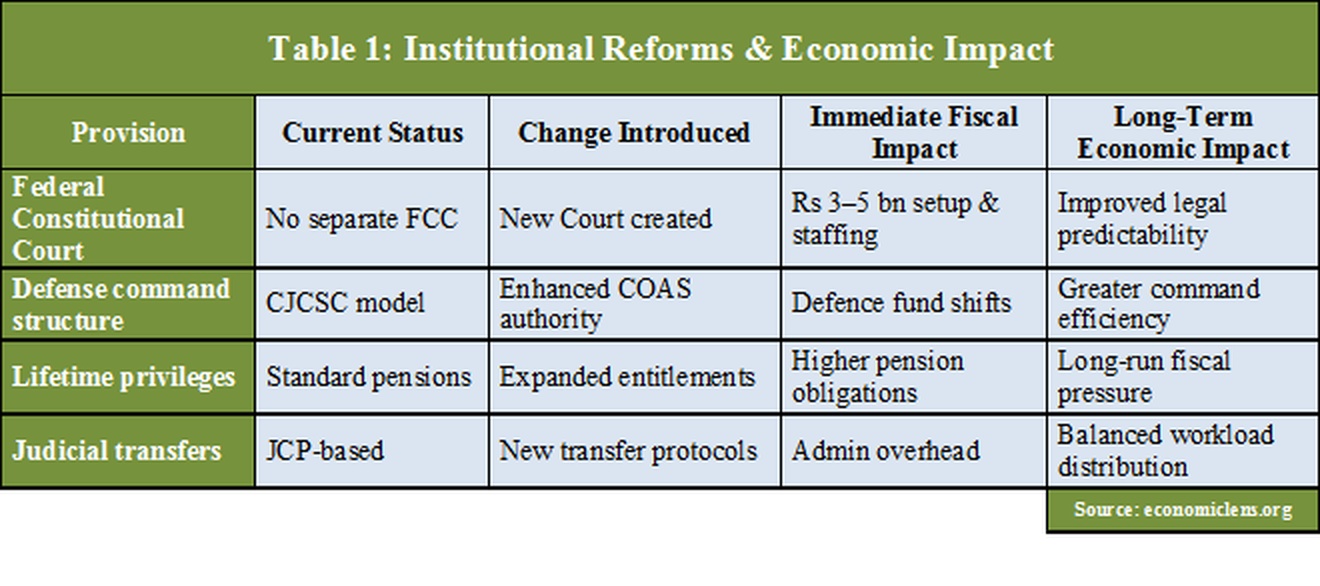
Pakistan 27th Constitutional Amendment: Institutional Reforms & Economic Impact TableWhile institutional reforms require upfront investment, they promise long-term economic benefits through improved stability, reduced legal ambiguity, and enhanced administrative coherence.
“When institutions become stronger, economic horizons become clearer. Solid foundations are the key to sustainable national progress.”
2. Fiscal Federalism & the 27th Constitutional Amendment
Fiscal federalism forms the backbone of equitable development in Pakistan. This Amendment may influence how national resources are distributed among provinces, potentially reshaping public investment, service delivery, and long-term infrastructure planning. Because provincial budgets fund education, healthcare, and regional development, even slight changes can create significant Economic Impact, especially in provinces with limited revenue-raising capacity.
Dawn (2024) highlights that revisions in provincial shares could weaken provincial capacity to address regional development challenges, particularly in underserved districts.” SDPI’s 2025 report highlights that reducing provincial fiscal space without compensation mechanisms increases regional disparities and slows inclusive growth.
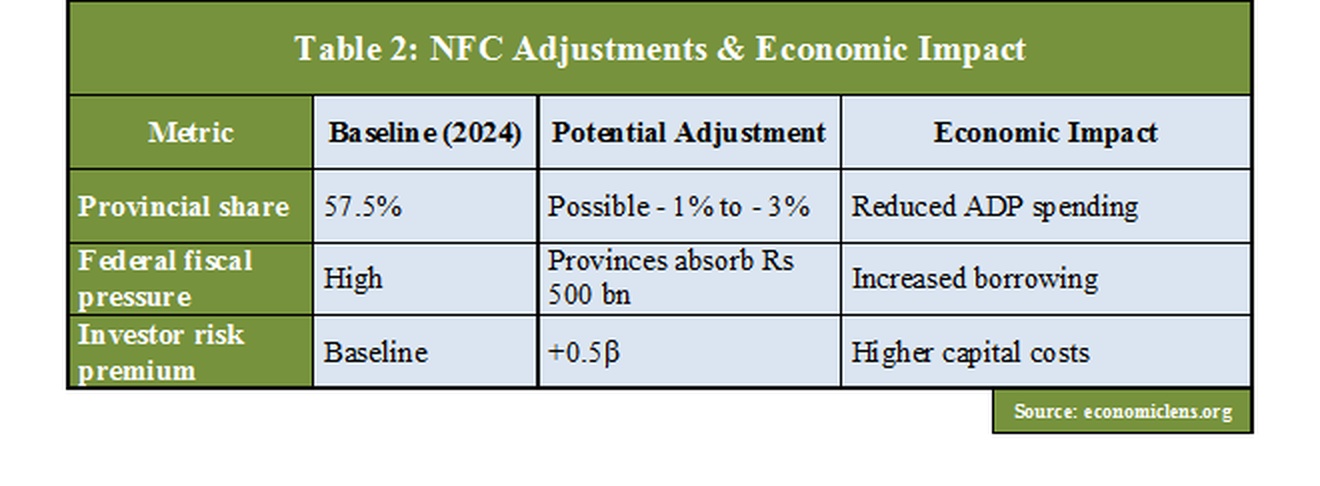
A reduction in provincial shares may narrow development budgets, weaken fiscal autonomy, and increase socio-economic disparities across provinces.
“Fair fiscal distribution strengthens unity. When every province prospers, the nation advances together.”
3. Education Centralisation under the 27th Constitutional Amendment
Human capital drives economic growth. By transferring education and population management to the federation, this Amendment creates one of the most consequential governance shifts in decades. Centralization may improve national standards, yet it risks disrupting provincial innovation and slowing progress. Since education directly determines labour productivity, literacy, and competitiveness, the amendment’s Economic Impact on Pakistan’s workforce is substantial.
Dr Akbar Zaidi explains: “Centralisation must be designed carefully. Without provincial flexibility, education reforms risk losing local relevance.” Express Tribune (2024) reports concerns from provincial departments about duplication and transitional confusion.
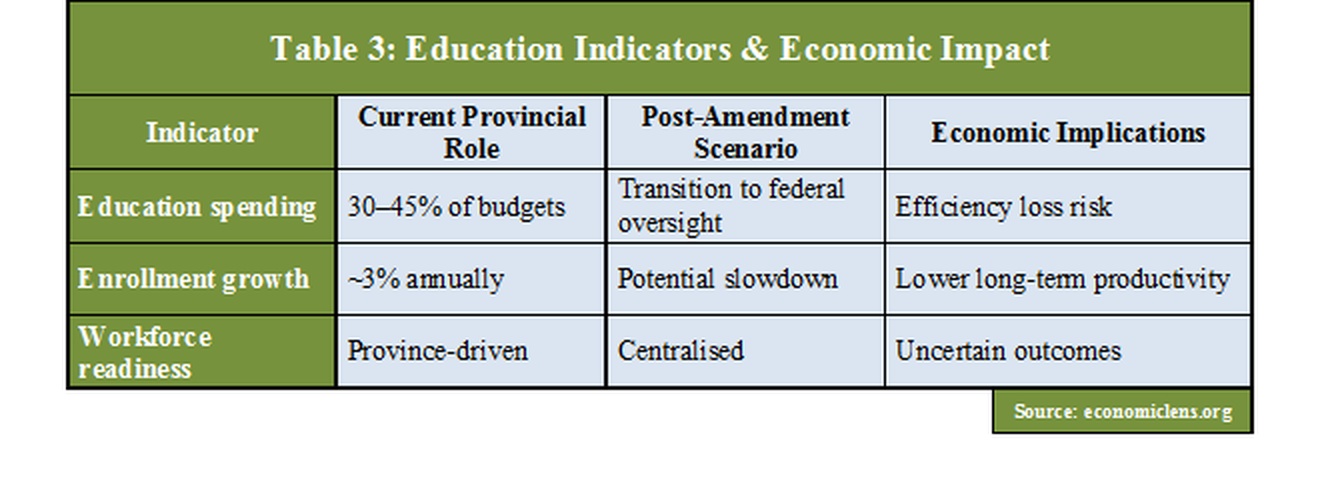
Any slowdown in education progress today will shape Pakistan’s economic capacity for decades, making careful implementation essential.
“In education, today’s decisions shape tomorrow’s workforce. Strong human capital is the engine of every thriving economy.”
4. Provincial Cabinets & the 27th Constitutional Amendment
Administrative expansion is a double-edged sword. This Amendment allows larger provincial cabinets, aiming to improve governance representation. However, this also increases recurrent expenditure, which may crowd out development spending. Understanding the fiscal trade-offs is essential to evaluating the amendment’s Economic Impact.
Business analyst Mian Zahid Hussain says that Cabinet expansion must deliver efficiency gains; otherwise, it becomes an expensive diversion from development priorities.” The provincial budget data shows recurrent costs rising faster than development allocations over the past five years.
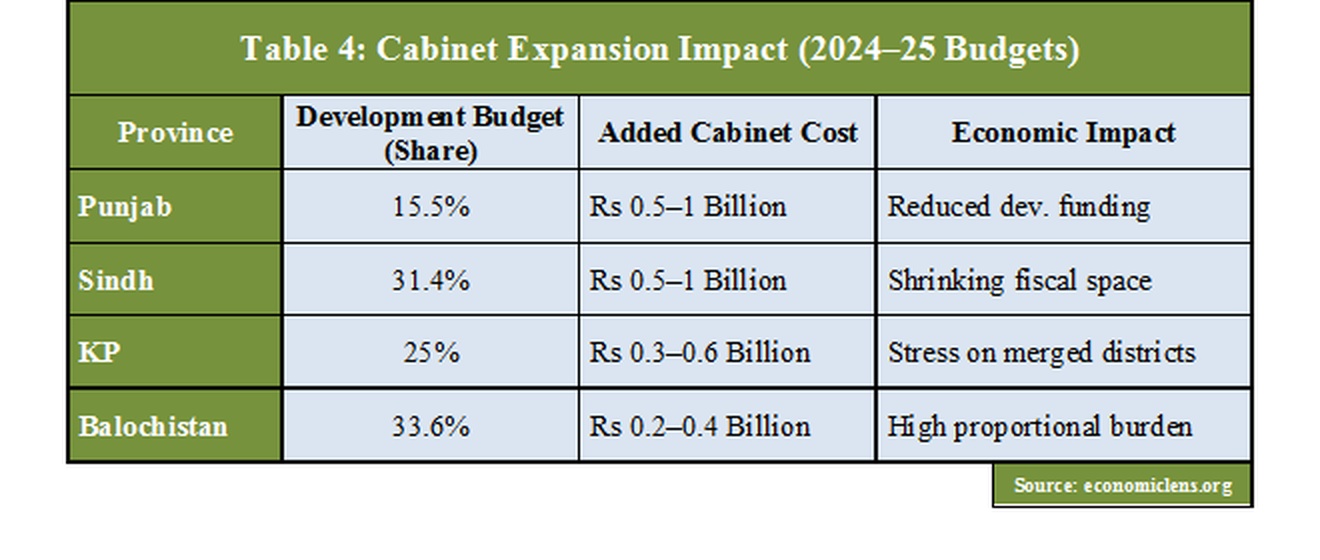
Recurring administrative costs limit development flexibility, especially in provinces already strained by fiscal pressures.
“Every rupee saved in administration can build a school, a hospital, or a road. Efficiency is not an option—it is a responsibility.”
5. Provincial Comparative Impact of the 27th Constitutional Amendment
This Amendment will not affect all provinces equally. Differences in fiscal capacity, administrative readiness, and development needs mean that Punjab and Sindh can absorb reforms more easily, while KP and Balochistan face tighter constraints. Because provincial disparities are already pronounced, understanding these uneven effects is essential for ensuring the amendment strengthens national cohesion rather than widening economic gaps.
Dr. Kaiser Bengali explains: “Reforms of this scale must account for provincial asymmetry. KP and Baluchistan remain more exposed to fiscal and administrative pressures, while stronger provinces can adjust more smoothly.” SDPI’s 2025 Federalism and Equity Review warns that provinces with weaker revenue bases are more likely to experience delayed development and service disruptions if resource flows tighten during the transition. The report highlights KP’s merged districts and Balochistan’s sparse population as key structural vulnerabilities.
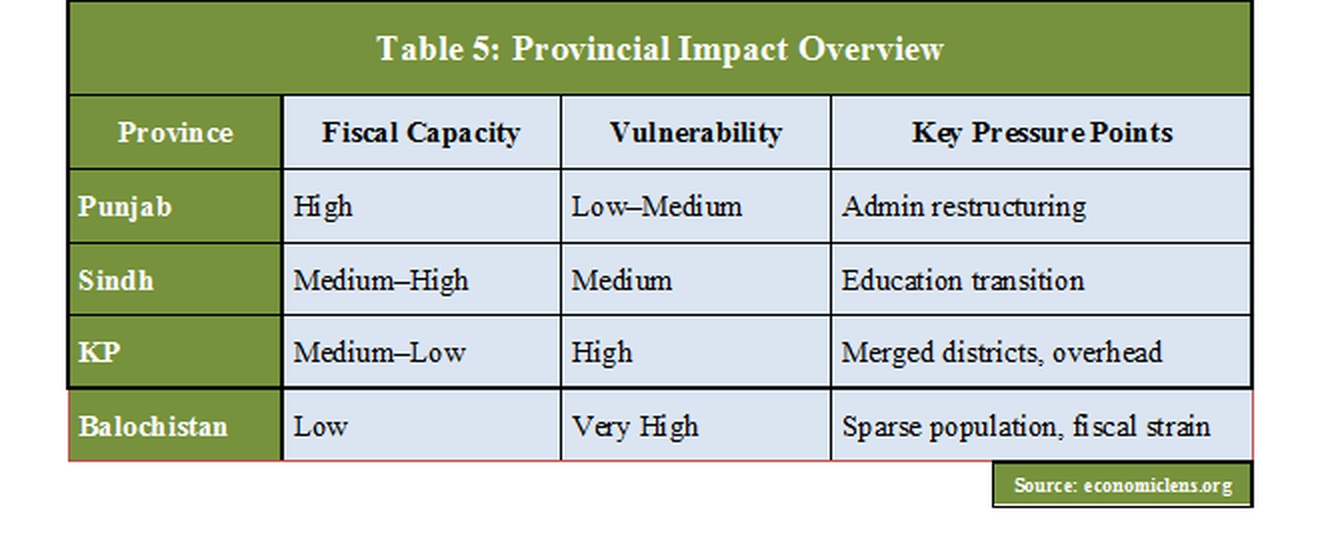
The table shows that Punjab and Sindh have the resilience to manage transitional changes, while KP and Balochistan face tighter fiscal margins and higher service delivery costs. If implementation is not province-sensitive, the amendment may unintentionally amplify existing regional disparities.
“When reforms touch every province, fairness becomes essential. A balanced approach ensures the 27th Constitutional Amendment lifts all regions—and moves Pakistan forward together.”
6. Risk Matrix for the 27th Constitutional Amendment
Major governance reforms require proactive risk management. This Amendment presents institutional, fiscal, and administrative risks that could undermine its intended outcomes. Identifying and preparing for these risks is essential to safeguarding its Economic Impact.
PIDE’s Dr Nadeem Ul Haque stresses: “Implementation—not drafting—determines reform success.” Similarly, PIDE’s Governance Review (2024) identifies coordination breakdowns as the primary barrier in reform execution.
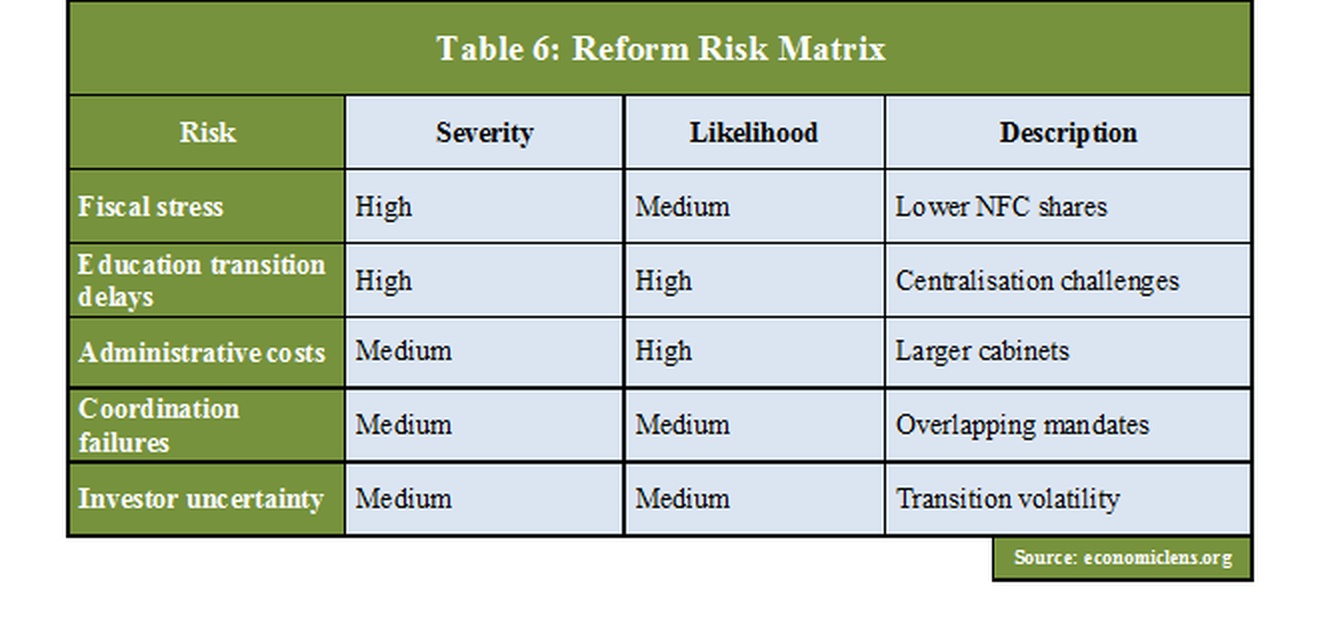
The most significant risks lie in transitional delays and fiscal strain—both of which directly affect development outcomes.
“Smart reforms require smart planning. Anticipating challenges ensures we build a future that is resilient and prepared.”
7. Economic Scenarios under the 27th Constitutional Amendment (2026–2030)
The long-term Economic Impact of this Amendment depends on implementation. These scenarios outline the spectrum of Pakistan’s possible economic futures based on coordination, governance, and reform management.
World Bank economist Dr Derek Chen notes: “Governance quality—not just policy design—determines economic outcomes.” World Bank Macro Outlook (2024) highlights that governance reforms directly influence investor confidence and GDP performance.
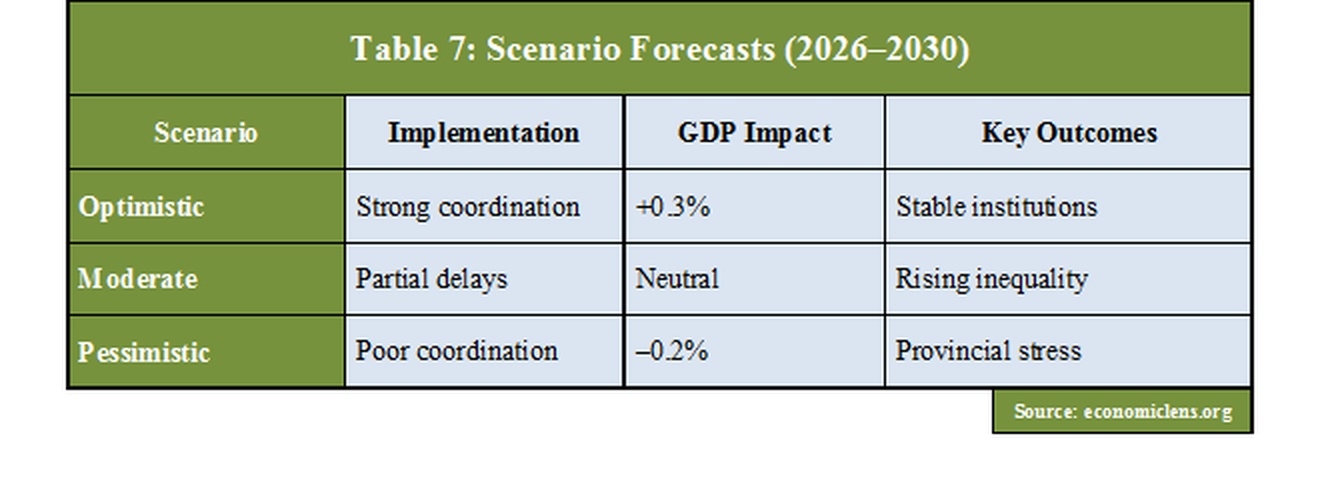
Effective implementation determines whether the amendment becomes a catalyst for progress or a source of fiscal pressure.
“Tomorrow’s economy depends on today’s execution. Disciplined implementation can turn reform into national renewal.”
Policy Recommendations
To maximise the benefits of the 27th Amendment, Pakistan must adopt a structured implementation approach. Establishing dedicated transition units for judicial, educational, and defence reforms will ensure clarity and accountability. Provinces should be safeguarded from fiscal shocks through phased adjustments and compensatory mechanisms. Education centralisation must retain local adaptability to avoid disrupting service delivery. Administrative expansion requires performance-based evaluations to justify additional costs. Over the long term, Pakistan must institutionalise monitoring frameworks and adopt transparent budgeting practices to ensure reforms deliver sustained development.
Conclusion
The 27th Constitutional Amendment is a defining moment in Pakistan’s constitutional and economic evolution. Its success will depend not solely on the text of the amendment, but on the discipline, coordination, and foresight with which it is implemented. The amendment presents opportunities to strengthen institutions, improve stability, and modernise governance; yet it also carries risks that must be carefully managed. With deliberate planning and evidence-based policy, Pakistan can transform this constitutional shift into a foundation for long-term growth, development, and national resilience.
Call to Action
Pakistan’s future depends on informed participation, transparent governance, and collective responsibility. Policymakers must demand accountability, researchers must monitor outcomes, provincial leaders must advocate for equitable arrangements, and citizens must stay engaged. The 27th Constitutional Amendment provides an opportunity to reshape Pakistan’s governance landscape—if we commit to implementing it wisely.