
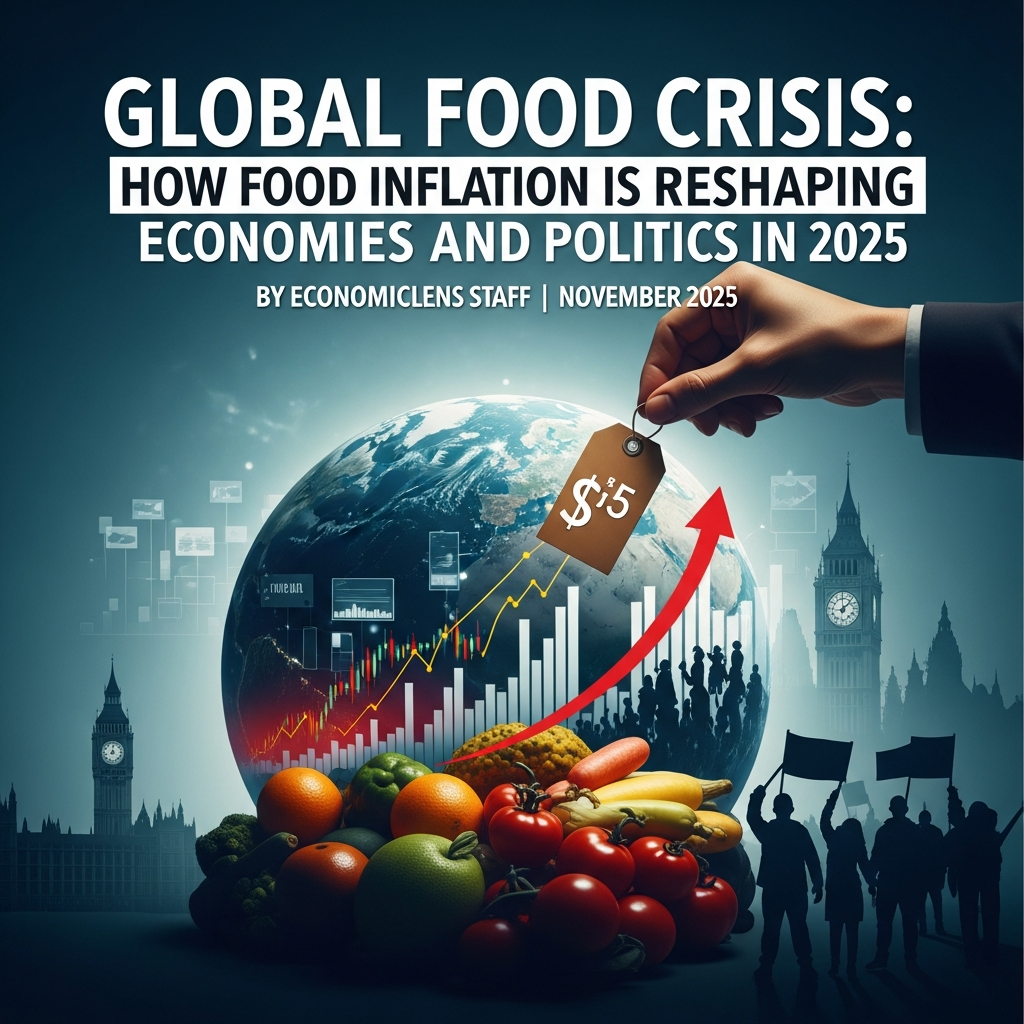
Explore how food inflation and the 2025 global food crisis are reshaping economies and creating political challenges worldwide
Introduction
Food inflation in 2025 is no longer a temporary concern; it has become a global food crisis affecting economies and political landscapes worldwide. Rising food prices, driven by climate change, geopolitical tensions, and disrupted supply chains, are reshaping how countries manage their resources and their food security. As the global food crisis deepens, it’s crucial to understand the factors behind food inflation and its lasting impact on global markets.
“What’s driving this threat, and how can it be mitigated? Let’s dive into the forces behind rising food prices and take control of the future we’re shaping.”
1. Background
What is Food Inflation?
Food inflation refers to the sustained rise in prices of essential food items like grains, vegetables, meat, and dairy. While food inflation has always been influenced by seasonal shifts and short-term shocks, the rapid rise in prices in 2025 signals a deeper, more persistent issue.
Global Context in 2025
In 2025, food inflation is no longer just a seasonal issue—it’s driven by long-term factors such as climate change, geopolitical tensions, and post-pandemic supply chain disruptions. Countries with robust agricultural systems are still seeing price hikes, while nations relying on food imports are particularly vulnerable to the global food crisis.
“According to the World Bank, food inflation is now projected to remain high for the foreseeable future, driven by persistent disruptions in supply chains and rising energy costs.”
“We must face the reality that food inflation is a defining issue of 2025. But can we rise to the challenge and take proactive steps toward solutions? The answer lies in our actions.”
2. Main Drivers of Food Inflation in 2025
Climate Change
Climate change is causing extreme weather events—droughts, floods, and heatwaves—that have a devastating effect on crop yields. These events increase food production costs, contributing to food inflation and exacerbating the global food crisis.
Geopolitical Instability
The Russia-Ukraine conflict has disrupted global grain supplies, causing wheat and other essential food prices to surge. Trade restrictions, economic sanctions, and international conflict are key drivers of food inflation globally.
Supply Chain Disruptions
The lingering effects of the COVID-19 pandemic have created lasting disruptions in global food supply chains. Rising labor shortages, transportation bottlenecks, and escalating fuel costs have pushed food prices higher, exacerbating the global food crisis.
Rising Fertilizer and Energy Prices
Fertilizer prices have risen by 20-25% since 2024, driven by rising energy costs. This affects crop yields and increases the cost of food production globally.
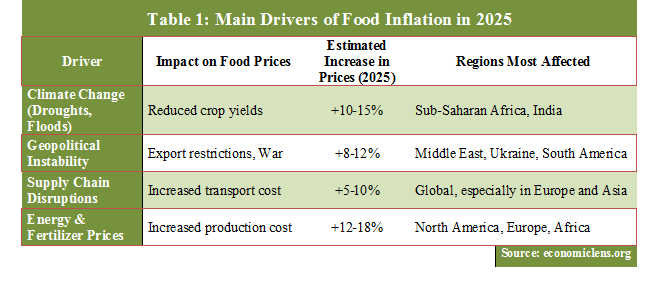
“As the world faces climate extremes, food inflation has been heavily impacted by the inability to maintain consistent agricultural yields,” says Dr. Janet Wilson, climate economist.
“With so many forces at play, food inflation isn’t just a byproduct of the times—it’s a result of our global interconnectedness. Can we harness this awareness and act? Together, we must find a way forward.”
3. Impact of Food Inflation on Global Economies
Rising Household Costs
In many countries, food now accounts for more than 30% of household spending. This is especially evident in low- and middle-income countries where people are forced to spend more of their income just to feed their families. Food inflation has a disproportionate effect on these households, leading to reduced living standards.
Political Consequences
In countries like Egypt, where bread is a staple, rising wheat prices have historically led to protests. Similarly, in Pakistan, floods and food shortages have sparked political instability. The global food crisis is not just an economic issue; it’s a political tinderbox that can destabilize governments.
Economic Instability
The increase in food prices means that households have less money to spend on non-essential goods and services. This results in lower demand in other sectors, which harms overall economic growth.
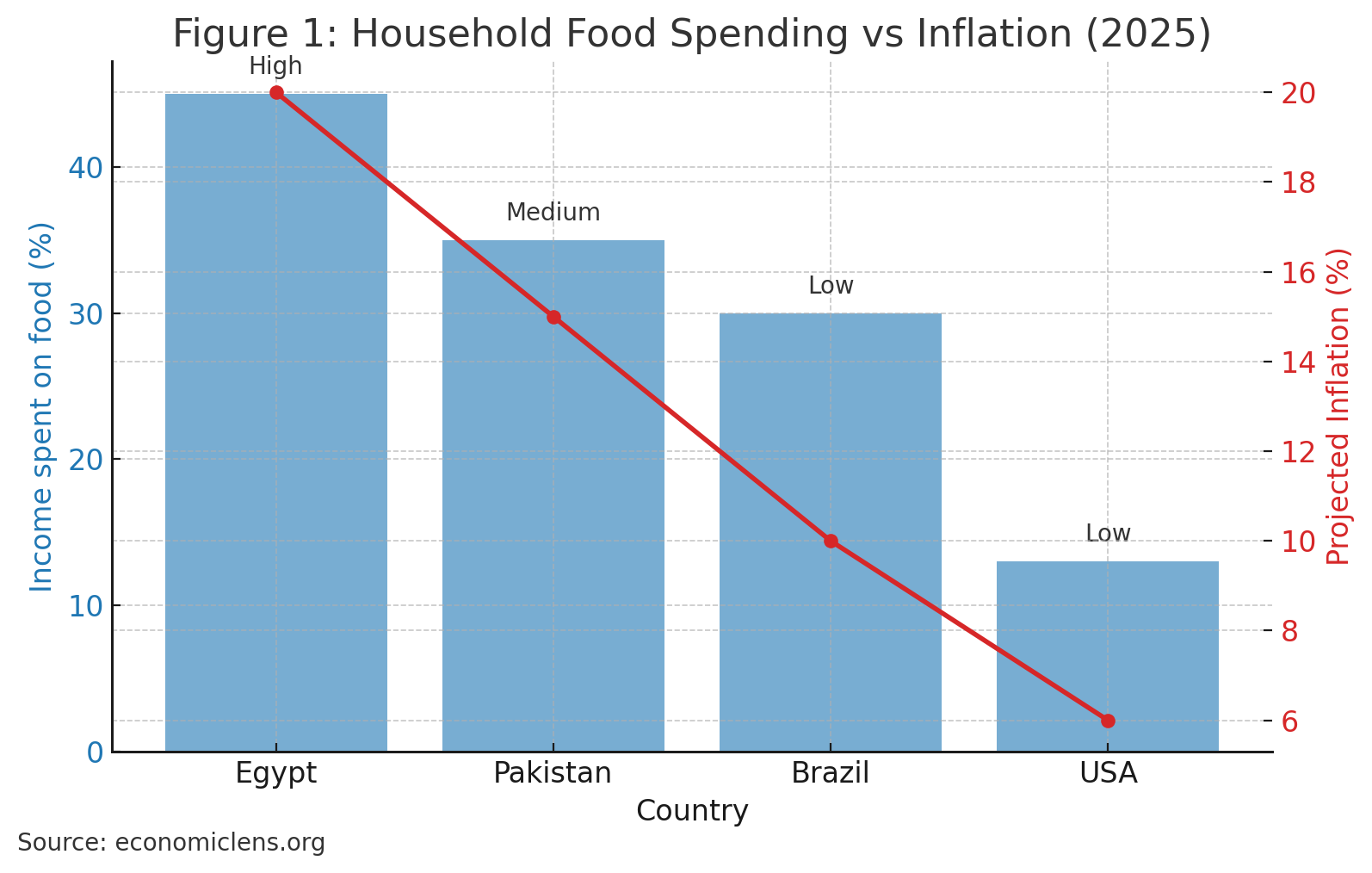
Egypt’s high political instability is driven by protests over rising food prices and economic distress. Pakistan’s medium instability is influenced by inflation and food price hikes amid ongoing floods. Brazil maintains low instability with stable government policies, keeping food prices relatively controlled. The USA experiences low instability, supported by a stable economy and manageable food price inflation
“Food inflation is emerging as one of the leading causes of political instability in countries that are already grappling with weak economies,” according to a 2025 IMF report.
“As food prices rise, the consequences extend far beyond budgets. Food inflation is now a political and economic crisis. Can we ensure that change is part of the solution?”
4. Key Factors Behind Food Inflation as an Economic and Political Threat
Import Reliance and Vulnerability
Countries like Egypt are particularly vulnerable to the global food crisis. As global prices surge, these nations face escalating food costs, and bread subsidies become unsustainable.
Underinvestment in Domestic Agriculture
Countries like Pakistan, despite having large agricultural sectors, still face high food inflation due to poor infrastructure, outdated farming techniques, and lack of investment.
Currency Depreciation
Countries experiencing currency depreciation, like Pakistan, are seeing even higher food prices as the local currency’s value decreases, making imports more expensive.
Social Inequality
Food inflation disproportionately impacts lower-income households, leading to increased malnutrition, social unrest, and growing inequality.
“The combination of food inflation and political instability creates a volatile situation, as lower-income populations face the brunt of rising prices,” says Dr. David Chen, sociologist.
“The rise of food inflation is more than just an economic issue; it’s a political minefield. Can we pave the way for a future where all people have access to affordable food? The solution starts now.”
5. Future Outlook and Trends
Persistent Inflationary Pressures
With no immediate end in sight, food inflation is likely to remain a key economic concern through 2025 and beyond. Global disruptions and local challenges will continue to affect food prices and the global food crisis.
Government and Global Responses
While governments are implementing temporary measures like subsidies and price controls, these solutions are unsustainable in the long run.
Technological Solutions and Innovations
AI and biotechnology may provide long-term solutions to food inflation by improving crop yields and farming efficiency.
Policy Recommendations
Governments must invest in resilient agriculture, diversify supply chains, and reform subsidies to support vulnerable populations without creating fiscal burdens.
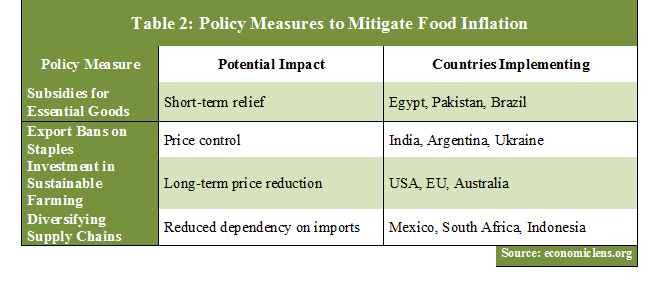
“Sustainable farming and diversified supply chains are the key to reducing the long-term threat posed by food inflation,” says Dr. Sophia Roberts, agricultural policy expert.
“The future of food inflation depends on the strategies we adopt today. Let’s take the first step toward building a more sustainable and secure food system.”
5. Conclusion
As food inflation continues to disrupt global economies, it has become clear that this is no longer a temporary issue. The economic and political threat posed by rising food prices requires immediate action from governments, businesses, and consumers.
Call to Action
The future of food inflation depends on how we respond today. Let’s start by demanding more sustainable policies, supporting local agriculture, and making informed choices to help mitigate this global crisis.



4 thoughts on “Global Food Crisis: How Food Inflation Is Reshaping Economies and Politics in 2025”
WOW just what I was looking for. Came here by searching for
about jury service
Эта информационная заметка содержит увлекательные сведения, которые могут вас удивить! Мы собрали интересные факты, которые сделают вашу жизнь ярче и полнее. Узнайте нечто новое о привычных аспектах повседневности и откройте для себя удивительный мир информации.
Подробнее можно узнать тут – https://vivod-iz-zapoya-1.ru/
Humans may all take advantage of learning more about ourself and our health and wellbeing.
Certaqin actions and exertion amounts can easily possess wonderful gain to us, and we
ought to find ouut even more info about them.
Your weblog has offered worthwhile info that is to be helpful to numerous societies and individuals,
and I just value your showing your know-how
in this way.
Its like you read my mind! You seem to know a lot about this, like you wrote the book in it or something.
I think that you can do with a few pics to drive the message home
a little bit, but instead of that, this is excellent blog.
A fantastic read. I’ll definitely be back.