
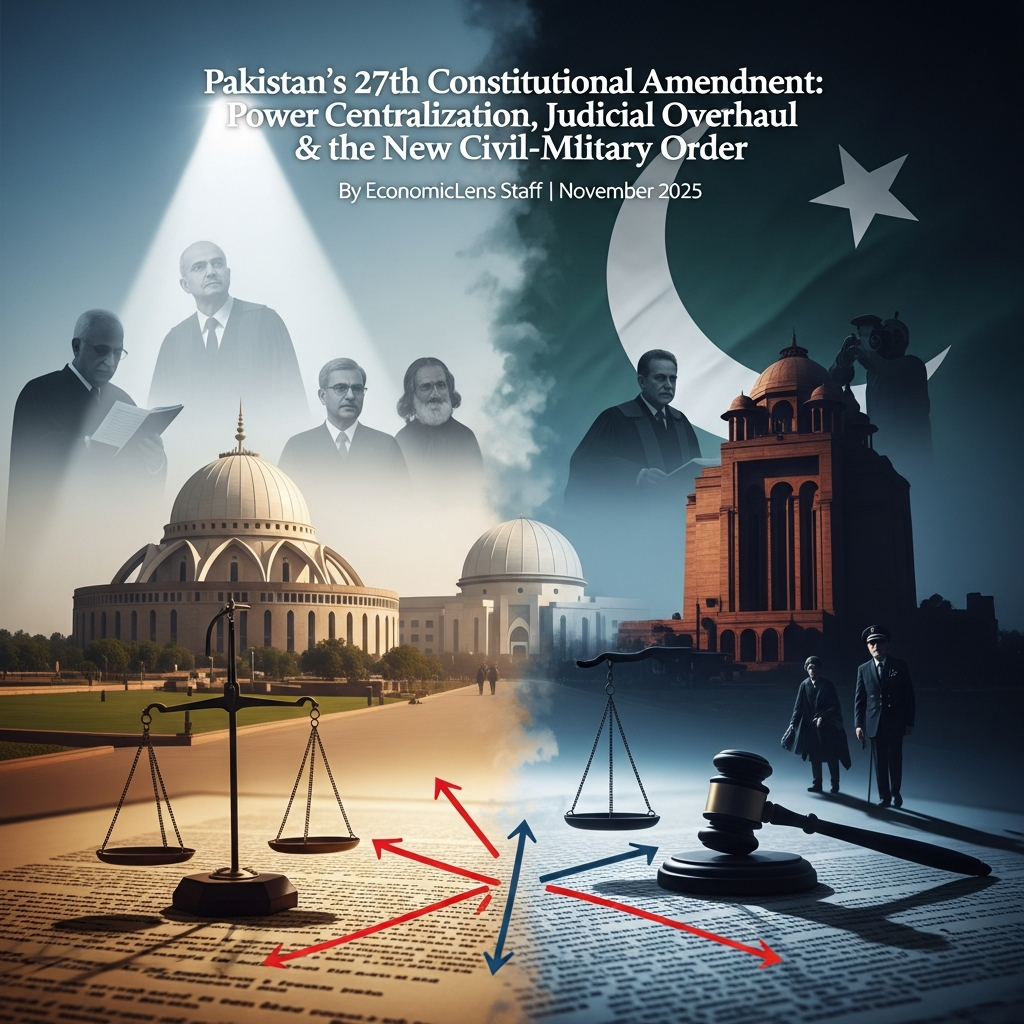
The Pakistan 27th Constitutional Amendment centralizes power, reshapes judicial authority, expands military influence and introduces new legal immunities. This critical review explains early repercussions, long-run risks, institutional imbalance and the growing challenges to accountability, democracy and governance.
Introduction
The Pakistan 27th Constitutional Amendment immediately entered national debate when its draft text was leaked to major print media. Because the amendment reshapes judicial authority, centralizes executive and military power, grants legal immunities and redefines provincial roles, it has triggered intense concerns about constitutional balance. Early media reports highlighted that these changes could weaken institutional independence and reduce avenues for accountability. Additionally, Islamic principles such as ihtisab emphasize that no authority is above accountability, making the amendment’s immunity clauses even more questionable. Therefore, a comprehensive critical review grounded in media evidence is essential for understanding the amendment’s long-term implications.
“True power is accountable power; nations rise when authority answers to justice, and justice answers to Allah.”
1. Institutional Power Shift under the Pakistan 27th Constitutional Amendment
The Pakistan 27th Constitutional Amendment centralizes federal control across multiple governance functions, shifting authority away from distributed institutions. Because institutional balance is vital for stability, critics argue that excessive centralization can compromise accountability and distort the relationship between key state organs. As print media reported during the leak week, the amendment restructures decision-making in ways that elevate federal dominance. Therefore, examining this shift is crucial for understanding evolving governance trajectories.
Dawn’s coverage (https://www.dawn.com/) of the leaked draft underlined that the amendment reconfigures power by consolidating authority under the federal structure, raising fears of reduced institutional autonomy. The Guardian echoed this analysis, warning that centralization may increase administrative speed but weaken oversight. Analysts quoted in both outlets stated that such consolidation risks creating a system too dependent on central command rather than collective institutional balance.
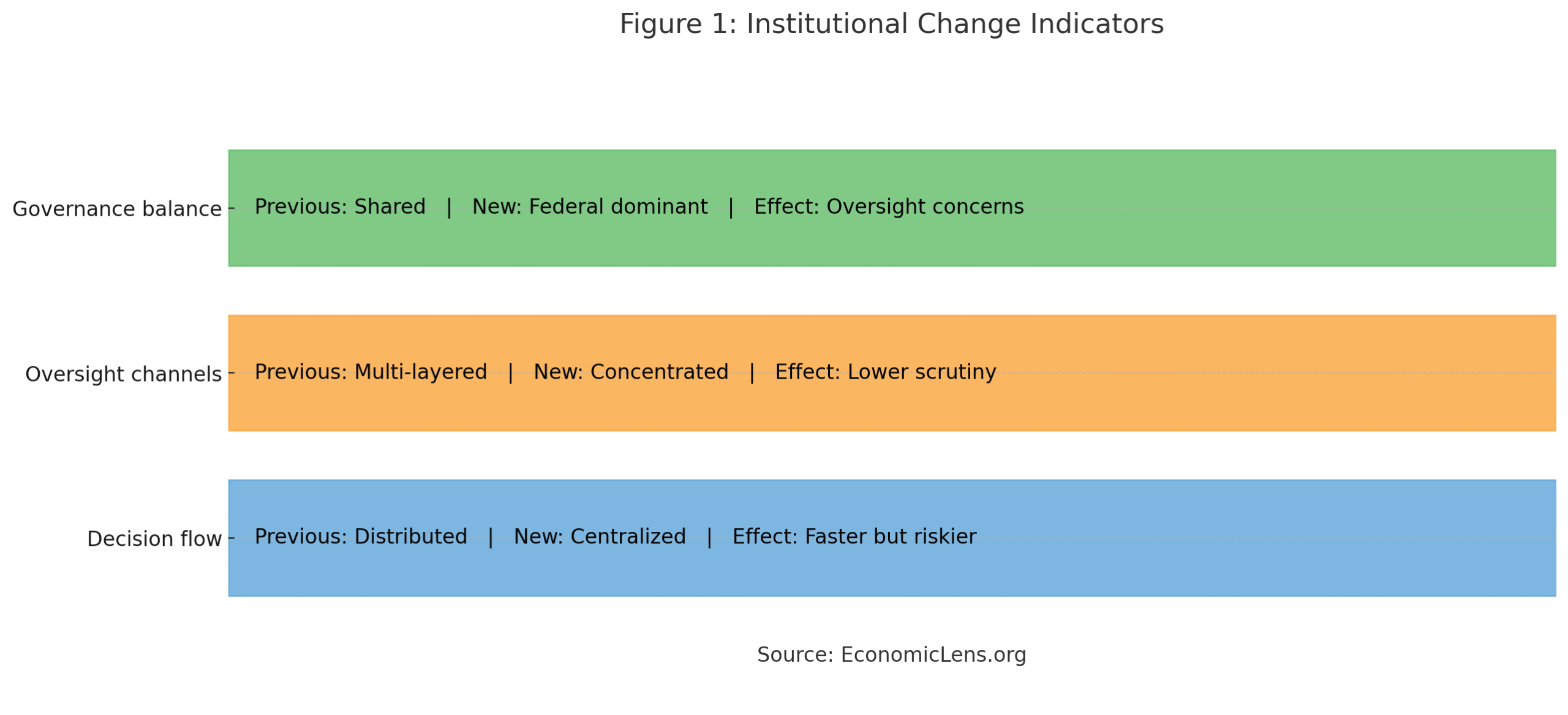
The table shows a trade-off between speed and accountability: faster decision-making is achieved by shrinking scrutiny channels, but this also reduces transparency. Such redefinition of authority risks undermining institutional independence by creating unilateral command pathways.
“Institutions grow strong not by concentrating power, but by balancing it; when authority rises unchecked, nations may move faster but lose the ability to steer wisely.”
For a detailed assessment of the amendment’s economic implications and institutional restructuring, see our companion analysis “27th Constitutional Amendment: Economic Shifts and Institutional Reforms Shaping the Future of Pakistan” (https://economiclens.org/27th-constitutional-amendment-economic-shifts-institutional-reforms/).
2. Judicial Overhaul and Constitutional Reconfiguration
Judicial transformation under the Pakistan 27th Constitutional Amendment remains one of the most controversial aspects. Because justice requires independence, any amendment affecting appointment mechanisms, appellate routes or constitutional review threatens neutrality. Print media reported that the restructured judicial framework may reduce impartial oversight, prompting concerns about fairness. In Islamic ethics, justice demands uncompromised autonomy, highlighting the gravity of these changes.
Al Jazeera’s coverage during parliamentary debate warned that restructuring the judiciary through new review mechanisms risks limiting independent oversight by shifting influence toward executive-aligned bodies. The News International similarly highlighted legal experts’ concern that curtailing the Supreme Court’s constitutional jurisdiction narrows avenues for challenging executive or military decisions. Both sources warned such changes could undermine trust in the justice system.
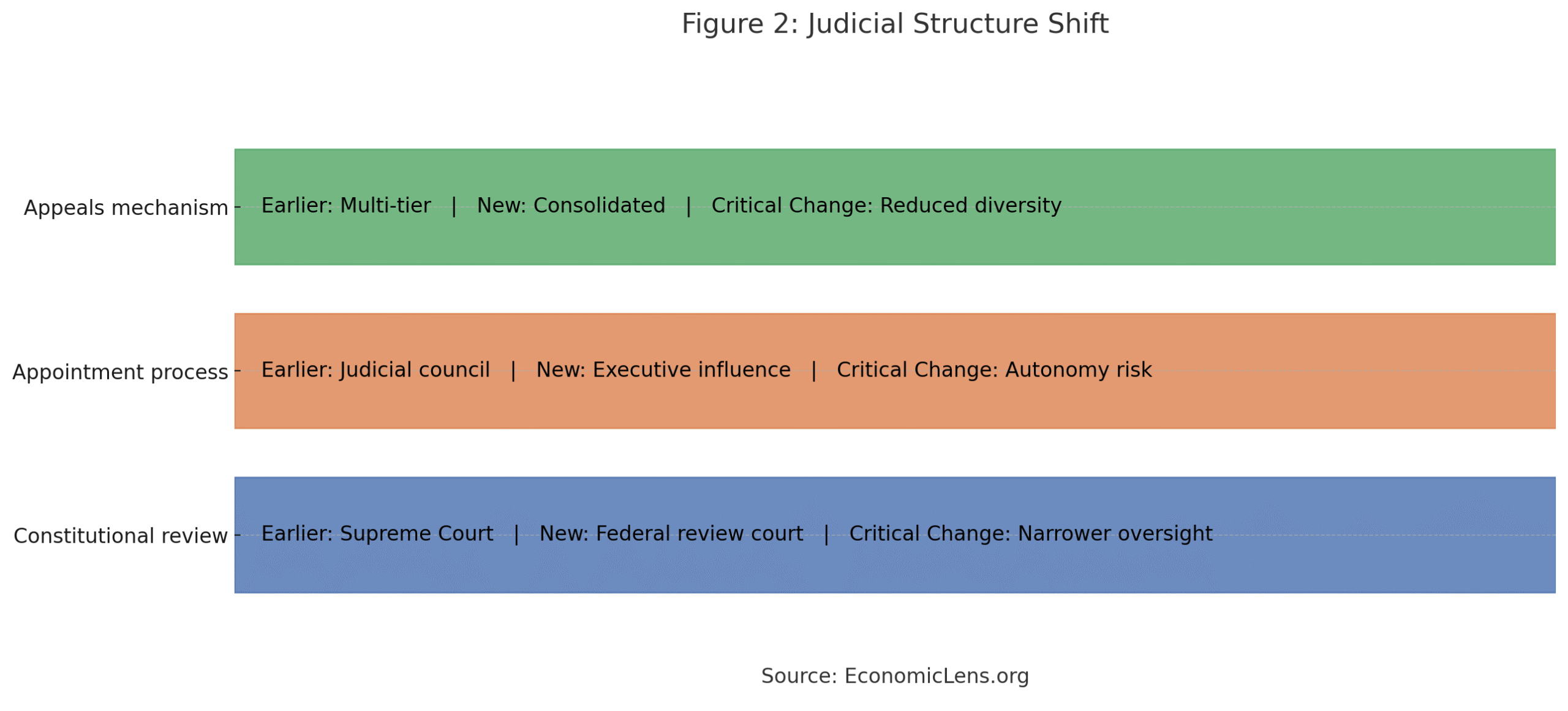
The table illustrates an overall narrowing of judicial authority, which reduces the diversity of legal interpretation. Centralizing constitutional review risks weakening impartial adjudication and strengthening executive influence over legal outcomes.
“Justice falters when independence fades; courts must remain free so that no office, no rank and no ruler escapes accountability before truth and before Allah.”
3. Civil–Military Realignment, Expanded Powers and New Immunities
The Pakistan 27th Constitutional Amendment introduces a major shift in civil–military relations by enhancing the constitutional authority of the Army Chief and granting new legal immunities to both the Army Chief and the President. Because these developments reshape oversight mechanisms, print media highlighted growing concerns regarding institutional imbalance. Expanded military authority affects national security command flows, administrative structures and internal governance frameworks. Therefore, examining these changes helps clarify the amendment’s impact on Pakistan’s civil–military equilibrium.
The Guardian reported that the amendment grants the Army Chief expanded command authority over strategic and administrative domains, coupled with legal immunity shielding the office from judicial proceedings. Dawn highlighted that immunity provisions also extend to the President, raising questions about unequal accountability. Analysts cited by both outlets cautioned that such exemptions undermine democratic norms and conflict with Islamic concepts of universal ihtisab, where no authority is beyond scrutiny. International coverage from <a href=”https://www.aljazeera.com/news/” target=”_blank” rel=”noopener”>Al Jazeera</a> noted that the reforms could reshape the civil–military power balance and centralize decision-making
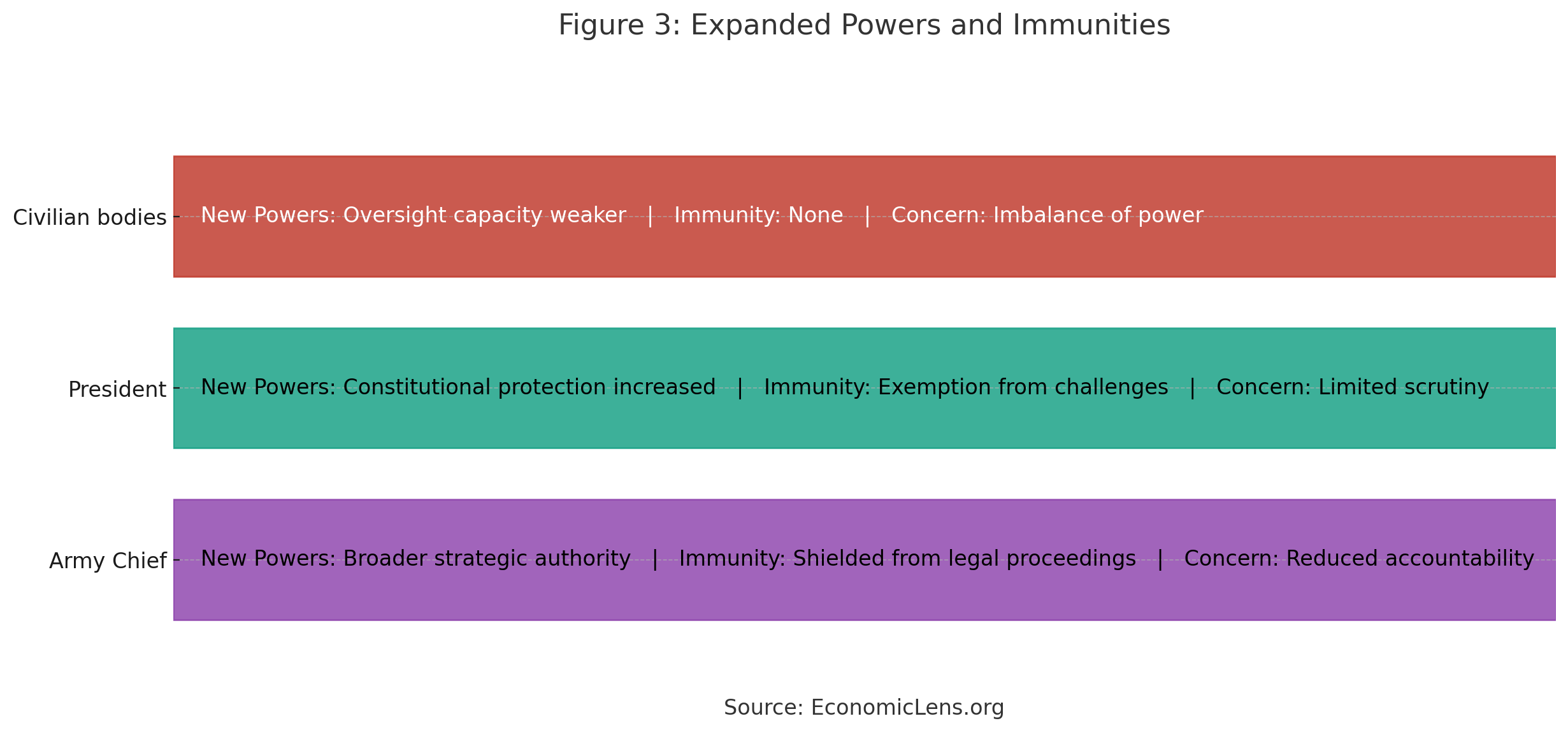
The table shows how new immunities tilt authority toward institutions already holding significant influence. This reduces the legal channels available for scrutiny, weakening constitutional checks designed to ensure equal accountability across state offices. Such imbalance risks normalising unequal legal treatment.
“Power that cannot be questioned becomes power that cannot be corrected; justice demands accountability for every rank, for no office stands above truth in the sight of people or Allah.”
4. Fiscal Federalism, Provincial Autonomy and Governance Risks
The Pakistan 27th Constitutional Amendment alters relationships between the federal centre and the provinces by centralizing control over key functions such as education, population planning and administrative oversight. Because provincial autonomy is essential for regional balance, print media noted growing apprehension among smaller provinces. Critics argue that these changes weaken de-centralization achieved through earlier reforms. Therefore, understanding the amendment’s impact on provincial capacity is vital for evaluating governance risks.
The News International reported that provincial leaders voiced concern that the amendment could undermine their developmental authority by transferring key powers back to the centre. Dawn editorialized that centralization may heighten disparities by limiting the ability of provinces to address local priorities. Analysts cited in both outlets highlighted that smaller provinces face greater vulnerability due to limited fiscal and administrative strength.
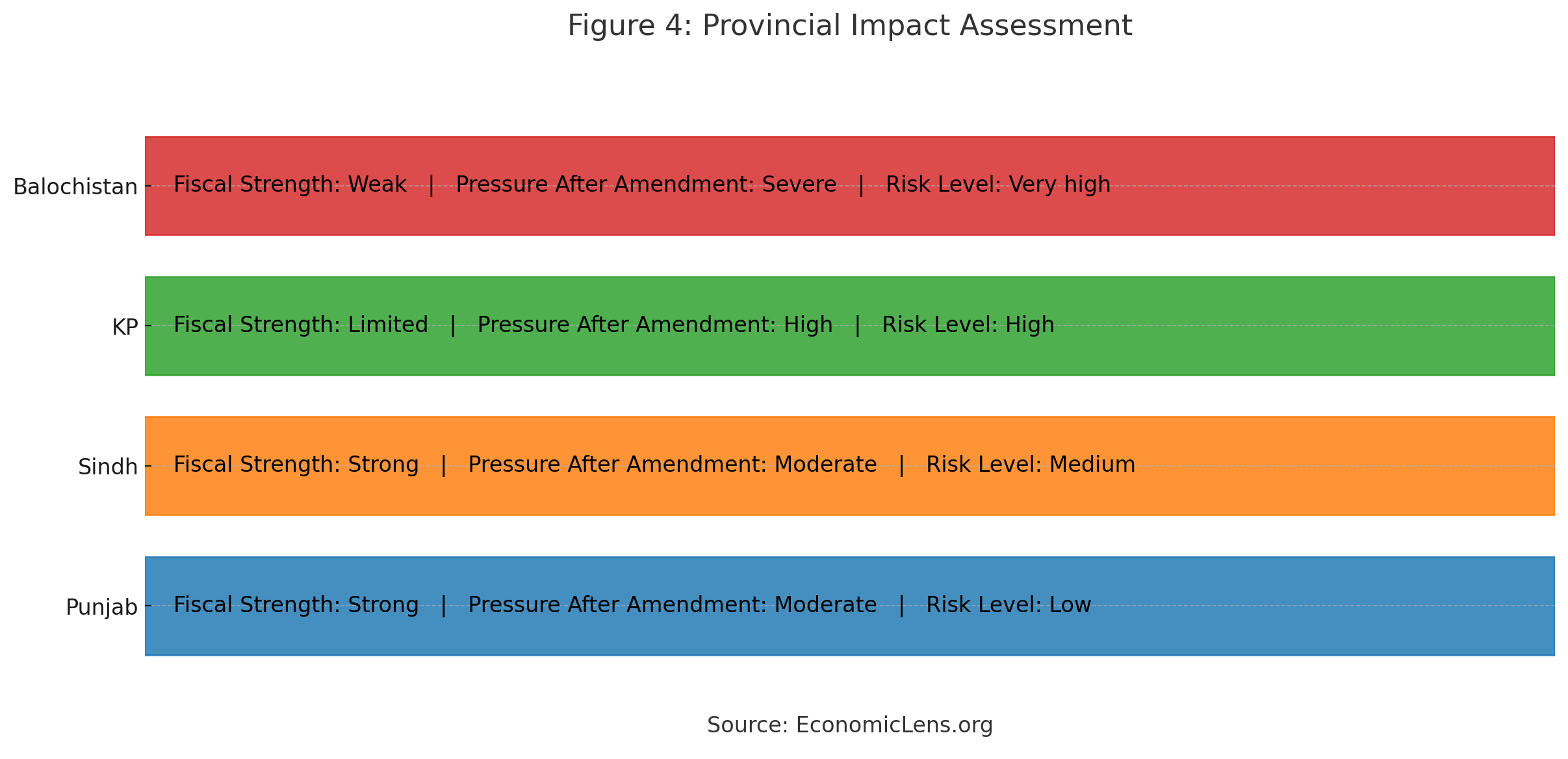
The table shows that centralization disproportionately affects provinces lacking fiscal resilience. KP and Balochistan risk widening development gaps, as centralized governance restricts regional autonomy and increases reliance on federal decision-making.
“When centralization burdens regions unequally, unity weakens; progress thrives only when every province grows with dignity, capacity and voice.”
5. Political Climate, Democratic Accountability and Public Trust
The Pakistan 27th Constitutional Amendment has reshaped the political environment by narrowing parliamentary debate, reducing opportunities for dissent and creating new unequal standards of accountability. Because democracy depends on openness, print media reports raised concern that the amendment may deepen political polarization. Reduced parliamentary oversight, heightened executive authority and immunity for top positions have eroded public trust. Therefore, assessing the democratic impact is essential for understanding how the amendment alters political stability.
Dawn reported that debate surrounding the amendment was unusually restricted, with limited space for opposition input. Al Jazeera (https://www.aljazeera.com/news/) highlighted civil society concerns that immunity clauses and reduced judicial independence weaken democratic safeguards. Analysts quoted across both newspapers warned that when leaders gain protections unavailable to citizens, political legitimacy declines and public distrust intensifies, especially in already fragile political environments.
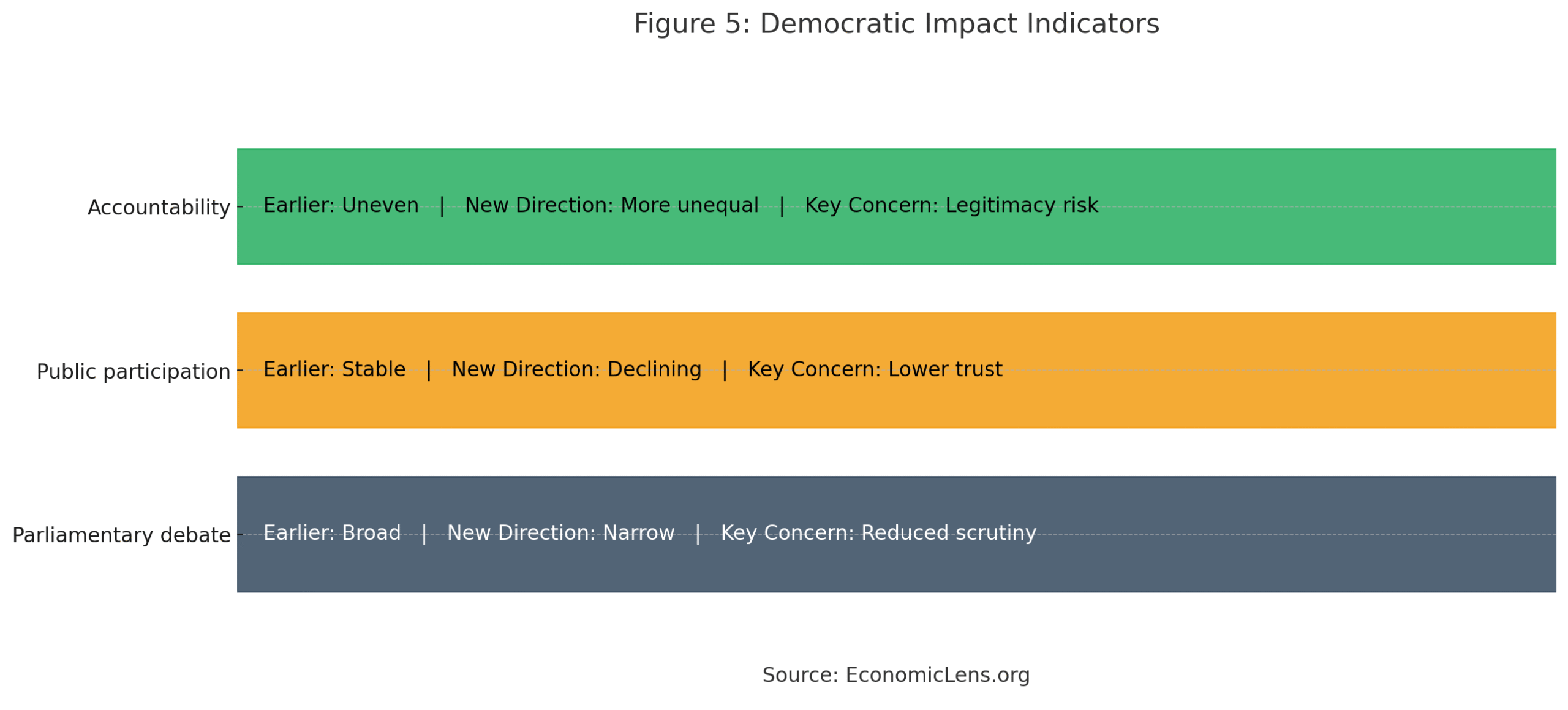
The table reflects a downward shift in democratic openness and equality. With reduced parliamentary scrutiny and expanded immunity for political and military leaders, public confidence suffers. This imbalance threatens the credibility of democratic processes, making governance appear increasingly exclusive rather than participatory.
“Democracy fades not in one moment but in many quiet steps; when participation shrinks and accountability narrows, nations lose the trust that binds them together.”
A broader look at Pakistan’s fiscal and governance pressures appears in “Pakistan’s Debt Emergency: IMF Bailouts, Fiscal Stress & the Road to Recovery” (https://economiclens.org/pakistans-debt-emergency-imf-bailouts-fiscal-stress-the-road-to-recovery/)
6. Early Repercussions After Implementation of the Pakistan 27th Constitutional Amendment
Since implementation, the Pakistan 27th Constitutional Amendment has produced immediate and far-reaching repercussions across judicial, political, military and governance sectors. Print media documented judge resignations, refusal of reassignments, delays in politically sensitive cases, public protests from lawyer bodies, international concern and visible institutional tension. Furthermore, experts warned that these developments foreshadow long-term structural shifts. Therefore, understanding early outcomes and future trajectories is essential for evaluating the amendment’s real-world impact.
Dawn reported that several judges declined reassignment or resigned outright, signaling discomfort with the new structure, while important legal cases were delayed due to jurisdictional uncertainty. The Guardian highlighted backlash from bar councils and rising international concern over expanded military powers and legal impunity. Analysts in both outlets stressed that these developments validate fears about weakened accountability, growing institutional strain and a more rigid power hierarchy.
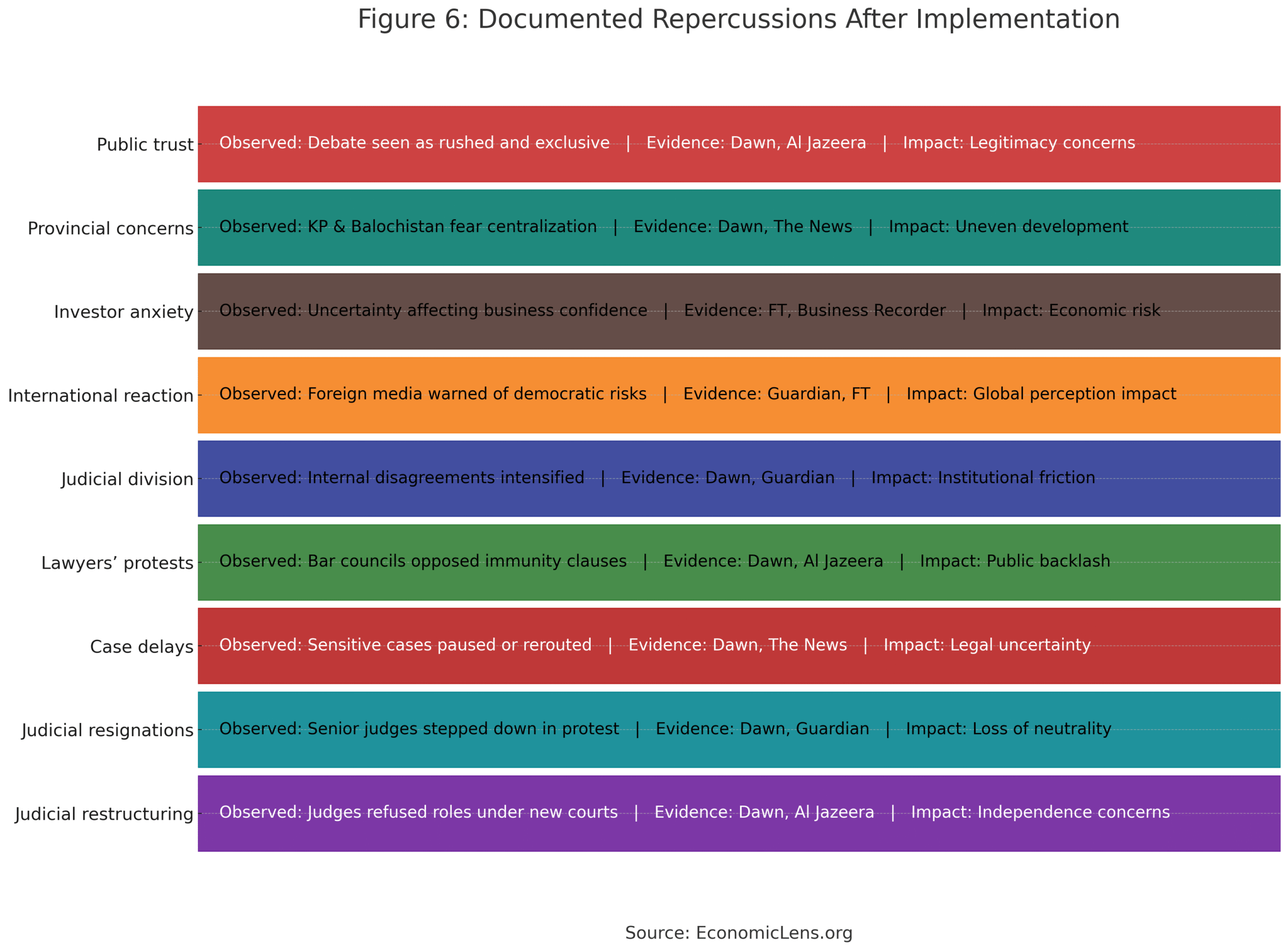
The table shows how the amendment immediately destabilised institutional equilibrium. Judicial refusals, resignations and delayed cases reflect operational disruption. Public protests from lawyers’ associations and rising international concern show broader rejection of immunity structures. Investor anxiety and provincial apprehension highlight long-term governance and economic risks. These repercussions reveal early warning signs of structural imbalance that may deepen over time.
“The primary beneficiaries of the Pakistan 27th Constitutional Amendment are the Army Chief, the President and the federal executive structure, all of whom receive expanded authority and legal protection unavailable to other institutions.”
7. Future Forecast: Long-Run Trajectory of the Pakistan 27th Constitutional Amendment
Long-term forecasts in print media suggest the Pakistan 27th Constitutional Amendment may permanently reshape the country’s institutional landscape. Because the amendment constitutionalises expanded military authority, alters judicial independence and entrenches legal immunities, its effects are likely to deepen over time. Analysts warn that Pakistan may shift toward a more controlled political model with reduced oversight and higher institutional fragility. Understanding these early trajectories is essential to predicting long-run outcomes.
The Guardian predicted that the amendment marks a long-term consolidation of military-led governance, noting its provisions will be difficult to reverse. Dawn editorialised that the erosion of judicial independence is likely to create a compliance-based court culture, inhibiting constitutional challenge. Analysts quoted in both sources warned that concentrated authority could reduce future political flexibility, strain federal relations and weaken institutional resilience in moments of national crisis.
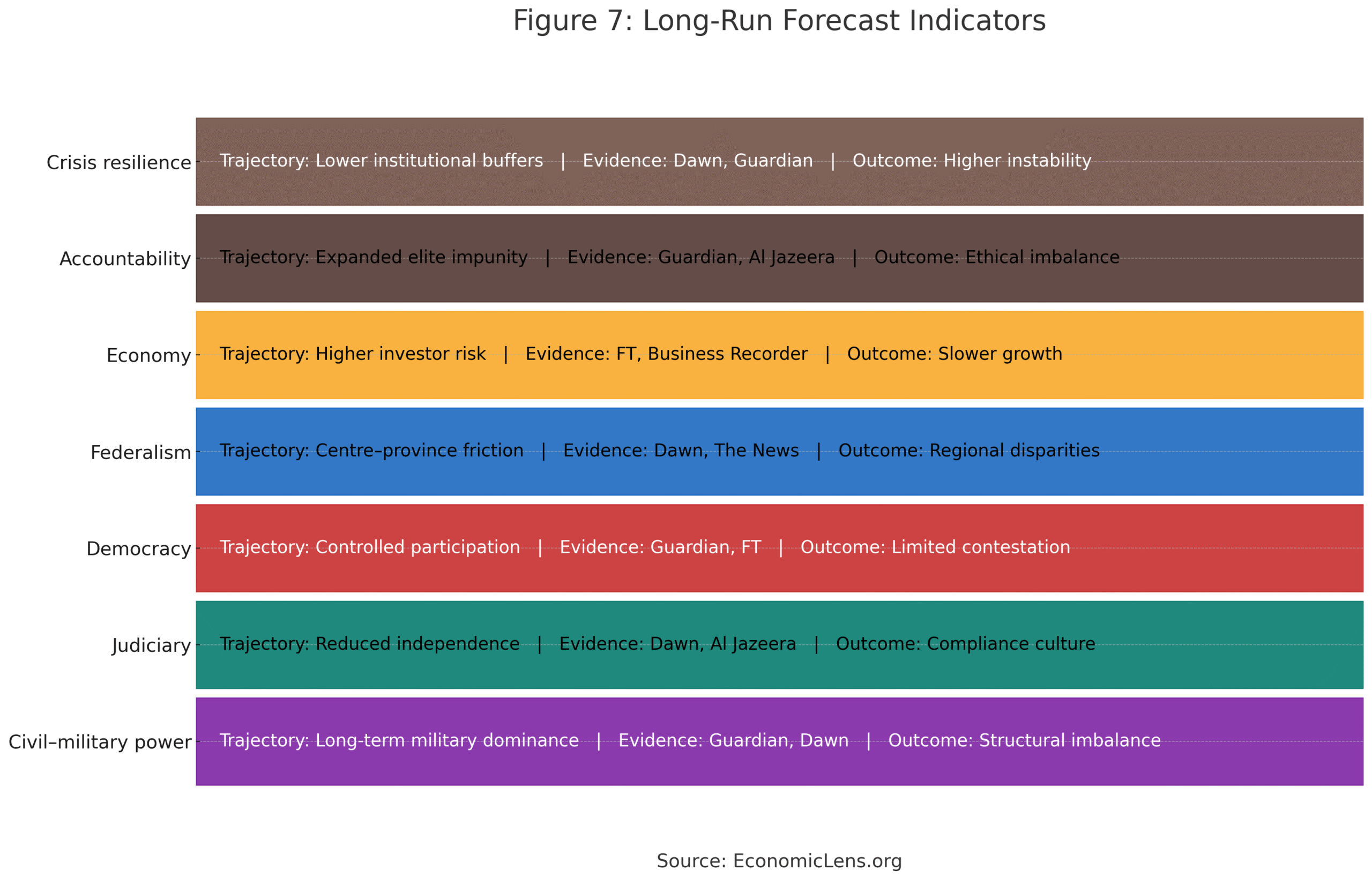
The table projects a long-term tilt toward concentrated authority across state structures. Reduced judicial independence and entrenched immunities suggest limited avenues for constitutional challenge. Federal strains and weakened crisis resilience reflect gradual institutional brittleness. Ultimately, the amendment’s long-run implications extend beyond immediate politics, shaping the strategic character of governance, justice and stability for years to come.
“The future of a nation is shaped by the principles it protects; when checks weaken and power hardens, the road ahead narrows, leaving little space for justice to breathe or institutions to grow.”
Conclusion
The Pakistan 27th Constitutional Amendment represents one of the most consequential shifts in Pakistan’s recent constitutional history. Because it centralizes federal authority, transforms judicial independence, expands military power and introduces new legal immunities, it carries broad implications that go far beyond administrative reform. Print media evidence shows early institutional strain, public backlash and international concern, indicating that the amendment affects not only immediate governance but long-term national direction. As Islamic principles emphasize universal accountability, any constitutional structure that elevates select offices above scrutiny risks undermining moral and democratic foundations.
“Nations endure when justice is guarded, not when power is shielded; long after amendments are written, their consequences remain written into the destiny of a people.”
Call to Action
As the Pakistan 27th Constitutional Amendment continues shaping the country’s institutional and political landscape, citizens, lawmakers and civil society must advocate for transparent governance and equal accountability. Because strong institutions rely on checks rather than exceptions, it is essential that Pakistan reinforces judicial independence, strengthens parliamentary scrutiny and ensures that no authority rises beyond ethical and constitutional limits. The future stability of the nation depends on collective vigilance and principled engagement.
“Accountability is the foundation of justice and the shield of nations; when citizens demand fairness from every office, they strengthen the future with courage, dignity and truth.”
A parallel discussion on <a href=”https://economiclens.org/global-migration-economics-2025-demographic-imbalance-remittance-dependence/”>governance and demographic pressures</a> further explains how institutional changes alter long-run economic pathways




1 thought on “Pakistan’s 27th Constitutional Amendment: Power Centralization, Judicial Overhaul & the New Civil–Military Order”
Great job Sir 👍👏