
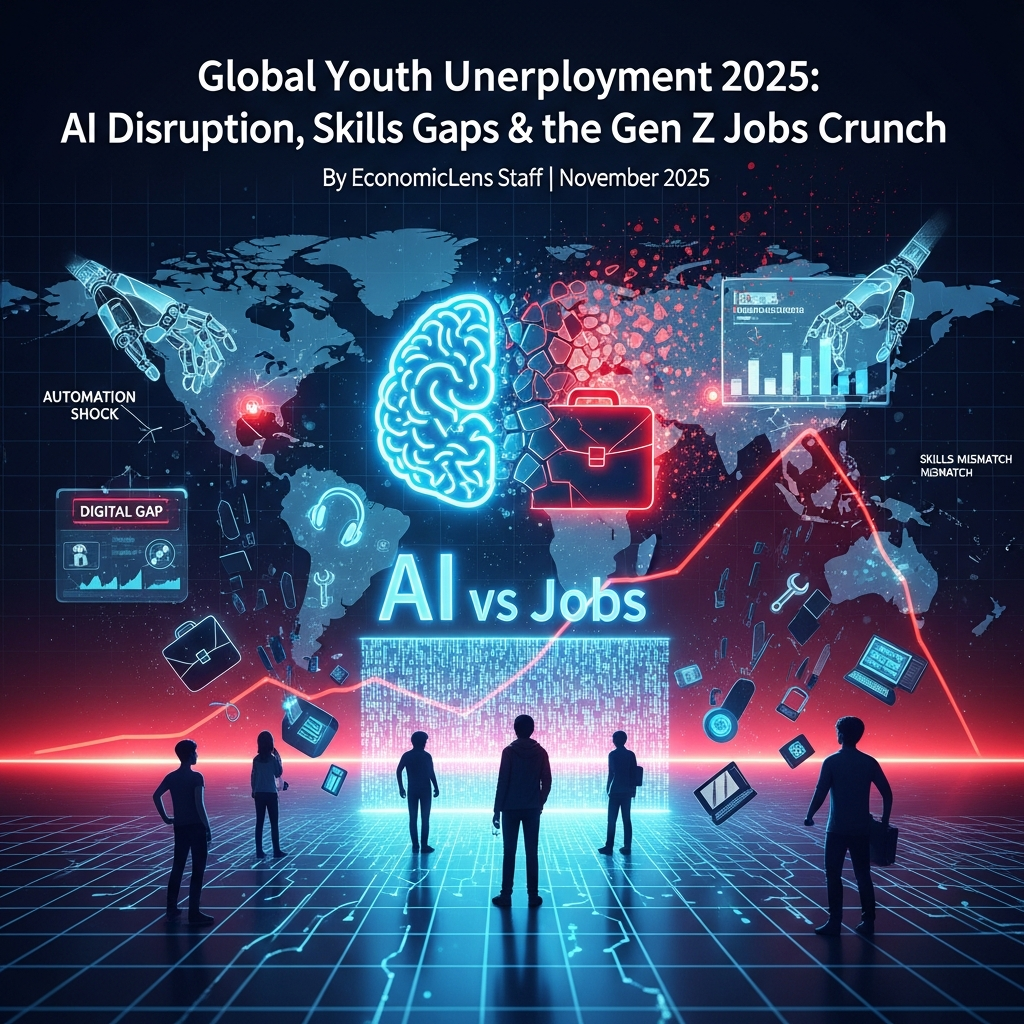
Global youth unemployment 2025 continues to rise as AI disruption, weak labor demand and widening skills gaps intensify pressure on Gen Z. This blog explains how automation, demographic stress, slow growth and migration trends combine to create a global employment crunch, reshaping youth labor markets across regions.
Introduction: Global Youth Unemployment 2025
The global youth unemployment 2025 landscape exposes deep structural challenges facing labor markets as demographic pressure, automation, weak job creation and widening skills gaps converge. With economies struggling to generate sufficient employment opportunities, young workers encounter significant barriers to entry in both formal and digital sectors. Consequently, the global Gen Z jobs crisis emerges as a defining labor market issue of the decade.
In the global youth unemployment 2025 outlook, AI driven automation accelerates displacement in entry level roles across services, retail, logistics and administrative fields. Meanwhile, education systems lag behind technological demands, widening the gap between market needs and available skills. Additionally, demographic surges in South Asia, Africa and the Middle East intensify competition for limited opportunities, influencing migration patterns and long term growth potential.
This blog examines the forces driving the youth jobs crisis through detailed data, regional analysis and expert perspectives. It explores the interaction between technology, demographics, skills and policy, offering insights into strategic pathways for creating employment resilience
1. Rising Youth Unemployment and the New Global Labor Shock
The global youth unemployment 2025 landscape reflects deep structural weaknesses as labor markets struggle to absorb a growing population of young workers amid slow growth, weak hiring cycles and rapid automation. Additionally, macroeconomic pressures limit job creation in both advanced and emerging markets. Meanwhile, demographic surges in South Asia, Africa and the Middle East intensify competition for limited opportunities. Consequently, the global Gen Z jobs crisis becomes a defining labour challenge with far reaching economic and social implications.
Expert Insight & Global Report Signals: Global Youth Unemployment 2025
ILO Senior Economist Richard Samans notes that automation increasingly affects entry level roles, reducing traditional pathways for youth employment. Furthermore, Brookings analysts highlight that wage stagnation and productivity decline limit upward mobility for young workers. Additionally, UNICEF labor researchers emphasize that rising NEET rates indicate growing disengagement among youth lacking both jobs and training opportunities.
The ILO Global Employment Trends 2025 records youth unemployment rising to 14.4 percent globally, with the strongest increases in MENA and South Asia. Meanwhile, the World Bank Human Capital Review 2025 warns that skills mismatches widen as education systems fail to adapt to technological change. Additionally, the OECD Skills Report highlights declining job security in advanced economies due to automation. The ILO Global Employment Trends for Youth 2025 report (https://www.ilo.org/global/publications) provides detailed evidence on rising NEET rates, youth labor stress, and structural unemployment patterns.
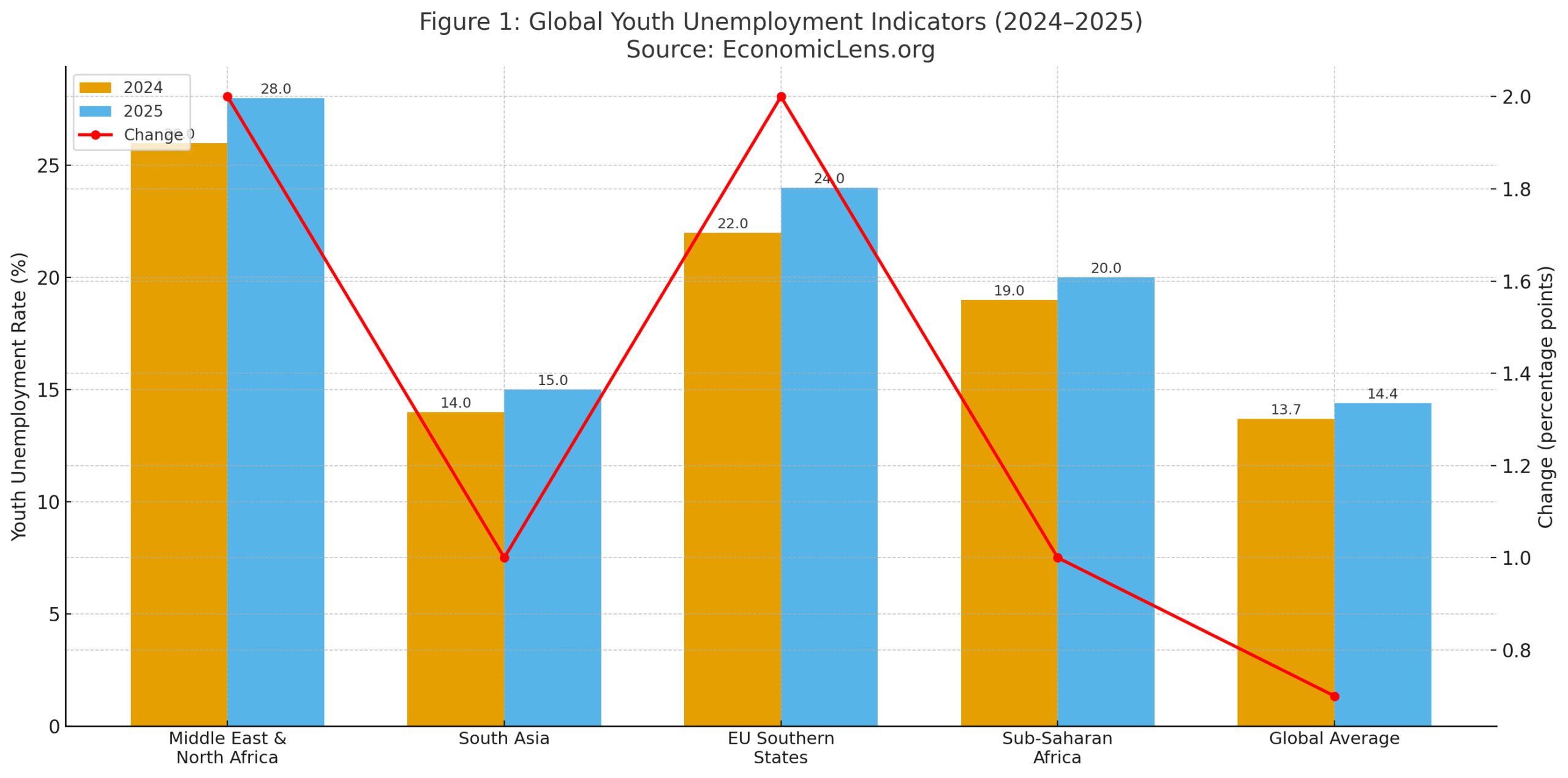
Youth unemployment rises across all major regions, reflecting structural weaknesses in labor markets. Consequently, demographic pressures, skills gaps and limited job creation combine to intensify the global Gen Z jobs crisis.
Youth Labor Crunch Spotlight: Egypt’s Employment Strain
Egypt’s youth population continues to expand rapidly, yet job creation remains insufficient to absorb new entrants. Economic reforms have slowed hiring in manufacturing and construction, while inflation reduces real wages. According to the African Development Bank, Egypt’s youth unemployment is projected to exceed 33 percent in 2025, driven by weak private sector absorption and rising migration intentions. Additionally, AI adoption in finance, telecom and retail reduces demand for routine jobs previously accessible to young workers. Consequently, Egypt stands at the center of the global youth unemployment 2025 challenge.
“A labor market under pressure reflects not only economic cycles but the slow pace of structural adaptation.”
2. AI Automation, Jobs Displacement and Skills Gaps
AI automation accelerates job displacement across sectors that traditionally offered entry level employment for youth. Service sectors including retail, hospitality, logistics, customer support and administrative work increasingly integrate AI enabled systems. Consequently, young workers face fewer opportunities in roles that previously required limited skills. Additionally, the digital skills gap widens as many education systems fail to provide coding, cloud tools and data literacy training aligned with market demand. Therefore, the global youth unemployment 2025 crisis becomes tightly linked to technological inequality.
A related analysis of how AI disruption reshapes global markets can be found in our report “AI Stock Market Bubble 2025: Big Tech Concentration & Global Market Risk” (https://economiclens.org/ai-stock-market-bubble-2025-big-tech-concentration-global-market-risk/).
Expert Insight & Global Report Signals: Global Gen Z Jobs Crisis 2025
WEF labor specialists note that 44 percent of youth exposed to AI automation lack the digital skills required to transition into new roles. Meanwhile, MIT Future of Work researchers highlight that algorithms replace routine decision making tasks faster than anticipated. Additionally, Accenture Workforce Transformation indicates that firms expect nearly 40 percent of entry level tasks to be automated by 2027.
The WEF Future of Jobs Report 2025 identifies data entry, call center support, accounting assistance and basic analytics as the most vulnerable youth occupations. Meanwhile, ILO Skills Transition Review confirms that digital divide issues limit the ability of young workers to shift into high demand sectors. Furthermore, OECD Skills Transformation 2025 warns that wage inequality grows as tech adoption accelerates. The WEF Future of Jobs Report 2025 (https://www.weforum.org/reports) highlights how AI and automation accelerate job displacement and transform entry-level roles worldwide.
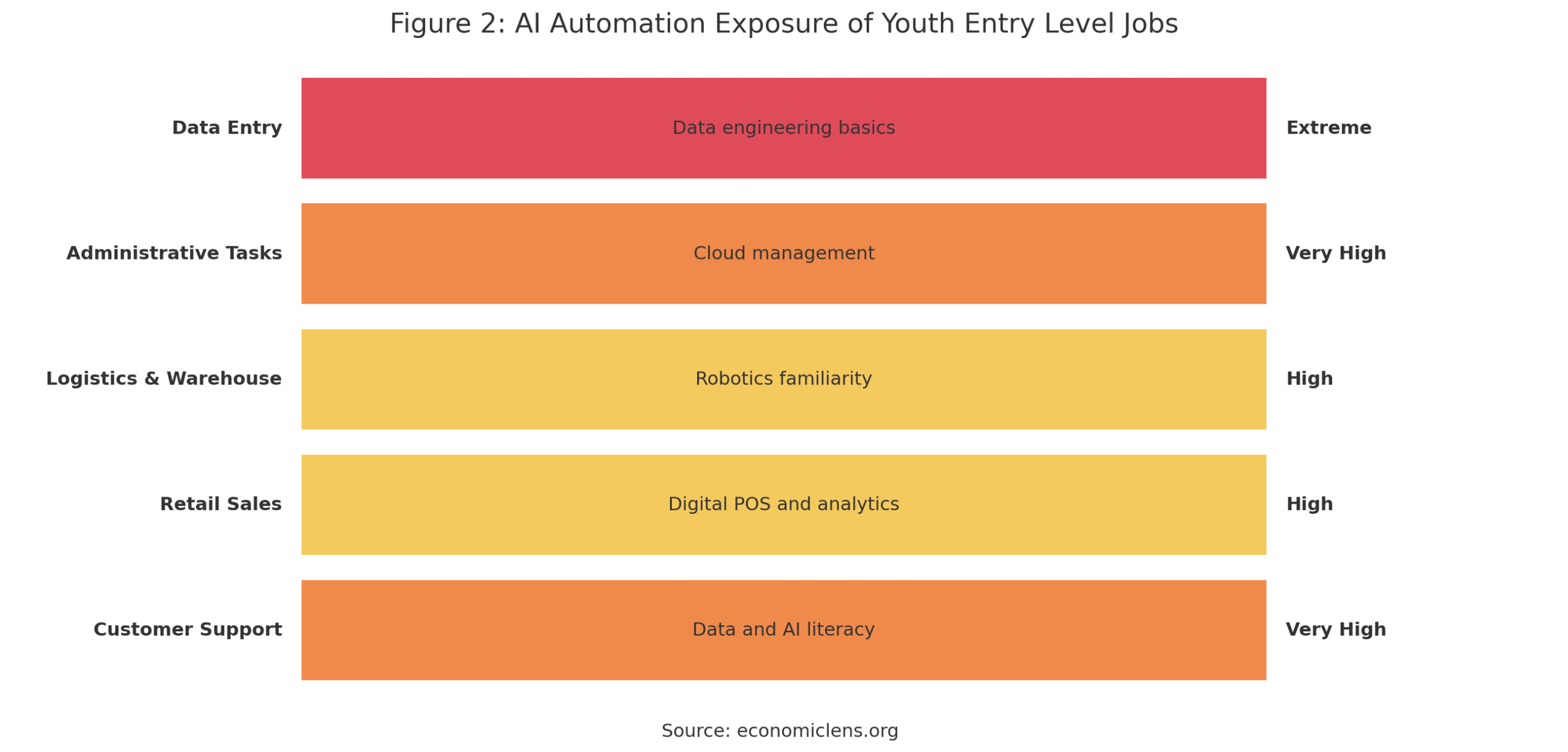
AI now impacts nearly all major entry level roles, increasing the need for technical and analytical skills. Consequently, skill gaps widen as traditional roles decline and new digital competencies become essential.
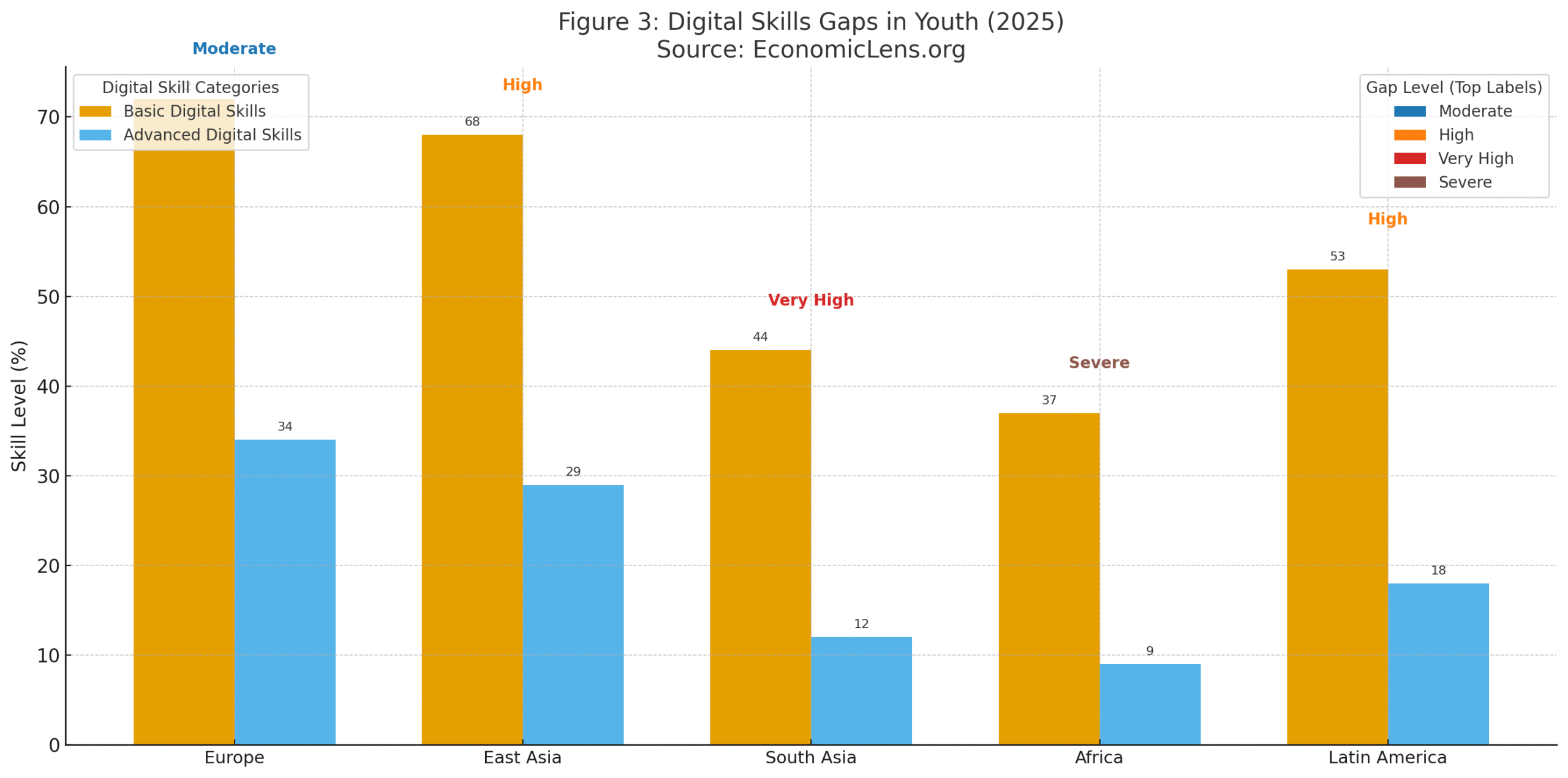
Digital proficiency gaps remain large across most regions, limiting youth readiness for AI driven labor markets. Consequently, access to training becomes a central policy priority.
Automation Disruption Insight: Call Center Jobs Vanish
AI voice systems reduce demand for entry level call center jobs across India, the Philippines and parts of Africa. According to Gartner, more than 25 percent of call center tasks are automated in 2025, lowering job availability for young workers. Meanwhile, firms shift to hybrid models that require advanced analytics and customer journey optimization skills. Consequently, workers without digital competencies face significant replacement risk.
“Automation does not eliminate all jobs, but it eliminates the easiest ones first.”
3. Regional Labor Pressures and Uneven Economic Exposure
The global youth unemployment 2025 crisis manifests unevenly across regions due to demographic pressures, industrial structures and economic resilience. South Asia and Africa experience strong population growth that outpaces job creation. Meanwhile, Southern Europe faces structural unemployment driven by sluggish industrial recovery. Additionally, North America and East Asia confront aging populations, yet youth labor markets remain stressed due to AI driven displacement. Consequently, the global Gen Z jobs crisis reflects both cyclical and structural vulnerabilities.
Expert Insight & Global Report Signals: Global Gen Z Jobs Crisis 2025
African Union labor specialists emphasize that Africa needs 25 million new jobs annually to absorb youth entrants. Meanwhile, EU labor researchers highlight that rigid labor markets in Southern Europe exacerbate youth unemployment. Additionally, ADB economists note that South Asia requires aggressive investment in digital infrastructure to support youth employment.
The UN DESA Population Review 2025 reports that Africa and South Asia together will account for more than 60 percent of global youth by 2030. Meanwhile, the World Bank Migration and Development Report identifies rising migration pressure from regions experiencing weak job creation. Additionally, OECD Regional Employment Scorecard confirms persistent youth unemployment pockets in Italy, Greece and Spain.
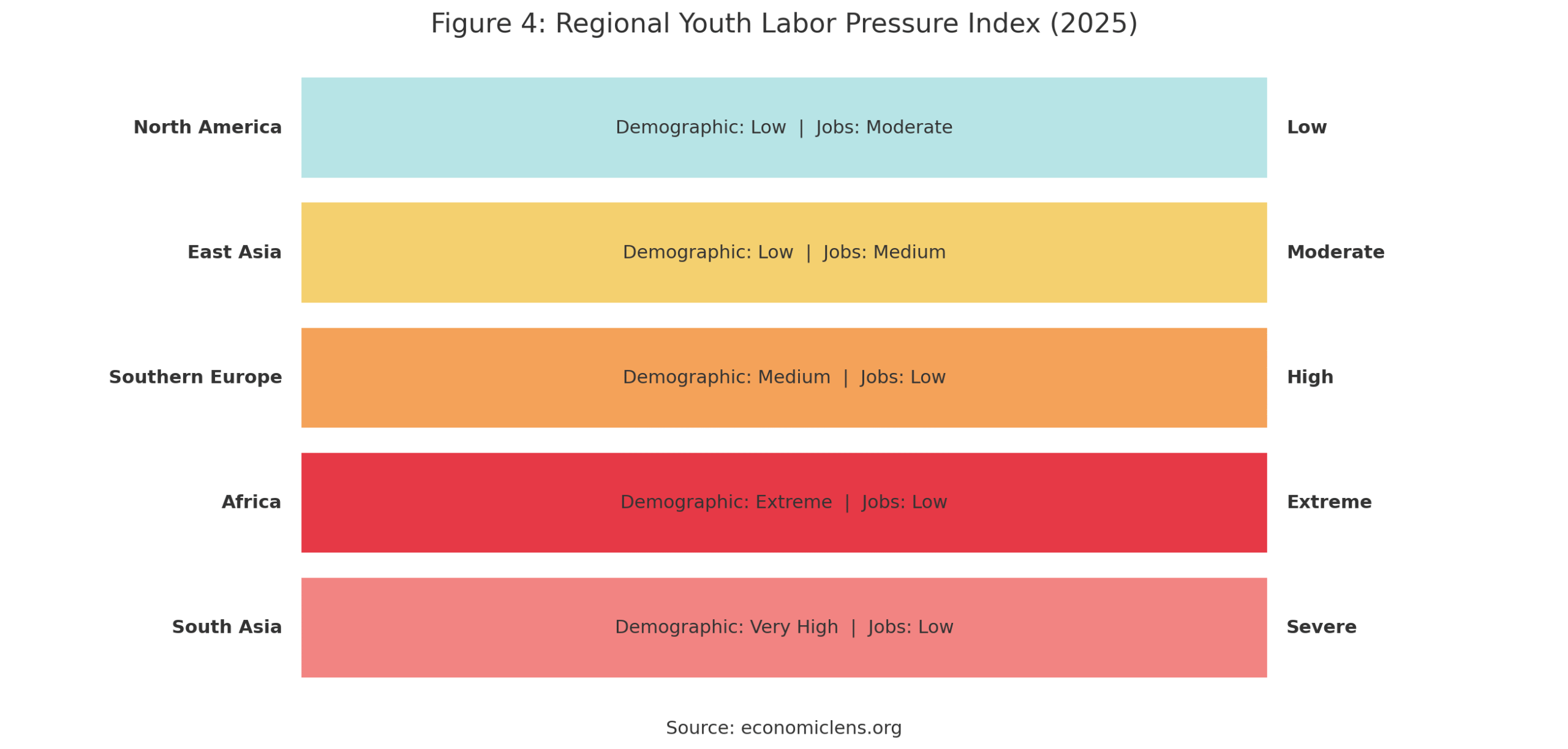
Labor pressure indicators show significant structural stress in South Asia and Africa, where job creation lags behind demographic expansion. Consequently, migration intentions rise as opportunities remain limited.
Regional Stress Brief: Nigeria at a Jobs Crossroads
Nigeria’s youth population expands rapidly, yet formal job creation remains insufficient. The oil sector faces low investment, manufacturing remains weak and services absorb fewer new entrants. According to the World Bank, Nigeria must create more than four million jobs annually to stabilize youth employment. Additionally, automation in banking and telecom reduces routine jobs. Consequently, Nigeria’s youth labor market pressures contribute significantly to the global youth unemployment 2025 narrative.
“Youth unemployment becomes a crisis when the youngest generation sees fewer paths forward than the generation before it.”
4. Migration, Brain Drain and Shifting Global Labor Flows
Migration intensifies as young workers seek better employment opportunities abroad due to weak domestic job markets. The global youth unemployment 2025 crisis accelerates outward migration from South Asia, Africa, Latin America and Southern Europe. Additionally, demand for skilled workers rises in North America, Europe and the Gulf, attracting youth with technical and vocational backgrounds. Consequently, brain drain becomes a central challenge for developing economies, while remittances play a stabilizing role.
Expert Insight & Global Report Signals: Youth Labor Market 2025
IOM analysts note that migration corridors continue to widen due to global labor shortages and demographic imbalances. Meanwhile, Gulf labor specialists highlight rising demand for technical roles in construction, energy and logistics. Additionally, European migration researchers warn that political constraints on migration may clash with economic needs for younger workers.
The World Bank Migration and Remittances Report 2025 records remittance flows reaching USD 870 bn globally, with South Asia and the Philippines as major beneficiaries. Meanwhile, UN Migration Data 2025 highlights growing skilled migration, especially in healthcare, engineering and digital services. Additionally, OECD Talent Mobility Review shows increased recruitment of AI, cybersecurity and cloud specialists.
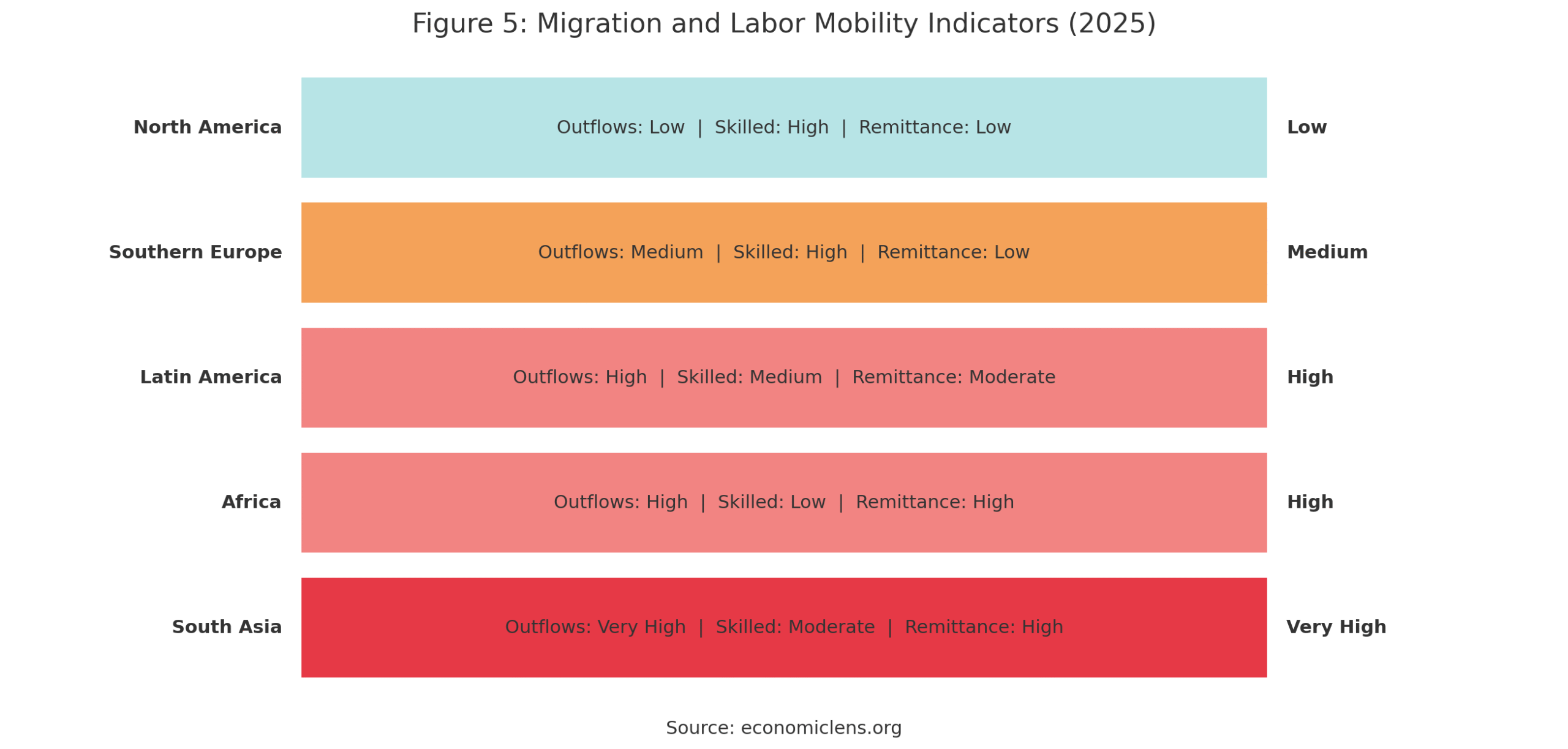
Migration indicators show rising outflows from regions with limited job creation and high demographic stress. Consequently, skilled workers increasingly relocate to advanced economies with stronger labor demand.
Global Mobility Insight: Philippines’ Skilled Exodus
Skilled migration from the Philippines accelerates as nurses, IT specialists and technical workers seek higher wages abroad. According to the Philippine Statistics Authority, outbound deployment grew by 12 percent in 2025 despite domestic improvements in the IT sector. This creates domestic skill shortages while supporting robust remittance inflows. Consequently, the Philippines remains a key contributor to global labor mobility patterns.
“Migration becomes a lifeline when opportunity fails to grow as fast as the youth who seek it.”
5. Policy Solutions, Education Reforms and Future Outlook
The global youth unemployment 2025 crisis requires integrated policy responses focused on digital education, vocational training, entrepreneurship support and targeted labor market reforms. Additionally, governments must align education systems with technological needs to prepare youth for AI driven economies. Meanwhile, international organizations emphasize the need for coordinated investment in human capital. Consequently, proactive strategies become essential to mitigate long term socio economic risks.
Expert Insight & Global Report Signals: Youth Labor Market 2025
WEF education strategists highlight that coding, cloud tools and data analysis must become core components of secondary and post secondary curricula. Meanwhile, ILO youth employment experts emphasize public private partnerships to scale apprenticeships. Additionally, UNESCO human capital analysts warn that countries failing to modernize education risk long term productivity stagnation.
The UNESCO Skills Readiness Report 2025 states that less than one fourth of countries have fully integrated digital literacy into national education frameworks. Meanwhile, World Bank Human Capital Update finds that vocational training programs produce strong employment gains when linked to industry demand. Additionally, OECD Youth Employment Framework highlights the effectiveness of apprenticeship linked pathways.
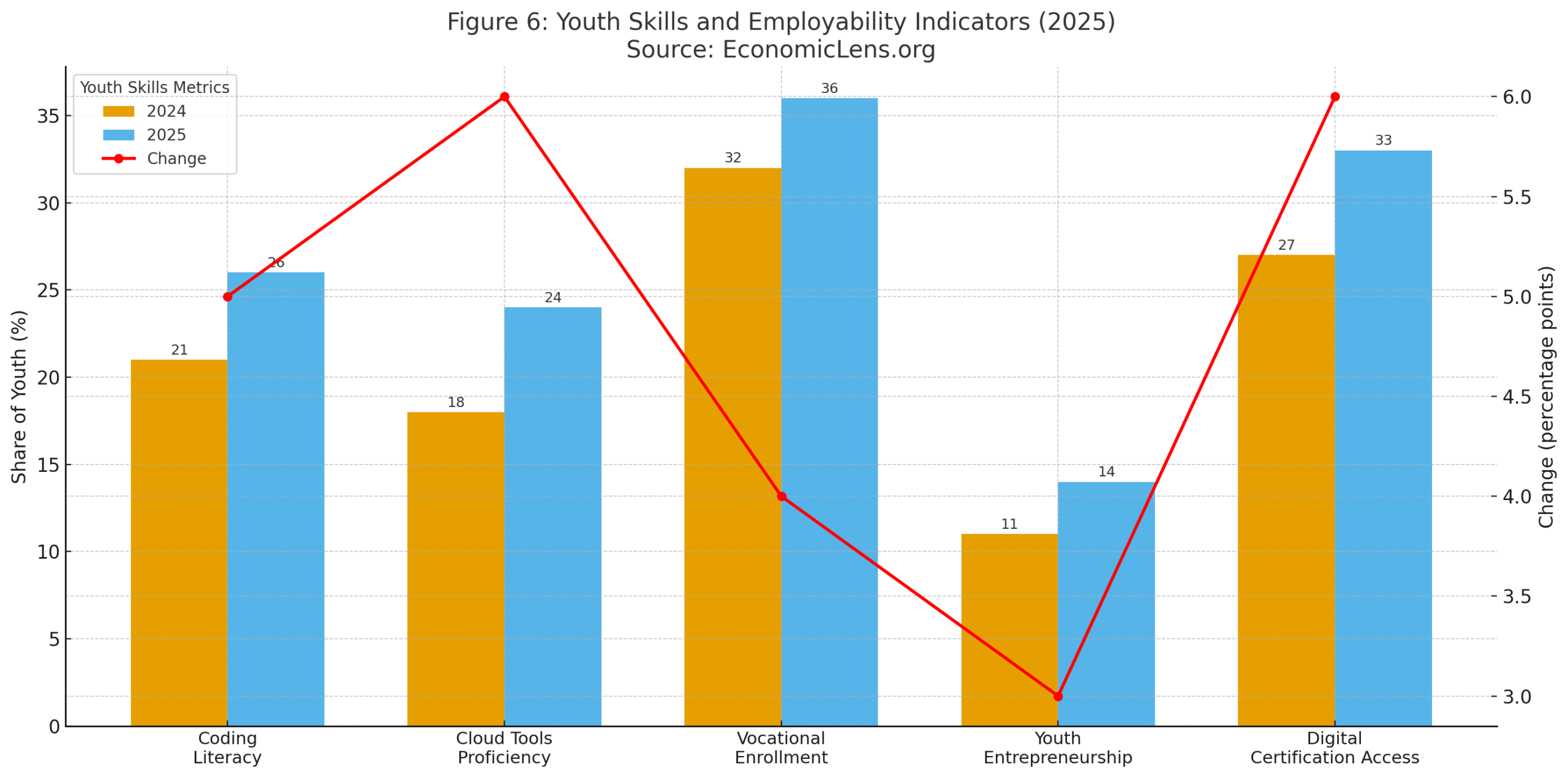
Skills indicators show gradual improvement in digital and vocational competencies. Consequently, youth employability increases in regions where training programs align with labor demand.
Skills Transformation Spotlight: India’s Training Surge
India expands its national digital literacy and vocational training programs, targeting ten million youth annually through public private initiatives. According to the Ministry of Skills, training modules in cloud computing, cybersecurity and AI enabled services record the fastest enrollment. Meanwhile, industries increasingly hire certified youth for entry level tech roles. Consequently, India strengthens its position as a global talent hub.
“The future of youth employment belongs to those who can build skills faster than the world transforms.”
Conclusion
Global youth unemployment 2025 highlights a structural challenge driven by demographic pressures, automation, weak job creation and widening skills mismatches. As AI adoption accelerates, entry level opportunities decline in sectors that once offered accessible pathways for young workers. Consequently, many economies confront rising NEET rates, increasing migration pressure and weakening productivity trends. Although regions such as South Asia and Africa possess large demographic potential, insufficient job growth limits the ability to harness this advantage. Furthermore, emerging skill demands require urgent education system reforms, deeper industry linkages and expanded digital training programs. Despite these challenges, opportunities exist in digital services, remote work ecosystems, green industries and vocational pathways. With targeted reforms, countries can mitigate risks and convert demographic surges into engines of long term growth.
For deeper context on how slow global growth intensifies employment stress, see “Global Economic Outlook 2025–2026: Slow Growth, Sticky Inflation & Rising Debt” (https://economiclens.org/global-economic-outlook-2025-2026-slow-growth-sticky-inflation-rising-debt/).
Call to Action
Policymakers, educators and industries must collaborate to redesign youth employment pathways for an economy reshaped by technology. Investments in digital skills, vocational training and innovation ecosystems are essential to prepare the next generation for fast evolving labor markets.




2 thoughts on “Global Youth Unemployment 2025: AI Disruption, Skills Gaps & the Gen Z Jobs Crunch”
Thanks for your efforts ❤️
Good Work 👍👏