
The KP social crisis is intensifying as demographic stress, youth vulnerability, poverty escalation and institutional breakdown accelerate human development collapse. Rising malnutrition, school dropouts, migration pressures and community fragmentation reveal a province under deep social strain. This blog explains how social vulnerabilities and demographic shocks are reshaping KP’s stability.
INTRODUCTION
The KP social crisis has reached a stage where the human development foundations of the province are collapsing faster than any model predicted. Poverty has surged past 48 percent. Multidimensional deprivation in merged districts has hit 68 percent. Malnutrition among children has worsened to 42 percent. These conditions place KP among the most vulnerable regions in the country. School dropout rates are climbing. Female unemployment has reached 41 percent. Moreover, more than 52 percent of households delay medical treatment because they cannot afford it.
Demographic pressure is straining every institution. With population growth at 2.7 percent, service delivery collapse at the district level and rising insecurity pushing families into displacement, communities are experiencing a slow-burning social breakdown. Youth fragility is deepening as 32 percent fall into the NEET category. Nearly 47 percent express intentions to migrate. As a result, a long-term demographic fracture is emerging across KP.
The KP social crisis is no longer a secondary outcome of economic and governance failures. It is now a primary force reshaping livelihoods, households, communities and the broader social fabric of the province.
Furthermore, the KP social crisis mirrors global human development emergencies in regions where poverty, demographic stress and weak public systems intersect. Many international development reports show that once social collapse begins, it spreads quickly across education, health, labor markets and community cohesion.
1. Human Development Breakdown and Poverty-Linked Social Collapse in the KP Social Crisis
Human development indicators across KP reveal an accelerating collapse. The human development index has fallen below 0.48 in several districts. School dropout rates have climbed to 36 percent. More than 19,000 schools lack basic facilities such as toilets, electricity and drinking water. Child stunting remains above 40 percent. These indicators show that the KP social crisis is manifesting as a widespread deterioration of basic human welfare.
Expert Insight & Global Report Signals
UNDP’s Human Development Report (https://hdr.undp.org) warns that regions experiencing simultaneous shocks in health, education and income typically fall into long-term human development stagnation. KP’s rising deprivation mirrors these global fragility patterns.
The World Bank’s Human Capital Index findings (https://www.worldbank.org/humancapital) reveal that provinces with weak school infrastructure, high dropout rates and low female participation suffer permanent economic losses due to skill depreciation. KP matches this high-risk profile.
FAO’s Nutrition and Food Security Review (https://www.fao.org/global-food-security) indicates that food inflation-driven malnutrition can set back a generation’s health and learning outcomes by decades. KP’s child malnutrition surge fits these global warnings and deepens the KP social crisis.
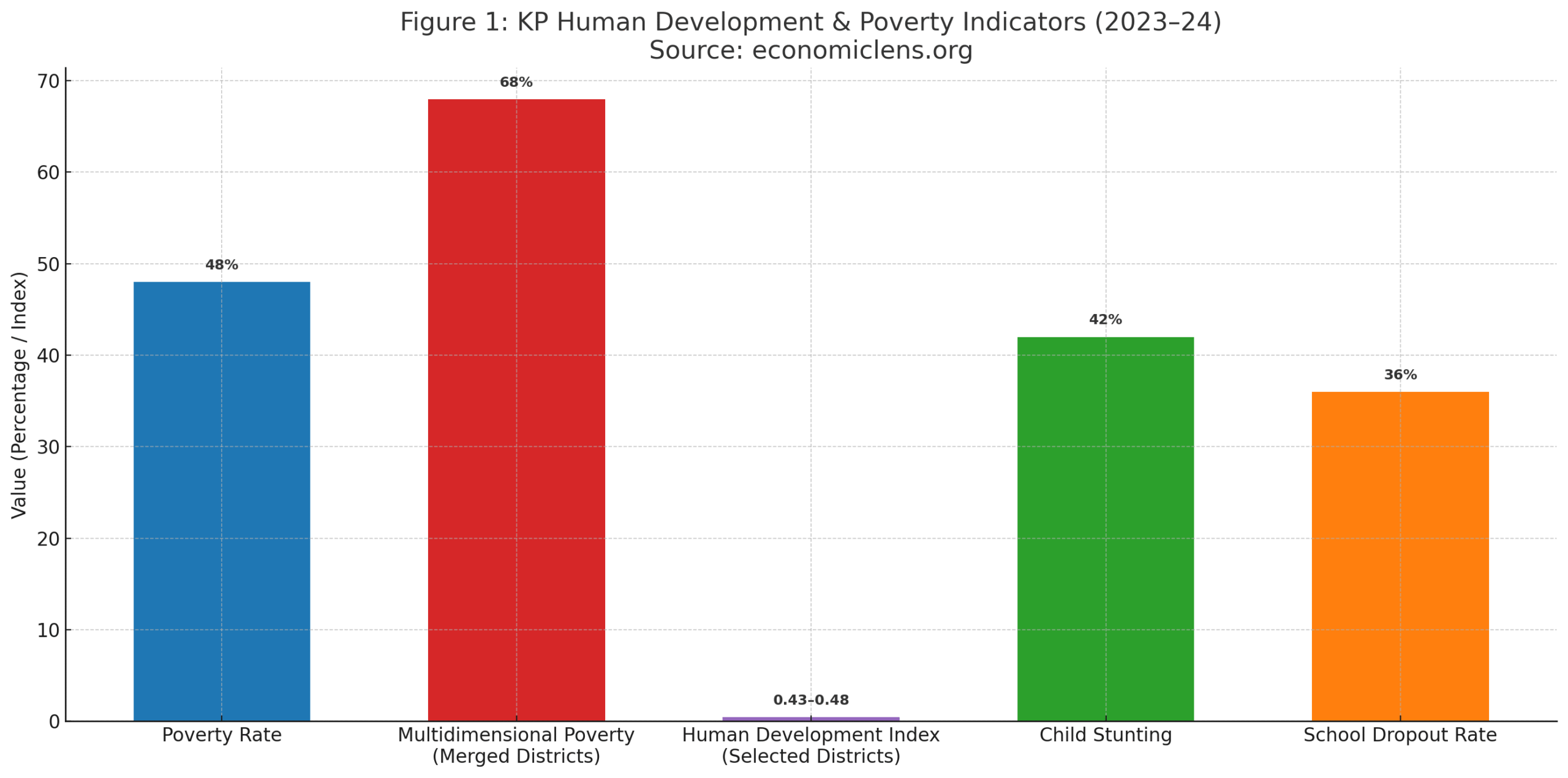
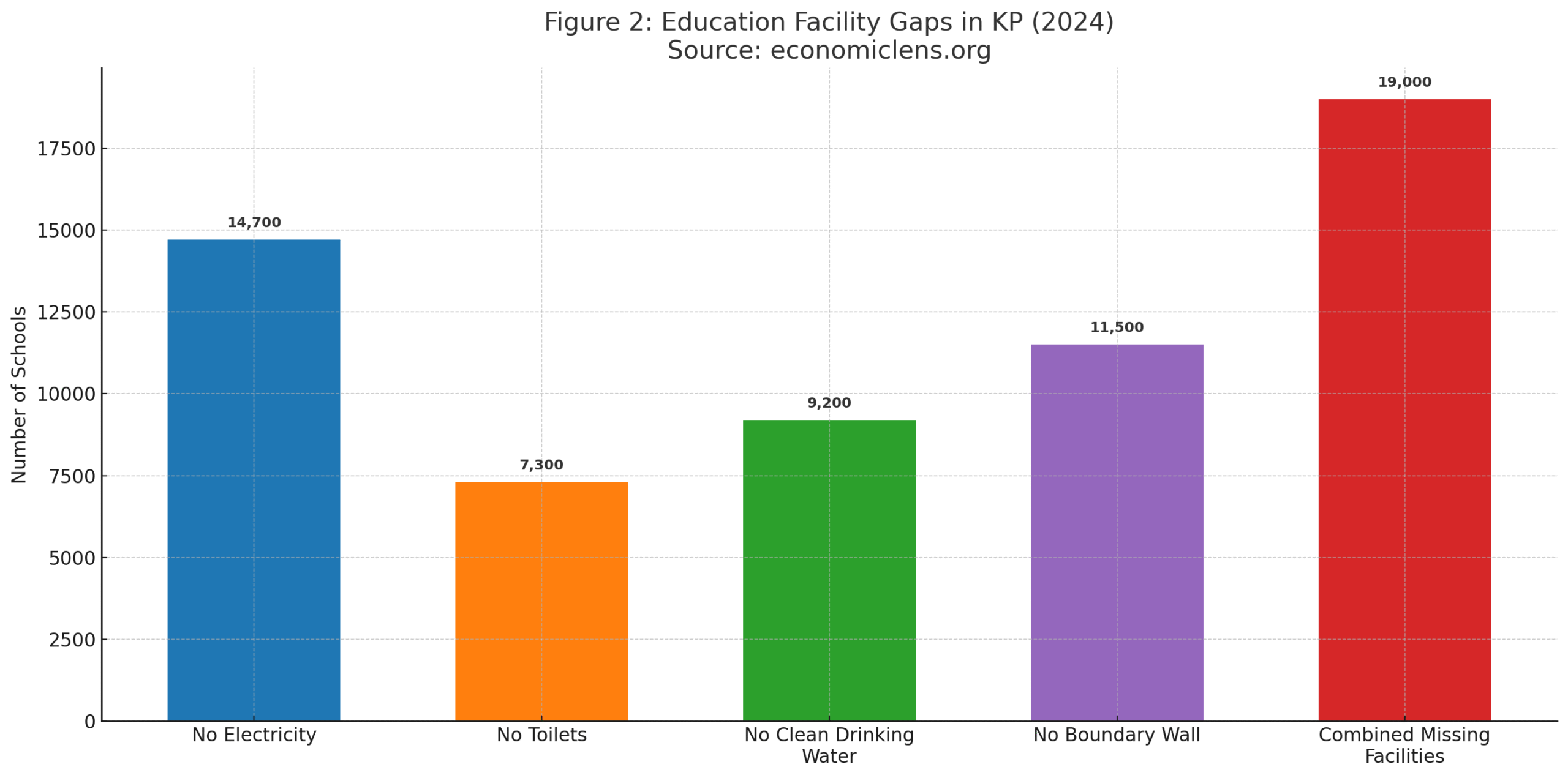
These indicators illustrate a province undergoing a deep social unraveling. Human development gains made over decades are being erased as poverty, malnutrition and education breakdown converge. The scale of missing school facilities is not a technical issue. It represents systemic institutional neglect that accelerates the KP social crisis.
Poor health, chronic malnutrition and weak education access create long-term irreversible losses in human capability. KP’s fragile social landscape is therefore not an extension of economic or governance pressures alone. It is evidence of a human development emergency unfolding in real time.
Sudan HDI Breakdown: Lesson for the human development crisis KP
Sudan’s human development breakdown provides a compelling parallel. According to UNDP, Sudan experienced simultaneous surges in poverty, malnutrition and school dropout rates during its crisis years. The World Bank found that 41 percent of Sudanese children were stunted. This matches KP’s alarming conditions.
Sri Lanka’s human development reversal during its 2022 collapse also demonstrates how quickly social indicators fall when institutions weaken. Moreover, Haiti’s prolonged development decline shows how malnutrition and weak schooling systems generate long-term, irreversible human losses. These global examples highlight how the KP social crisis fits broader global patterns of structural human vulnerability.
“If human development continues collapsing at this pace, KP will enter a multi-generational crisis where poverty, malnutrition and educational deficits permanently limit the province’s future potential.”
2. Demographic Pressure, Urban Overcrowding and Social Vulnerability Under the KP Social Crisis
Demographic pressure in KP has reached a breaking point as rapid population growth, internal displacement and urban overcrowding strain already fragile social systems. KP’s population growth rate of 2.7 percent exceeds the national average. Districts like Peshawar and Nowshera report density increases of 34 to 41 percent within a decade. More than 410,000 individuals have been internally displaced due to insecurity and border disruptions. These demographic shifts are major accelerators of the KP social crisis, creating stress that weak institutions are unable to absorb.
Expert Insight and Global Signals
UNDP’s Population Stress Index (https://www.undp.org) notes that rapid population growth without corresponding institutional capacity leads to service delivery breakdown and rising vulnerability. KP’s demographic spike fits this global pattern.
The World Bank’s Urbanization and Development Review (https://www.worldbank.org/urban) highlights that when cities grow faster than municipal infrastructure, housing shortages, slum expansion and sanitation failures intensify. Peshawar’s overcrowding reflects these trends.
UNHCR’s Displacement and Social Pressure Report (https://www.unhcr.org) confirms that internal displacement creates economic and social strain on host communities. It stretches health, schooling and welfare systems. KP’s displacement surge contributes directly to the expanding KP social crisis.
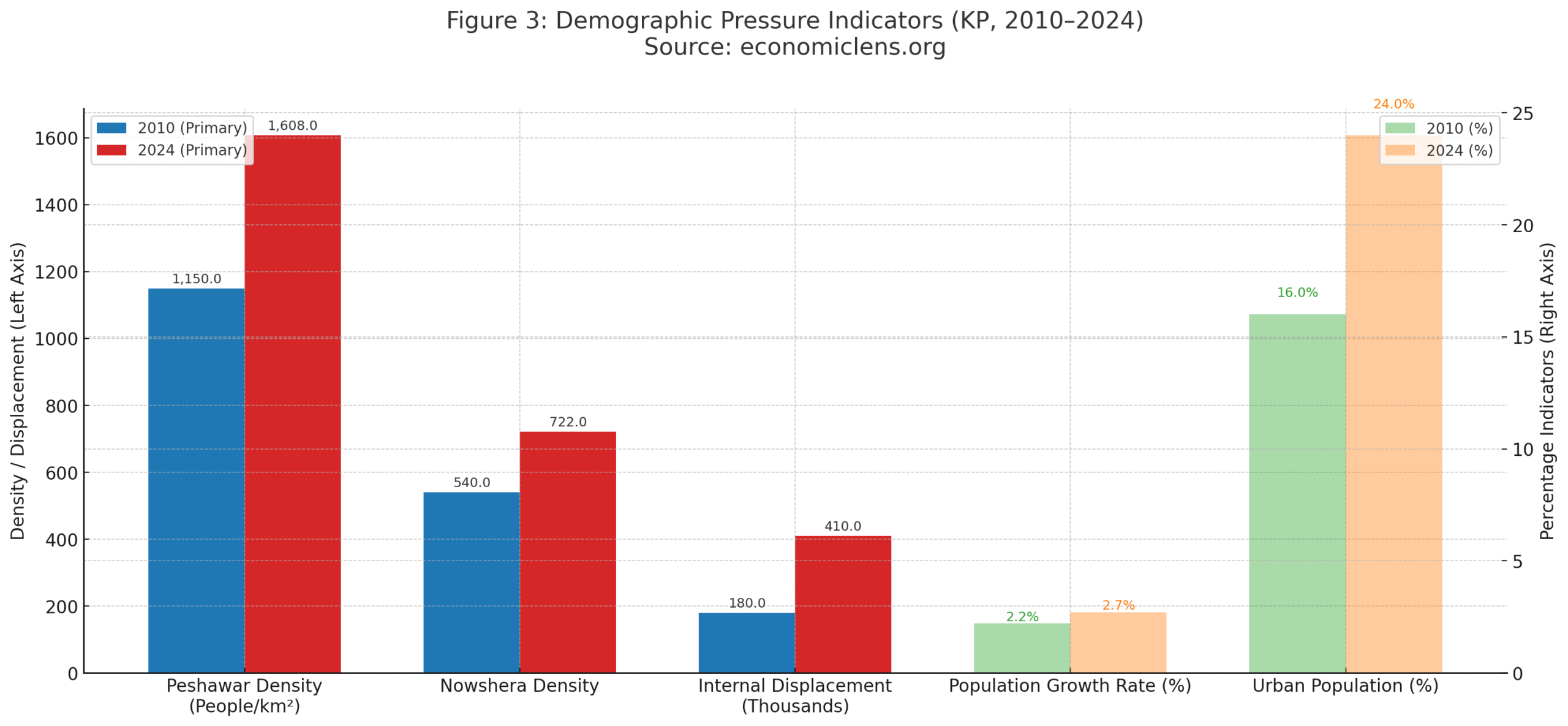
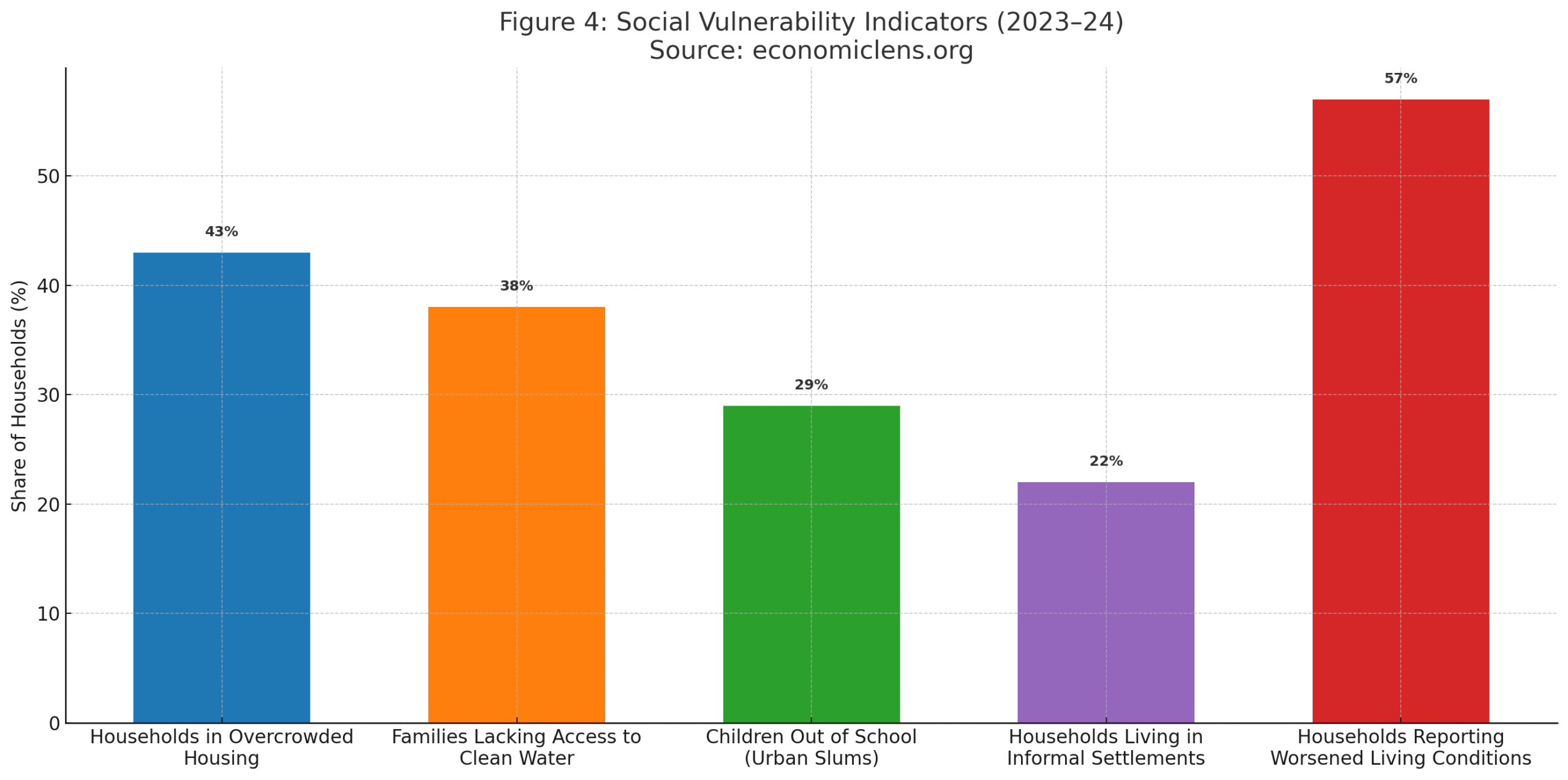
The rapid rise in population density, coupled with internal displacement, has created a demographic pressure cooker. Overcrowding in urban areas, rising informal settlements and collapsing sanitation systems reveal how demographic stress deepens the KP social crisis. Peshawar, Swat and Nowshera now experience severe strain on health services, water supply and urban housing. This pressure affects vulnerable households the most. Consequently, communities face structural instability that makes recovery slower and more fragile.
The influx of displaced households places overwhelming pressure on municipal systems that already operate with inadequate financing and weak administrative support. Without structured interventions, demographic stress will continue destabilizing community well-being. It will also accelerate the collapse of social safety networks that many families rely on.
Rohingya Displacement Shock: Lesson for demographic stress in KP
Bangladesh’s Rohingya-host migration crisis provides a powerful global parallel. According to UNHCR, the influx of displaced populations placed enormous pressure on Bangladesh’s schools, health systems and urban housing. Turkey and Syria experienced similar strain after post-earthquake displacement, where cities already struggling with basic services absorbed hundreds of thousands of vulnerable people. Lebanon’s overcrowding crisis likewise demonstrates how weak infrastructure collapses under population stress. These global cases mirror the demographic pressure shaping the KP social crisis.
“If demographic pressures continue rising without strengthened institutional capacity, KP will face irreversible urban collapse that deepens the social crisis and destabilizes vulnerable communities across the province.”
3. Health and Nutrition Emergency Under the KP Social Crisis
The health system in KP is failing under the weight of escalating social vulnerability. More than 52 percent of households delay medical treatment because they cannot afford costs. Additionally, 34 percent of healthcare facilities report non-functional rooms, staff shortages or equipment failures. Malnutrition among children stands at 42 percent. Immunization coverage has fallen below 65 percent in several merged districts. These indicators reveal how the KP social crisis is intensifying into a full-scale health and nutrition emergency.
Expert Insight & Global Report Signals
WHO’s Essential Health Service Disruption Index (https://www.who.int) warns that prolonged service collapse leads to higher mortality, reduced immunization and widening health gaps. KP’s facility failures fall into this risk zone.
UNICEF’s Global Nutrition Report (https://www.unicef.org) highlights that child stunting levels above 30 percent reflect severe long-term cognitive and economic losses. KP’s figure of 42 percent signals a deep emergency.
The World Bank’s Health Systems Strengthening Assessment (https://www.worldbank.org/health) indicates that regions with weak primary care, delayed treatment and rising malnutrition often face multi-generational development setbacks. KP now fits this global profile.
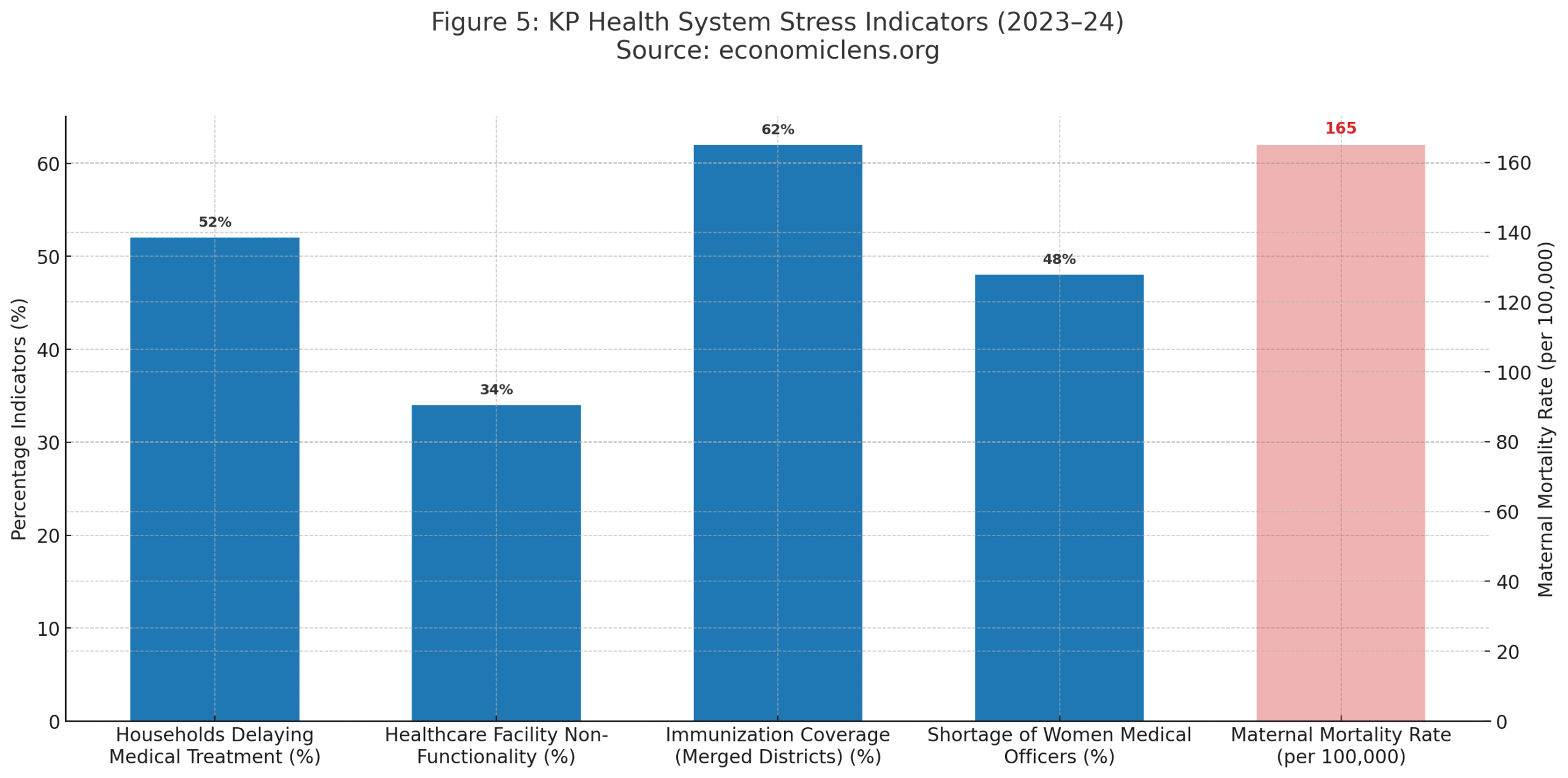
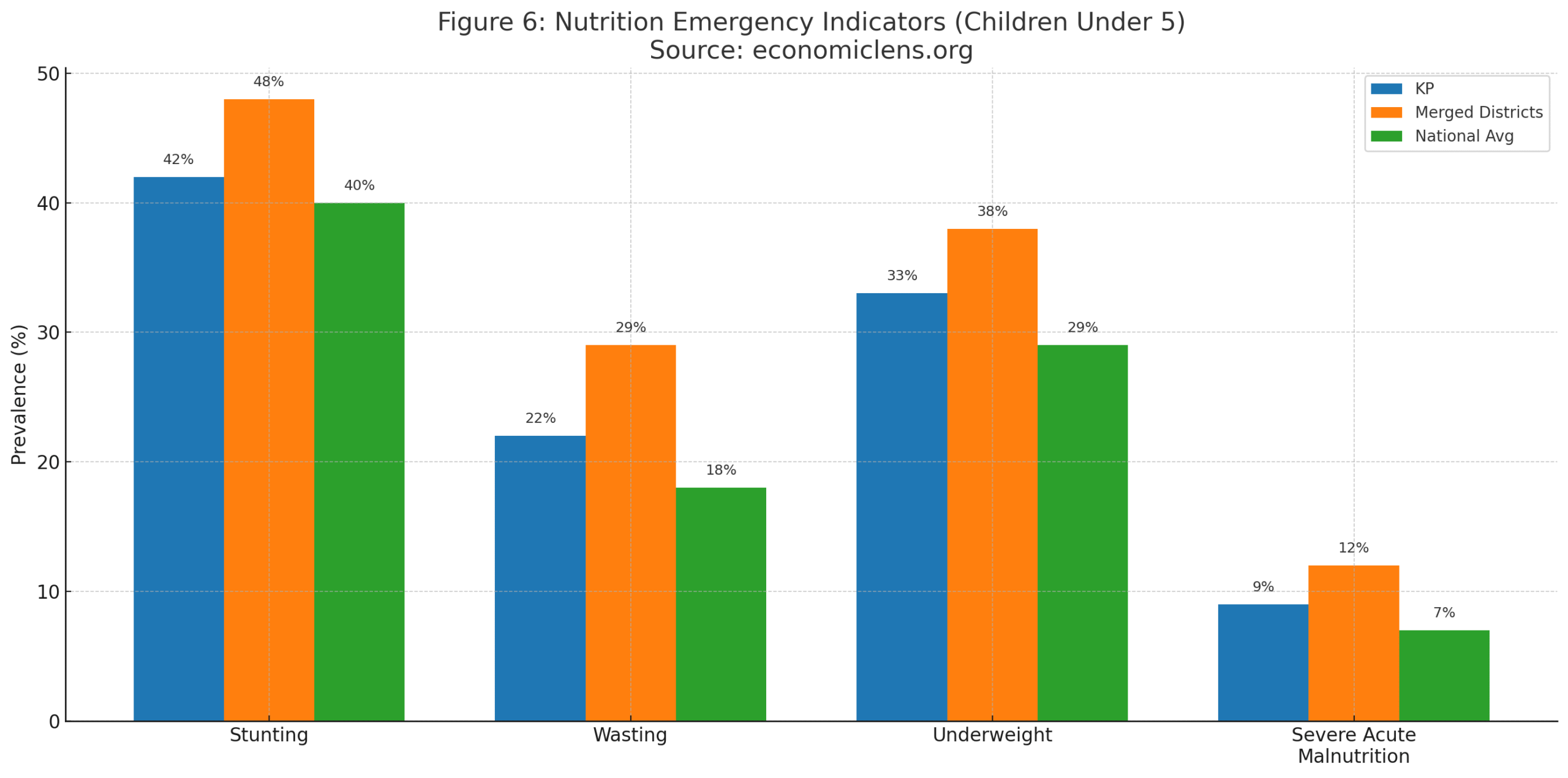
The health and nutrition emergency reflects deep systemic failure. The inability of hospitals and BHUs to provide basic care forces families to delay treatment. This delay results in preventable suffering and long-term health deterioration. Malnutrition levels are catastrophic. They affect cognitive development, school readiness and long-term productivity. Children in merged districts face even greater risks due to weak infrastructure and chronic deprivation.
This collapse in service delivery is closely connected to the broader governance breakdown documented in the KP governance crisis analysis
(https://economiclens.org/kp-governance-crisis-security-turmoil-border-disruptions-and-institutional-decay/).
Weak institutional systems amplify every dimension of the KP social crisis, including health and nutrition outcomes.
Yemen Health System Collapse: Lesson for the KP social crisis
Yemen’s health collapse provides a stark parallel. According to WHO, over half of Yemen’s health facilities became partially or fully non-functional during periods of instability. Somalia’s drought-driven malnutrition crisis similarly shows how fragile health systems collapse under environmental and political pressure. Gaza’s 2024 health system strain demonstrates how service breakdown under conflict severely reduces access to lifesaving care. KP is showing early signals of similar structural deterioration.
“If health and nutrition failures continue rising, KP risks entering a prolonged humanitarian emergency where basic human survival becomes the central challenge for millions.”
4. Gender Inequality, Social Mobility Collapse and Women’s Vulnerability
The gender dimension of the KP social crisis is rapidly worsening. Female unemployment has surged to 41 percent. Female literacy remains stuck at 36 percent. Women’s labor force participation stands at a critically low 18 percent. Health indicators are even more alarming. Nearly 48 percent of facilities lack women medical officers. Maternal mortality is rising to 165 deaths per 100,000. These structural barriers limit education, mobility, healthcare access and economic opportunity.
Expert Insight & Global Report Signals
UN Women’s Gender Inequality Review (https://www.unwomen.org) shows that regions with high female unemployment and low literacy experience slower economic recovery and deeper social instability. KP reflects this risk.
The World Bank’s Gender Employment Gap Report (https://www.worldbank.org/gender) highlights that gender inequality leads to reduced household income, higher child malnutrition and weakened community resilience.
ILO’s Women and Work Analysis (https://www.ilo.org/global) confirms that labor force participation below 20 percent correlates with long-term human development decline. KP’s indicators show the same structural danger within the KP social crisis.
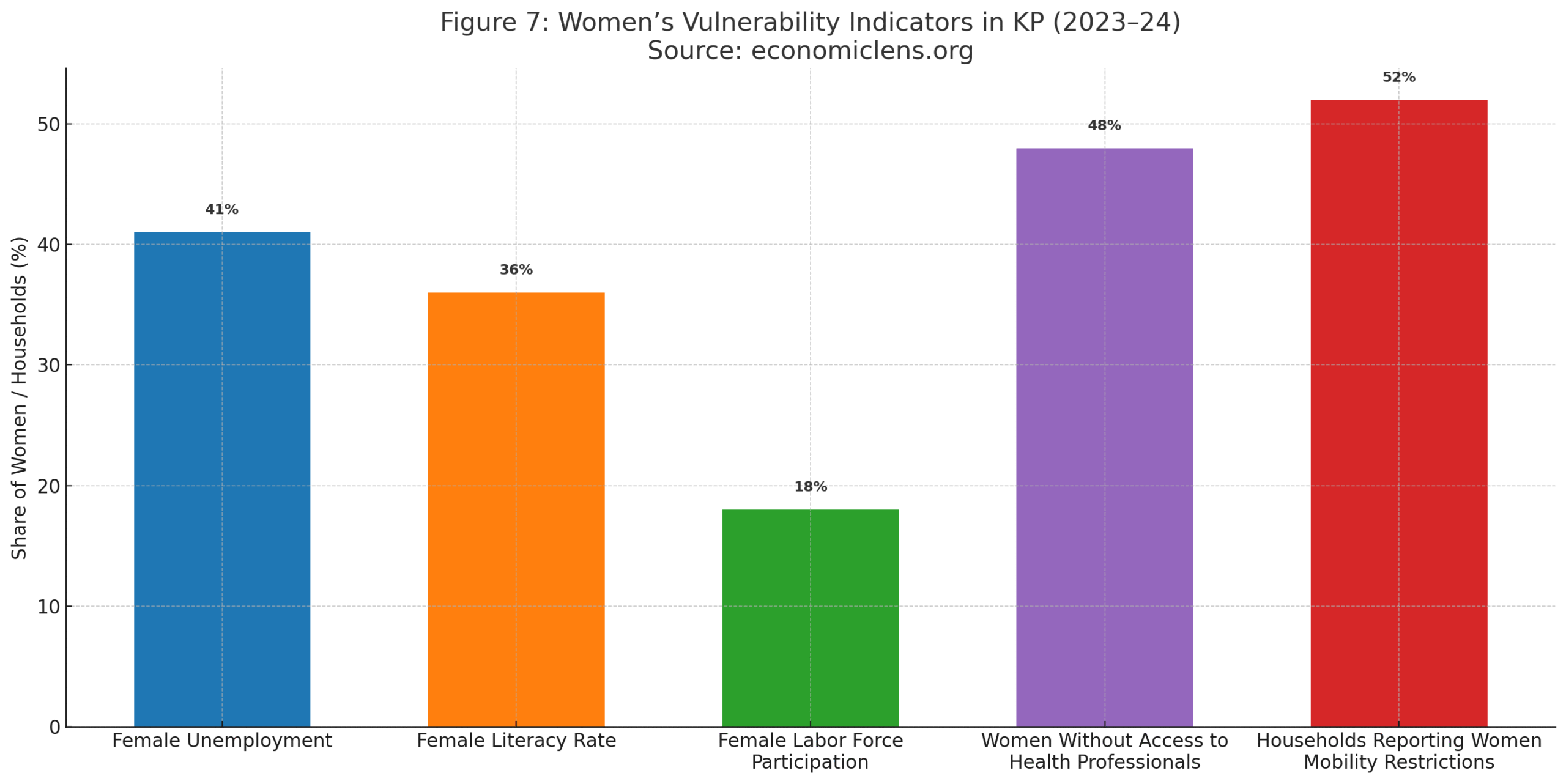
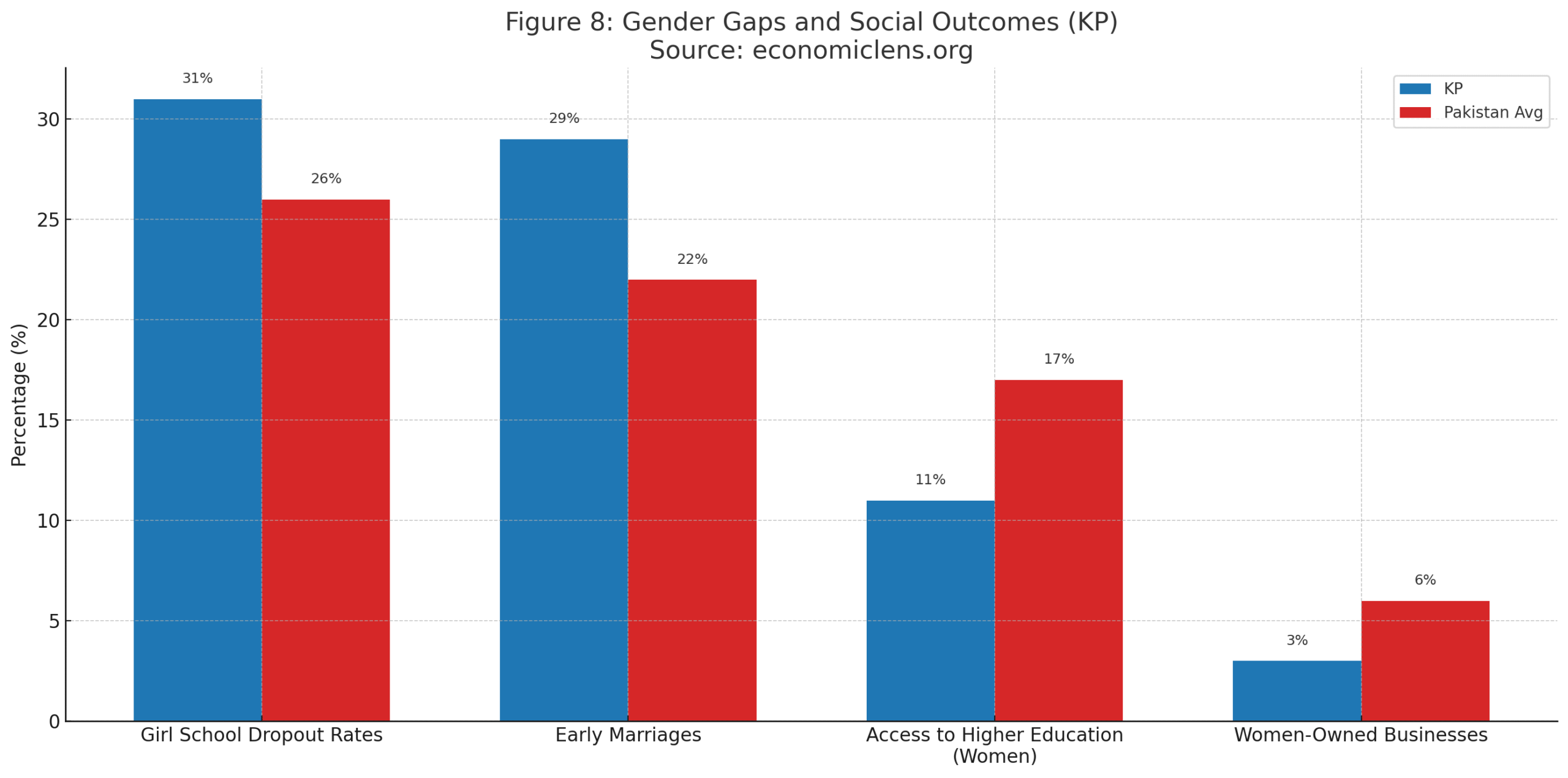
The gender gap in KP is not merely a social inequality issue. It is a structural factor that deepens poverty, reduces household resilience and accelerates inter-generational vulnerability. Lower literacy, limited mobility and lack of economic participation trap millions of families in cycles of deprivation. Female unemployment at 41 percent drastically reduces household income potential. Maternal health gaps and limited female representation in health services worsen the KP social crisis by increasing risks for children, families and communities.
Afghanistan Gender Restrictions: Lesson for social collapse in KP
Afghanistan’s gendered development collapse illustrates how restricting women’s participation leads to long-term social decline. Iran’s female unemployment pressures create widening household vulnerability. Nigeria’s maternal health struggles reveal how weak institutions deepen gender-specific risks. Similar conditions are emerging in KP as female exclusion accelerates social fragility.
“If gender inequality continues growing, KP will face a generational collapse in education, health and income that will permanently weaken the province’s social and economic foundations.”
5. Social Fragmentation, Informal Justice and Community Breakdown
KP is witnessing a rapid rise in social fragmentation as communities lose trust in state institutions and turn increasingly toward informal systems. Public reliance on informal justice mechanisms has surged to 41 percent. Citizen trust in institutions has collapsed to 23 percent. Complaints to ombudsmen and administrative petition bodies have risen by 164 to 184 percent. This shift toward non-state structures is a defining signal of the deepening KP social crisis.
Expert Insight & Global Report Signals
OECD’s Social Fragmentation Review (https://www.oecd.org/governance) warns that when formal institutions lose legitimacy, informal networks take over dispute resolution and resource allocation. This undermines state authority and weakens social cohesion.
UNDP’s Social Cohesion Index (https://www.undp.org) highlights that social fragmentation increases violence, weakens civic trust and accelerates community-level instability.
The World Bank’s State Fragility Framework (https://www.worldbank.org/fragility) confirms that declining trust and rising informal justice use are strong predictors of long-term social and political instability. These trends are now visible in the KP social crisis, particularly in conflict-prone areas.
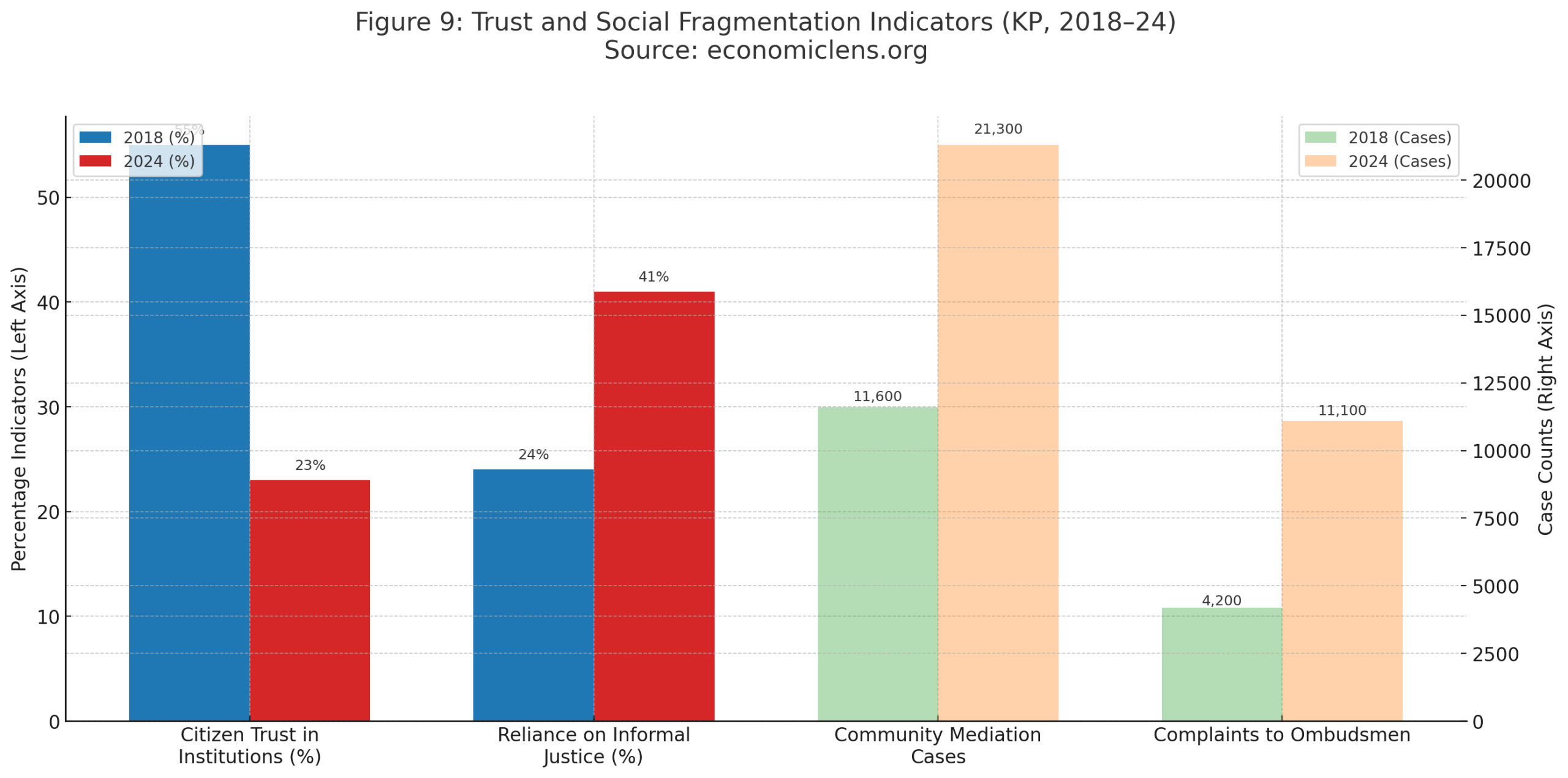
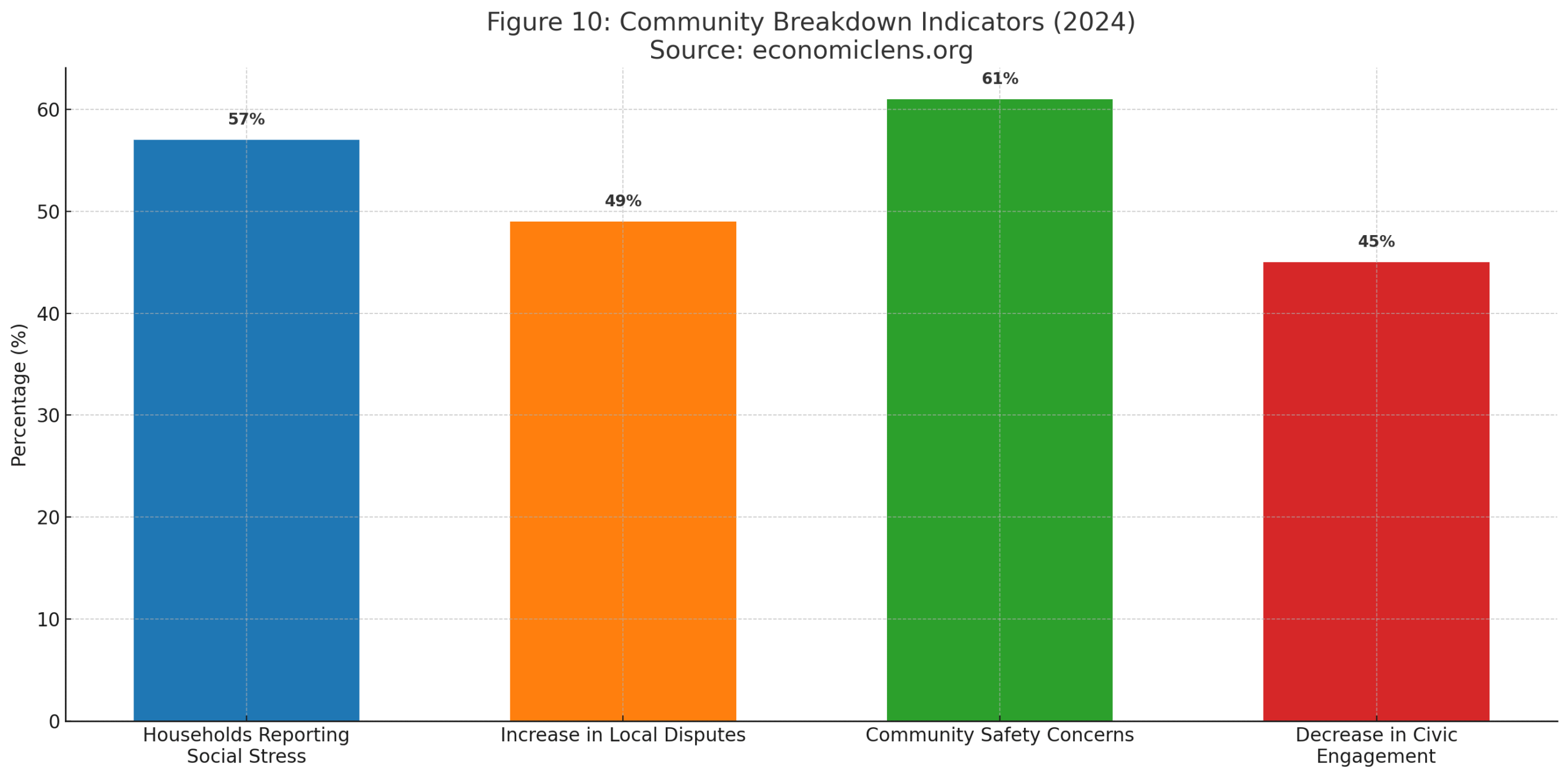
Social fragmentation reveals the full depth of the KP social crisis, where weak institutions no longer mediate disputes or provide support. Families rely on informal justice systems because they perceive state institutions as ineffective and disconnected. As community safety deteriorates, households become socially isolated, reducing trust and increasing vulnerability.
This pattern of declining institutional trust connects directly with the broader governance weaknesses documented in the KP governance crisis study
(https://economiclens.org/kp-governance-crisis-security-turmoil-border-disruptions-and-institutional-decay/).
The erosion of institutional credibility fuels social fragmentation and expands the influence of informal systems across the province.
Kenya Informal Justice Surge: Lesson for institutional strain in the KP social crisis
Kenya’s informal justice surge provides a global mirror to KP’s situation. According to the World Bank, rising distrust in formal institutions pushed nearly 40 percent of rural communities toward informal dispute systems. South Africa has also seen increased dependence on community councils as citizens lose faith in state mechanisms. Guatemala’s widespread use of informal mediation further demonstrates how fragile states gradually lose authority to local actors. KP is now moving in a similar direction as institutional trust erodes.
“If social fragmentation continues deepening, KP will face an irreversible erosion of community cohesion that undermines both state legitimacy and social stability.”
Policy Pathway: Rebuilding Social Resilience Under the KP Social Crisis
KP needs an aggressive and multi-layered social restoration strategy. The province must strengthen school infrastructure and expand nutrition programs. It must also scale up targeted cash transfers to stabilize households under stress. Primary healthcare and maternal services must be upgraded to reverse rising malnutrition and mortality rates.
Local governments require predictable financing to rebuild urban services, water systems and sanitation networks. Youth-focused interventions such as skills training, community engagement programs and safe public spaces are essential to reduce vulnerability and restore social mobility. Women’s participation must be expanded through improved education access, healthcare investment and safety reforms that enable economic inclusion.
Social cohesion programs built around community mediation, dispute resolution centers and neighborhood governance structures will help restore trust and reduce fragmentation. These interventions are essential for rebuilding the social fabric and limiting the long-term impact of the KP social crisis.
“KP must rebuild its social foundations now, or the province risks permanent human development losses that will shape its next generation’s fate.”
Conclusion
The KP social crisis has evolved into a multidimensional collapse of human development, community resilience and demographic stability. Malnutrition, weak education systems, gender inequality, demographic pressure and social fragmentation reveal a province facing deep structural vulnerability. Consequently, KP’s social landscape is now shaped by overlapping crises that reinforce each other.
Global evidence shows that once social systems collapse across health, education and community cohesion, recovery becomes slow, fragile and incomplete. KP now stands at that threshold. Its institutions, households and communities face sustained pressure that could define the province’s long-term trajectory.
Only a coordinated social restoration effort, backed by strong institutions and sustained investment, can prevent long-term generational damage. Without decisive action, the province risks entering a period of irreversible social decline.