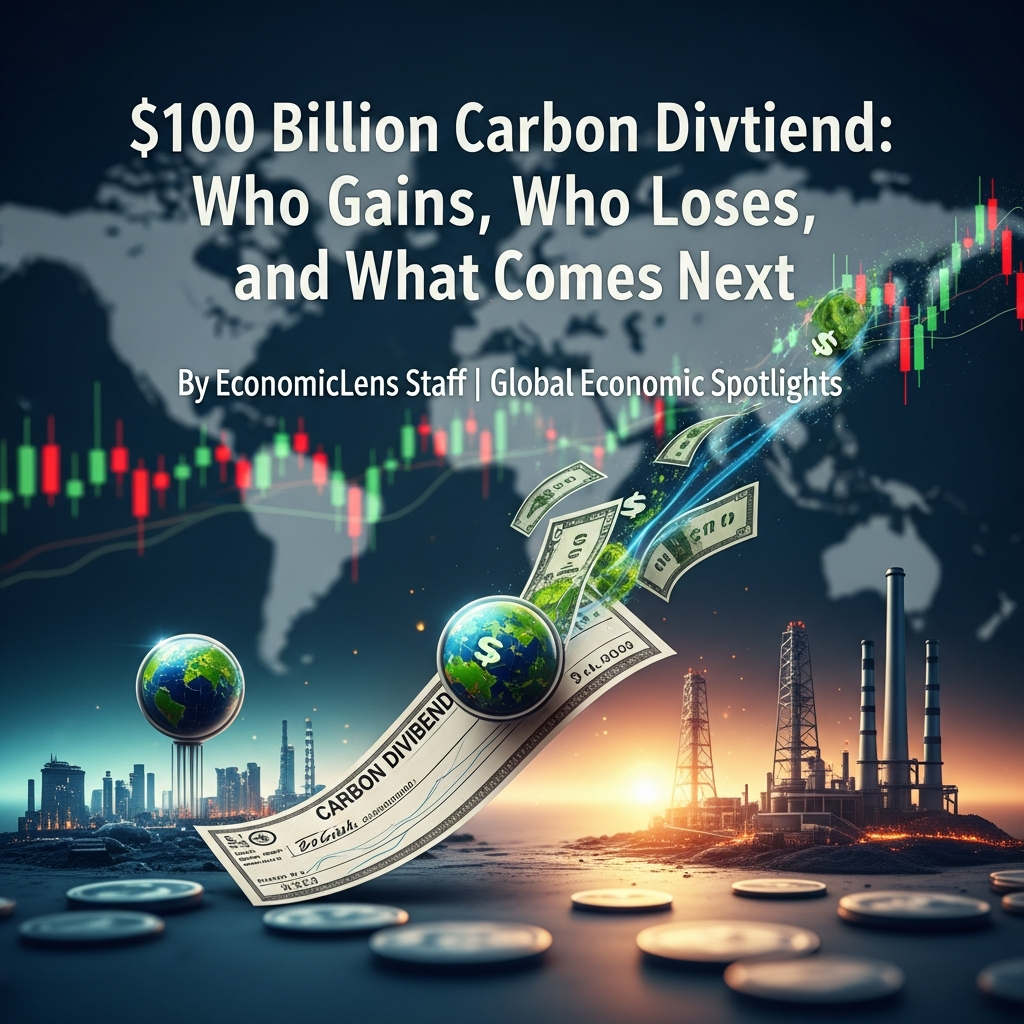
Carbon dividend revenues surpassed $100 billion in 2024, marking a turning point in global climate finance. This analysis explains how governments use carbon pricing revenues, who benefits from them, where transparency gaps persist, and why governance now defines net-zero success.
Introduction
The global carbon dividend has reached a historic milestone. In 2024, carbon taxes and emissions trading systems generated more than $100 billion in revenue, confirming that carbon pricing has moved beyond the margins of climate policy. Policymakers now treat it as a core fiscal and economic instrument. This shift coincides with structural changes in energy markets, where renewables overtaking coal are reshaping global growth patterns
https://economiclens.org/renewables-overtake-coal-as-the-green-energy-transition-reshapes-global-growth/
According to the World Bank, broader emissions coverage and higher effective carbon prices across jurisdictions drove this revenue surge https://www.worldbank.org/en/publication/state-and-trends-of-carbon-pricing.
More than 70 countries now price carbon directly and cover nearly one-third of global greenhouse gas emissions. As a result, policy debates increasingly focus not on price levels, but on how governments govern, allocate, and measure the carbon dividend within net-zero strategies.
Carbon Pricing Revenues and Global Economic Governance
Carbon pricing revenues have expanded rapidly over the past decade. Governments initially introduced carbon taxes and emissions trading systems as experimental policies. Today, they anchor macroeconomic governance. Wider emissions coverage and rising effective prices have driven this transition.
This fiscal evolution aligns with growing evidence that decarbonization and green investment can support profitable and sustainable growth rather than impose long-term economic costs (https://economiclens.org/decarbonization-and-green-investments-unlocking-a-profitable-and-sustainable-future/).
The International Monetary Fund now frames carbon pricing as a dual-purpose tool that advances climate goals while strengthening public finances (https://www.imf.org/en/Topics/climate-change)
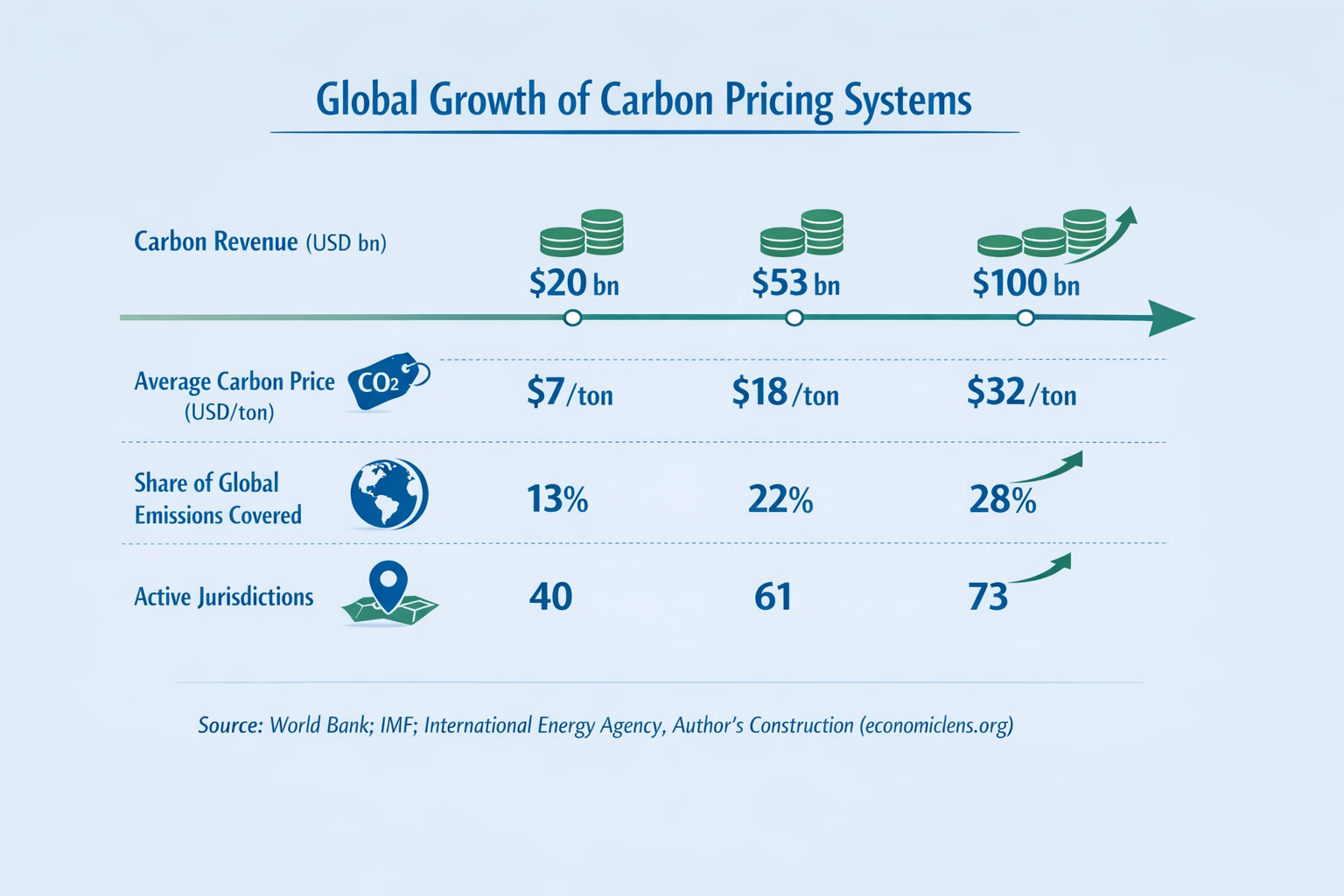
Since 2015, carbon pricing systems have expanded, increased revenues, broadened emissions coverage, and lifted average carbon prices. Consequently, emissions pricing now shapes investment incentives and fiscal planning across both advanced and emerging economies.
Climate Fiscal Returns and the Transparency Gap
Carbon pricing generates rising climate fiscal returns, but transparency has lagged behind. Most governments disclose total carbon revenues, yet far fewer explain how they spend these funds or what outcomes they achieve.
This shortfall becomes more serious as countries increasingly rely on carbon revenues to support food systems, climate adaptation, and resilience in vulnerable economies (https://economiclens.org/climate-finance-and-the-global-food-challenge/).
The World Resources Institute warns that weak disclosure erodes public trust and undermines long-term policy durability (https://www.wri.org).
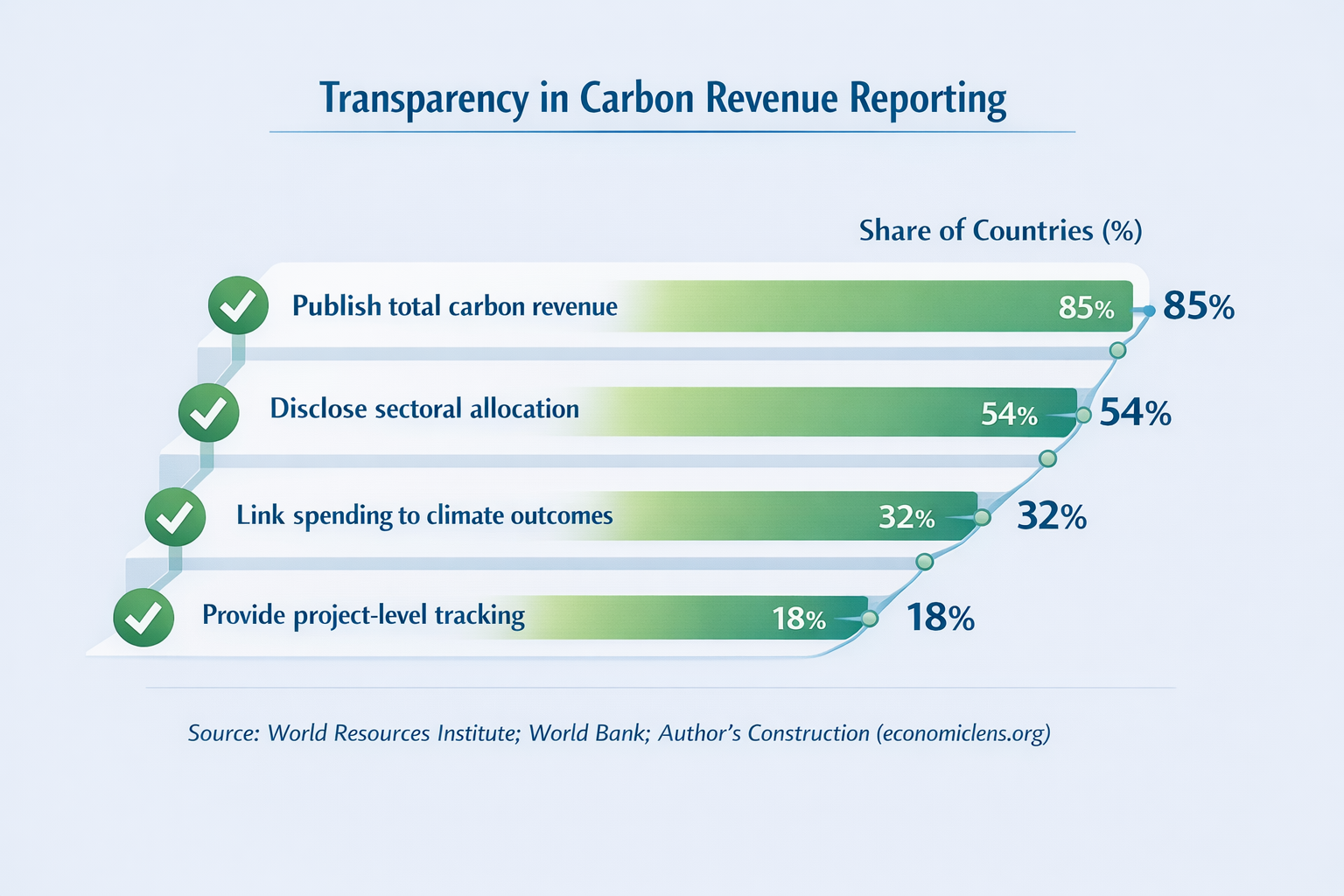
Most countries publish revenue totals, but only a minority connect spending to climate outcomes or provide project-level tracking. Therefore, transparency now matters as much as the carbon price itself.
Carbon Revenue Recycling Across Regions
Carbon revenue recycling varies sharply across regions due to differences in income levels, development priorities, and political constraints. Advanced economies often channel revenues toward fiscal balance and industrial innovation. Emerging economies typically prioritize renewable deployment, infrastructure, and climate adaptation.
As a result, many policymakers question whether current fiscal frameworks can finance the green energy transition at sufficient scale (https://economiclens.org/green-energy-transition-can-we-finance-the-green-energy-transition-by-2025/).
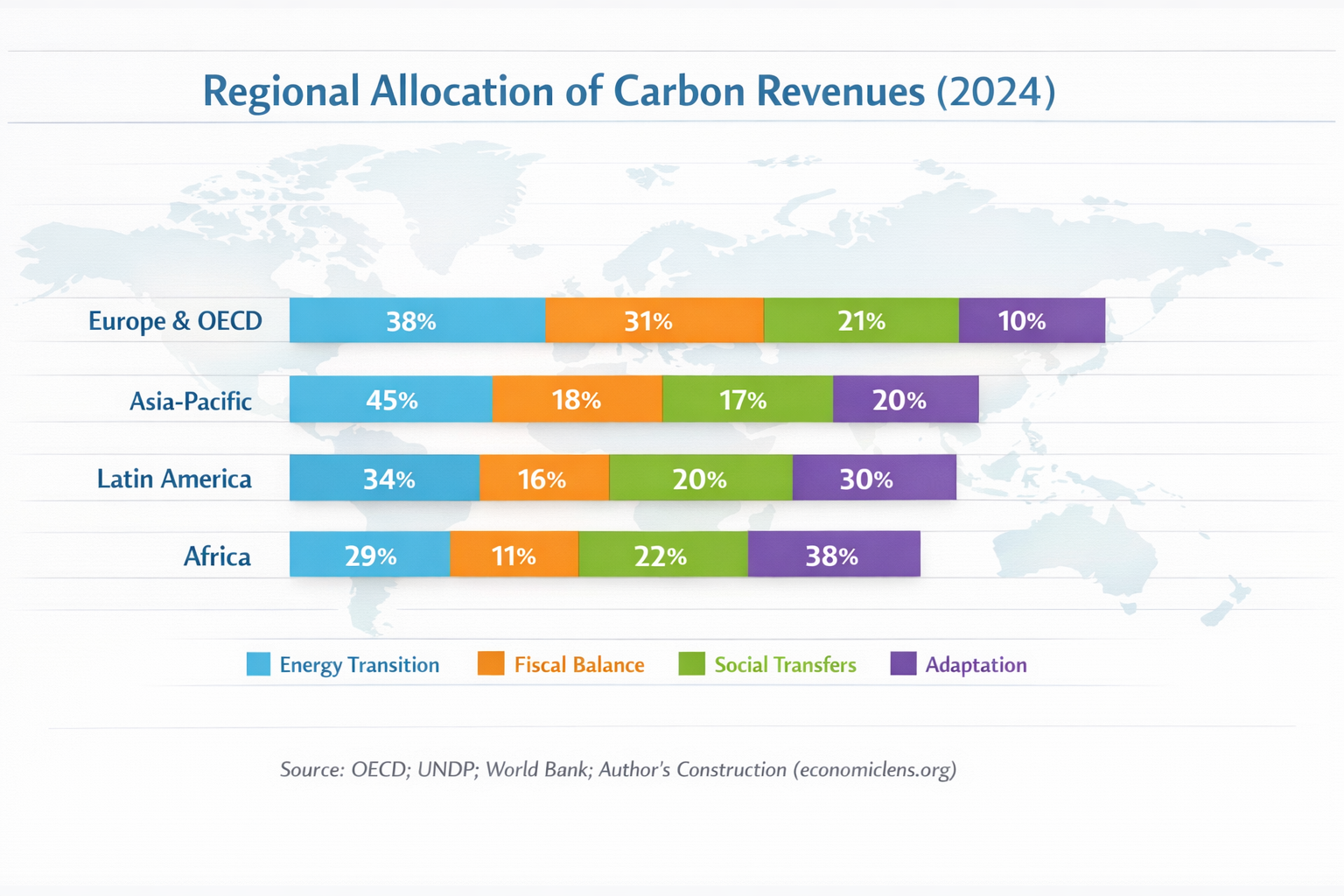
Regions allocate carbon revenues differently based on fiscal priorities, development needs, and climate risks. Thus, carbon revenue recycling increasingly operates as both climate finance and development policy.
Green Fiscal Dividend and Sectoral Decarbonization
The green fiscal dividend appears most clearly in sectoral spending patterns. Governments direct carbon revenues toward power generation, transport, and industrial decarbonization. This approach reflects a growing consensus that clean energy must become structurally cheaper than fossil fuels to sustain long-term emissions reductions
)https://economiclens.org/why-green-energy-needs-to-be-cheaper-than-fossil-fuels-the-future-of-affordable-sustainability/)
The International Energy Agency confirms that investment in clean power and grid infrastructure now delivers most long-term emissions reductions (https://www.iea.org)
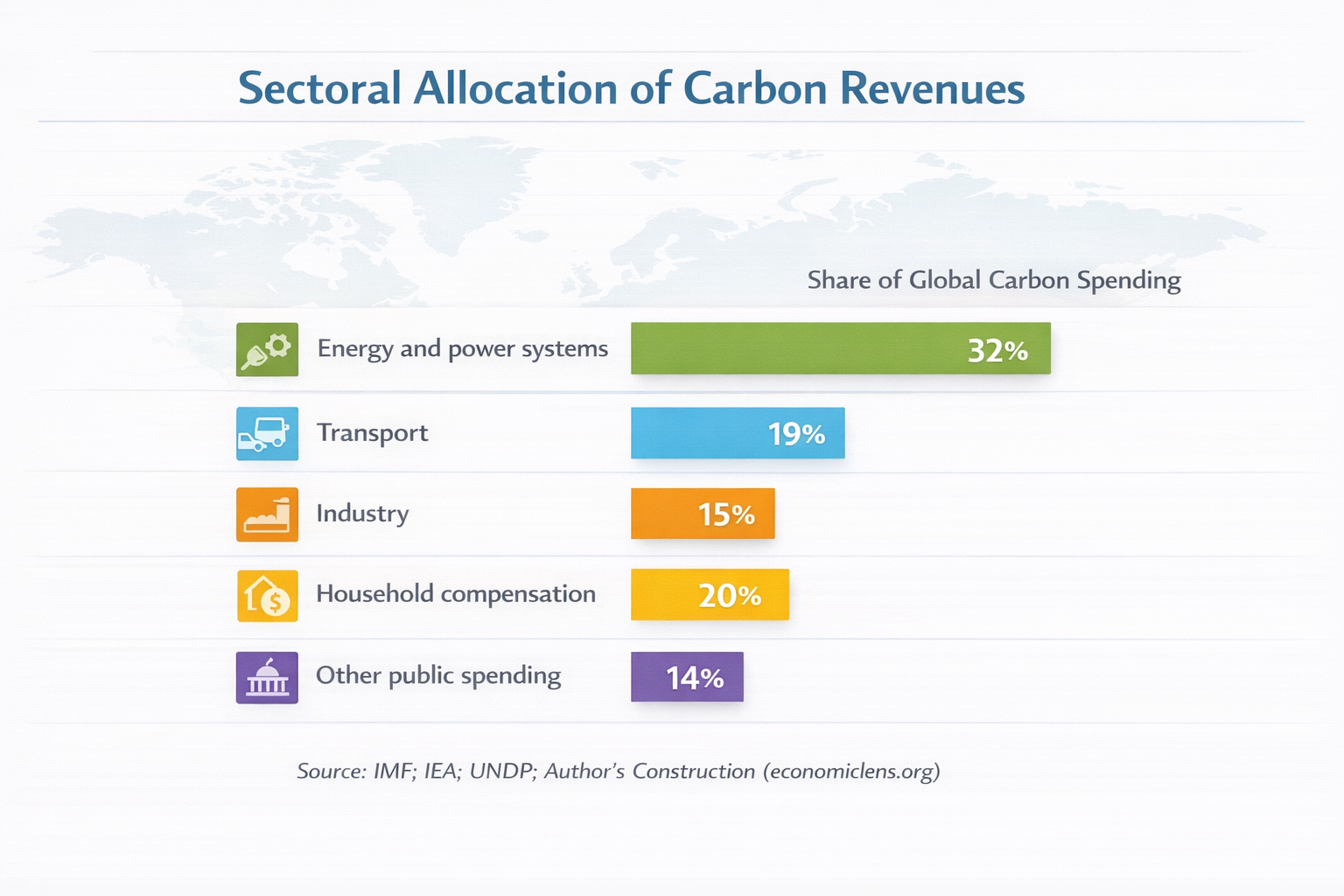
Governments allocate most carbon revenues to energy and power systems, followed by household compensation and transport investment. Consequently, fiscal alignment with decarbonization is strengthening across sectors.
Household Carbon Rebates and Political Legitimacy
Household carbon rebates play a central role in public acceptance. Where governments recycle revenues through rebates or social programs, resistance to carbon pricing declines. However, these mechanisms often interact with existing price distortions.
Therefore, effective carbon dividend frameworks require complementary energy subsidy reform, particularly in fossil-fuel-dependent economies (https://economiclens.org/energy-subsidy-reform-policy-note/). The International Labour Organization stresses that just transition policies must combine price signals with income protection (https://www.ilo.org/global/topics/green-jobs/lang–en/index.htm).
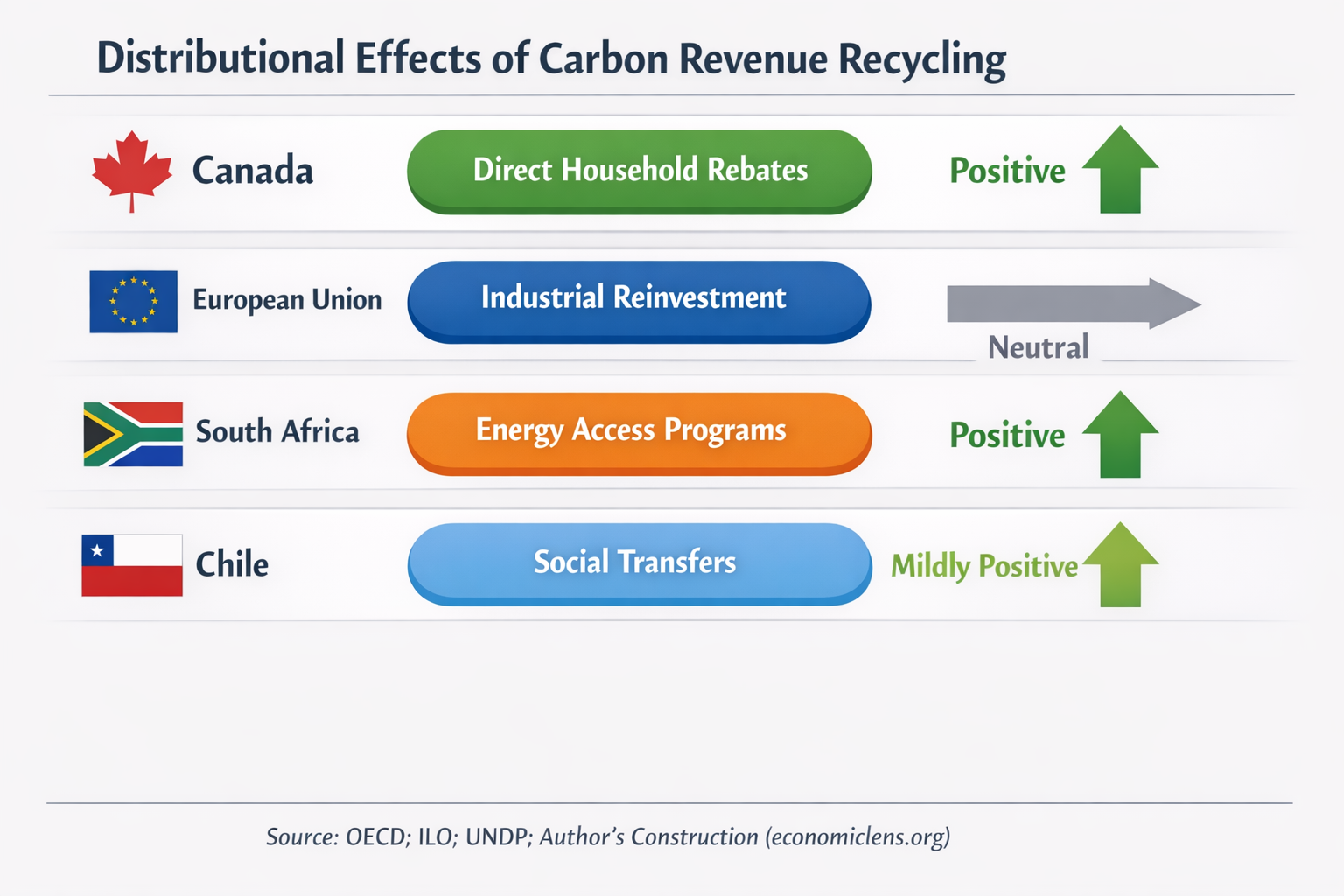
Carbon revenue recycling strategies affect household welfare differently, with rebates and energy access programs producing the most positive outcomes. As a result, equity considerations increasingly determine the durability of carbon pricing systems.
Climate Revenue Governance in the Age of Accountability
As carbon revenues grow, accountability has become a defining feature of climate governance. Governments now face stronger pressure to demonstrate traceability and measurable results. International monitoring frameworks under the UNFCCC Global Stocktake reinforce this shift (https://unfccc.int/process-and-meetings/the-paris-agreement/global-stocktake).
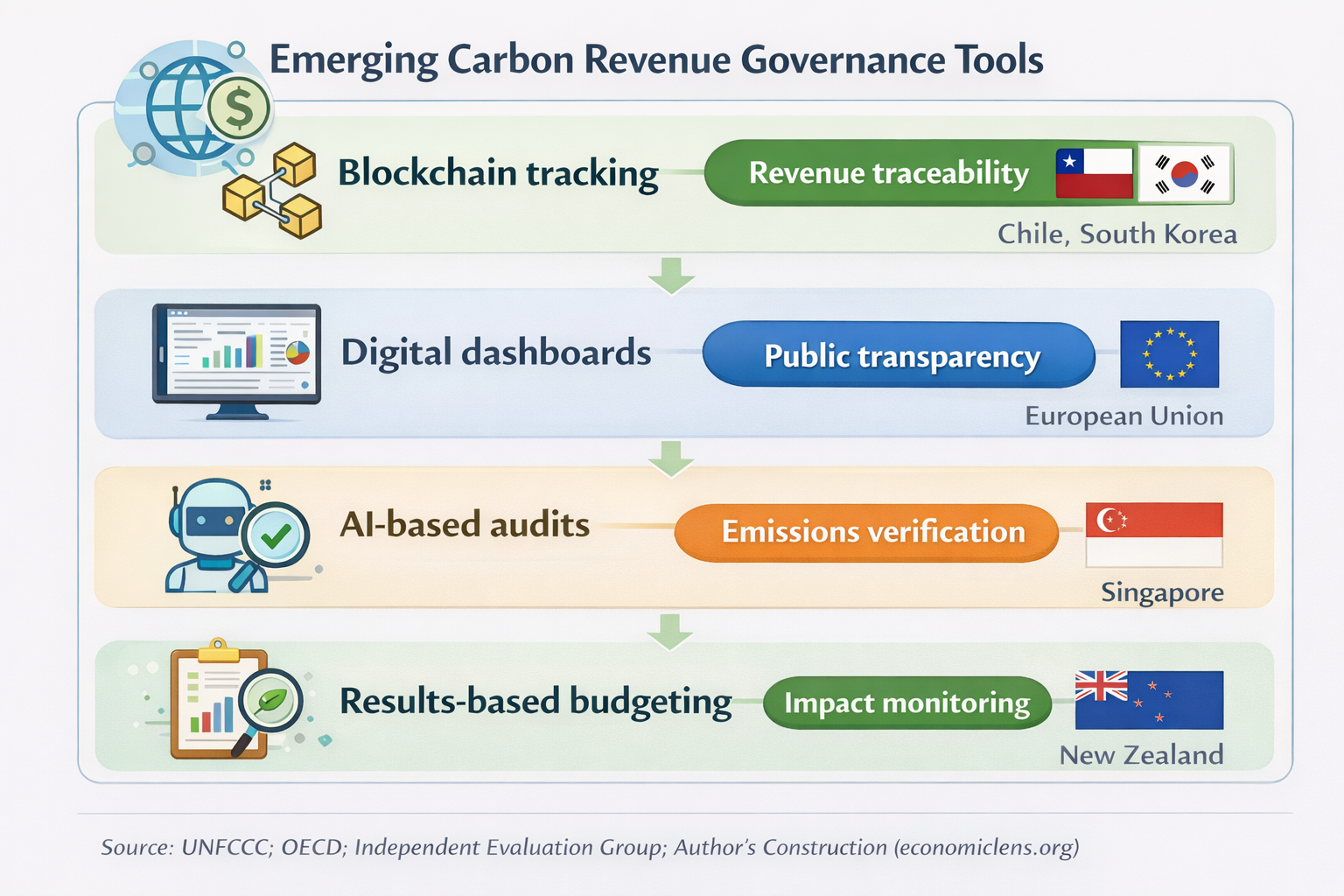
New digital and governance tools now improve transparency, traceability, and accountability in carbon revenue management. Consequently, transparency increasingly signals institutional capacity rather than administrative compliance.
Emissions Monetization Systems and Fiscal Innovation
Emissions monetization systems continue to evolve through fiscal innovation. Governments no longer treat carbon pricing as a static tax instrument. Instead, they integrate it into governance frameworks that link taxation, investment, and accountability.
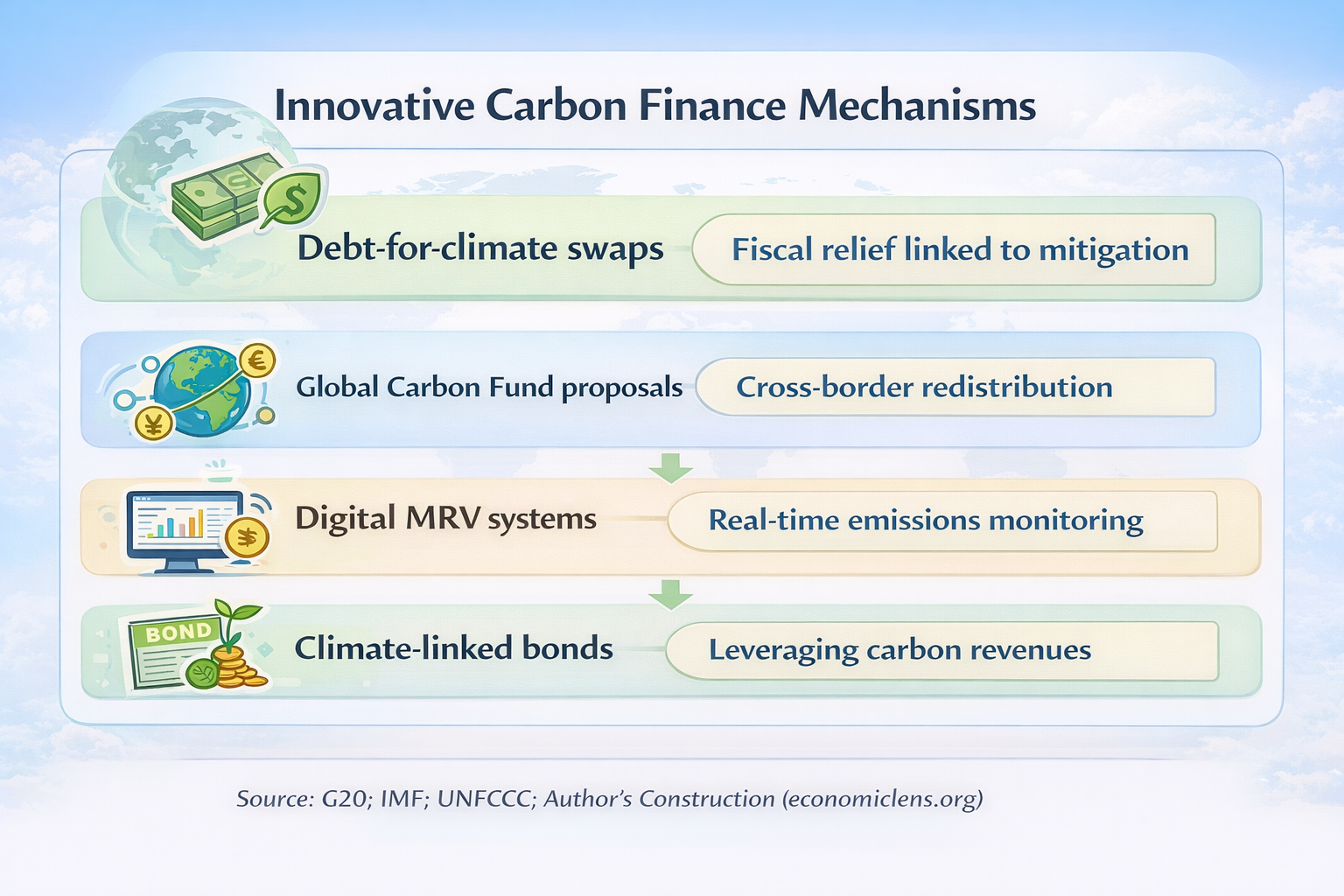
Innovative carbon finance instruments increasingly leverage revenues for debt relief, cross-border redistribution, and emissions monitoring. Therefore, carbon finance is entering a phase of institutional maturity.
Net-Zero Dividend and Measuring Real Impact
Revenue collection alone does not define success. The net-zero dividend depends on measurable environmental and social outcomes. Yet only a limited number of countries consistently report such metrics.
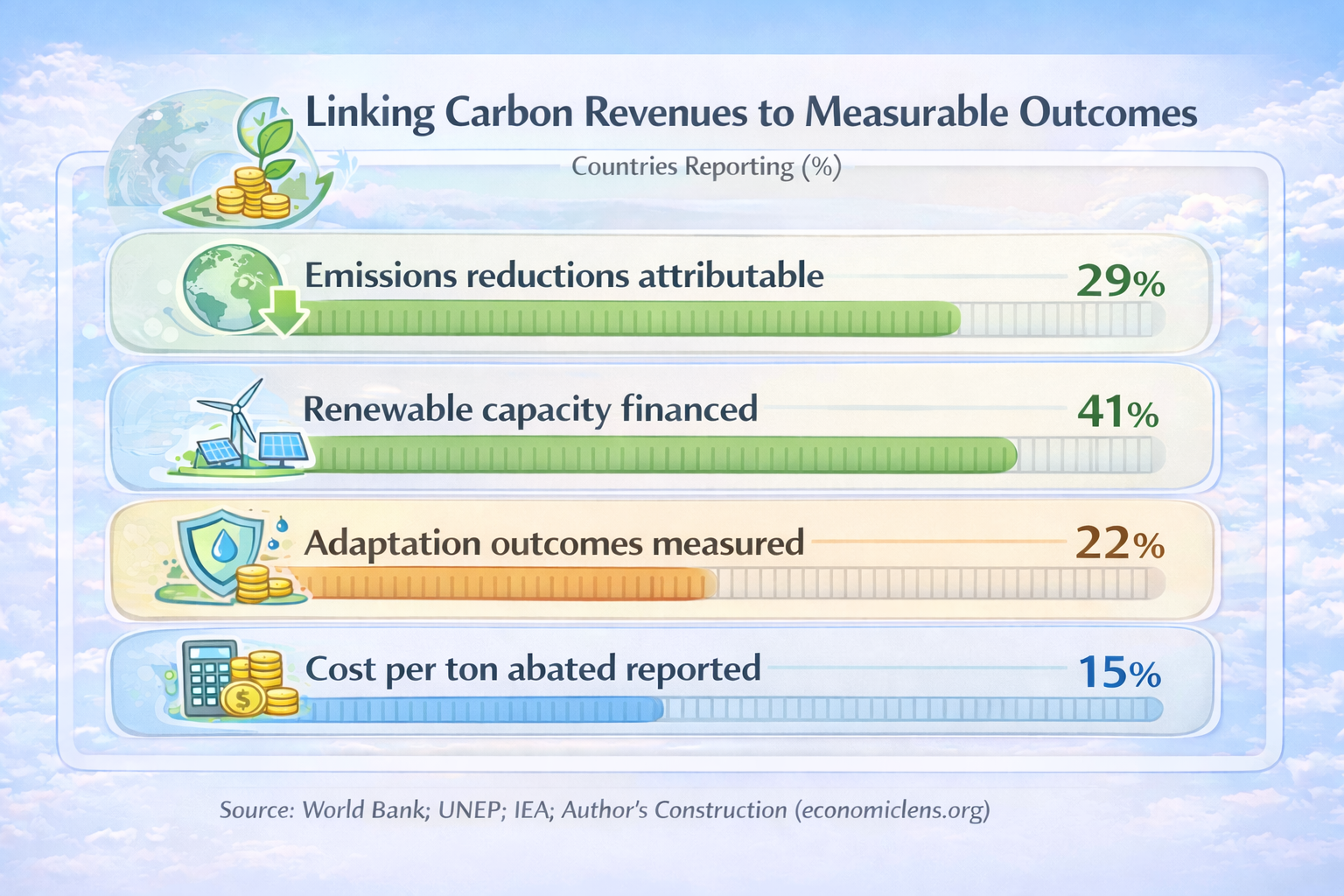
Only a minority of governments systematically link carbon revenues to emissions reductions, adaptation outcomes, and cost-effectiveness indicators. Without standardized metrics, policymakers struggle to assess returns on carbon investment.
Policy Pathways Shaping the Next Decade
Evidence highlights three dominant pathways. First, governments are embedding carbon revenues into climate-designated budgets. Second, subnational carbon markets are expanding. Third, digital accountability systems are closing information gaps. Together, these developments will determine whether the carbon dividend delivers durable net-zero progress.
Final Word: From Revenue to Responsibility
The $100 billion carbon dividend marks a decisive moment in climate economics. Governance now represents the real test. As carbon markets expand, transparency, equity, and measurable impact will determine legitimacy.
If governments manage carbon revenues effectively, the carbon dividend can evolve from a revenue milestone into a cornerstone of a just, resilient, and net-zero global economy.