Explore how renewable energy is reshaping the global economy—driving net-zero growth, clean innovation, and sustainable power transitions that surpass coal and redefine prosperity for a greener future.
A Turning Point in Global Power
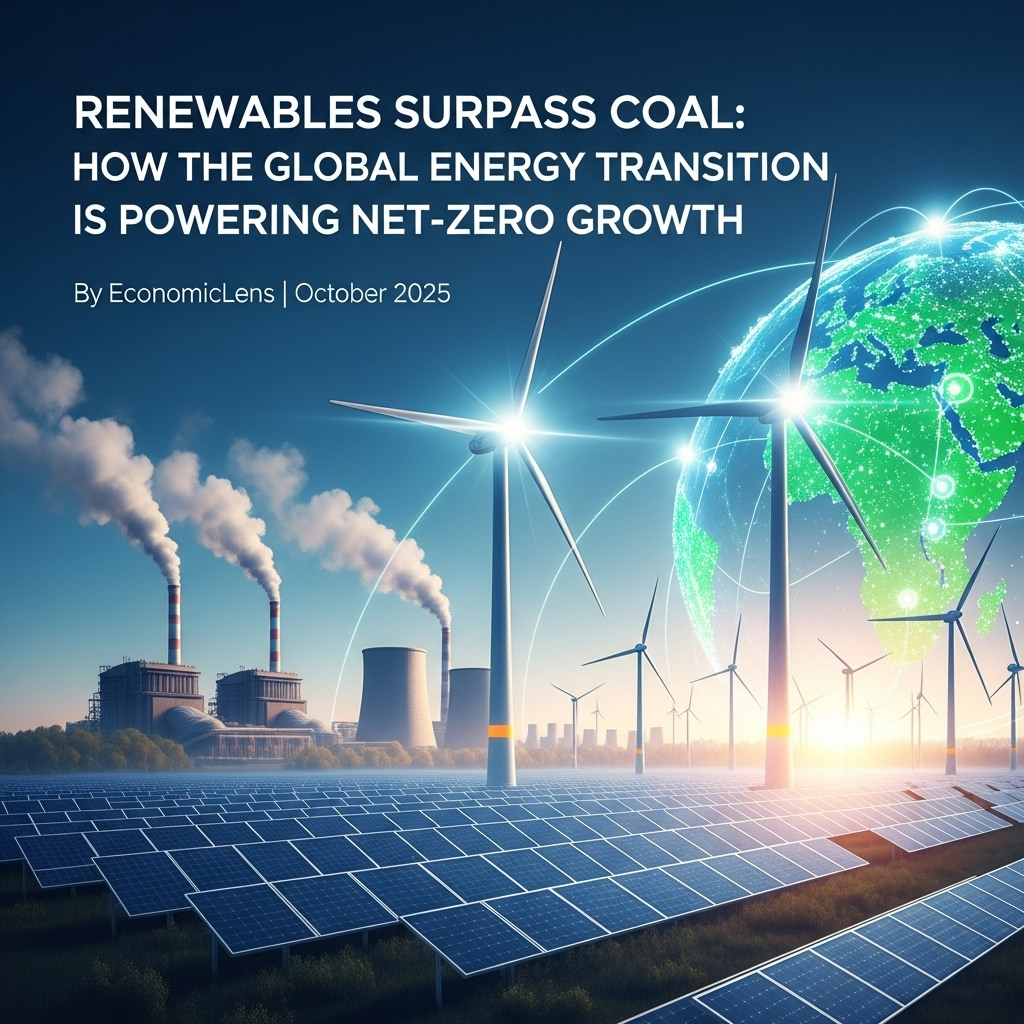
The global energy landscape has reached a pivotal moment. Renewable energy has, for the first time in history, surpassed coal as the leading source of power. According to the International Energy Agency (2025), renewable energy now accounts for 38% of global electricity generation, while coal has fallen to 35%. This shift marks not only an environmental achievement but a transformative moment for the global economy.
For over a century, fossil fuels like coal and oil have powered industrialization and shaped geopolitics. However, the 21st century is seeing a major reversal. Energy expansion is now dissociated from carbon emissions, encapsulating the essence of net-zero growth. This era represents a future where economies grow while progressively eliminating their carbon footprint (OECD, 2025).
Net-zero growth is redefining prosperity. Nations are increasingly evaluated on the efficiency, innovation, and inclusiveness of their energy systems, rather than their fossil fuel consumption. Every additional gigawatt of solar, wind, or hydroelectric power reduces emissions, boosts productivity, creates jobs, and strengthens long-term economic stability (World Bank, 2025).
This transformation is driven by both technological advances and economic shifts. Since 2010, the cost of solar and wind energy has dropped by more than 80%, making renewable energy more affordable and eco-friendly (BloombergNEF, 2025). As renewable energy continues to grow, it is reshaping the global economy by making decarbonization increasingly profitable (IMF, 2025).
As the energy transition accelerates, countries rich in renewable resources are emerging as new energy leaders, while those dependent on fossil fuels face declining returns (IEA, 2025). Renewable energy has evolved from a barrier to development into the cornerstone of a new economic model, where emissions decrease alongside productivity (UNDP, 2025).
Global Power Realignment
Over the past decade, the equilibrium of worldwide power production has changed significantly. The formerly coal-centric energy portfolio is increasingly shifting towards renewable sources, transforming global economies and investment strategies. The following statistics exemplify this pivotal transformation.
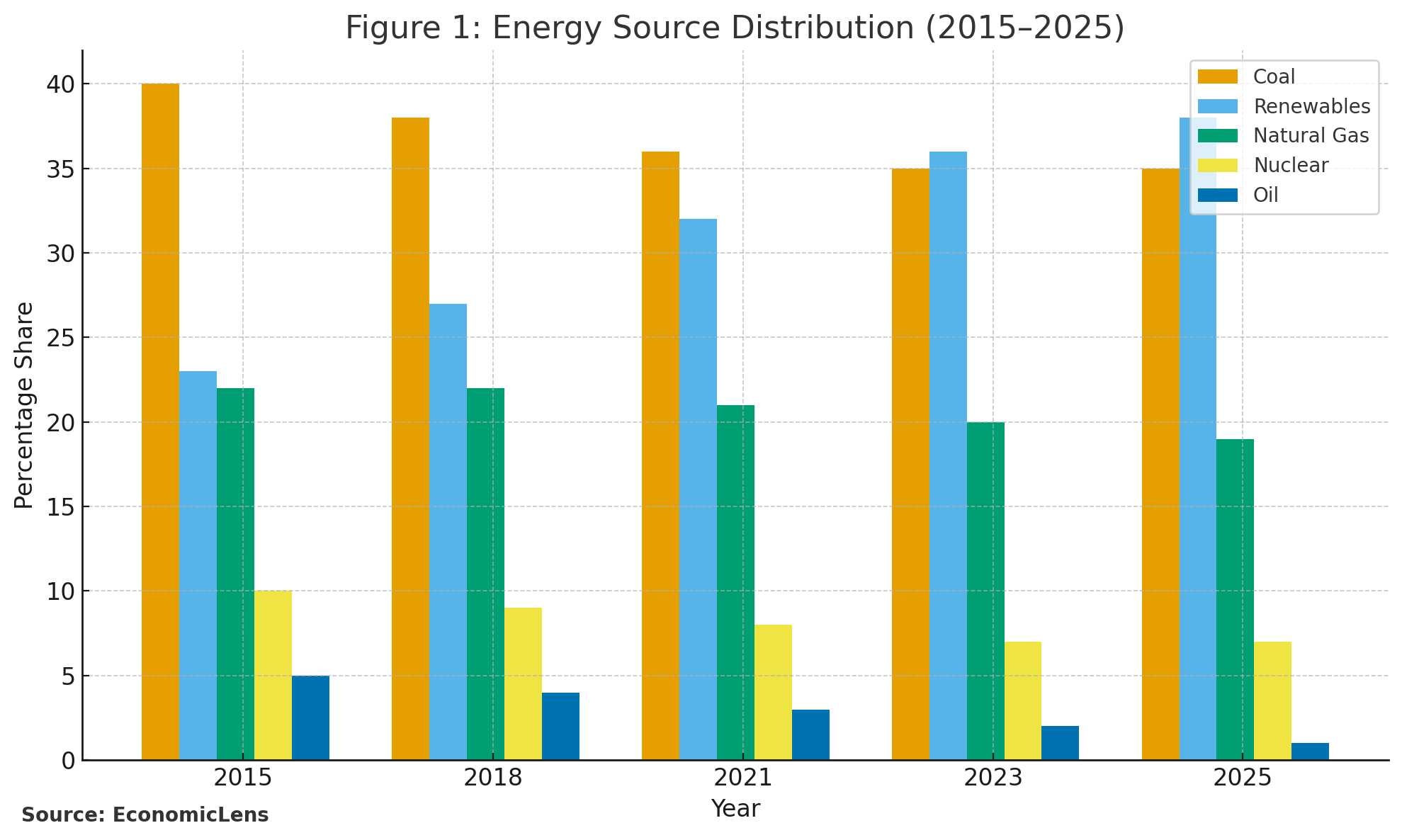
Over just a decade, renewable energy sources have augmented their worldwide power share by 15 percentage points, whilst coal has consistently diminished. This tendency is inexorable. Solar and wind energy have become the most economical sources of new generation in more than two-thirds of global markets (IEA, 2025).
Natural gas continues to serve a transitional function; nevertheless, its future is constrained as energy storage, green hydrogen, and intercontinental power grids advance (OECD, 2025). The fossil fuel age that previously supported industrial expansion is transitioning to a clean, digitized, and decentralized system that enhances economic resilience (IMF, 2025).
Regional Dynamics of Clean Energy
The global transition to renewable energy is inconsistent. Diverse areas are progressing along unique paths, influenced by their resource availability, access to technology, and regulatory structures. The following figure delineates geographical trends in renewable energy expansion across five main worldwide zones.
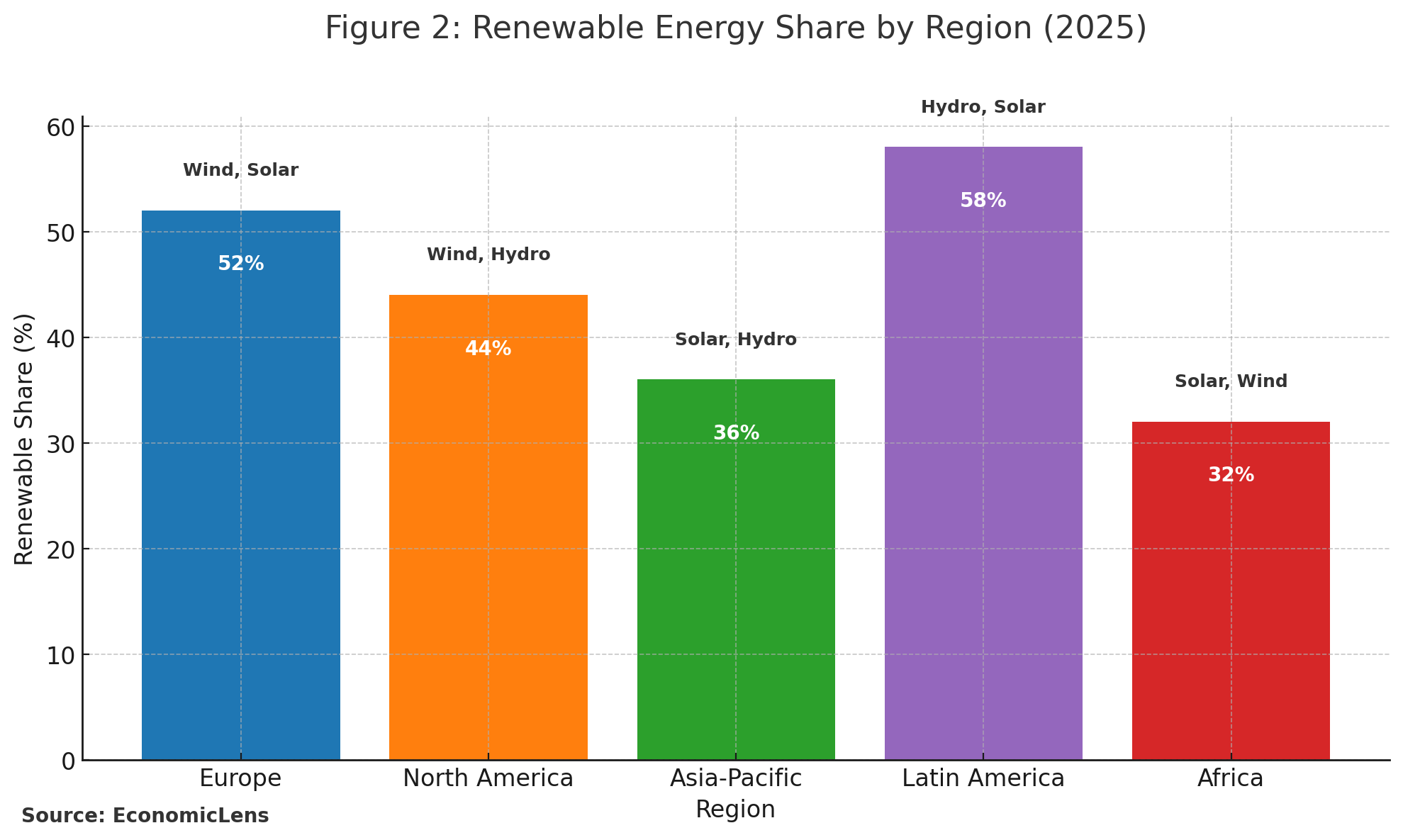
The success of Europe is attributed to sustained carbon price and extensive offshore wind development (IEA, 2025). Latin America capitalizes on its predominance in hydropower and fast solar development. In the Asia-Pacific region, China and India are rapidly expanding their renewable energy capability, but reliance on coal persists in some areas (IMF, 2025).
Africa’s clean-energy path is remarkable: decentralized solar mini-grids and green finance are electrifying rural areas, connecting decarbonization with poverty alleviation and inclusive development (UNDP, 2025). These dynamics demonstrate that the global power shift constitutes a developmental revolution, whereby energy availability and climatic stability are interconnected.
Financing the Global Transition
The pace of decarbonization is dependent upon the velocity and route of global capital. In the last five years, investment has significantly transitioned from fossil fuels to renewable energy, indicating new governmental incentives and changing investor priorities (IMF, 2025).
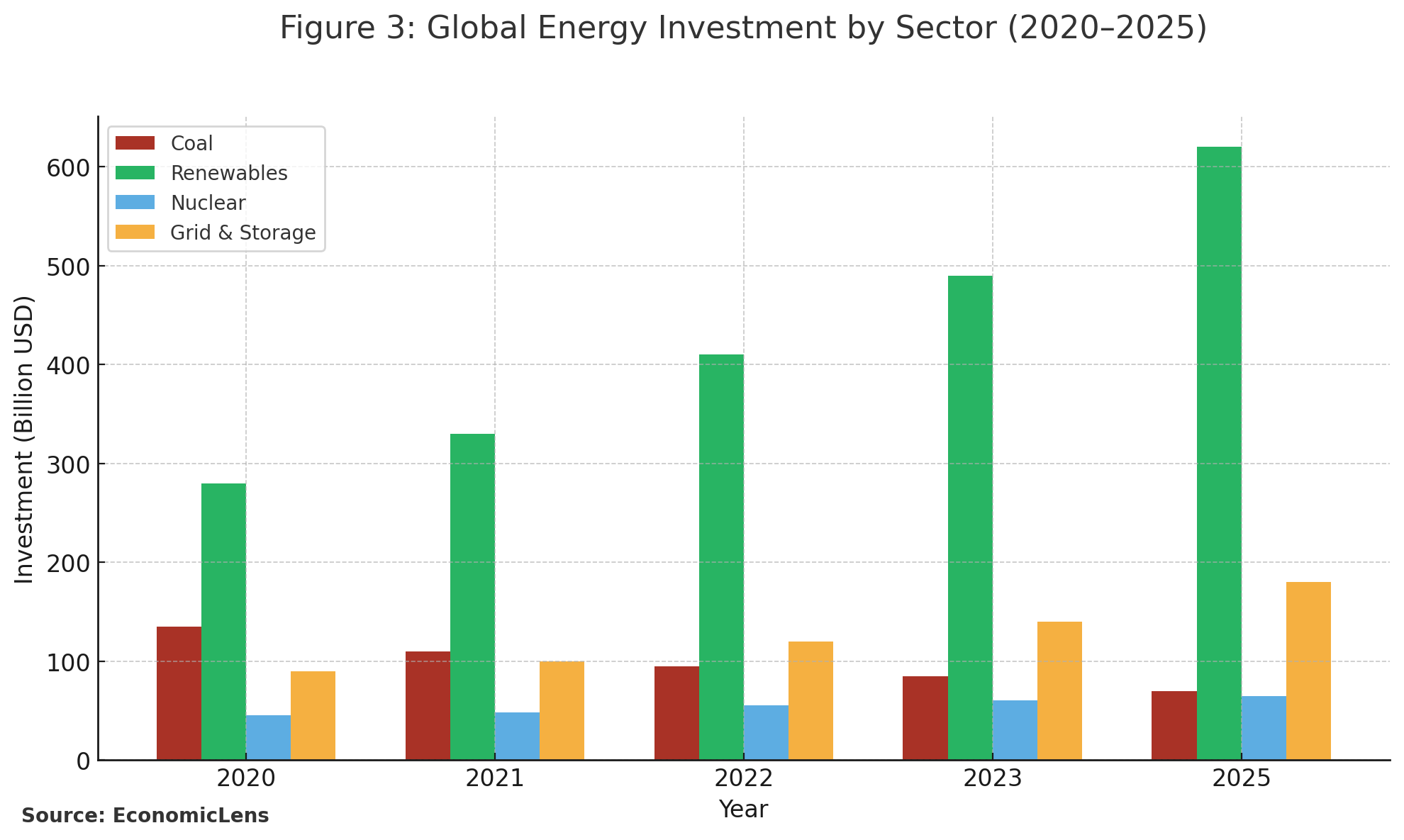
In 2025, investments in renewable energy totaled $620 billion, approximately nine-fold that of coal. Significant fiscal initiatives, such as the U.S. Inflation Reduction Act and the EU Green Industrial Plan, have initiated a worldwide competition in clean finance (IMF, 2025).
Nonetheless, this funding remains concentrated, with four-fifths of global green financing directed towards rich nations. Enhancing concessional financing, debt-for-climate swaps, and blended funds is crucial for realizing a genuinely fair energy transition (World Bank, 2025). Redirecting even 10 percent of yearly fossil fuel subsidies could bridge the majority of the global clean investment deficit (OECD, 2025).
Securing the Foundations of the Clean Energy Era
As the global community develops more renewable infrastructure, focus is shifting to the resources that facilitate this advancement. The renewable energy revolution relies significantly on minerals essential for technology production, presenting new economic and geopolitical difficulties.
Solar panels, wind turbines, and batteries need substantial amounts of lithium, cobalt, nickel, copper, and rare earth metals. The International Energy Agency (2025) projects that demand for these commodities will increase four-fold by 2040 if the world adheres to a net-zero trajectory.
This dependence engenders new vulnerabilities. More than 70 percent of the world’s cobalt supply is sourced from the Democratic Republic of Congo, while China oversees over 80 percent of rare-earth refining capabilities (OECD, 2025). This concentration increases the likelihood of supply interruptions, trade leverage, and ethical issues with mining techniques.
The future of net-zero development relies on establishing sustainable and diverse mineral supply chains. Enhancing recycling, establishing secondary markets for essential minerals, and advocating for circular-economy design might satisfy roughly 40 percent of mineral demand by the mid-21st century (World Bank, 2025). Guaranteeing transparency, environmental protections, and equitable labor practices in extraction is equally essential.
The absence of robust mineral supply networks may result in the global energy transition substituting one kind of reliance for another. Consequently, sustainable development in the clean-energy era must rely on both renewable innovation and resource security.
Jobs and the Just Transition
The shift to a renewable energy economy is transforming jobs across the global energy industry. Although millions of new employment are being generated, conventional fossil-fuel workforces are seeing considerable upheaval. The following figure illustrates the evolution of job trends from 2015 to 2025.
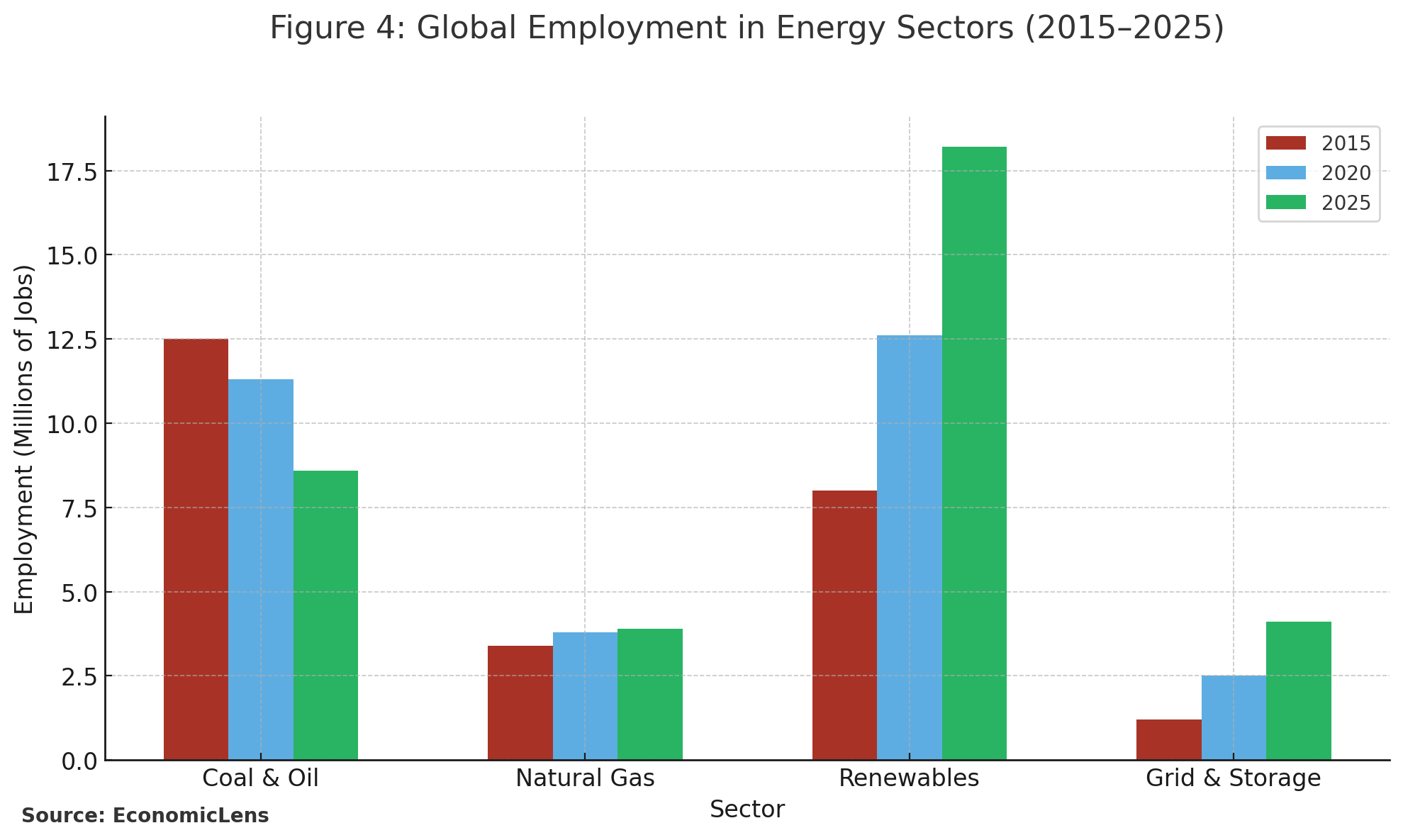
Renewable sectors now employ a greater number of people than the fossil fuel sector combined (IRENA, 2025). Solar energy alone sustains 6.5 million employment worldwide, while the sectors of wind and battery manufacturing are growing rapidly.
Regions reliant on coal encounter challenging transitions. A fair transition requires labor re-skilling, social protection, and focused investment in green sectors (ILO, 2025). The green revolution can only achieve sustainability if it is socially inclusive.
The Net-Zero Dividend
The clean-energy transition yields a quantifiable economic benefit referred to as the net-zero dividend. This idea pertains to the cumulative benefits society get when emissions reduction coincides with economic growth (UNEP, 2025).
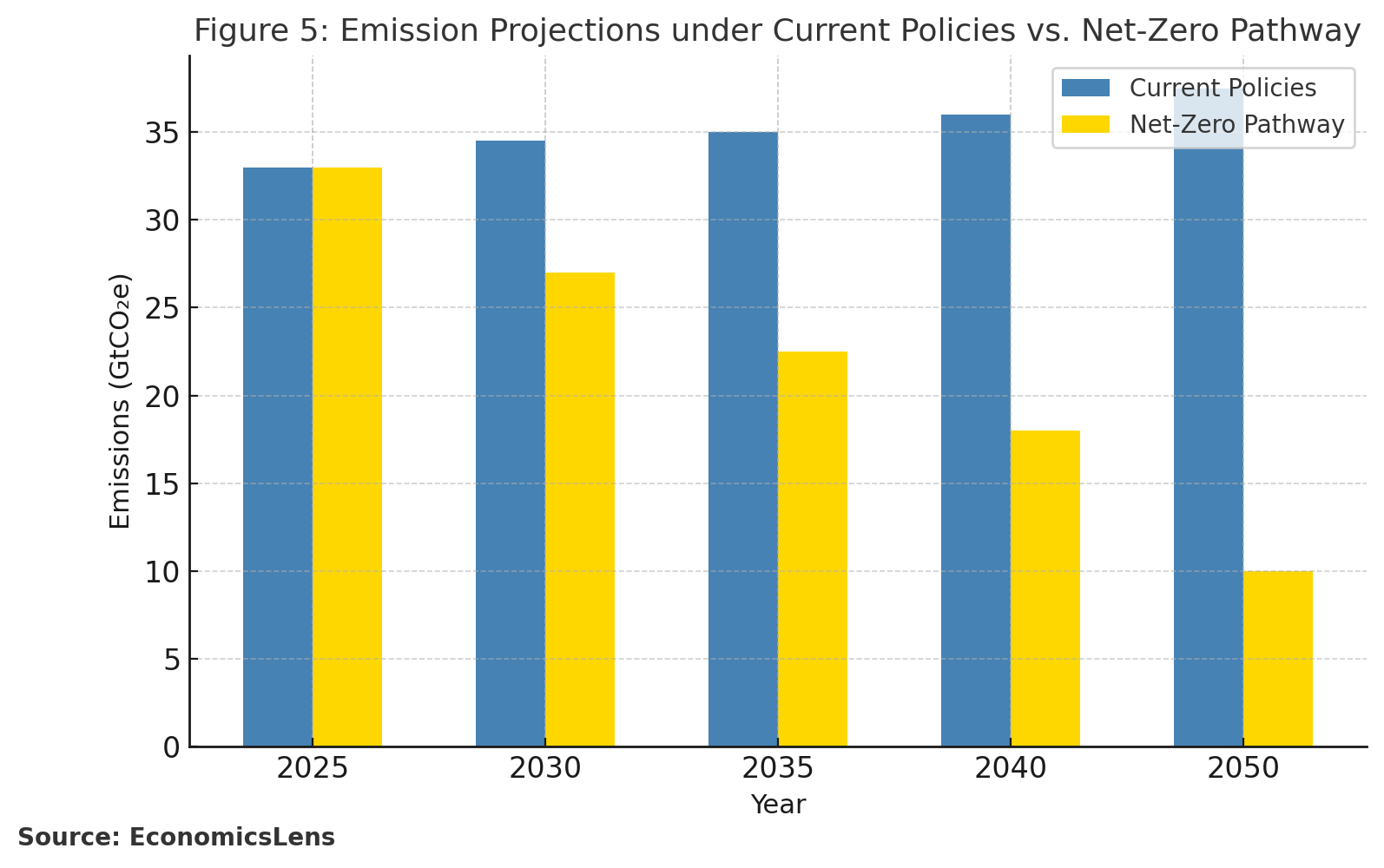
Countries aiming for net-zero trajectories may see global GDP increases of 2–3 percent by mid-century, in addition to billions conserved in mitigated climate damages (UNEP, 2025). The dividend encompasses environmental, economic, and social dimensions. Renewable energy reduces energy fluctuation, promotes health, supports trade stability, and fosters innovation.
This is the rationale of net-zero growth: economies flourish by decarbonizing, transforming climate accountability into a sustainable competitive edge (OECD, 2025).
Policy Implications
Governments must include renewable objectives into fiscal and industrial policies, aligning budgets with long-term decarbonization goals (World Bank, 2025). International climate funding should be directed towards developing countries via concessional loans and blended-finance instruments (IMF, 2025). Social inclusion must remain paramount, accompanied by retraining initiatives and financing for local businesses (ILO, 2025). Ultimately, enhancing supply-chain resilience for essential minerals must be prioritized globally to protect the clean-energy transition (OECD, 2025).
Research Insights
Recent studies highlight five critical boundaries that will influence the next decade of renewable energy (IEA, 2025; IMF, 2025; UNEP, 2025):
- Assessing GDP resilience and productivity enhancements derived from renewable investments.
- Modeling climate-related financial instruments for fiscal stability.
- Enhancing artificial intelligence and digital grid optimization.
- Facilitating equitable financial access for women and rural enterprises.
- Enhancing global governance for the security of vital minerals.
Final Word
The ascendance of renewables over coal signifies a new era in human advancement. It illustrates that economic growth and environmental conservation may progress together. The countries at the forefront of renewable energy are not only decreasing emissions; they are reinterpreting prosperity itself.
“As the International Energy Agency (2025) concludes, the energy race of the twenty-first century will not be won by those who extract the most carbon, but by those who generate the most clean power.”