

Digital currency wars are transforming global finance as AI-driven monetary policy, CBDCs, and fintech platforms reshape exchange rates, monetary sovereignty, and financial stability. This in-depth analysis examines digital monetary blocs, cyber risks, inequality, and the future of programmable money.
A New Battlefield in Global Finance
Digital currency wars are redefining how monetary power is exercised in the global economy. Competition is shifting from printing presses to algorithms and digital infrastructure. Global finance is undergoing a transformation unlike any in the post-war era. Currency value, once anchored in reserves and central bank discretion, is now shaped by data, platforms, and code.
This article examines how artificial intelligence and central bank digital currencies are turning currency competition into a strategic contest that is reshaping global finance, monetary sovereignty, and financial stability.
Moreover, the revival of competitive devaluation in the digital economy reflects more than policy rivalry. It signals a structural shift in the global financial system, as emphasized by the International Monetary Fund https://www.imf.org/en/Topics/digital-money
Although inflation has stabilized across many advanced economies, exchange-rate volatility has returned as a policy instrument. Governments increasingly allow currencies to weaken to support exports, attract capital, or absorb shocks. Notably, artificial intelligence, advanced analytics, and central bank digital currencies already shape the speed and direction of these adjustments, according to the Bank for International Settlements https://www.bis.org/about/bisih/topics/cbdc.htm
This shift is increasingly visible in the contest between emerging payment systems and legacy networks, particularly as the digital yuan challenges SWIFT in redefining global financial influence https://economiclens.org/digital-yuan-vs-swift-the-race-to-redefine-global-finance/
As a result, digital currency wars are no longer about who issues more money. They are about who programs monetary logic more effectively.
AI-Driven Monetary Competition and Algorithmic Policy Shifts
Currency management is moving away from discretion toward algorithmic coordination. Historically, exchange-rate changes responded to inflation or trade gaps. Today, AI systems anticipate shocks before they occur. Consequently, liquidity can be reallocated automatically, as documented by the World Bank https://www.worldbank.org/en/topic/financialsector/brief/digital-finance
At the same time, digital currencies and algorithmic trading platforms create real-time feedback loops. Market signals and policy actions now interact instantly. Therefore, central banks can intervene within seconds rather than weeks. These dynamics are also evident in crypto-asset markets, where algorithmic liquidity has amplified price swings, including the sharp Bitcoin correction of 2025 https://economiclens.org/bitcoin-price-crash-2025-why-bitcoin-fell-below-92000-and-what-comes-next/
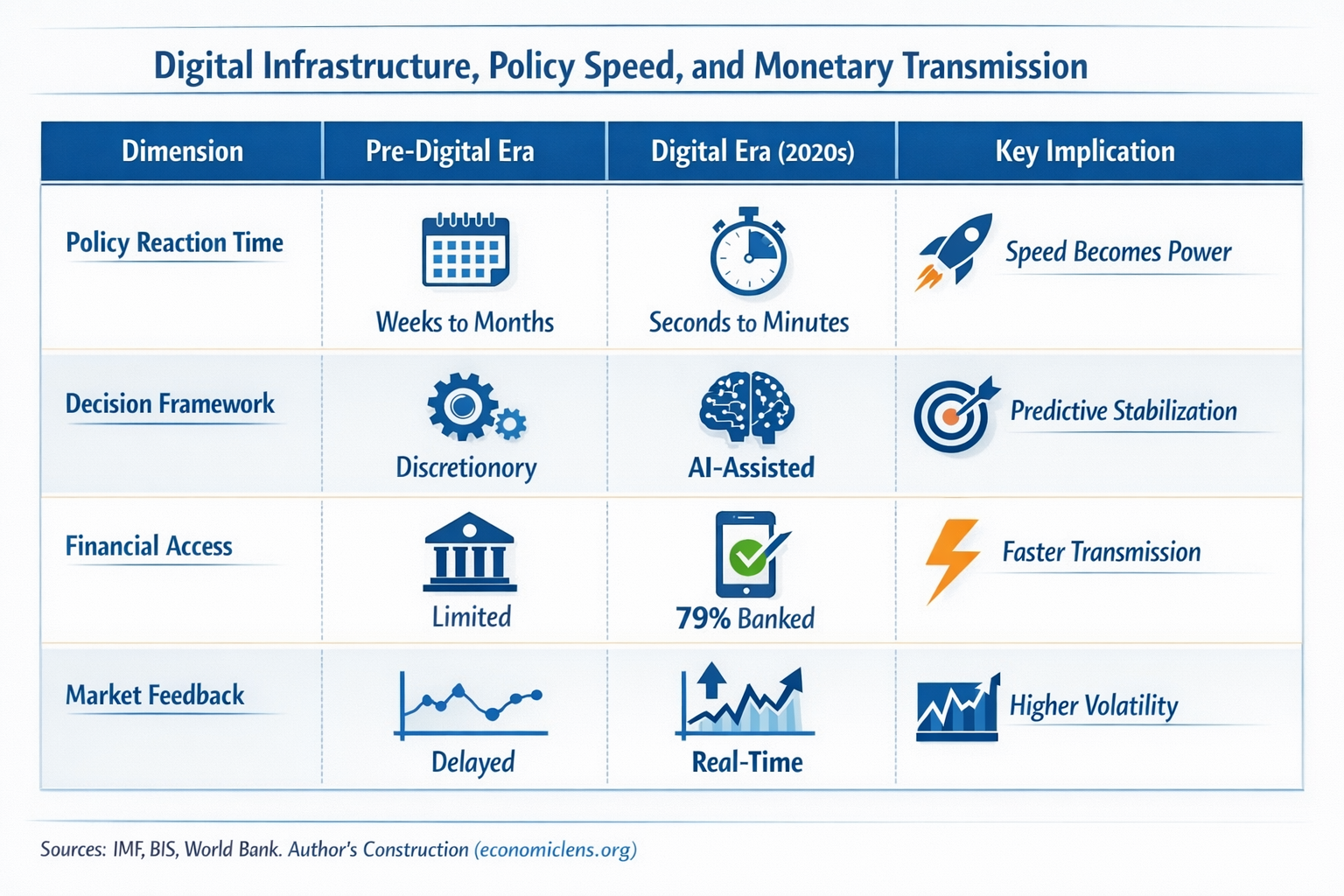
This figure illustrates how time compression has become a core element of monetary power. Faster reaction speeds allow central banks to influence markets before expectations fully form. At the same time, wider digital access ensures that policy signals transmit rapidly across economies.
Central Bank Digital Currencies and Emerging Monetary Blocs
Central bank digital currencies mark a consolidation of monetary authority inside digital systems. Unlike physical cash, CBDCs are programmable, traceable, and interoperable. As the People’s Bank of China notes, this transforms money into both a policy tool and a data framework https://www.pbc.gov.cn/en/3688110/index.html
CBDCs are not neutral technologies. Instead, they reshape geopolitical alignments. Economies are increasingly linked through payment architecture rather than trade agreements. Therefore, digital currency wars are giving rise to new monetary blocs.
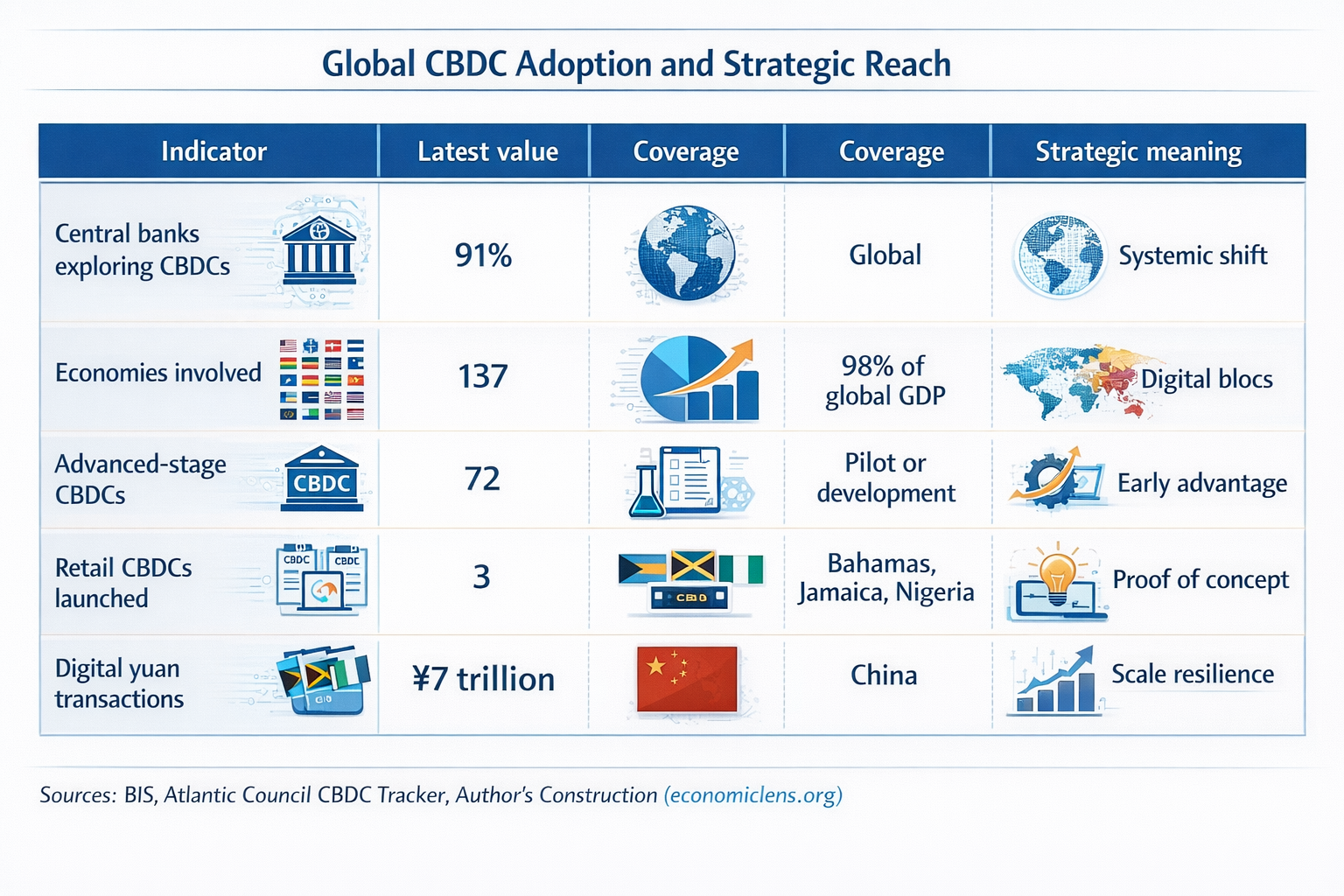
The breadth of CBDC experimentation indicates that digital currency wars are becoming systemic rather than exceptional. Early movers gain structural advantages through scale, standards, and network effects. Over time, this may lock countries into distinct digital monetary spheres.
Fintech Payment Systems and Shadow Devaluations
The private sector now wields major influence over currency flows. Stablecoins, fintech remittances, and decentralized exchanges provide liquidity outside central bank control. Consequently, exchange rates can be affected without formal intervention.
During periods of stress, these systems generate shadow devaluations. Capital can exit rapidly and across borders, reinforcing volatility in already fragile markets.
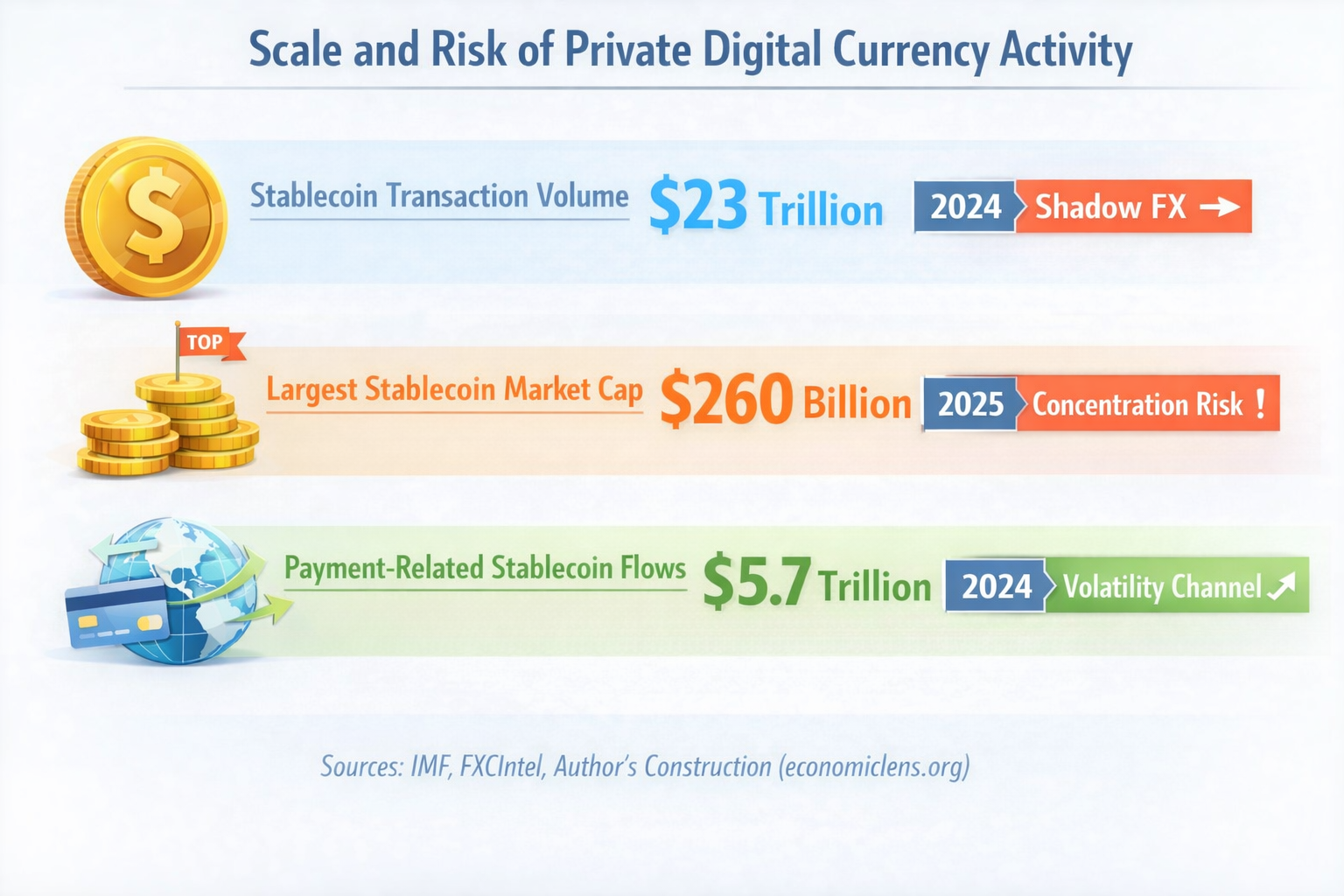
These figures highlight how private digital money now rivals traditional currency channels in scale. The mismatch between market size and regulatory coverage increases instability. As a result, monetary authorities face challenges beyond conventional policy tools.
Digital Monetary Infrastructure and the New Global Hierarchy
Digital currency adoption reflects global inequality. Advanced economies dominate cloud computing, AI chips, and payment rails. As a result, many developing countries depend on foreign platforms, as highlighted by UNCTAD https://unctad.org/topic/ecommerce-and-digital-economy
This dependence weakens monetary sovereignty. It also exposes countries to data extraction and algorithmic bias.
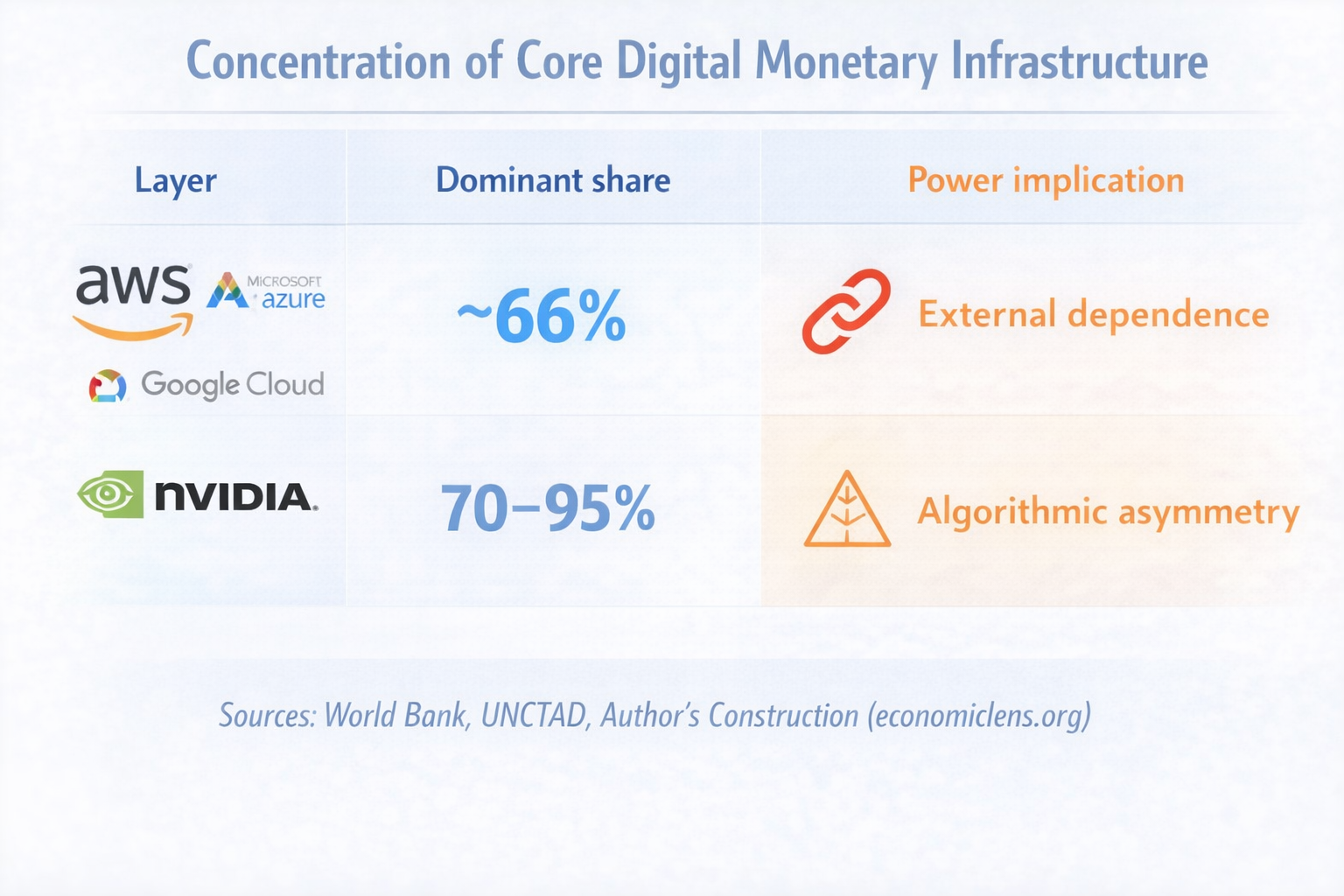
Control over digital infrastructure translates into monetary influence. Countries lacking sovereign platforms face asymmetric dependence on foreign providers. Over time, this reinforces a hierarchical digital financial order.
Cyber Risk and Financial Security in Digital Systems
As financial systems digitalize, cybersecurity becomes inseparable from monetary security. Payment networks, AI trading systems, and CBDC platforms expand the attack surface. Therefore, cyber incidents can trigger financial disruption, as noted by the International Telecommunication Union https://www.itu.int/en/ITU-D/Cybersecurity
This systemic fragility is increasingly visible in digitally connected economies, where cyber shocks impose real economic costs and amplify global instability https://economiclens.org/cyber-digital-fragility-counting-the-cost-of-a-connected-yet-vulnerable-global-economy/
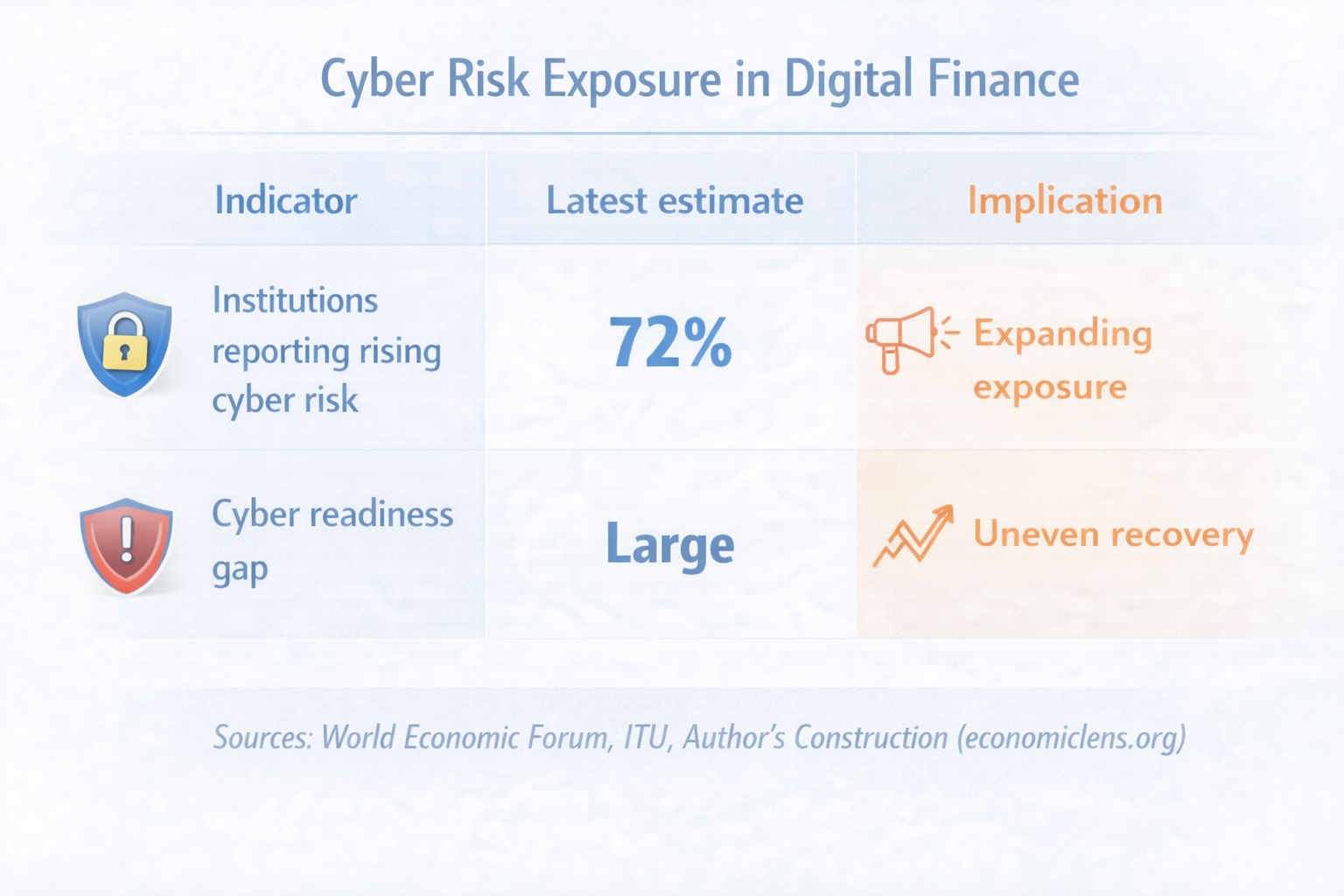
The rising frequency of cyber risks signals that financial stability now depends on digital resilience. Countries with weaker cyber capacity face longer disruptions and higher spillover costs. Cybersecurity has therefore become a pillar of monetary credibility.
Employment, Inequality, and the Social Costs of Monetary Competition
Digital currency wars have social consequences. Automation dampens inflation volatility but intensifies wage pressure. Import-dependent economies suffer most. Purchasing power erodes faster than labor markets adjust, according to the International Labour Organization https://www.ilo.org/global/publications/books/WCMS_862569
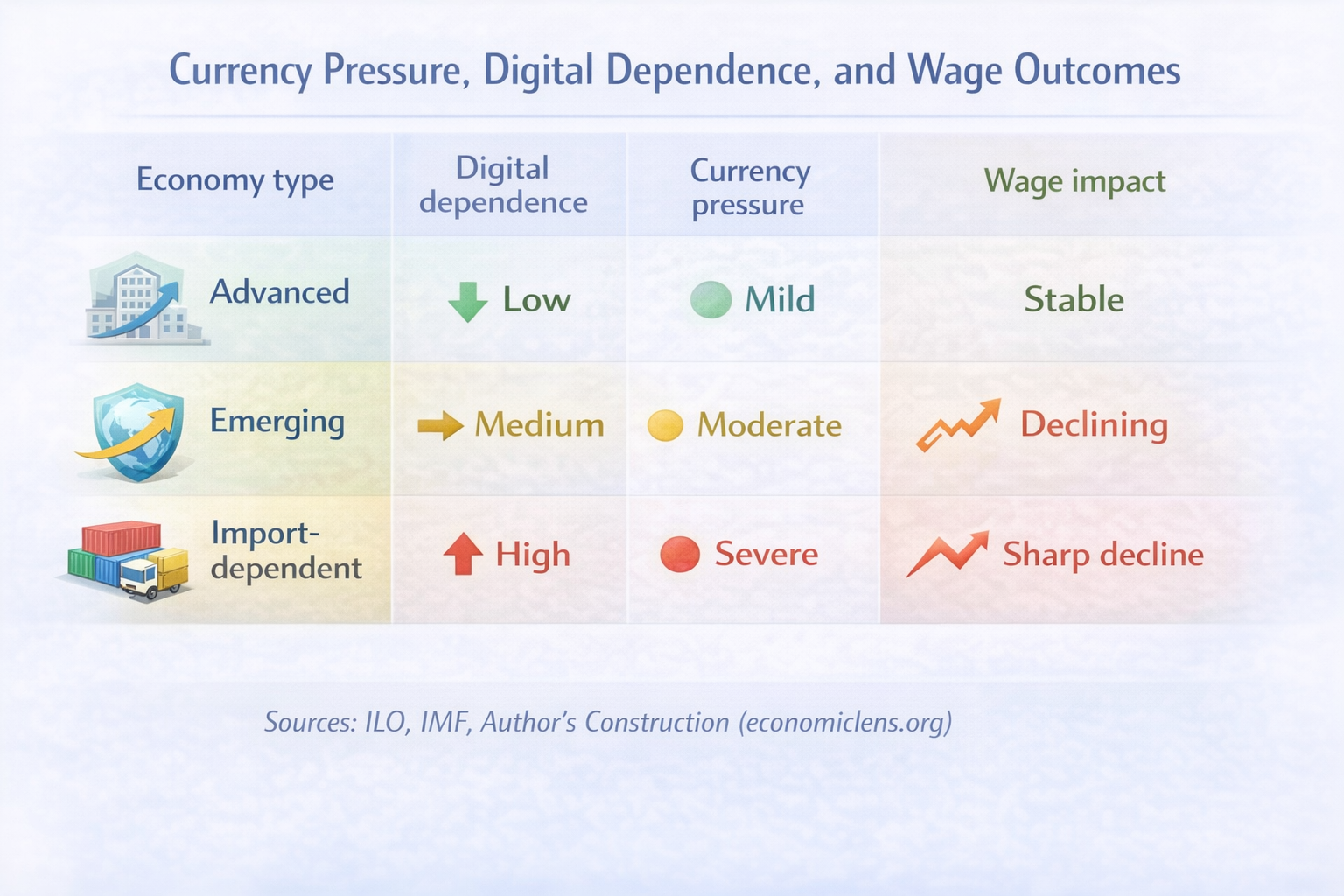
This table links macroeconomic shifts to lived economic outcomes. Higher digital dependence amplifies currency stress and worsens wage erosion. As a result, digital currency wars carry distributional consequences beyond financial markets.
The Digital Currency Dividend and Path to Cooperation
Despite the risks, programmable money offers a coordination dividend. If governance converges, interoperable CBDCs can reduce transaction costs and stabilize capital flows. Therefore, cooperation can transform rivalry into shared gains.
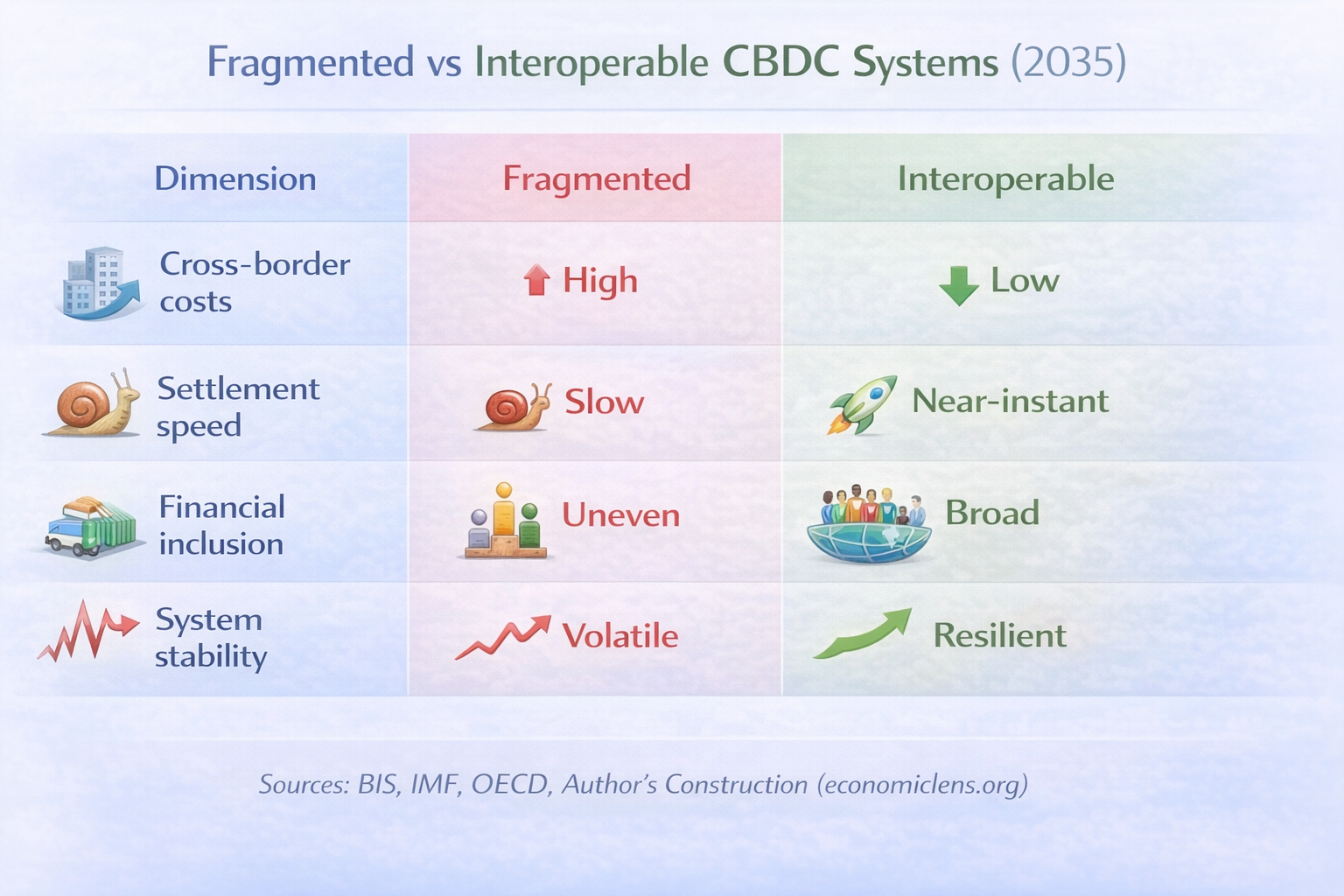
Interoperability determines whether digital currency wars deepen fragmentation or promote stability. Coordinated systems reduce friction and volatility. Without cooperation, technological rivalry risks undermining global trust.
Policy Choices in an Era of Digital Monetary Transformation
Policymakers must convert innovation into stability. This requires global CBDC standards, cybersecurity cooperation, regulation of private digital currencies, and investment in sovereign digital infrastructure. At the same time, fiscal and monetary policy must align so efficiency gains translate into real income growth.
Final Word
Digital currency wars have transformed money into code and data into power. As rivalry intensifies, advantage will belong to those who combine technology with transparency and authority with purpose.
The core risk is not digital money itself, but unmanaged competition embedded in algorithms, platforms, and payment infrastructure.
In the era of programmable finance, true monetary strength will come not from reserves alone, but from the ability to encode stability, accountability, and equity into the global financial system, as emphasized by the IMF https://www.imf.org/en/Topics/digital-money.




1 thought on “Digital Currency Wars: AI, CBDCs, and Global Finance”
Hi Economic Lens Staff,
Could you please produce a similar in-depth blog exploring China’s digital currency (the Digital Yuan)? It would be great to cover how it’s impacting the global financial landscape, its role in the digital currency wars, and what it means for monetary sovereignty and the future of digital payments.
Looking forward to your insightful analysis!
Thank you.