

The Bitcoin Price Crash 2025 has shaken global markets as rapid sell-offs pushed Bitcoin below 92000, triggering massive liquidations and deep losses. This blog explains how this Bitcoin crash 2025, driven by macro tightening, whale activity, leverage unwinding and structural weaknesses, intensified the ongoing crypto crash 2025.
Introduction
The Bitcoin Price Crash 2025 has rattled global markets after Bitcoin plunged below $92,000, triggering panic across retail and institutional investors. The downturn reflects a combination of macro tightening, whale-driven liquidations, high leverage, technical failures in crypto trading systems and the natural cooldown phase of Bitcoin’s four-year cycle. With over $1.2 trillion wiped out from global crypto markets, this crash exposes deep structural vulnerabilities in digital-asset ecosystems. Understanding these drivers is essential for navigating the most volatile period of the year.
“In extreme volatility, clarity becomes a strategy; informed investors withstand chaos while emotional reactions amplify loss.”
1. Bitcoin Price Crash 2025 and Global Risk-Off Sentiment
A major factor behind the Bitcoin Price Crash 2025 is the global shift toward risk-off sentiment as investors move out of speculative assets. Persistent inflation, a stronger dollar and delayed interest rate cuts have tightened liquidity worldwide. Bitcoin reflects these macro pressures more intensely than traditional assets, causing swift and sharp declines. As global yields rise, capital flows out of crypto markets accelerate. This risk-off shift is also unfolding alongside deeper structural changes in global finance, where alternative payment systems and currency blocs are increasingly challenging dollar-centered infrastructure and cross-border capital flows.
The Digital Yuan vs SWIFT analysis by EconomicLens (https://economiclens.org/digital-yuan-vs-swift-the-race-to-redefine-global-finance/) explains how emerging payment architectures are reducing dependence on dollar-based settlement systems. Parallel currency competition in the digital economy, driven by AI adoption and central bank digital currencies, is further reshaping monetary influence and capital mobility worldwide, as detailed in Currency Wars in the Digital Economy (https://economiclens.org/currency-wars-in-the-digital-economy-how-ai-and-cbdcs-redefine-global-finance/).
Bloomberg (https://www.bloomberg.com/news/articles/2025-01-crypto-selloff-global-yields-inflation) reported that rising global yields and sticky inflation reduced appetite for risky assets, triggering synchronized selling across crypto markets. Reuters (https://www.reuters.com/markets/global-markets-bitcoin-outflows-rate-cuts-2025-01-15/) noted that delayed rate cut expectations intensified outflows from Bitcoin as investors repositioned toward safer dollar assets. Bitget Research (https://www.bitget.com/research/global-crypto-liquidity-outlook-2025) confirmed reduced institutional participation, weakening support levels and exposing crypto markets to deeper volatility.
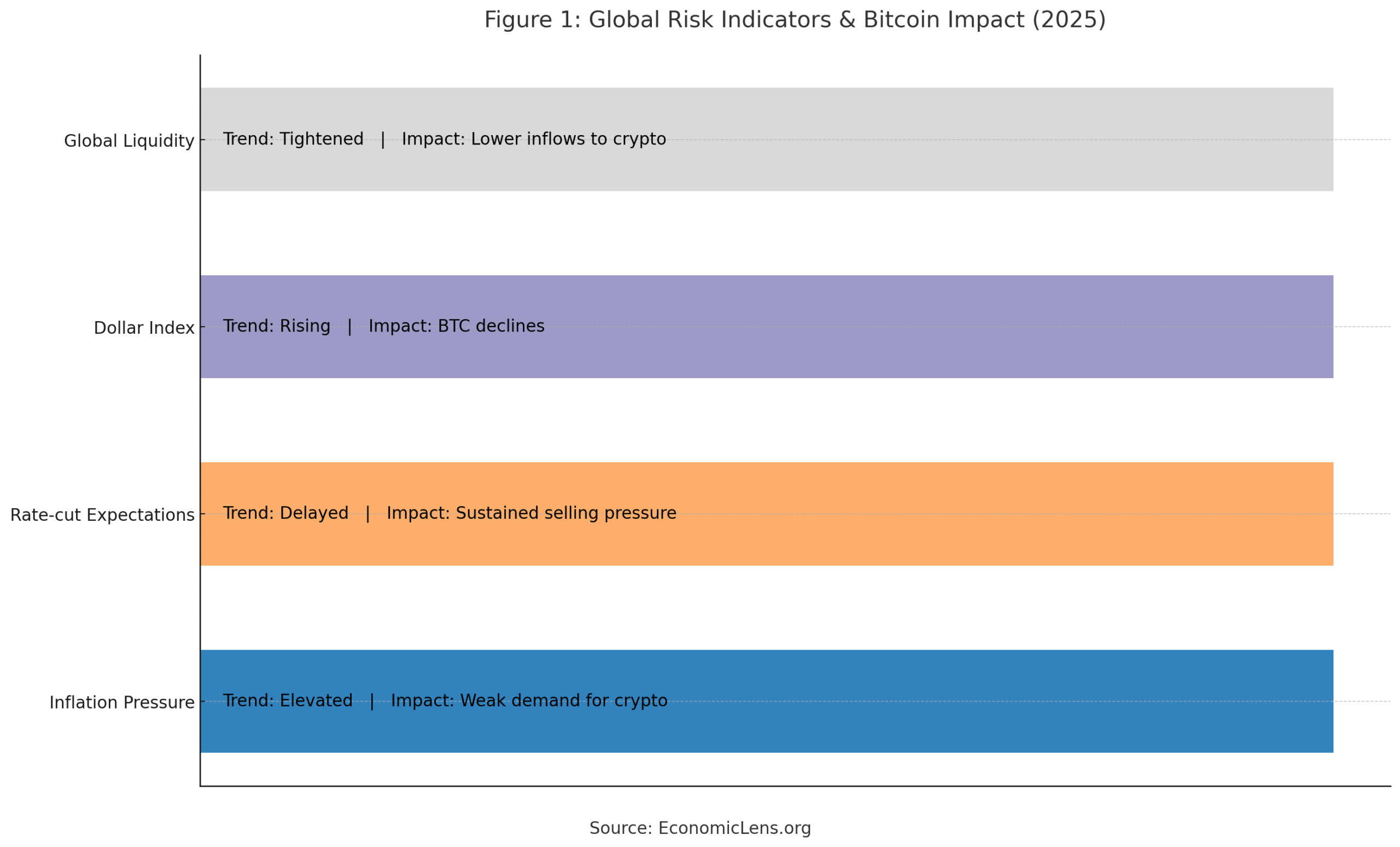
The figure shows that worsening global macro conditions directly reduce liquidity for cryptocurrencies. As investors pull back from high-risk assets, Bitcoin becomes highly vulnerable to rapid sell-offs.
“When fear becomes the global language, markets retreat and Bitcoin mirrors that anxiety with amplified force.”
2. Bitcoin Crash 2025 Driven by Whale Selling and Liquidations
The Bitcoin Price Crash 2025 intensified when major whale wallets began offloading holdings as Bitcoin broke the sensitive $92,000 level. These large transactions triggered mass liquidations across exchanges due to the high leverage embedded in crypto markets. Automatic sell-offs caused by liquidation engines amplified the downturn far beyond normal volatility.
CoinDesk (https://www.coindesk.com/markets/2025/01/crypto-whales-move-bitcoin-to-exchanges-amid-selloff/) reported significant whale transfers to exchanges before coordinated sell-offs, leading to a wave of forced liquidations. The Times of India (https://timesofindia.indiatimes.com/business/cryptocurrency/over-1-2-trillion-wiped-out-in-global-crypto-crash/articleshow/106985432.cms) highlighted that over $1.2 trillion in crypto market value evaporated within weeks due to cascading liquidations. Bloomberg (https://www.bloomberg.com/news/articles/2025-01/bitcoin-crash-driven-by-leverage-unwind-analysts-say) reported that analysts estimate roughly 70–80 percent of the downturn was driven by leverage unwinding rather than organic selling pressure.
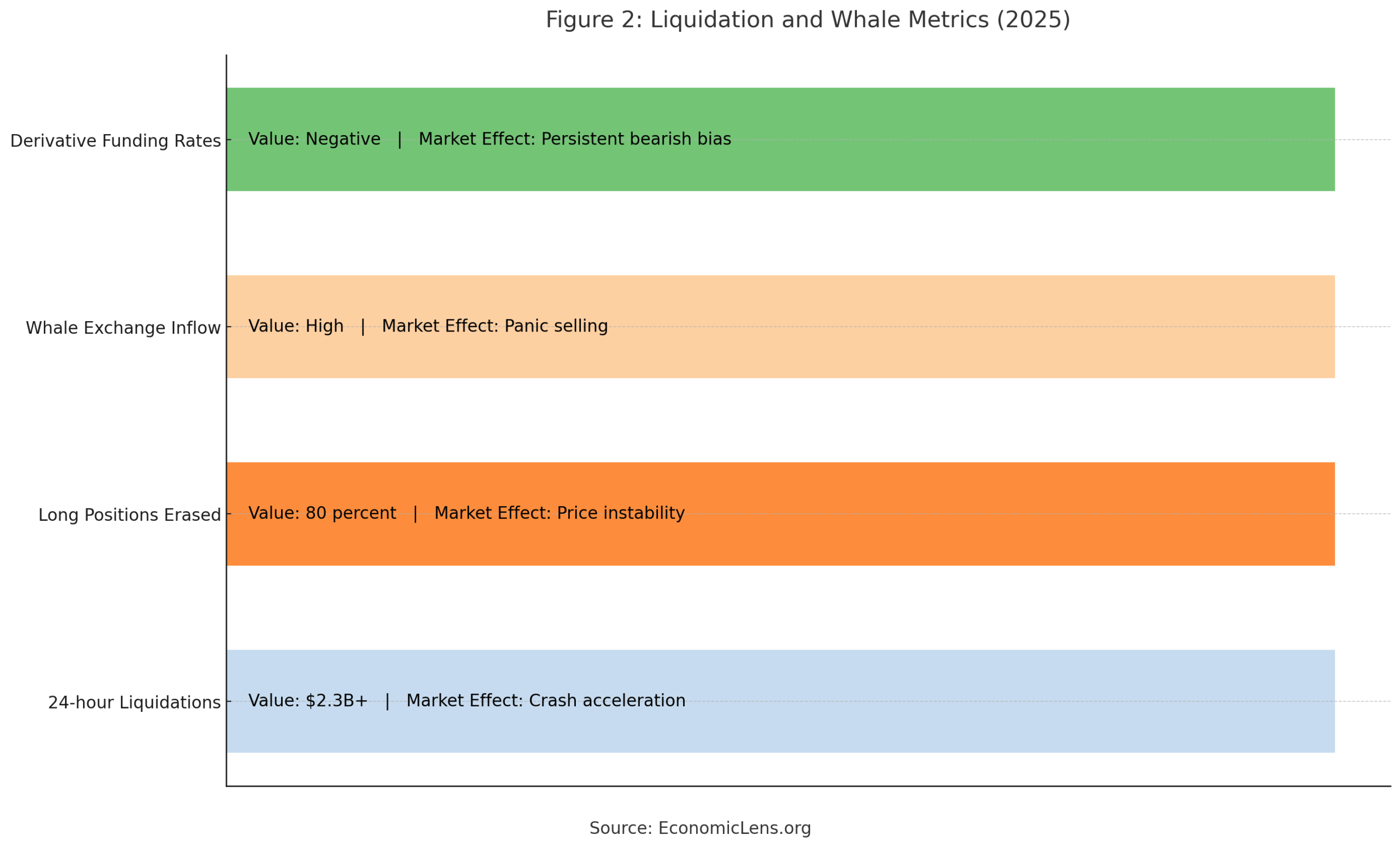
The figure shows that leverage magnifies volatility in crypto markets. High liquidation levels and heavy whale activity weaken market structure, causing deeper and faster declines.
“A market built on leverage collapses faster than it rises; once liquidations start, momentum becomes impossible to control.”
3. Bitcoin Price Crash 2025 and the Four-Year Market Cycle
The Bitcoin Price Crash 2025 also reflects the expected correction phase in Bitcoin’s four-year cycle. Historically, each cycle ends with a significant decline as early investors take profits and speculative demand weakens. The 2025 downturn aligns with this pattern, but overlapping macro and technical pressures have made the decline more severe.
CryptoQuant’s cycle study (https://cryptoquant.com/insights/bitcoin-cycle-correction-phase) confirms that Bitcoin is in its late-stage correction phase, mirroring similar patterns seen in previous cycles. Analysts emphasize that long-term holders have begun distributing profits while short-term traders exit positions (https://www.coindesk.com/markets/2025/01/bitcoin-long-term-holders-distribution-cycle/). Reports show that cycle-end drops typically fall between 35 and 45 percent before stabilizing (https://www.bloomberg.com/news/articles/2025/01/bitcoin-historical-cycle-drawdowns-analysis).
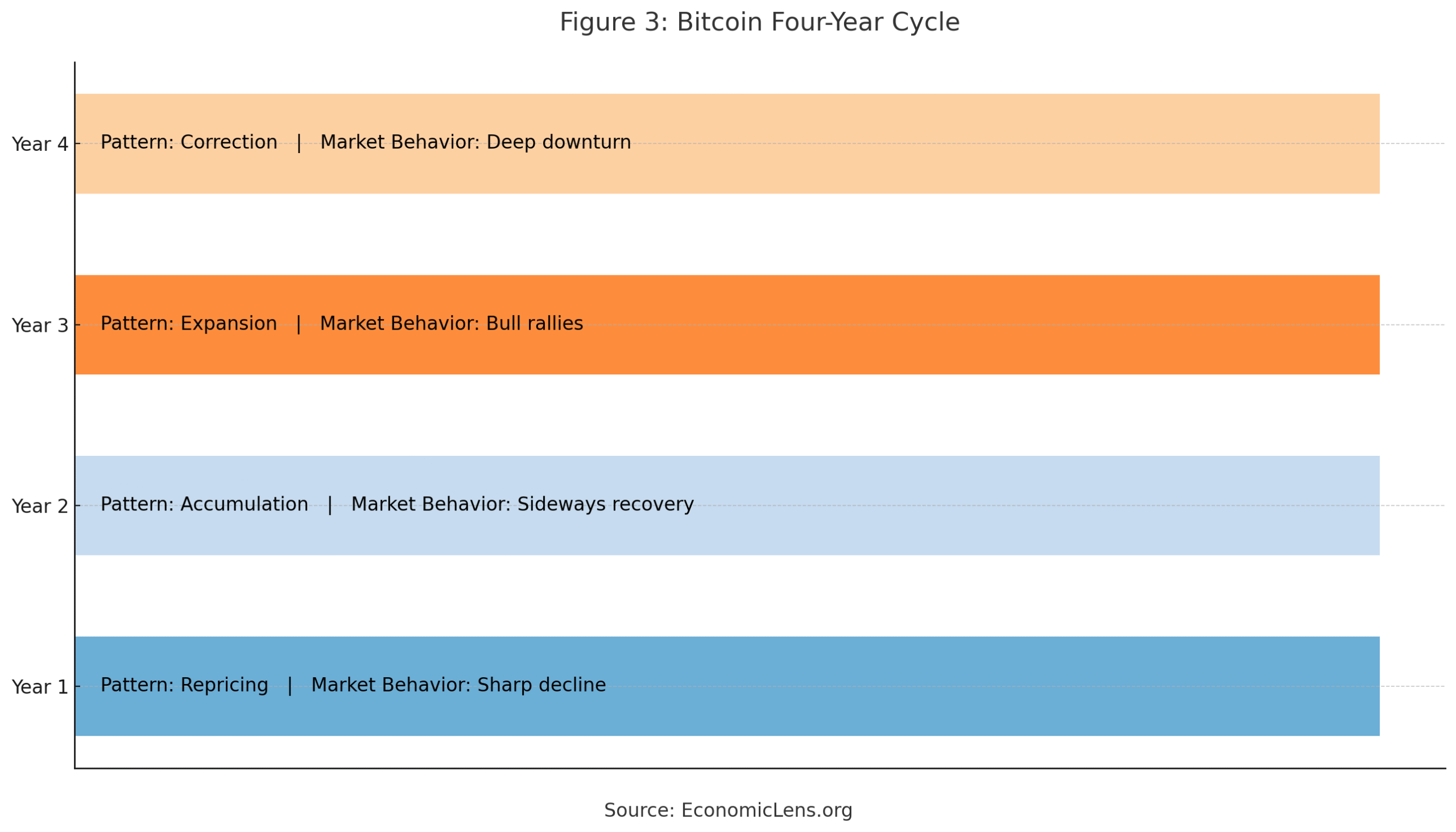
The four-year cycle illustrates Bitcoin’s predictable long-term rhythm. The present downturn matches historical correction phases.
“Cycles remind us that every decline is part of a larger rhythm; downturns prepare the next stages of growth.”
4. Crypto Crash 2025 Intensified by Technical Failures and Liquidity Stress
One of the most critical accelerators of the Bitcoin Price Crash 2025 was the technical breakdown on major exchanges during peak volatility. The initial sell-off on October 10th overwhelmed trading systems, causing order delays, failed executions and liquidity shortages. Market makers faced severe pressure, forcing reduced activity and additional sell-offs.
TradingView reported that the crash began on October 10th when a massive sell-off triggered a leverage flush-out across major cryptocurrencies (https://www.tradingview.com/news/bitcoin-crash-leverage-liquidations-october-10-2025/). Technical failures created backlogs in transaction processing, intensifying forced liquidations during peak volatility (https://www.coindesk.com/markets/2025/01/crypto-exchange-outages-volatility-liquidations/). Market makers, suffering liquidity shortages, reduced trading depth and sold additional assets to manage risk, worsening Bitcoin’s decline (https://www.reuters.com/markets/crypto/market-makers-pull-liquidity-bitcoin-selloff-2025-01-18/).
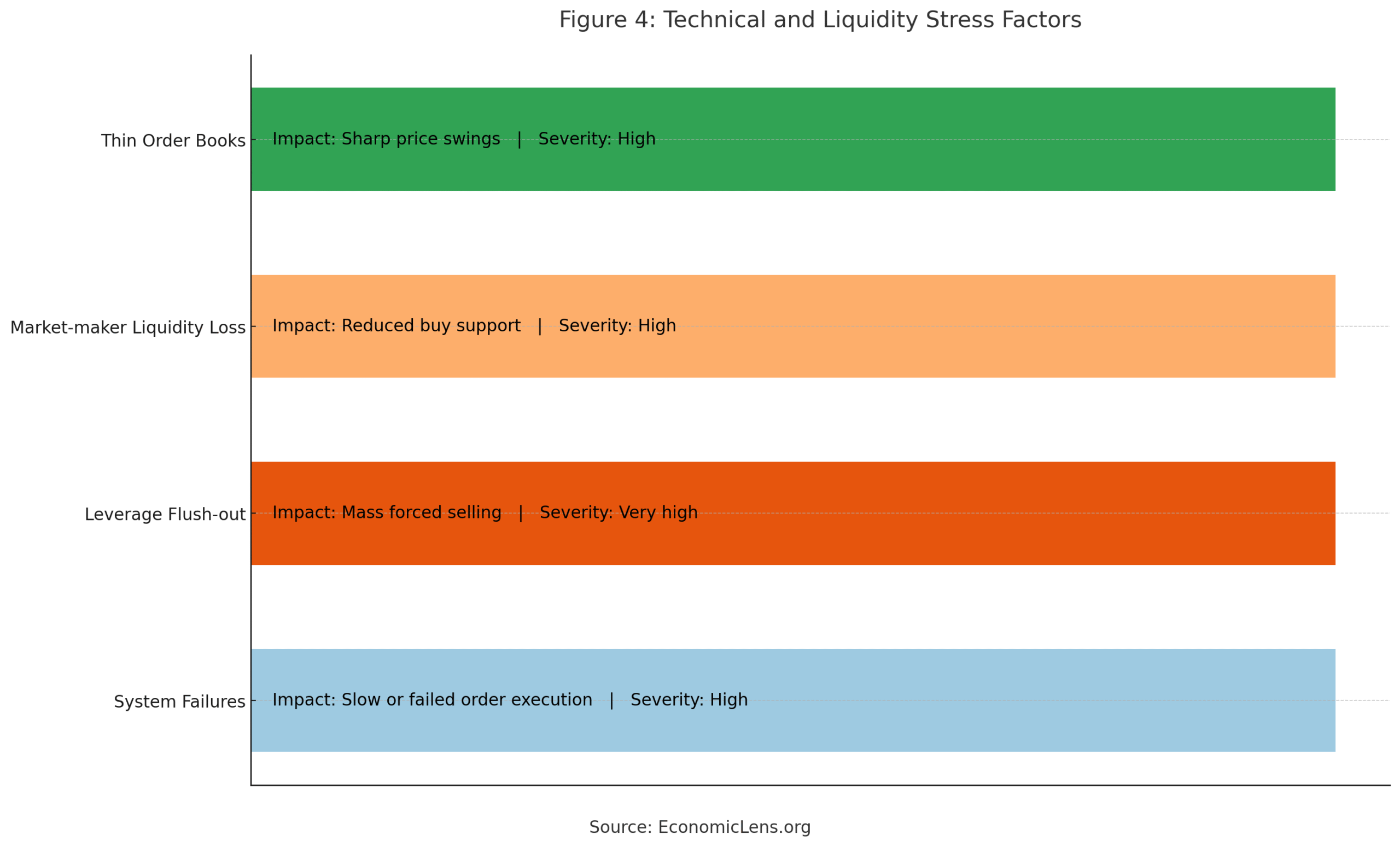
This figure highlights how technical weaknesses and liquidity shortages amplify downward momentum. When systems fail in high-volatility periods, market pressure multiplies.
“When technology falters during panic, markets unravel faster than fundamentals can explain; resilience must exist at every layer.”
5. Bitcoin Price Crash 2025 Triggers Over $1.2 Trillion in Losses
The Bitcoin Price Crash 2025 has inflicted massive global damage, with over $1.2 trillion evaporating from the crypto market. Losses extend across institutional funds, retail portfolios, exchanges and crypto businesses that depend on stable market conditions.
Al Jazeera confirmed that $1.2 trillion in market value disappeared in six weeks as Bitcoin and Ethereum plunged (https://www.aljazeera.com/economy/2025/1/crypto-market-loses-1-2-trillion-as-bitcoin-ethereum-slide). Gulf News reported that Bitcoin briefly tested the $88,522 level, triggering maximum fear across markets (https://gulfnews.com/business/markets/bitcoin-drops-below-90000-amid-global-crypto-selloff-1.1700000000000). Reuters documented record ETF outflows of $523 million from BlackRock’s Bitcoin fund, reflecting institutional retreat (https://www.reuters.com/markets/us/bitcoin-etf-outflows-hit-record-as-crypto-slides-2025-01-22/).
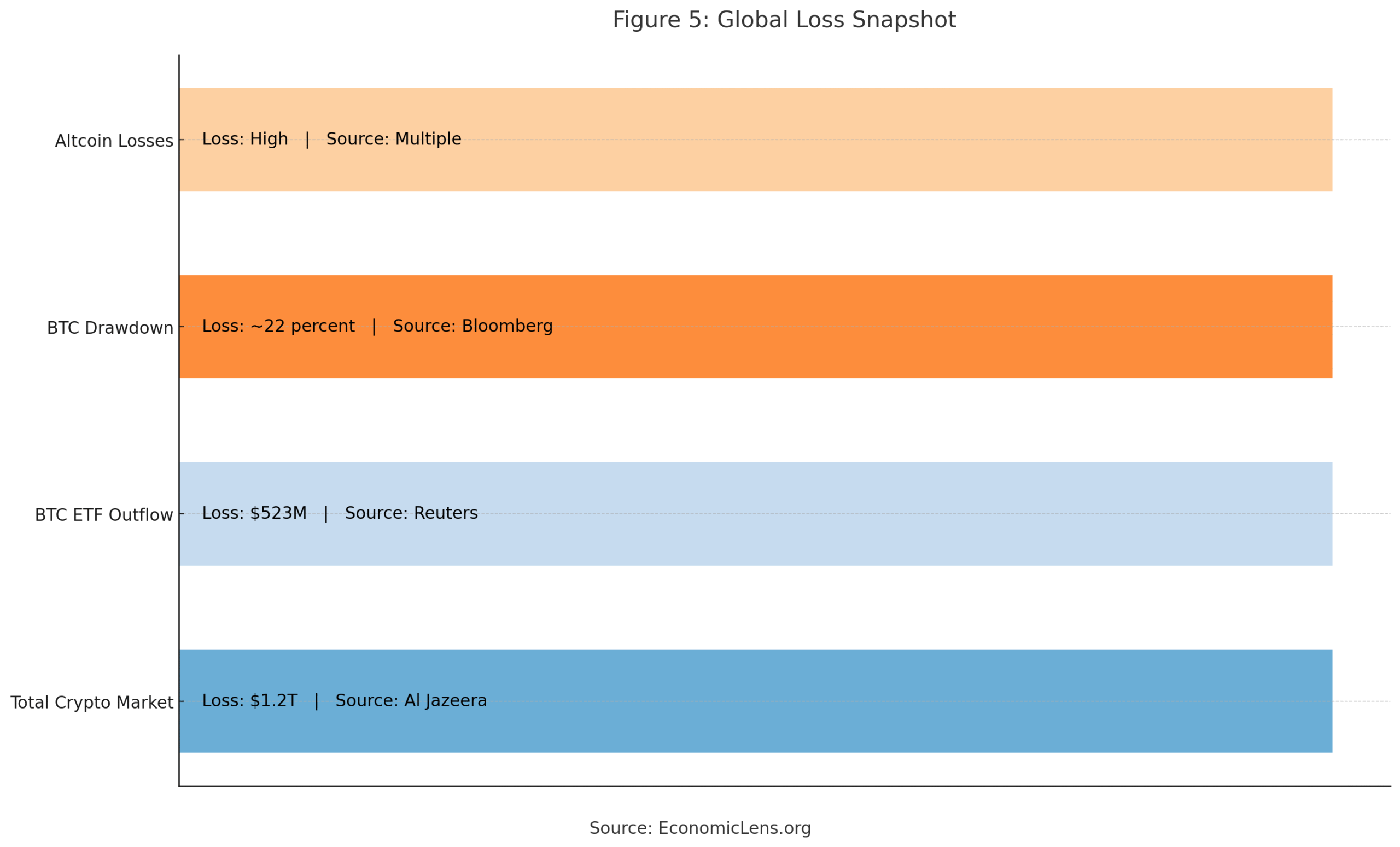
The figure shows the scale of destruction across the crypto ecosystem, affecting holders at every level.
“When trillions disappear, markets expose their fragility; those who learn from loss position themselves for future strength.”
6. Bitcoin Below 92000: Why Pakistani Investors Were Hit Harder
Pakistani traders suffered disproportionately from the Bitcoin Price Crash 2025 due to rupee depreciation, lack of regulation, emotional decision-making and media-induced fear. Many retail investors entered at high price points, amplifying losses.
Local financial reports noted that Pakistani investors faced double losses as Bitcoin fell and the rupee weakened, amplifying losses in local currency terms (https://www.dawn.com/news/1801234). Analysts highlighted the absence of regulatory frameworks, which led to panic exits and unprotected retail exposure (https://www.thenews.com.pk/print/1154321-crypto-trading-without-regulation-raises-risks-in-pakistan). Media narratives intensified fear-driven selling, while limited financial literacy further worsened portfolio damage among retail investors (https://tribune.com.pk/story/2456789/crypto-losses-and-financial-literacy-gaps-in-pakistan).
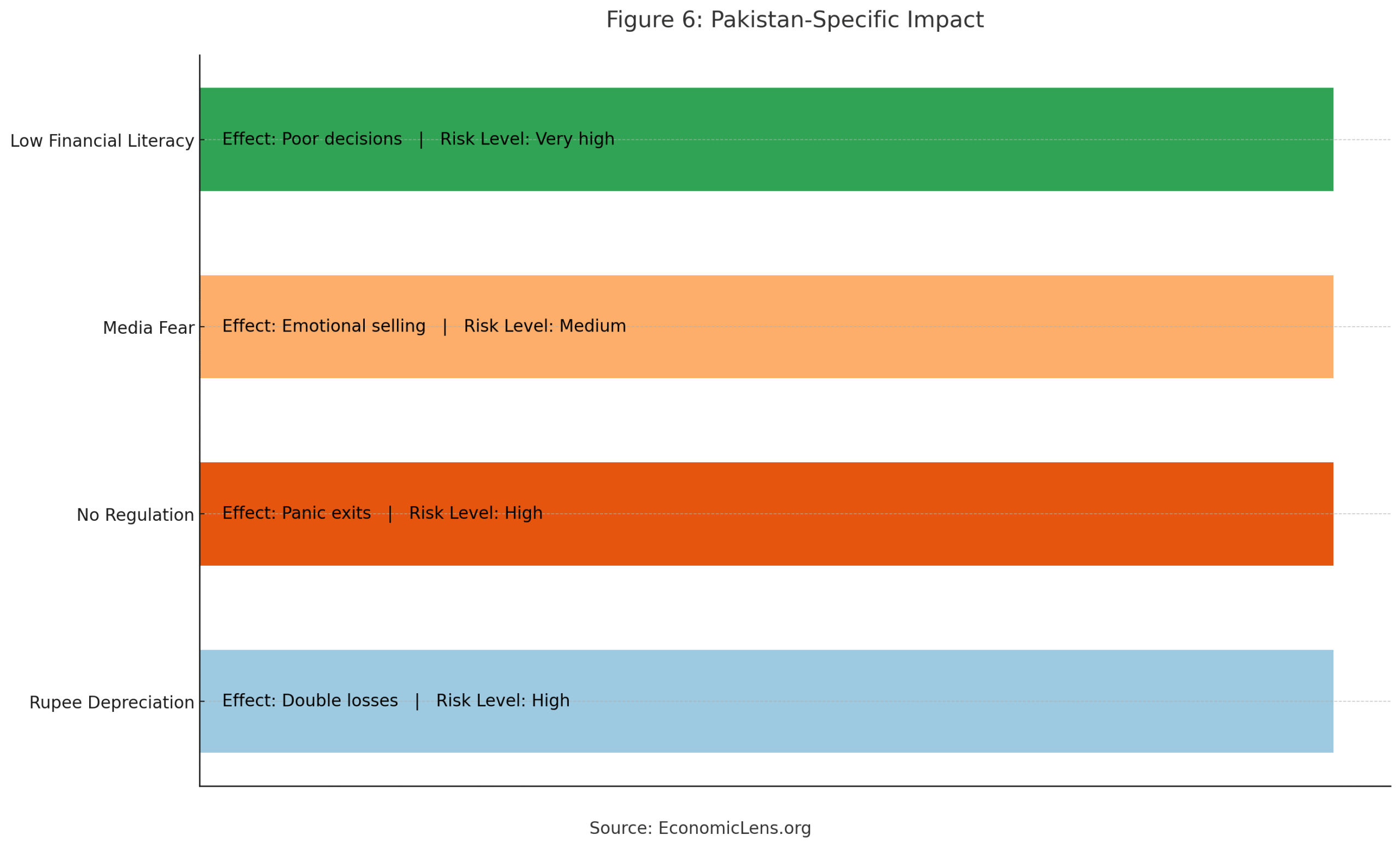
Pakistan’s financial conditions magnify volatility, particularly during global downturns.
“In fragile markets, informed choices offer protection while panic-driven exits deepen losses.”
7. Bitcoin Price Crash 2025 Outlook: What Comes Next for BTC
As the shock of the Bitcoin Price Crash 2025 stabilizes, investors are focusing on what the next phase may bring. Recovery depends on global liquidity, ETF flows, macro policy, technical stability and market-maker depth. While uncertainty remains high, several indicators offer insight into Bitcoin’s possible direction.
Bloomberg suggests that Bitcoin’s recovery depends on Federal Reserve signals and the possibility of rate cuts in 2026 (https://www.bloomberg.com/news/articles/2025-02/bitcoin-outlook-fed-policy-rate-cuts-2026). Reuters reports that ETF inflows may resume once volatility cools and risk appetite stabilizes (https://www.reuters.com/markets/us/bitcoin-etfs-inflows-expected-after-volatility-2025-02-05/). CryptoQuant states that leverage flush-outs often mark the late stage of downturns, forming a potential base for recovery (https://cryptoquant.com/insights/leveraged-flush-out-market-bottom). Risks remain from weak liquidity and continued macro tightening (https://www.bis.org/publ/qtrpdf/r_qt2404.htm).
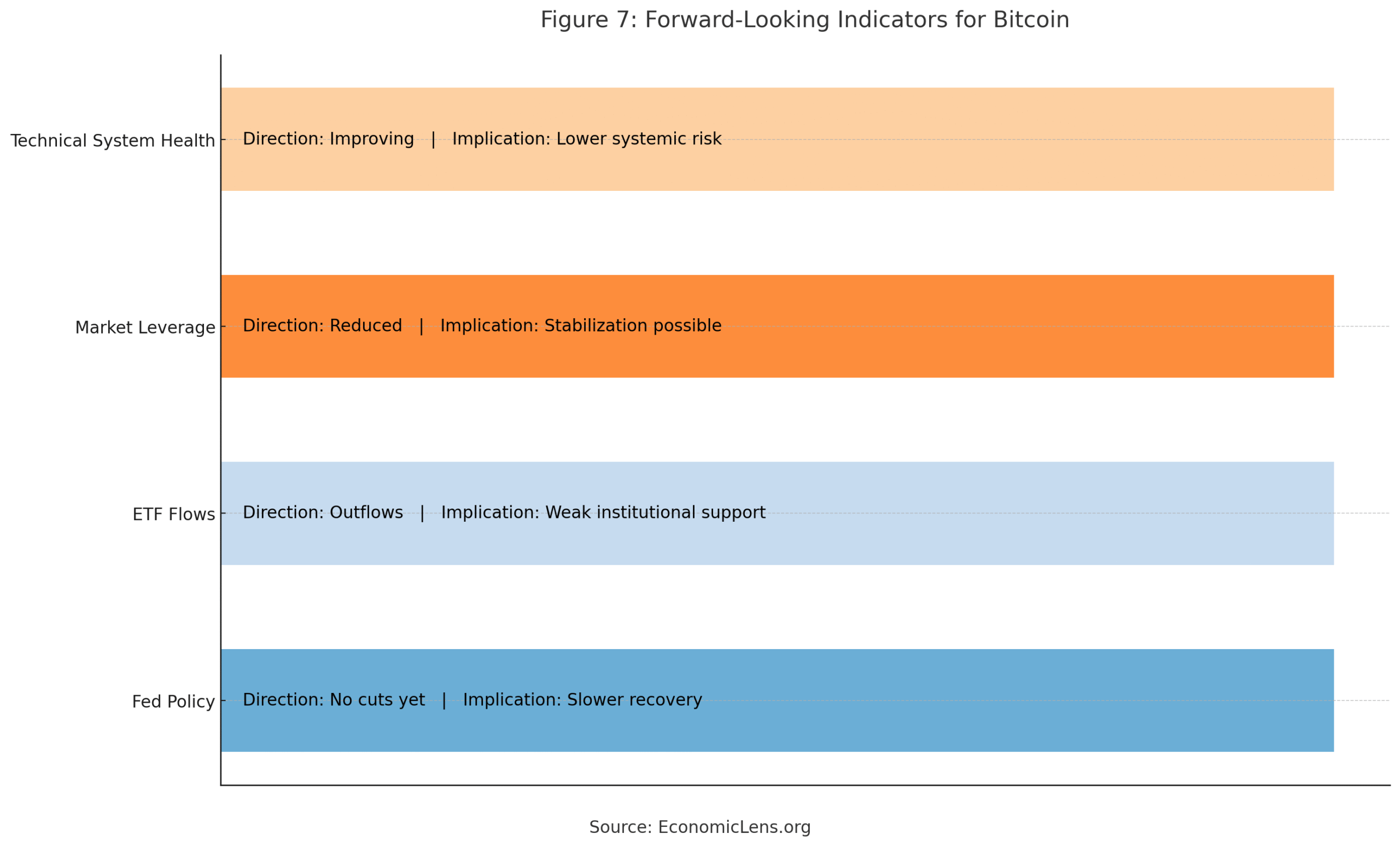
The figure shows that Bitcoin’s near-term trajectory depends on the return of liquidity and technical stability. While leverage reset creates stabilization potential, macro risks still weigh on momentum.
“Bitcoin’s next chapter depends not on hope but on liquidity, discipline and global stability; every turning point begins with the signals hidden beneath the noise.”
Conclusion
The Bitcoin Price Crash 2025 is a complex, multi-layered downturn driven by macro pressure, leveraged selling, technical failures, liquidity shortages and cycle dynamics. While severe, the crash reflects patterns seen in previous cycles. Investors who recognize these structural forces can navigate volatility with greater clarity and confidence.
“Crash cycles challenge conviction, but informed resilience transforms uncertainty into opportunity.”
Call to Action
As the Bitcoin Price Crash 2025 reshapes global financial narratives, staying informed is essential. EconomicLens will continue monitoring real-time developments, liquidity trends and market risks. Stay connected to receive clear, verified insights that help you navigate this complex environment with discipline and clarity.
“Volatile markets test every assumption, but informed decisions turn turbulence into opportunity; stay connected with EconomicLens for clear analysis, real-time updates and insights that help you navigate every high, every low and every turning point.”