
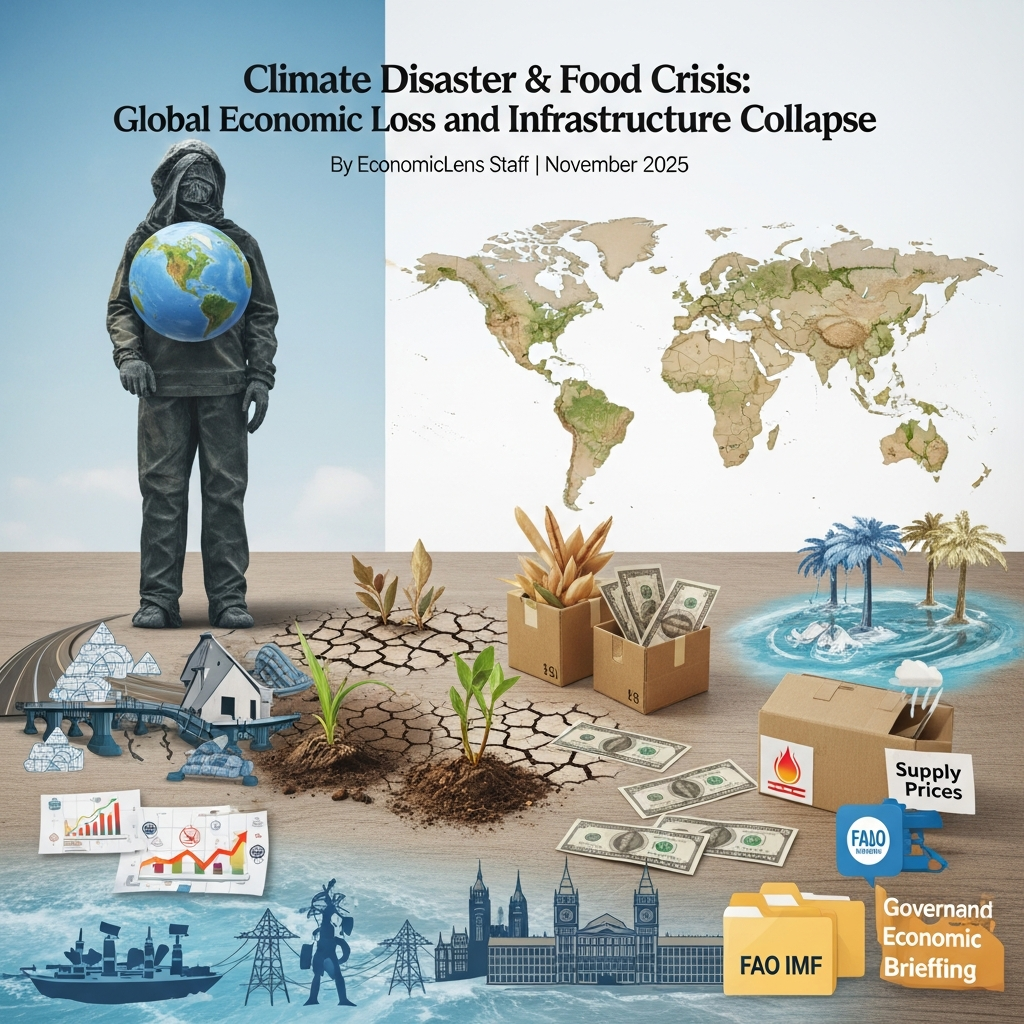
Climate disaster and food crisis now drive global economic disruption as climate shocks intensify food inflation, undermine food security, and damage infrastructure. This analysis explores rising fiscal stress, agricultural losses, migration pressures, and systemic risks shaping long-term global resilience.
Introduction
The accelerating convergence of the climate disaster food crisis is reshaping global economic stability at unprecedented speed. As climate shocks intensify, they weaken food security, fuel food inflation, disrupt infrastructure, and strain national budgets. Moreover, rising debt, persistent inflation, and shrinking fiscal space leave governments with fewer tools to respond to repeated climate shocks. Because these crises intensify each other, economic systems face a deeper and more structural vulnerability: each climate disaster worsens the food crisis, while each food crisis accelerates inflation and damages fiscal stability. Consequently, nations must rethink climate, food, and fiscal policy as an interconnected challenge.
This blog analyzes these dynamics across five structured sections, including a new integrated analysis of migration pressures, followed by a consolidated policy implications section.
1. Climate Disaster Economics & Global Exposure
Climate disaster impacts are becoming more frequent, more destructive, and more expensive. Governments across all income levels face rising reconstruction costs, shrinking recovery periods, and mounting debt. Because climate shocks strike repeatedly, economies lose resilience over time and fiscal pressure compounds. This escalating exposure marks a structural shift in global economic risk.
IMF economist Dr. Leila Morgan states: “Climate disasters have evolved from rare shocks into persistent economic stressors, weakening national budgets year after year.”
The World Bank’s 2024 Climate Burden Outlook estimates global climate disaster losses at $348 billion, reflecting a decade of uninterrupted increases.
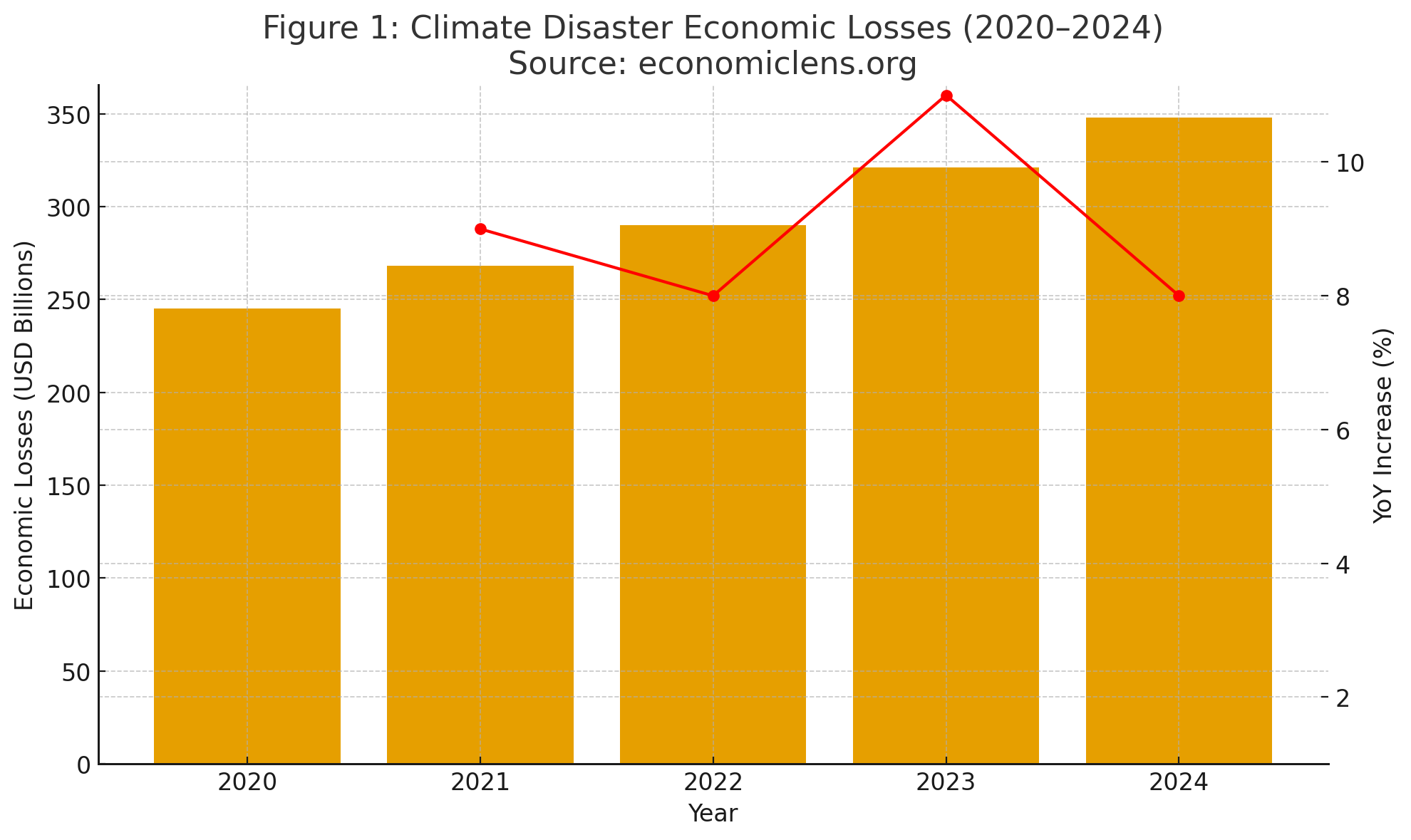
The data confirms that climate disaster losses are rising consistently, revealing a structural trend that threatens long-term fiscal sustainability.
“Countries that act now can convert exposure into resilience—those that delay risk turning every climate disaster into an economic breaking point.”
2. Food Crisis, Climate Shocks & Rising Migration Pressures
The food crisis is intensifying as climate disasters dismantle agricultural systems, increase food inflation, and destabilize food security around the world. Because climate shocks strike repeatedly, rural livelihoods collapse, and millions cannot sustain themselves in climate-exposed regions. As a result, climate-induced migration is accelerating, turning environmental stress into a major economic and demographic challenge. Consequently, food insecurity has evolved beyond a humanitarian issue—it now shapes population movements, labor markets, and national stability.
FAO food systems analyst Richard Alvarez emphasizes: “Food security is now the strongest predictor of climate displacement. When harvests fail, migration becomes inevitable.”
UN climate mobility specialist Dr. Elisa Marquez adds: “The link between food crisis and forced migration is tightening. Communities hit by repeated climate shocks are relocating at unprecedented scale.”
FAO’s 2024 Food Security Outlook attributes 23% of global crop losses directly to climate shocks. Simultaneously, the 2024 UN Internal Displacement Report shows 32 million climate-driven displacements, mostly in food-insecure regions.
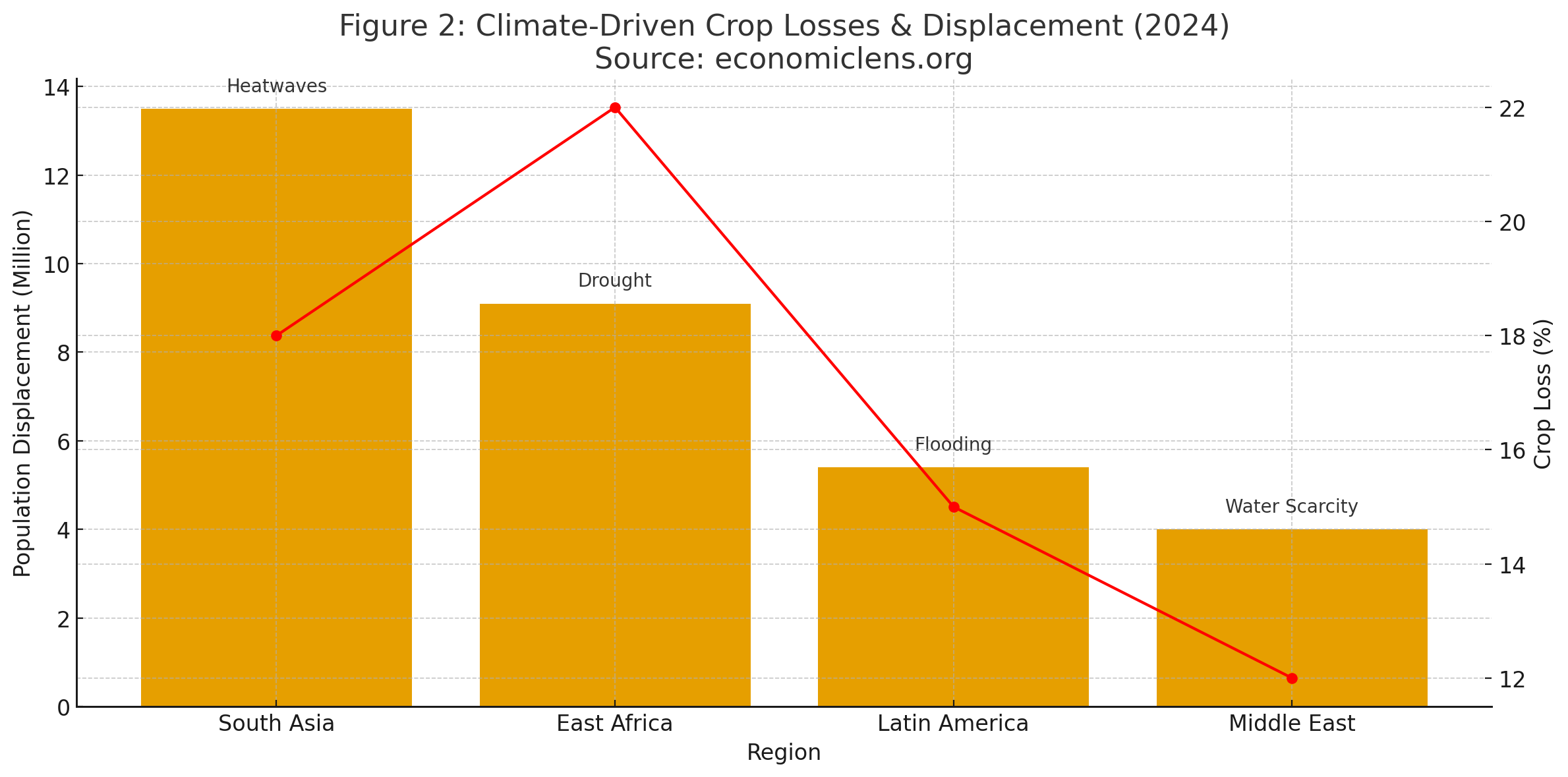
Regions experiencing severe climate shocks also face the highest displacement rates, showing that the food crisis and climate migration are deeply interconnected economic forces.
“When food systems fail, people must move. But by strengthening food security and climate resilience, nations can protect both communities and economic stability.”
3. Climate Disaster & Infrastructure Breakdown
Infrastructure—roads, ports, energy grids, and water systems—is increasingly unable to withstand intensifying climate disasters. As failures multiply, productivity declines, capital losses rise, and essential services become unreliable.
OECD analyst Dr. Hana Kirov warns: “Infrastructure fragility amplifies every climate disaster, turning environmental shocks into long-term economic setbacks.” The OECD’s 2024 Infrastructure Resilience Report estimates $120 billion in climate-related infrastructure damage worldwide.
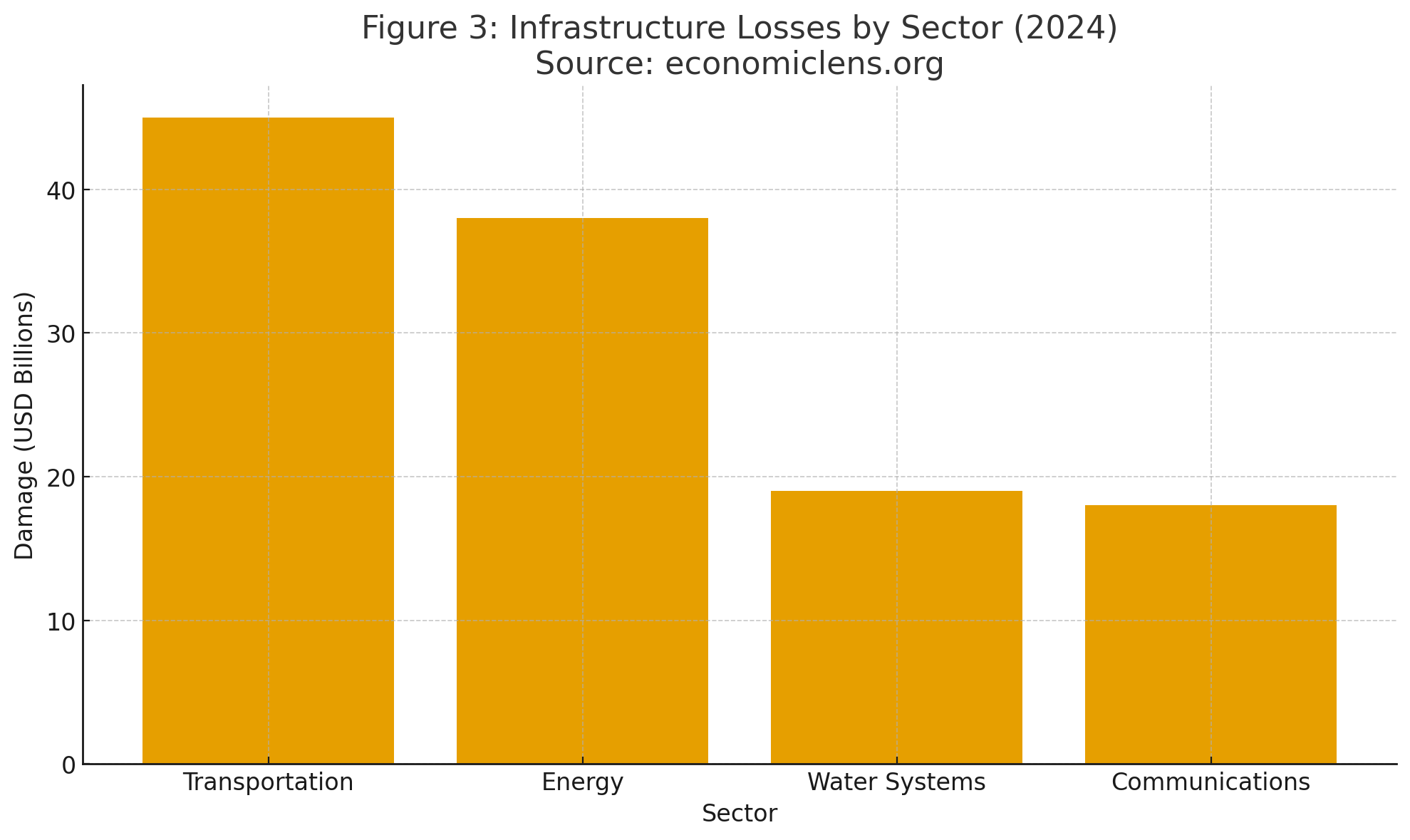
Transport and energy networks suffer the highest losses, highlighting their critical vulnerability in climate disaster scenarios.
“Resilient infrastructure turns climate risk into economic strength—fragile infrastructure turns climate disasters into national crises.”
4. Climate Disaster, Supply Chains & Food Inflation
Climate disasters disrupt global supply chains, especially food and energy routes. These disruptions push costs upward, intensifying food inflation and creating persistent economic instability.
BIS economist Dr. Martin Hale notes: “Climate-driven supply shocks fuel inflation beyond what monetary policy can manage.”
The BIS 2024 Climate Economics Bulletin reports that climate-related disruptions raised global logistics costs by 17%, with food items most affected.
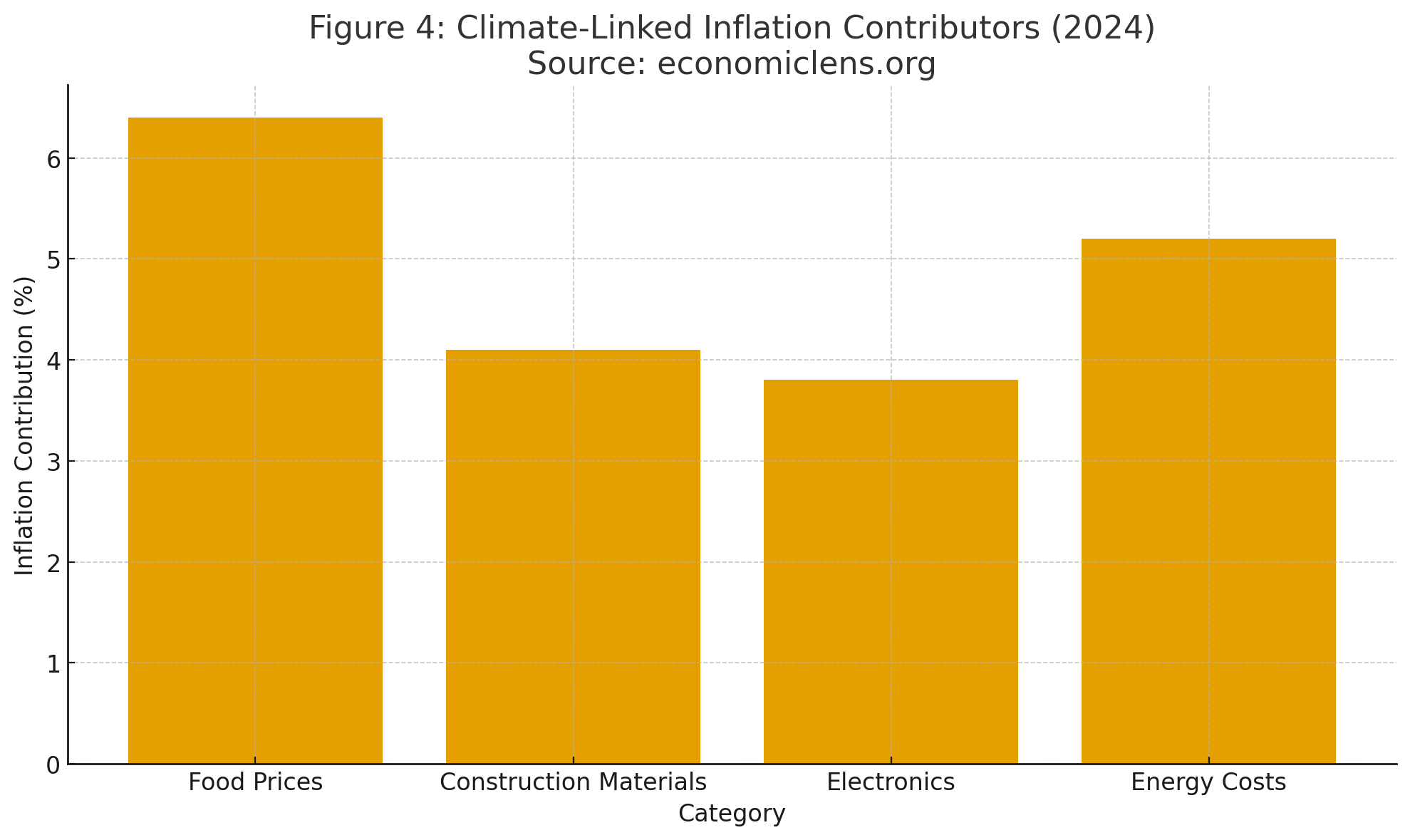
Food inflation is the most severe climate-linked cost driver, showing how climate disasters launch cascading price shocks across economies.
“Stabilizing supply chains is not just an economic choice—it is the strongest defense against climate-driven inflation.”
5. Governance Gaps & Climate Disaster Risk
Governance quality determines whether climate disaster and food crisis impacts are contained or amplified. Weak regulation, slow adaptation policies, and fragmented planning increase vulnerability and fiscal pressure.
World Bank advisor Dr. Miriam Conte states: “Governance gaps multiply climate losses. Countries with weak systems recover slower and suffer deeper crises.”
The Global Adaptation Index 2025 finds that 63% of countries remain inadequately prepared for climate shocks.
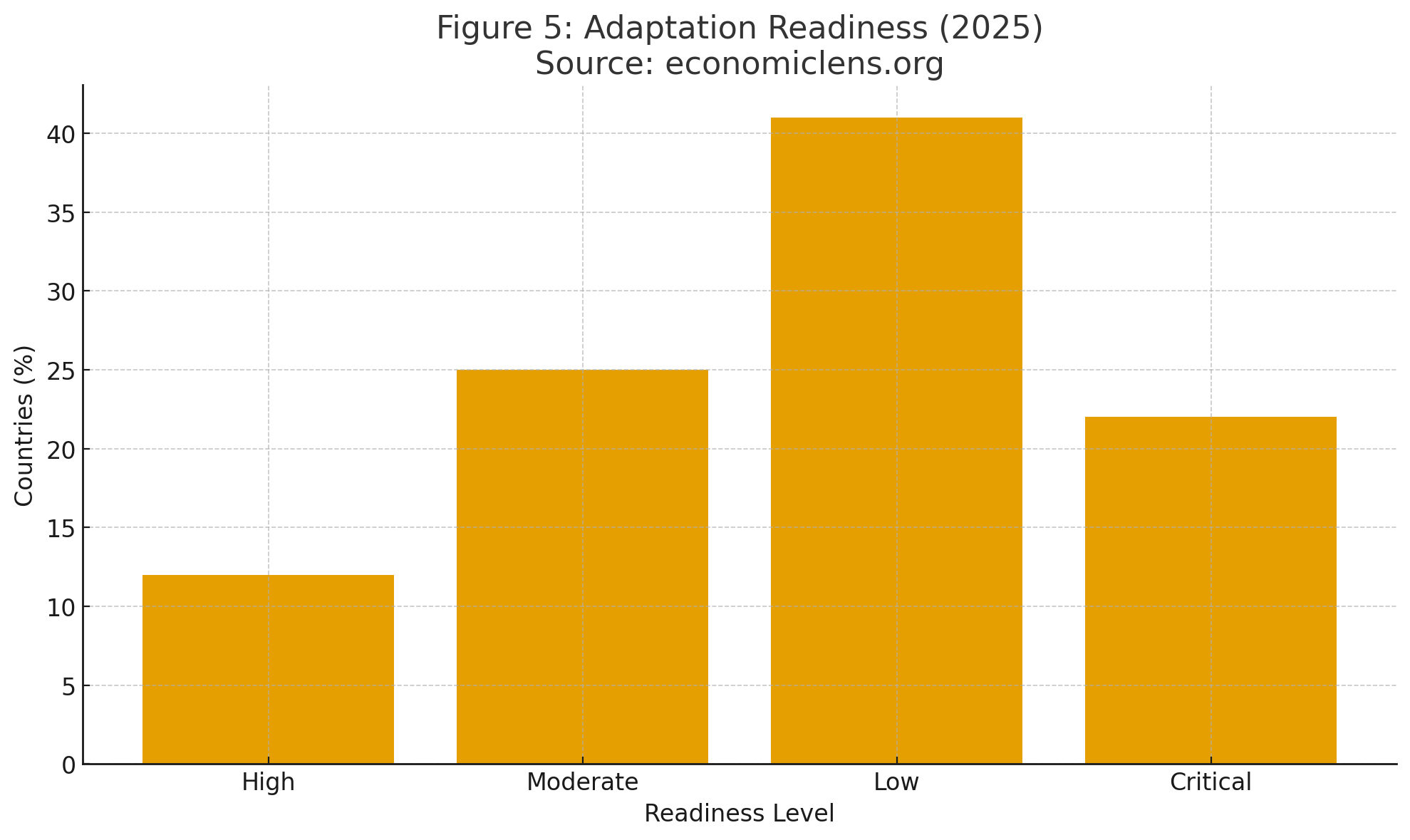
Most countries are still in low-readiness categories, revealing a global preparedness gap that increases climate and food-system fragility.
“Good governance is the shield between climate disaster and national stability. Without it, every shock becomes a crisis.”
Policy Implications
Nations must embed climate disaster risk into fiscal planning, strengthen food systems, and accelerate adaptation financing. Governments should modernize infrastructure with climate-resilient standards, diversify supply chains to reduce climate-driven food inflation, and expand investment in early-warning systems. Public institutions must adopt climate-stress testing, enforce transparent climate governance, and allocate resources to vulnerable regions where shocks hit hardest.
“Smart, forward-looking policy turns climate danger into future resilience. The governments that act now will shape economic security in the climate era.”
Conclusion
The combined forces of climate disaster and food crisis have become defining economic challenges of the century. Climate shocks destabilize food security, fuel food inflation, damage infrastructure, and accelerate migration—all while straining national budgets. Yet with strong governance, strategic investments, and resilient planning, nations can protect communities and build long-term stability. The path forward requires urgency, coordination, and vision.
Call to Action
Support climate-resilient food systems, advocate for sustainable infrastructure, and stay informed about climate-driven economic risks. Individual awareness and public engagement play a critical role in building collective resilience.



3 thoughts on “Climate Disaster & Food Crisis: Global Economic Loss and Infrastructure Collapse”
Superb
Well defined analysis about climate disaster and economic loss… Highly recommended
Excellent