
The education disruption decade is transforming global education through AI tutors and e-learning systems. While digital tools improve personalization and access, unequal connectivity, device shortages, and skills gaps are widening inequality. This analysis explores how AI education disruption and the digital learning divide shape outcomes worldwide.
Introduction
The education disruption decade represents one of the most significant shifts in modern learning systems. Rapid advances in AI tutors, widespread adoption of e-learning platforms, and persistent inequality risks are reshaping how societies educate future generations. Because digital tools are spreading faster than institutions can adapt, the education disruption decade creates both opportunity and instability.
AI-driven learning promises personalization, continuous feedback, and flexible pacing. However, access remains uneven across regions and income groups. As a result, the education disruption decade accelerates progress for connected students while widening learning gaps for others. Moreover, conflict, climate shocks, and economic pressure continue to push millions of learners into fragile digital environments.
The digital learning divide now determines education outcomes as much as curriculum quality. Students without devices, internet access, or digital skills struggle to keep pace. Meanwhile, digitally advanced systems integrate AI tutors at scale. This imbalance reinforces inequality and limits social mobility.
Understanding the education disruption decade is essential for governments, educators, and investors. Education now shapes workforce readiness, economic resilience, and long-term stability. Without targeted reforms, this decade risks deepening inequality instead of reducing it.
1. Education Disruption Decade and AI Tutors in Personalized Learning
AI tutors sit at the core of the education disruption decade. These systems adapt content, track performance, and provide instant feedback. AI education disruption enables learning to move beyond classroom limits.
However, concerns continue to grow. Algorithmic bias, weak oversight, and data privacy risks remain unresolved. In high-income systems, AI tutors complement teachers. In low-income systems, limited access reduces impact. Consequently, AI education disruption can widen gaps if policy safeguards remain weak.
Expert Insight & Global Report Signals
UNESCO’s AI in Education Report 2024 (https://www.unesco.org/en/education/digital-education) explains that AI tutors improve learning outcomes when paired with trained educators and stable digital infrastructure. The report also warns that unequal access to devices and connectivity risks excluding low-income regions from AI-driven education benefits.
The World Bank Education Technology Review 2025 (https://www.worldbank.org/en/topic/edutech) highlights that AI-supported learning performs best in systems with teacher training and regulatory oversight. For deeper context on how AI disruption influences employment and inequality, see our related analysis:
https://economiclens.org/ai-and-automation-navigating-job-displacement-economic-inequality-in-2026/
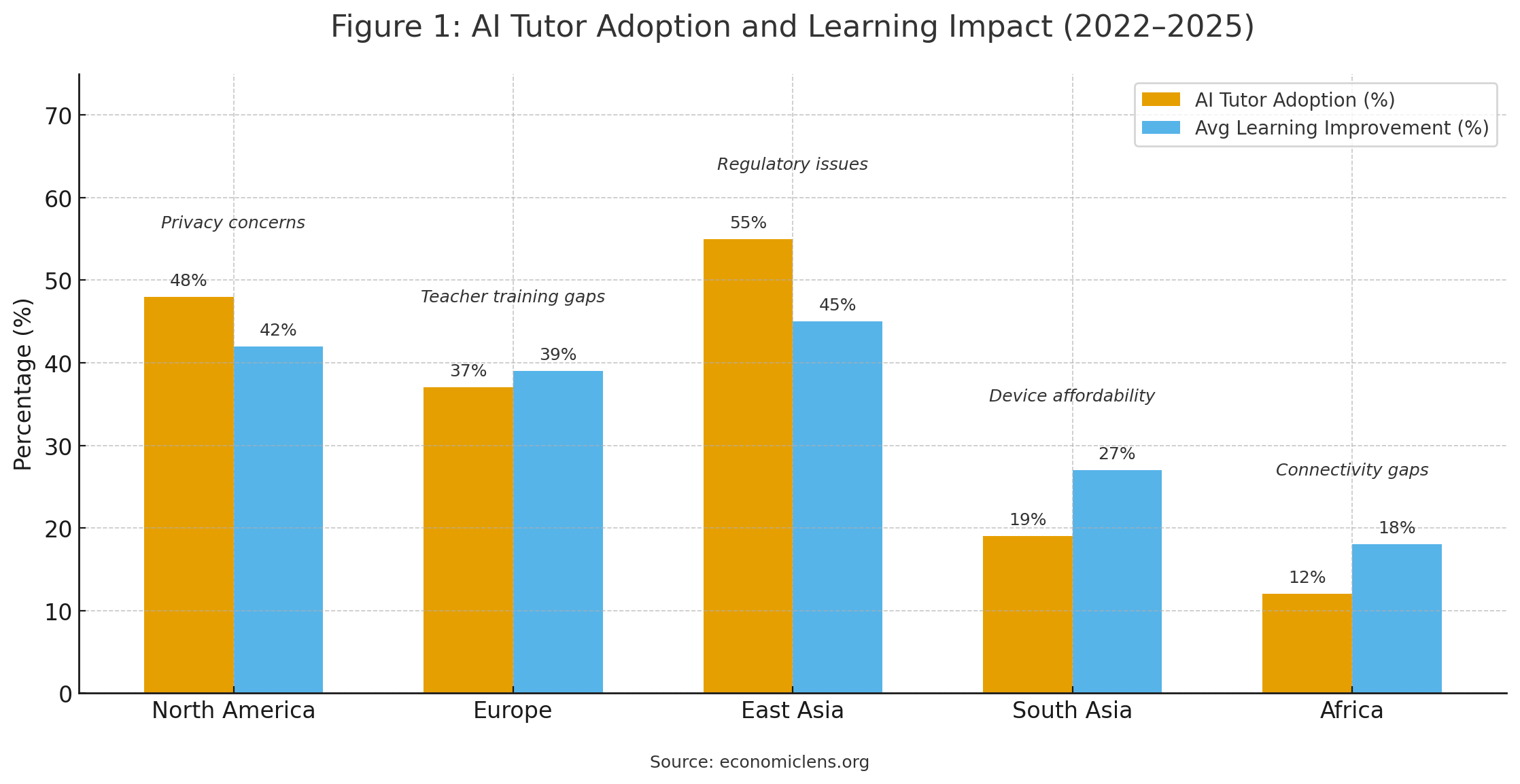
High-income regions report significant gains from AI tutoring, while low-income regions lag behind due to cost, connectivity, and skill barriers. This signals a widening digital learning divide where students with access accelerate, while others stagnate.
“AI can be the great equalizer, or the great divider, depending on who gets access first.”
2. Education Disruption Decade and the Digital Learning Divide
The pandemic pushed e-learning into the global mainstream. However, the education disruption decade revealed that digital readiness varies sharply across countries, regions, and households. The digital learning divide now shapes educational outcomes as much as curriculum or teaching quality.
High income students benefit from reliable internet, personal devices, and digital literacy support. In contrast, millions of learners face unreliable connectivity, shared devices, or no access at all. These disparities reduce engagement, increase dropout rates, and worsen long term learning loss.
E-learning platforms offer flexibility and scalability, but they depend on stable infrastructure. Without it, digital education becomes fragile. Consequently, the education disruption decade exposes structural weaknesses rather than solving them.
Expert Insight & Global Report Signals
Educational sociologist Andreas Schleicher (https://www.oecd.org/education) from the OECD explains that digital expansion has revealed foundational inequality: “We have not just digitized learning. We have exposed how uneven the foundations of modern education truly are.”
The World Bank Education Technology Review 2025 (https://www.worldbank.org/en/topic/edutech) shows completion rates rise only where students have broadband access, parental support, and teacher guidance.
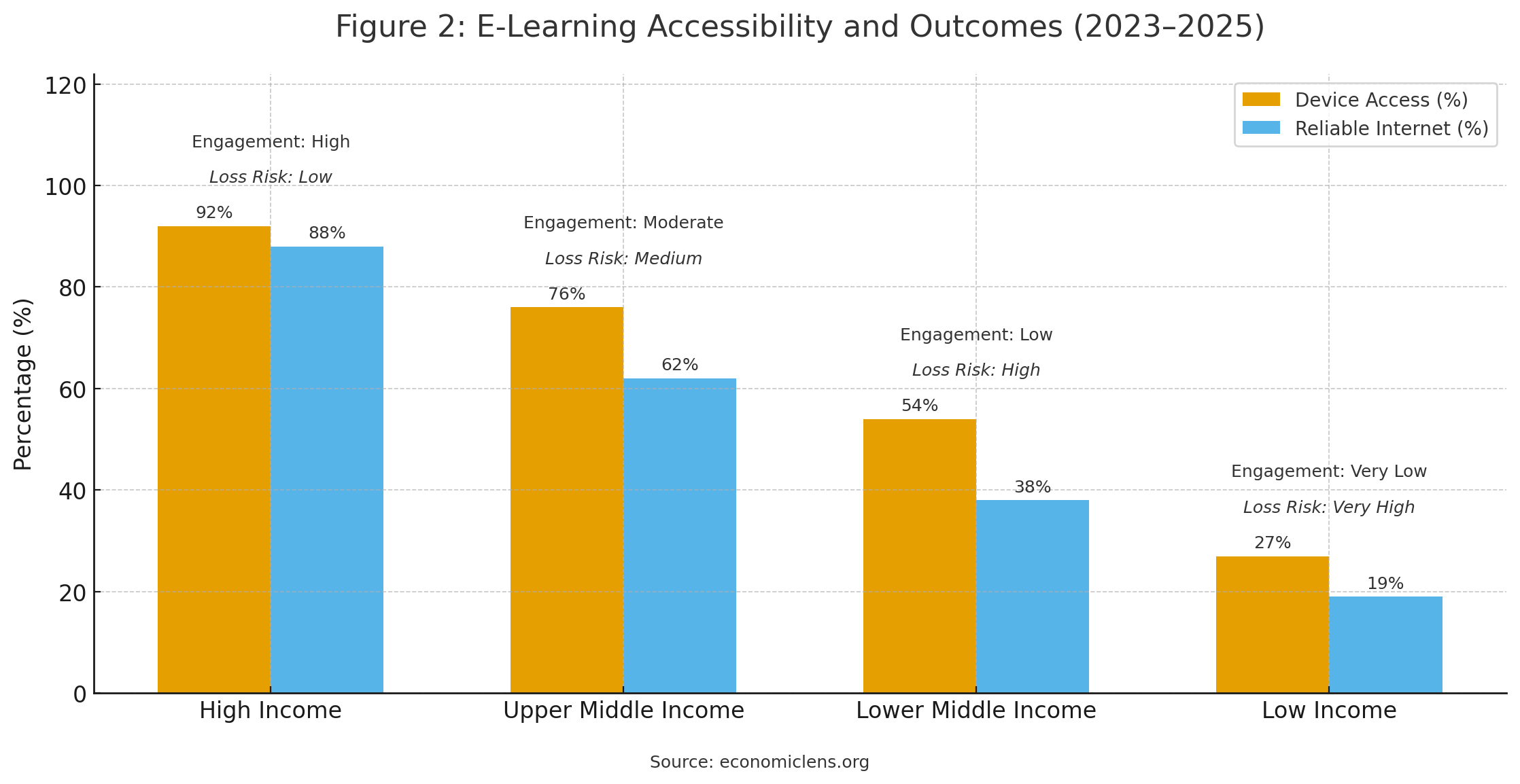
E-learning success is strongly correlated with device and internet access. Students in low-income countries face severe constraints, elevating the risk of long-term learning loss. The digital gap continues to widen even as global investment in EdTech accelerates.
“Digital classrooms promise a new world of learning, but only for those who can log in.”
3. Education Disruption Decade: Learning Loss, Inequality, and Policy Choices
Beyond access challenges, the education disruption decade has produced deep learning loss. Extended school closures, hybrid instability, and digital fatigue weakened reading, math, and cognitive development. While digital literacy improved, foundational skills declined in many regions.
These losses have lasting consequences. Lower literacy and numeracy reduce lifetime earnings, limit workforce readiness, and slow economic growth. The longer recovery is delayed, the deeper the damage becomes.
Policy now determines whether disruption leads to recovery or long term decline. Governments must treat digital access as public infrastructure. Teachers require training to manage AI tools responsibly. AI tutors require strong governance to protect privacy and prevent bias.
Expert Insight & Global Report Signals
Neuroscientist Dr. Adele Diamond (https://www.developmentalcognitive.org) warns that early learning disruption affects cognitive development and executive function. The Global Learning Poverty Report 2024(https://www.worldbank.org) shows that 70 percent of children in low income regions cannot read basic text by age ten. The World Economic Forum Future of Learning 2030 roadmap (https://www.weforum.org) calls for broadband expansion, affordable device programs, and transparent AI governance.
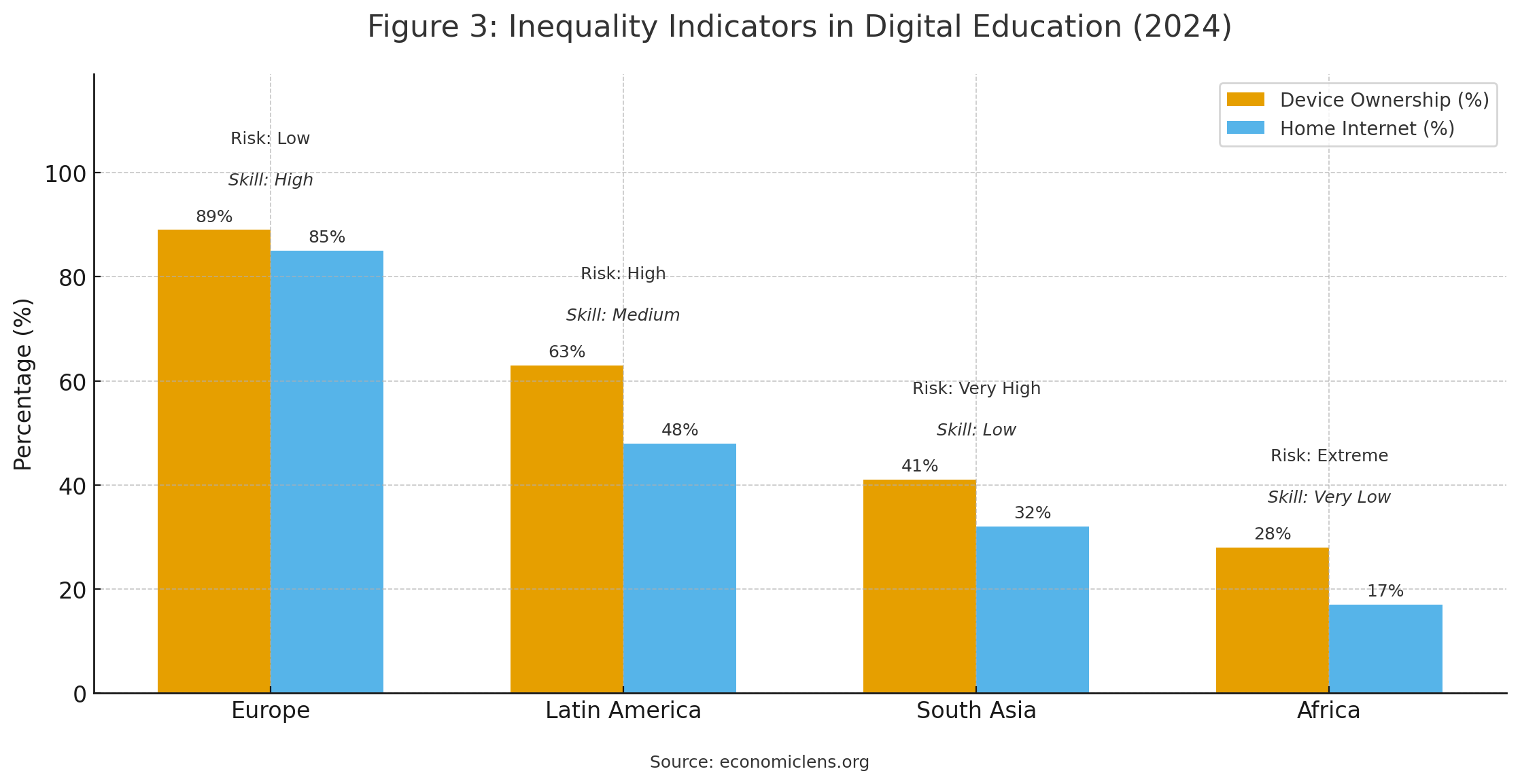
Regions with low digital literacy and device ownership face the sharpest educational inequalities. This translates directly into long-term gaps in employment, earnings, health, and social mobility.
“A child’s future should not depend on the speed of their internet connection.”
4. Education Disruption Decade and Learning Loss Risks
Beyond access and technology gaps, the education disruption decade has produced persistent learning loss across many regions. COVID-19 lockdowns, unstable hybrid schooling, and prolonged screen exposure disrupted the continuity of education. As a result, many learners experienced regression in reading, mathematics, and critical thinking. Younger children remain the most affected because foundational learning stages were interrupted at critical moments.
Although schools reopened, recovery has been slow and uneven. Many education systems lack remedial capacity, trained staff, and targeted support mechanisms. Consequently, learning gaps that emerged during early disruption years continue to widen. Digital tools alone have not reversed this trend, especially in environments with limited teacher engagement and weak learning support structures.
Over time, these losses translate into reduced academic confidence, lower skill accumulation, and long-term economic consequences. Therefore, addressing learning loss has become one of the most urgent challenges of the education disruption decade.
Expert Insight & Global Report Signals
Neuroscientist Dr. Adele Diamond (https://www.developmentalcognitive.org) explains that prolonged learning disruption during early childhood affects cognitive development, particularly executive function and attention control. The Global Learning Poverty Report 2024 by the World Bank (https://www.worldbank.org) finds that nearly 70 percent of ten-year-olds in low-income regions cannot read a basic text, compared with 57 percent before the pandemic. The report also notes that hybrid education models have not closed this gap where teacher support and learning continuity remain weak.
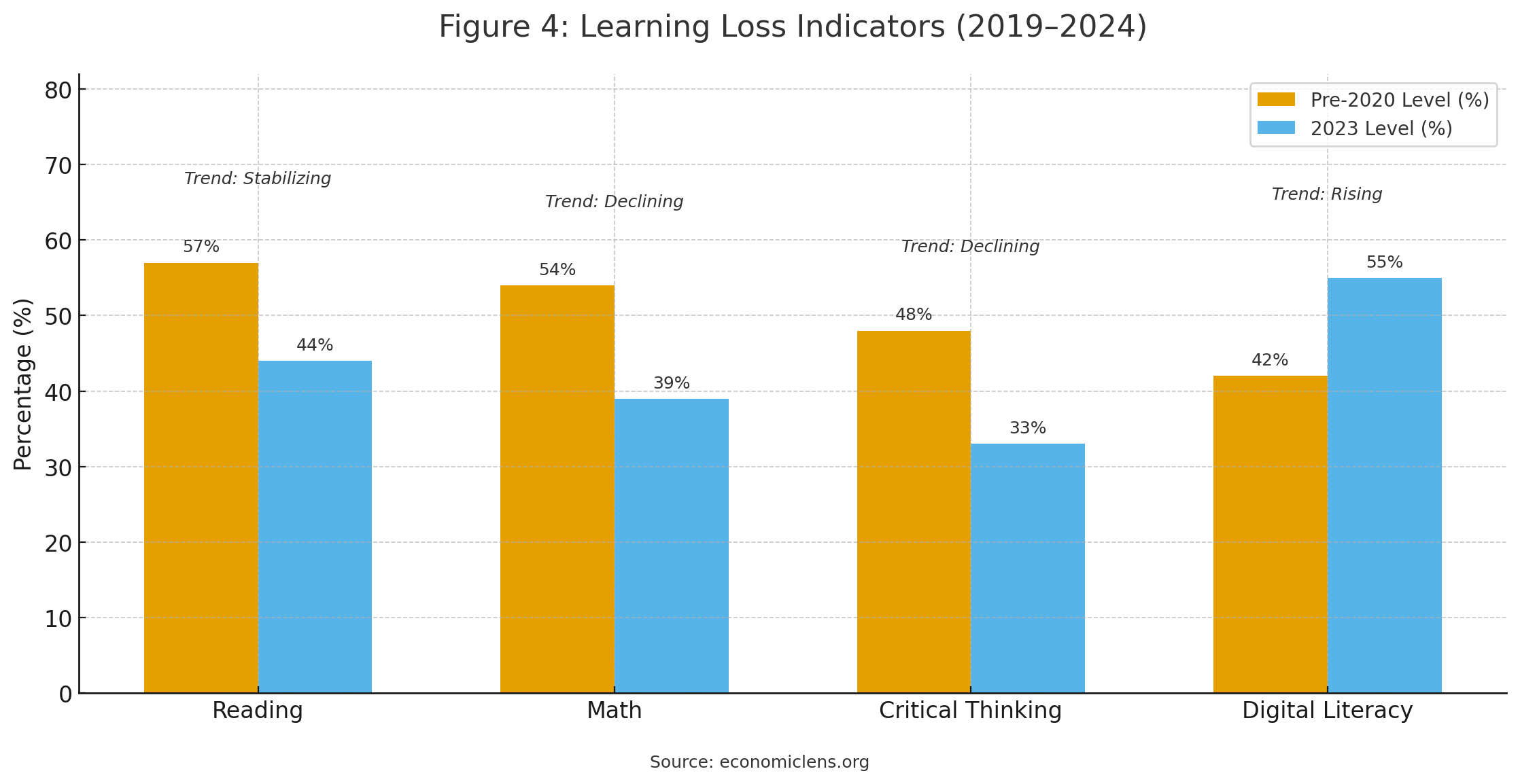
While digital literacy has improved, foundational skills continue to weaken. Recovery depends on trained teachers, stable learning environments, and structured remediation programs. Without these supports, digital progress alone cannot restore learning outcomes.
“The world is racing toward digital futures; but too many learners are falling behind on the basics.”
5. Education Disruption Decade and Policy Paths for Inclusive Digital Education
The education disruption decade underscores the need for coordinated and inclusive education policy. Governments must address access gaps, strengthen teacher training, regulate AI tools, and establish resilient hybrid learning frameworks. Without structural reform, AI tutors and e-learning platforms risk reinforcing inequality rather than reducing it.
Effective policy requires treating digital access as public infrastructure. At the same time, educators need training to integrate technology responsibly. AI governance must protect student data, prevent bias, and ensure transparency. When these elements align, digital education can support equity and resilience.
Policy action also determines long-term economic outcomes. Education shapes workforce readiness, productivity, and social mobility. Therefore, inclusive education policy is not only a social priority but also an economic necessity.
Expert Insight & Global Report Signals
OECD Director of Education Andreas Schleicher (https://www.oecd.org/education) emphasizes that technology alone cannot deliver inclusive learning outcomes. He notes that effective digital education depends on governance, sustained investment, and human support systems. The World Economic Forum Future of Learning 2030 roadmap (https://www.weforum.org) recommends expanding national broadband coverage, scaling low-cost device programs, and strengthening AI regulation to protect learners and ensure equitable outcomes.
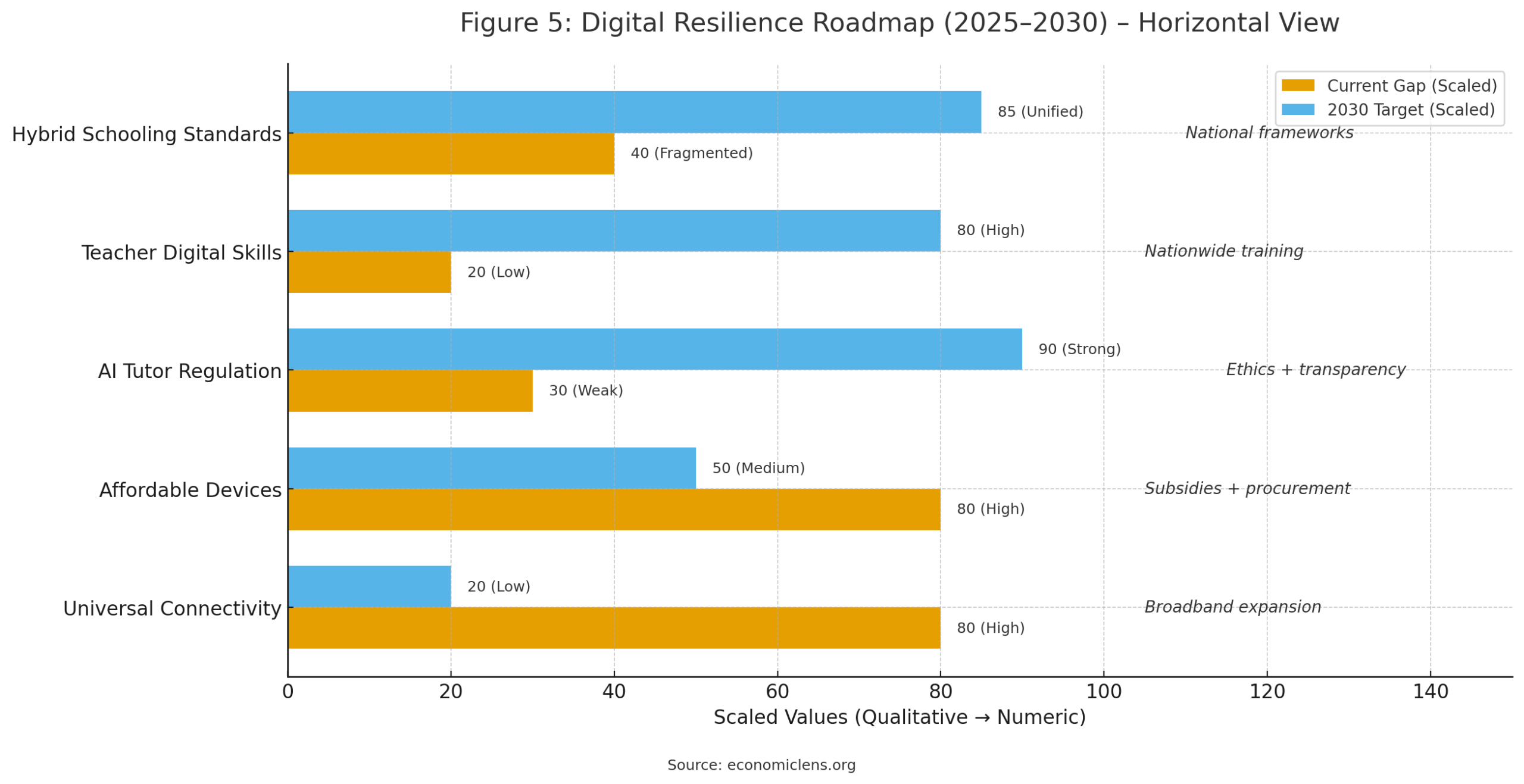
Digital resilience requires investment across infrastructure, human capital, and governance. Each reform reduces inequality risks and supports sustainable learning outcomes. Policy coherence across these areas determines whether digital education narrows or widens existing gaps.
“Digital education can lift millions; if policies lift barriers first.”
Conclusion
The education disruption decade has reshaped global learning more deeply than any recent period. AI tutors, e-learning systems, and digital platforms introduce powerful opportunities for personalization and access. However, unequal connectivity, weak governance, and fragmented policy responses continue to widen learning gaps.
Climate disruptions, conflict displacement, and economic stress further strain education systems. While technology accelerates learning for those with digital support, millions remain disconnected from progress. Without targeted reform, future generations could inherit an education landscape defined by inequality rather than opportunity.
Call to Action
Governments, educators, and global institutions must treat inclusive digital education as a priority. Connectivity should be a public good. AI tools must be regulated transparently. Hybrid learning standards must protect vulnerable learners.
Ensuring that every student, regardless of geography or income, benefits from digital transformation is the defining challenge of the education disruption decade.