
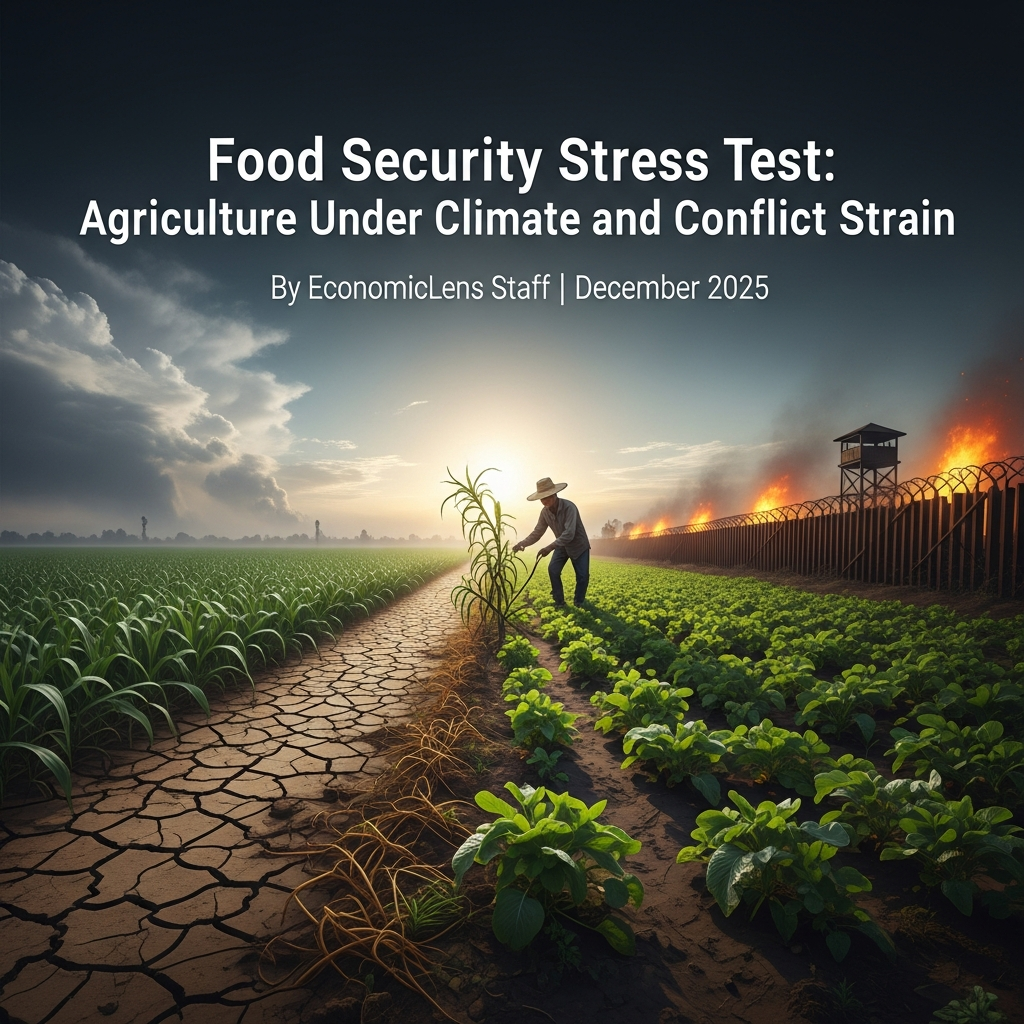
The global food security stress test shows agriculture under severe strain as climate shocks, conflict disruptions, and supply chain breakdowns expose fragile food systems worldwide. Rising heat, water stress, displacement, and fertilizer shortages deepen structural risks across regions. This blog explains how converging climate and conflict pressures are weakening global agriculture and accelerating food insecurity.
Introduction
The global food security stress test reveals a world increasingly unable to withstand climate-induced shocks and conflict-driven disruptions. As droughts intensify, supply chains fracture, and conflict zones expand, agriculture faces unprecedented strain. Food systems that once appeared resilient now look fragile, interconnected, and vulnerable to cascading risks across borders.
These pressures, compounded by climate volatility, geopolitical instability, and market disruptions, are testing whether global agriculture can continue feeding a growing population. With each passing year, extreme weather, displacement from conflict, and input scarcity magnify the risk of widespread food insecurity.
1. Global Crop Stress & the Food Security Stress Test
Climate change remains the most significant stress factor in the food security stress test. Extreme weather—heatwaves, floods, droughts, and storms—reduces yields, disrupts planting cycles, and accelerates soil degradation. Because climate shocks are increasing in frequency and intensity, agricultural systems have less recovery time between events. As a result, climate vulnerability is now systemic, not episodic.
FAO climate scientist Dr. Cindy Holleman notes: “Climate extremes now interact, reinforce one another, and hit the same regions repeatedly. Agriculture is losing its buffer.” The IPCC AR6 Agriculture & Food Systems Assessment (2024) highlights that global crop yields could decline by 10–25% by 2050 due to temperature rise, water scarcity, and soil degradation. Climate-sensitive crops like wheat, maize, and rice show the steepest declines in tropical regions. The FAO Climate & Food Systems Dashboard (https://www.fao.org/climate-change/en/) provides detailed global assessments on how rising temperatures and water stress impact food production.
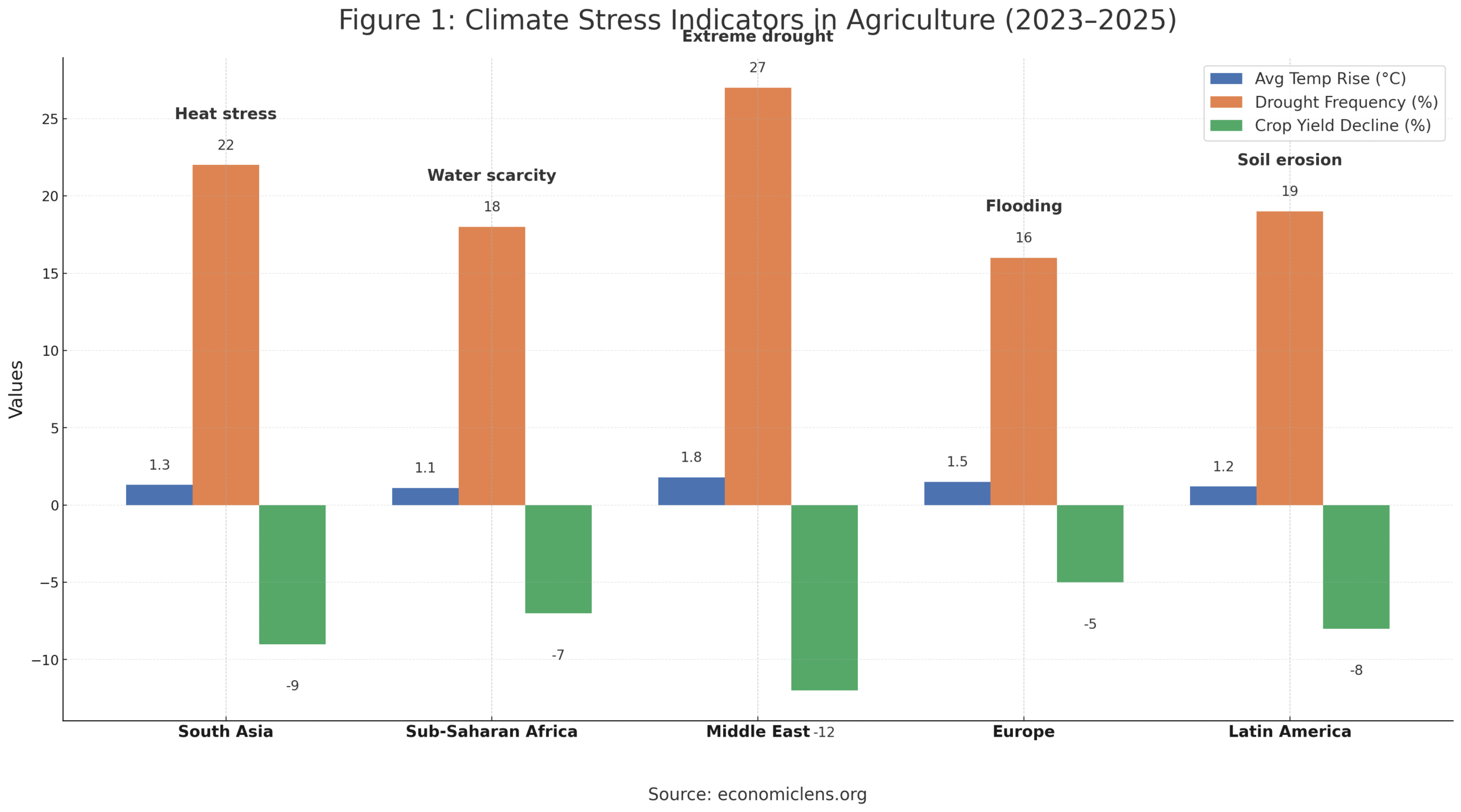
The data shows a consistent pattern: rising temperatures correlate directly with falling yields and higher drought frequency. Regions already vulnerable (i.e. South Asia, Africa, and the Middle East) are experiencing the steepest declines, revealing widening global food inequalities.
“Every degree of warming pushes millions closer to hunger, unless resilience rises faster than the temperature.”
2. Climate–Agriculture Strain, Conflict and Food System Vulnerability
The food security stress test reveals that conflict remains the second-largest driver of hunger globally. War disrupts supply chains, destroys farmland, and displaces farming communities. The Ukraine war, conflicts in Sudan and Gaza, and chronic instability in the Sahel show how geopolitics can destabilize global food markets—affecting countries far beyond the conflict zones.
World Food Programme (WFP) economist Arif Husain warns: “Conflict is the fastest route from food insecurity to famine. When farmers flee, fields die.” The Global Report on Food Crises (GRFC 2024) identifies 135 million people facing severe food insecurity primarily due to conflict. Ukraine alone reduced global wheat exports by 27%, while Sudan’s civil war disrupted agricultural zones producing nearly 40% of the country’s staple crops.
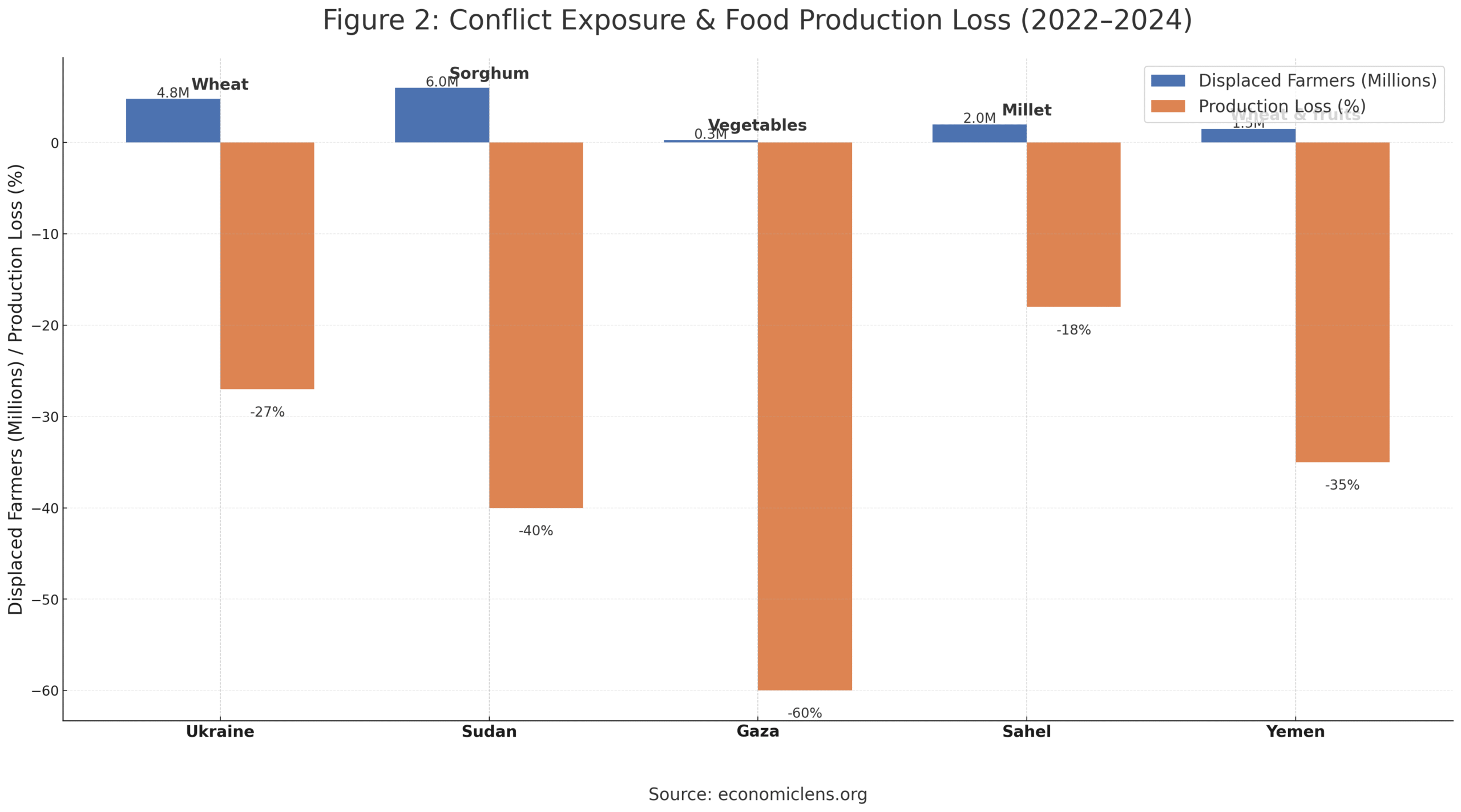
Conflict disrupts both labor and land. Production drops correlate strongly with displacement numbers, demonstrating how war systematically erodes agricultural capacity and food access.
“Where conflict burns, harvests fail; peace is the first seed of food security.”
3. Agricultural Resilience: Why Food Security Stress Test Matters for Vulnerable Regions
Even food-surplus nations are becoming vulnerable as global supply chains face stress from climate events, port disruptions, fertilizer shortages, and geopolitical realignments. Because agriculture depends on international trade, any external shock can push countries into crisis, especially import-dependent regions. A broader analysis of global chokepoints and supply disruptions is available in our report “Global Water Stress: Canal Bottlenecks, Hydropower Losses & Supply Chain Risk” (https://economiclens.org/global-water-stress-canal-bottlenecks-hydropower-losses-supply-chain-risk/).
IFPRI researcher David Laborde argues: “We no longer have local food crises. We have globalized food shocks that travel across borders within days.” The World Bank Food & Fertilizer Outlook 2025 highlights that fertilizer prices remain 42% higher than pre-COVID averages, while shipping disruptions in the Red Sea have increased grain transport costs by 35–45%. The World Bank Food & Fertilizer Outlook (https://www.worldbank.org/en/topic/agriculture/brief/food-and-fertilizer-prices) highlights continued volatility in fertilizer markets and its direct impact on food security.
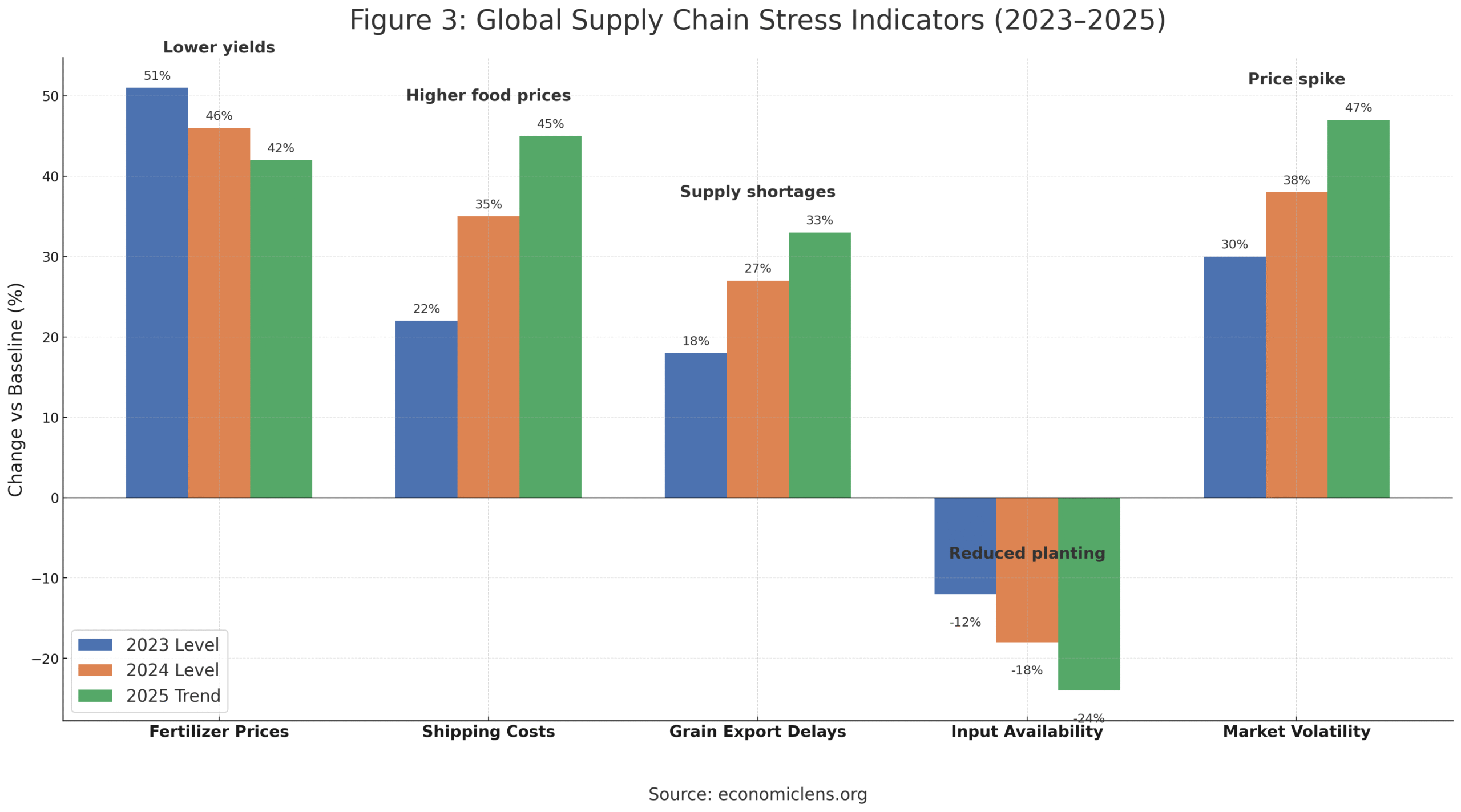
The inputs that sustain food systems (i.e. fertilizer, energy, and shipping) are becoming more expensive and less reliable. High volatility ensures that any climate or conflict shock triggers amplified price spikes.
“When supply chains choke, hunger spreads faster than harvests can recover.”
4. Food System Vulnerability Under Conflict-Driven Food Insecurity
The food security stress test shows that vulnerability varies sharply by region. Low-income and conflict-affected regions are bearing the greatest burden of climate change, production losses, and market shocks. Mapping these vulnerabilities reveals where the global food crisis may deepen.
FAO resilience expert Josef Schmidhuber explains: “Food insecurity grows where climate stress meets weak institutions.” The FAO State of Food Security 2024 finds that Sub-Saharan Africa and South Asia now host 70% of all globally food-insecure people, with climate and conflict acting as dual stress multipliers.
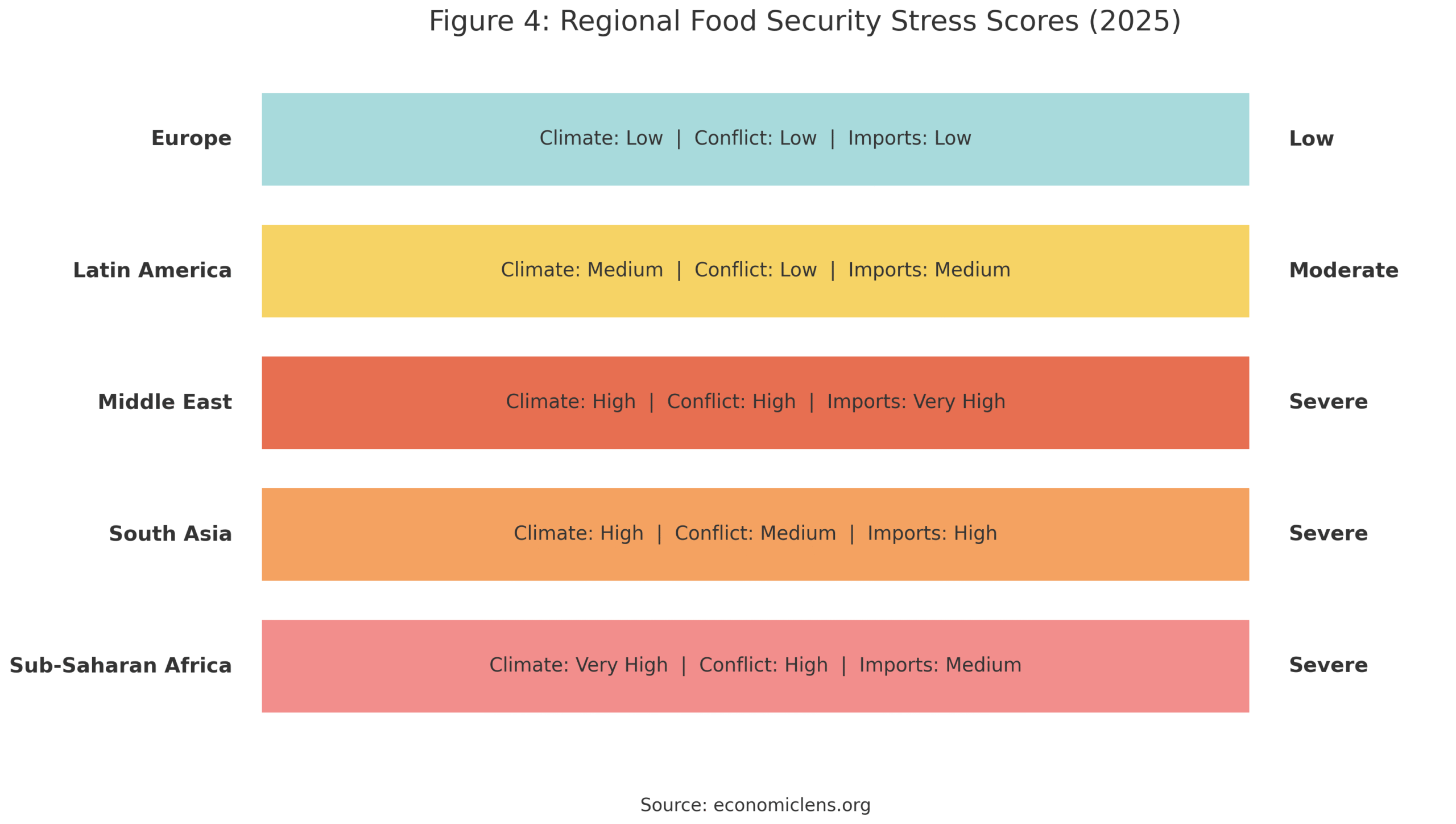
Regions with overlapping climate, conflict, and import dependencies face the highest stress. Middle-income regions like Latin America remain moderately stable, while Europe maintains resilience.
“Understanding where food systems fail is the first step toward strengthening where people need help most.”
5. From Stress Test to Strategy: Building Resilience for Pakistan’s Food Security
The food security stress test highlights one lesson: resilience must become the core of agricultural strategy. Climate-adaptive crops, conflict-resistant supply chains, and diversified imports are no longer optional; they are essential. For insights on how macroeconomic pressures intensify global vulnerability, see “Global Economic Outlook 2025–2026: Slow Growth, Sticky Inflation & Rising Debt” (https://economiclens.org/global-economic-outlook-2025-2026-slow-growth-sticky-inflation-rising-debt/).
CGIAR agricultural policy lead Claudia Sadoff states: “Resilience is no longer a buzzword; it is survival.” The UN Food Systems Roadmap 2030 recommends targeted investments in irrigation, crop diversification, drought-resistant seeds, and digital agriculture to protect yields and stabilize markets.
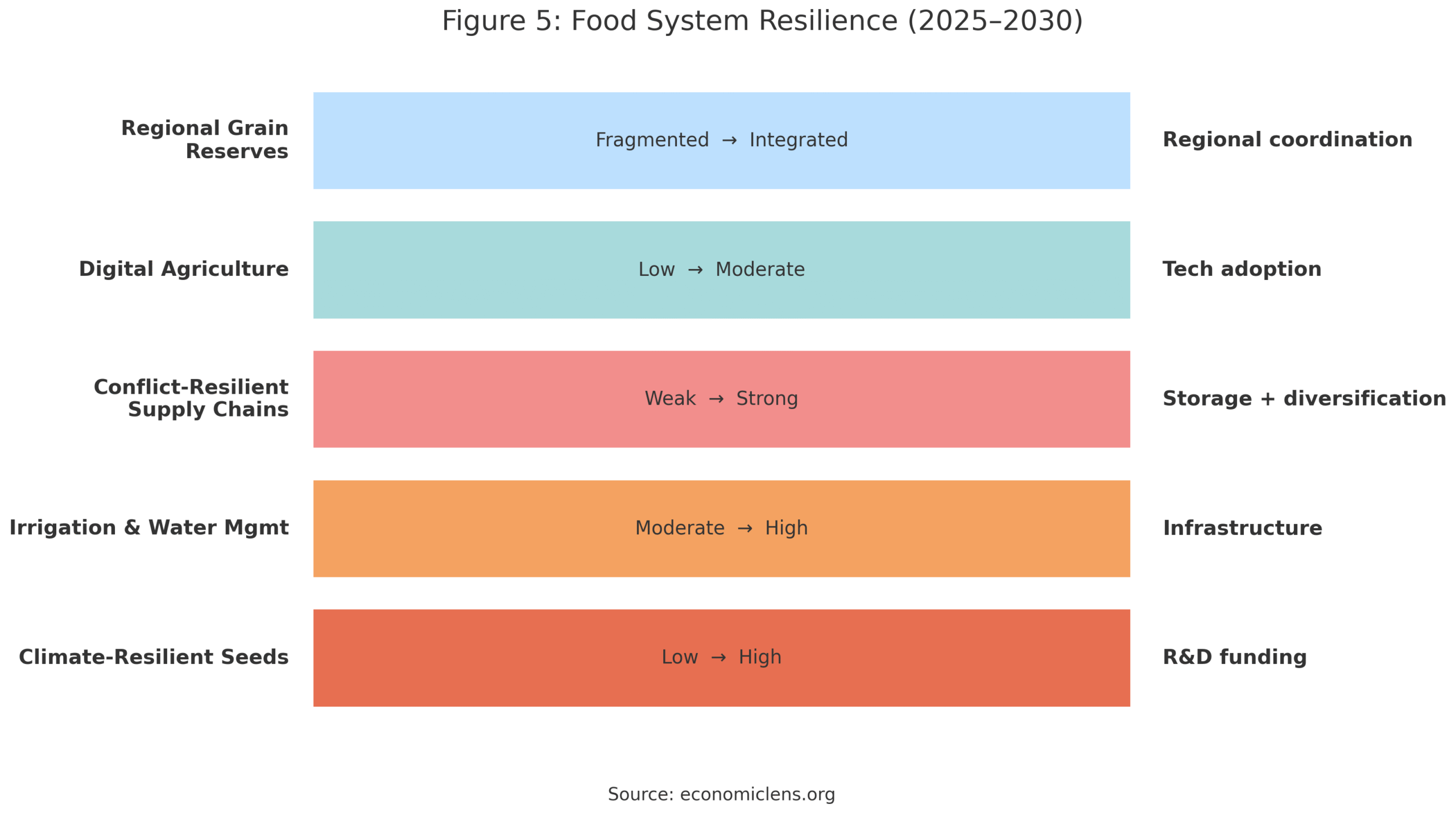
Most countries have low adoption of climate-resilient seeds and weak conflict-proof supply chains. Moving toward 2030 targets requires coordinated investment and institutional reform.
“Resilient food systems aren’t built in crisis; they’re built before crisis arrives.”
Conclusion
The global food security stress test exposes a troubling truth: agriculture is under simultaneous pressure from climate change, conflict, and market volatility. These compounding shocks reveal that global food systems are more fragile than previously understood. Unless resilience strategies accelerate, millions could fall deeper into hunger and poverty. Safeguarding global agriculture is no longer a technical challenge, it is a geopolitical and humanitarian imperative.
Call to Action
Global leaders, institutions, and food-producing nations must move from reactive crisis management to proactive resilience building. Governments must invest in climate-safe agriculture, strengthen market buffers, support farmers in conflict-affected regions, and develop policies that stabilize the global food supply. Without decisive action today, tomorrow’s food shortages could become irreversible.



2 thoughts on “Food Security Stress Test: Agriculture Under Climate and Conflict Strain”
Appreciate your contribution 👍
Good Work 👏👏