
Discover how the Gig Economy is reshaping the Global Labor Market in 2025. Explore the impact of flexible work, emerging platforms, and evolving worker rights in this booming sector.
1. Introduction: The Rise of the Gig Economy 2025
The Gig Economy 2025 will completely transform the Global Labor Market. With increasing flexibility, digital platforms, and evolving work patterns, this sector is rapidly growing, reshaping how people earn a living across the globe. Experts expect that by 2025, a substantial portion of the workforce will engage in gig work, a shift that will fundamentally change not only the way work is done but also how economies function.
“The Gig Economy presents opportunities for enhanced workforce flexibility, but it requires innovative solutions to ensure that workers have access to fair pay, benefits, and job security,” says Dr. Jane Foster, labor market economist at Harvard University.
“But how will we ensure that the benefits of this rapidly growing sector are accessible to all?”
Let’s dive into what’s driving the Gig Economy 2025 and how it’s changing the future of work.
2. The Global Rise of Gig Economy 2025
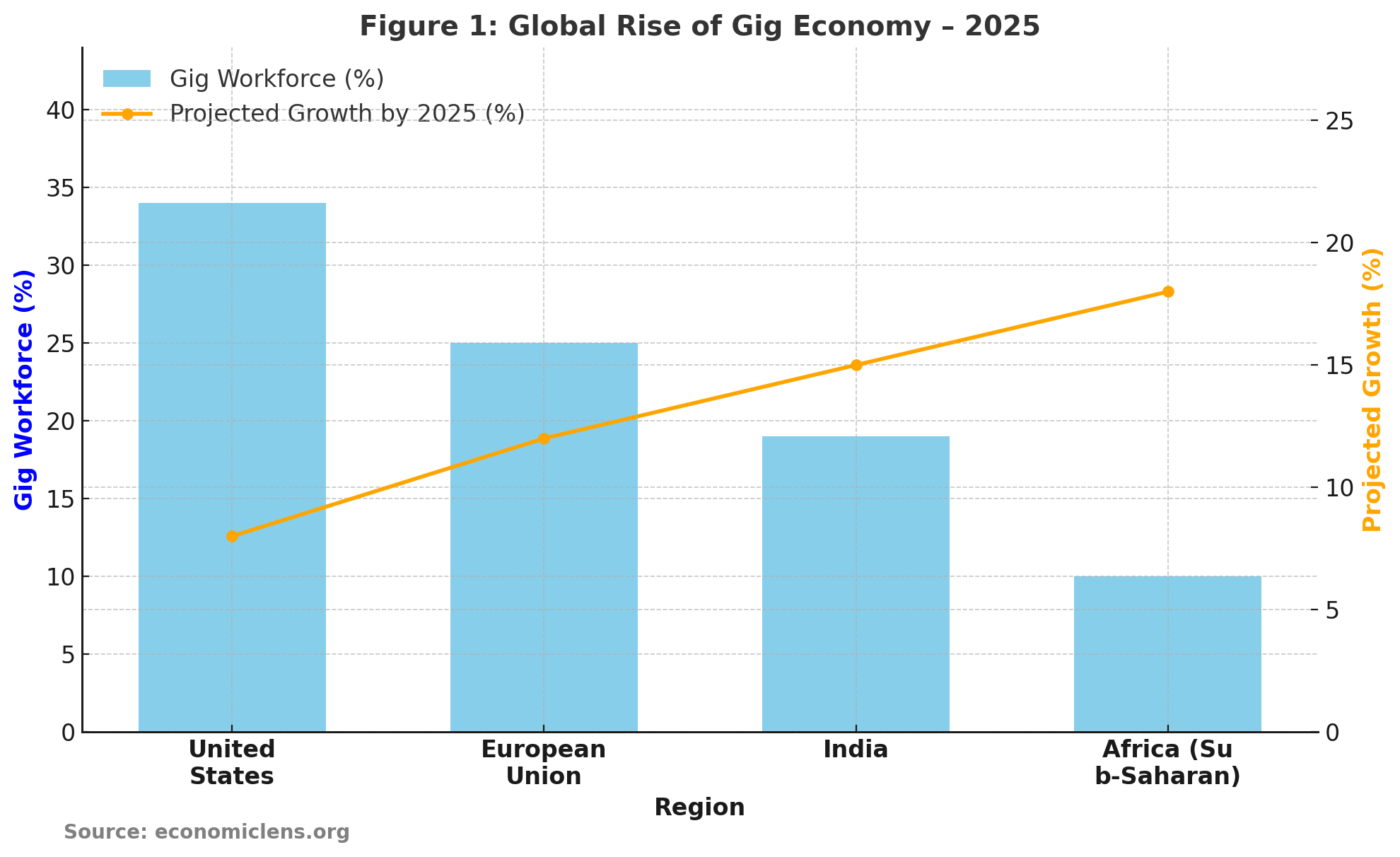
Experts predict that by 2025, the Gig Economy will reach new heights after its significant growth over the last decade. Recent studies show that nearly 50% of the workforce in developed economies will engage in some form of gig work, whether it’s freelancing, temporary contracts, or other non-traditional employment forms. Emerging economies are also seeing a rise in gig work, driving this shift alongside Western markets, driven by technological advances and the need for greater work flexibility.
Carlos Alvarez, a global business strategist, states: “By 2025, we’re likely to see major shifts where gig work isn’t just about flexibility, but also about highly skilled, digital-first roles that demand continuous learning. This is the future that many workers will need to prepare for.”
“As these shifts unfold, will businesses and workers be prepared for the challenges and opportunities ahead?”
Let’s look at the driving forces behind this evolution.
3. Key Drivers of the Gig Economy in 2025
Several factors propel the Gig Economy 2025, including technological innovations, economic conditions, and the desire for more control over work-life balance. Digital platforms like Upwork, Fiverr, and Uber have made it easier for workers to find opportunities online, while advancements in AI and blockchain are opening up new gig work categories.
Dr. Emily Chen, a researcher at MIT’s Digital Economy Lab, adds: “As automation and AI improve, gig work will be reshaped from low-wage labor to high-skill, highly paid opportunities. This shift will increase economic inequality if we don’t address the necessary upskilling and regulation.”
“With these powerful forces at play, how can we ensure that gig workers are prepared for a more digitally-driven economy?”
Let’s look at the challenges of worker rights and income security.
5. Challenges in the Gig Economy 2025: Worker Rights and Income Security
While the Gig Economy offers tremendous flexibility, it also presents challenges, particularly regarding worker rights and income security. As of 2025, gig workers still face the absence of traditional job benefits such as health insurance, retirement plans, and paid leave. A lack of job security and the unpredictability of income are also major concerns for gig workers across sectors.
The need for regulation is more urgent than ever. Governments and labor unions are creating frameworks to offer basic protections for gig workers, such as the right to collective bargaining, minimum wage laws, and access to benefits.
Sarah Malik, a freelance platform specialist, states: “The lack of basic labor protections for gig workers, such as sick leave or health benefits, highlights a serious issue. Workers are navigating an economy where they may be highly skilled but still lack access to the same protections as traditional employees.”
“How can governments and businesses ensure a fair balance between flexibility and worker security in the gig economy?”
Let’s explore how the future of freelance work will play out.
6. The Future of Freelance Work in the Gig Economy 2025
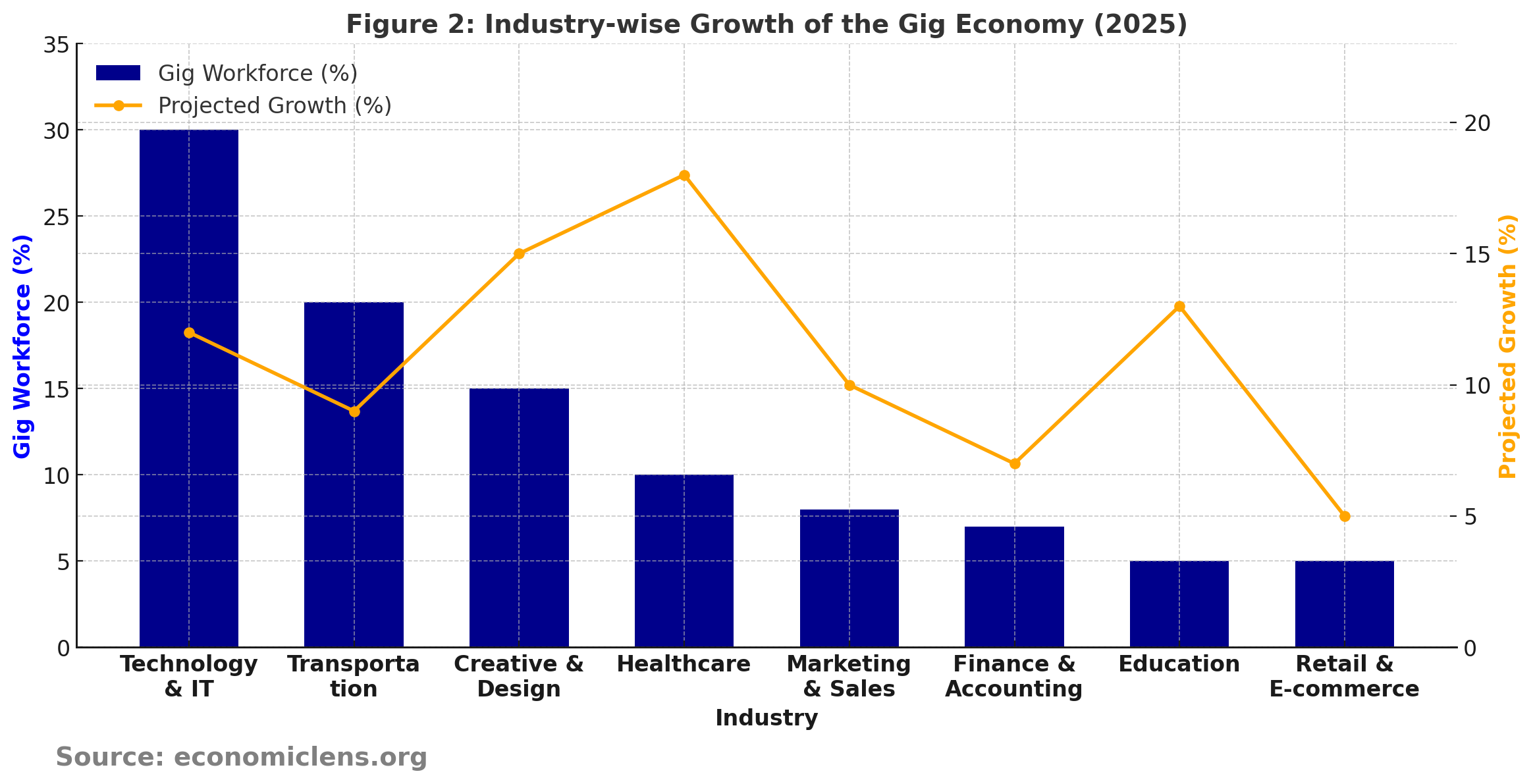
One of the most significant shifts in the Gig Economy 2025 will be the rise of freelance work in sectors once dominated by full-time employees. Marketing, design, writing, IT development, and even finance are now offering freelance opportunities that allow for greater independence and control. By 2025, AI tools will further assist freelancers in finding jobs, managing contracts, and optimizing their work processes.
Key Trends:
- Instant payments and blockchain contracts will make financial transactions in the gig economy faster and more secure.
- Freelancers will have the tools they need to manage their own benefits (healthcare, retirement) using digital platforms.
Carlos Alvarez again notes: “The future gig worker won’t just be a driver or delivery person; we’re looking at roles that leverage AI, robotics, and blockchain, creating a new generation of high-skill freelancers. The need for constant adaptation and digital literacy will be essential.”
“As the future of work evolves, skills development becomes crucial for gig workers.”
Let’s dive into how workers can stay competitive and secure in this rapidly changing environment.
7. What’s Next for Gig Workers in 2025?
As the Gig Economy 2025 continues to expand, the key to staying competitive will be skills development. With so many opportunities available across diverse sectors, it’s important for gig workers to remain adaptable and continually upskill.
Sarah Malik emphasizes the importance of upskilling for gig workers: “As technology advances, workers need to be equipped with not just technical skills, but the ability to adapt to new systems, collaborate digitally, and build a strong personal brand.”
“The future of gig work isn’t just about securing a job—it’s about future-proofing your career.”
What’s the next step for you in the gig economy?
The Future Outlook
From an economic perspective, the rise of the Gig Economy 2025 is a double-edged sword. On the one hand, it offers greater economic flexibility—enabling businesses to scale and workers to have more autonomy in their careers. However, there are real concerns about economic inequality, as the gig economy has the potential to exacerbate the wage gap. High-skilled freelancers in areas such as software development, design, and writing can command premium rates, while low-skilled workers in fields like food delivery or ridesharing are often left vulnerable to exploitation with minimal earnings and no safety nets.
Key Takeaway:
As the Gig Economy 2025 unfolds, the balancing act will be how policymakers, businesses, and workers address the challenges of worker protection while fostering innovation and opportunity.
“The gig economy is here to stay—but can we ensure equitable growth?”
Let’s explore how we can create a more inclusive and fair future for all gig workers.
8. Conclusion: The Future of the Gig Economy 2025
The Gig Economy 2025 is not just a passing trend, but a permanent shift in the way the world works. As technology continues to evolve, more workers will move toward freelance, contract-based, and temporary roles. However, the success of this shift will depend on addressing key challenges such as worker rights, income stability, and skills development.
For businesses, policymakers, and workers, embracing change and ensuring a fair, supportive environment for gig workers will be crucial in making the gig economy a thriving, sustainable model for the future of work.
9. Call to Action
As the Gig Economy 2025 continues to grow, the future of work is being shaped right before our eyes. But what does this shift mean for you? Whether you’re a freelancer, a business owner, or simply someone navigating these changes, your insights matter. How are you preparing for the gig economy?
Join the conversation and share your thoughts, experiences, and ideas on how we can build a more sustainable and equitable workforce for the future. Subscribe to our newsletter to get the latest updates and strategies on how the gig economy is reshaping the world of work—and how you can thrive in it.