
The global debt crisis has intensified as public and private borrowing exceeds $315 trillion. This analysis explores sovereign risk, market credibility, climate vulnerability, and how transparency, AI oversight, and sustainable finance can restore balance to global public finance systems.
Introduction
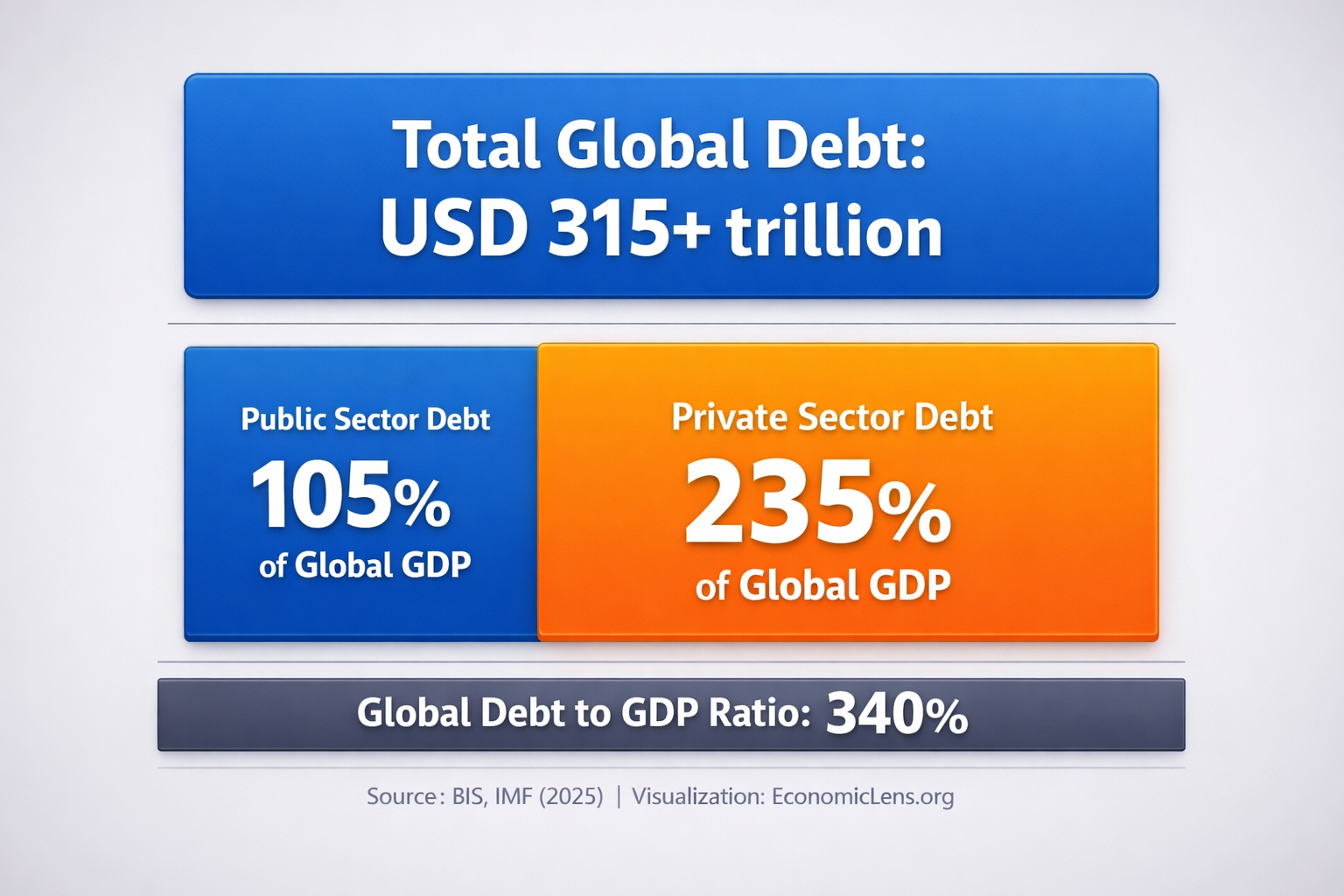
The global debt crisis now defines the world economy. Public and private borrowing has surpassed USD 315 trillion, exceeding 340 percent of global GDP. What began as a temporary response to financial shocks, pandemics, and climate disasters has hardened into a structural growth model. Debt no longer merely smooths cycles. It increasingly substitutes for productivity, fiscal reform, and political consensus.
At the same time, the global economy faces weak growth and persistent inflation. These dynamics are examined in detail in EconomicLens’ Global Economic Outlook 2025–2026, which shows how rising debt is narrowing policy space across advanced and developing economies alike.
https://economiclens.org/global-economic-outlook-2025-2026-slow-growth-sticky-inflation-rising-debt/
As interest rates normalize, the sustainability of this debt-driven equilibrium is being tested. Fiscal credibility, rather than liquidity, has become the anchor of economic stability.
The Architecture of the Global Debt Crisis
Global growth has become increasingly dependent on borrowing rather than productivity gains. Governments issue bonds to finance chronic deficits. Corporations borrow to sustain valuations through buybacks. Households rely on credit to maintain consumption amid stagnant real wages. According to the IMF, this shift reflects a deeper structural imbalance where debt substitutes for long-term investment and reform.
Hidden liabilities further intensify the problem. State-owned enterprises, public guarantees, pension obligations, and contingent liabilities remain outside official debt figures. These exposures distort fiscal transparency and delay corrective action. When shocks occur, the true scale of obligations becomes visible, often too late for gradual adjustment.
Links: https://www.bis.org/statistics/debt.htm, https://www.imf.org/en/Publications
The global debt crisis is driven as much by composition as by size. High private leverage increases financial fragility, while rising public debt constrains countercyclical policy during downturns.
When Markets Lose Patience
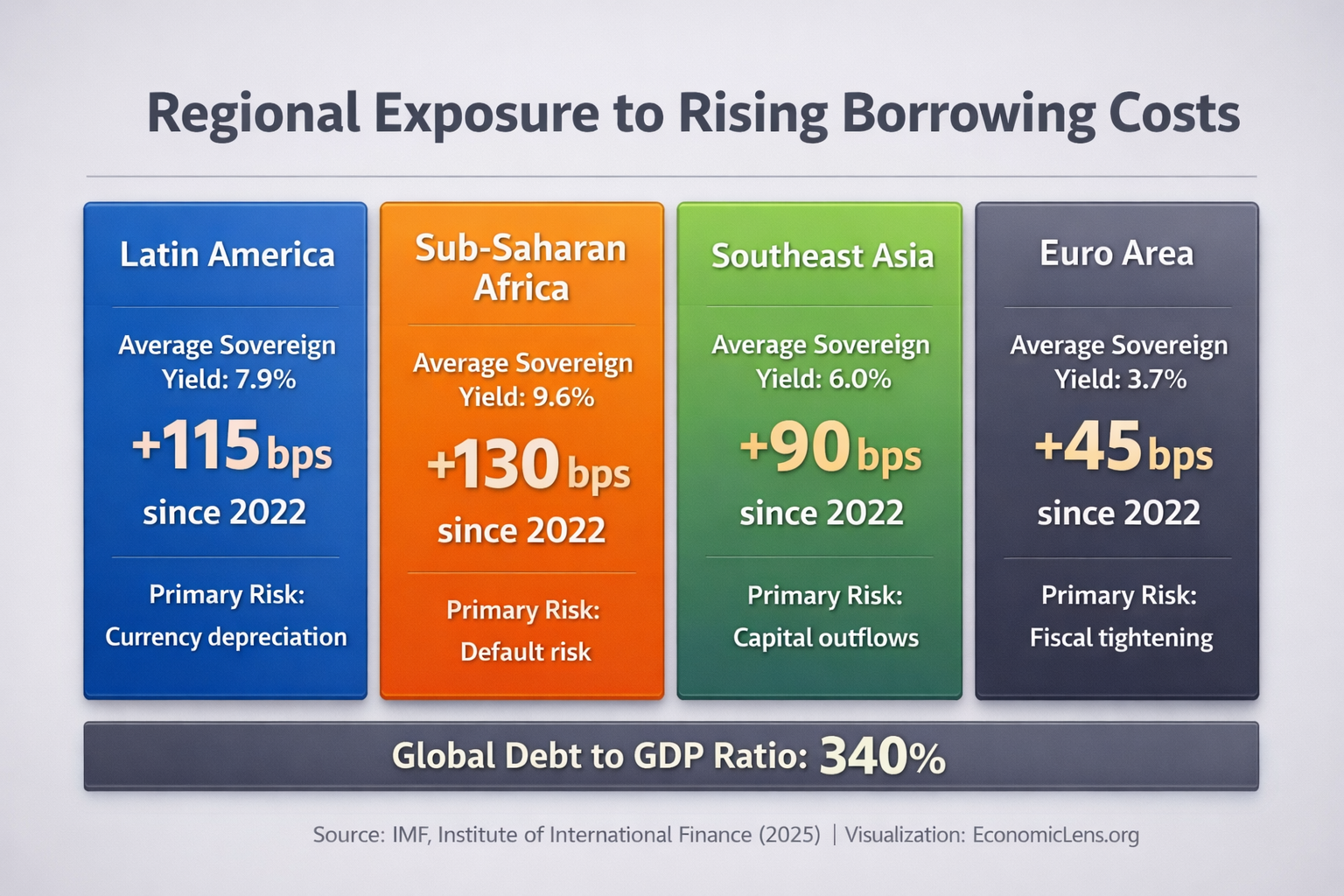
For over a decade, investors tolerated rising leverage because borrowing costs remained artificially low. That environment has changed. As monetary policy tightens, markets now differentiate sharply between credible fiscal systems and opaque ones. Yield levels matter less than institutional trust.
Countries with transparent budgets, credible statistics, and domestic investor bases adjust through policy tightening. In contrast, economies dependent on external financing face capital flight, currency depreciation, and rollover risk. This asymmetry explains why the global debt crisis deepens divergence across regions.
Links: https://www.imf.org, https://www.iif.com
Emerging markets face sharper financing stress due to currency exposure and shallow capital markets. Advanced economies absorb pressure through slower growth and fiscal consolidation.
As borrowing costs rise, several developing economies now face rollover stress. This is evident in the wave of debt defaults and IMF rescue programs reshaping fiscal sovereignty across the Global South.
https://economiclens.org/debt-defaults-imf-rescue-programs-a-new-crisis-for-developing-economies/
The Political Economy of Perpetual Borrowing
Debt reduction is politically unpopular. Consequently, governments often justify borrowing as economic sovereignty or social protection. In practice, it entrenches dependence on global creditors. Electoral incentives reward short-term spending, while fiscal discipline carries delayed political costs.
Subsidies, wage increases, and tax cuts boost immediate demand but weaken fiscal resilience. Over time, interest payments crowd out development spending. The fiscal contract between the state and citizens shifts from service provision to debt servicing.

Links: https://www.oecd.org/finance , https://www.worldbank.org/en/topic/debt
The global debt crisis increasingly reallocates public resources away from human capital. This undermines long-term growth and social stability.
In advanced economies, political choices also deepen fiscal strain. This is evident in the long-term effects of Trump’s tax legacy, where short-term stimulus expanded deficits without durable revenue gains.
https://economiclens.org/trumps-tax-legacy-2025-economic-boom-middle-class-mirage-or-a-debt-time-bomb/
The Debt and Climate Crisis Nexus
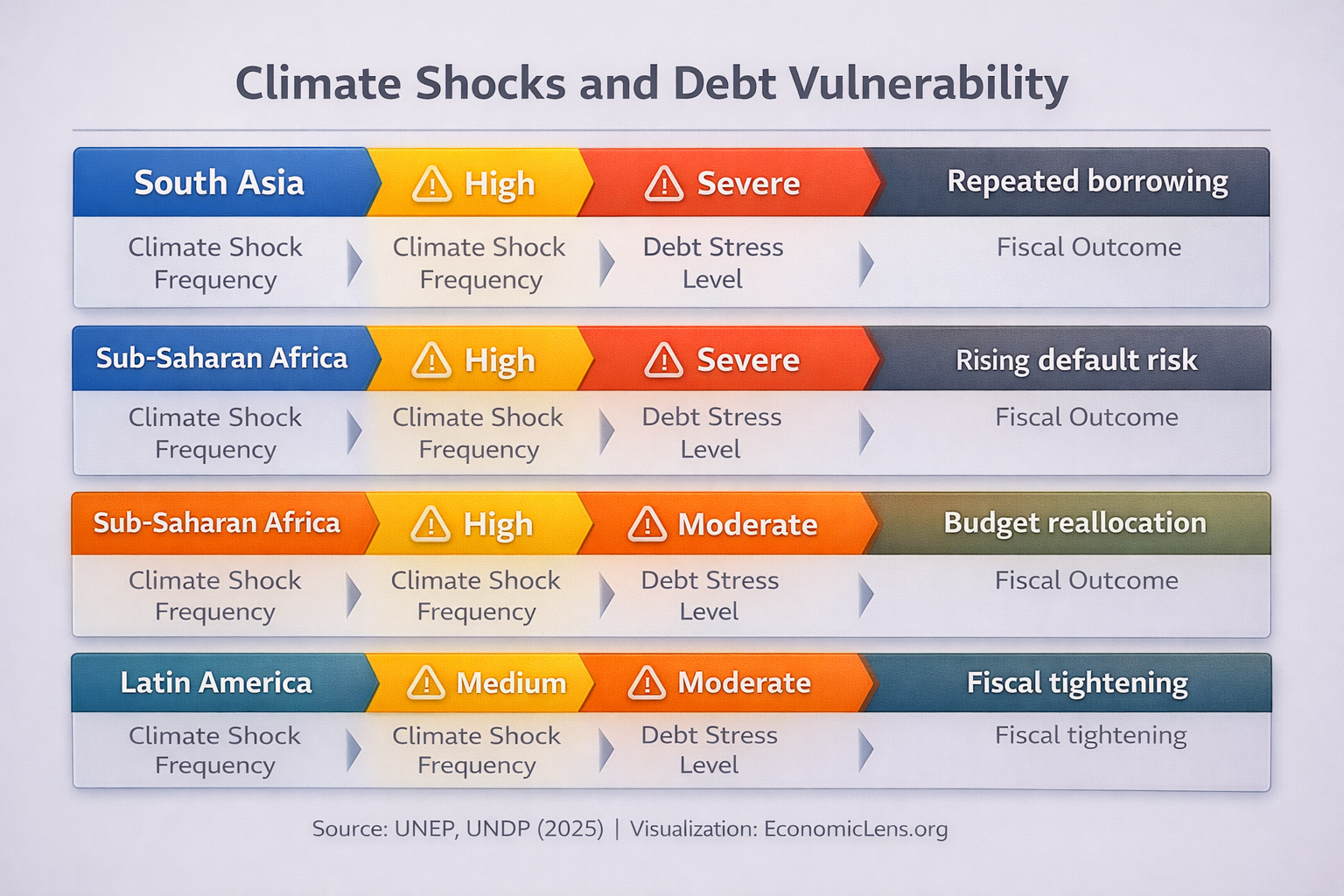
Debt and climate vulnerability are now structurally linked. Climate shocks destroy capital stock, reduce productivity, and erode revenues. Governments respond by borrowing to rebuild. Debt service costs then rise, reducing fiscal space for adaptation and resilience.
This cycle is most severe in climate-exposed regions with limited fiscal buffers. Repeated shocks create debt traps, where each disaster increases vulnerability to the next.
Links: https://www.unep.org, https://www.undp.org
Climate exposure amplifies the global debt crisis by converting environmental risk into fiscal insolvency. Without relief or climate finance, adaptation remains underfunded.
Everyday Impacts of the Global Debt Crisis
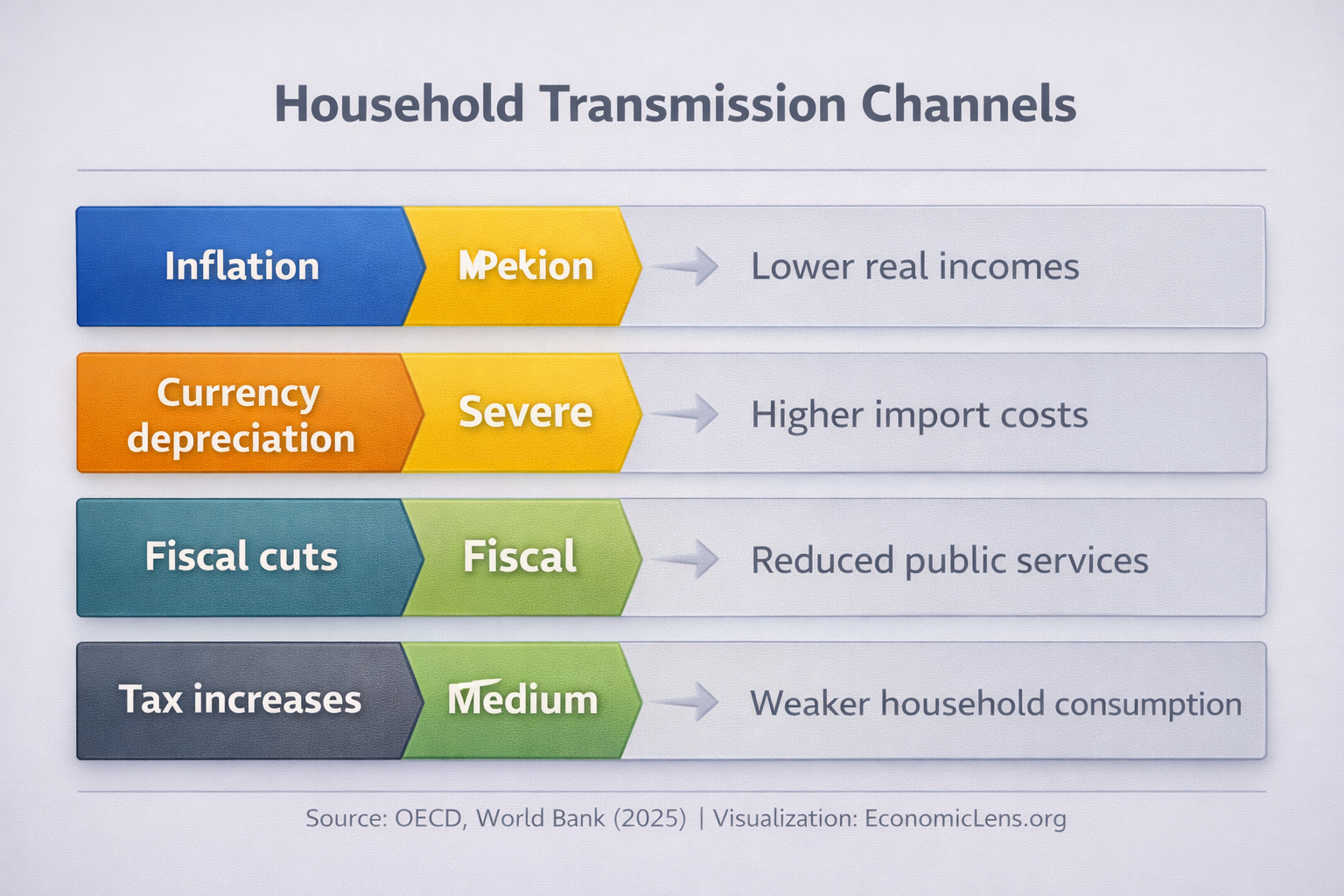
The global debt crisis is not confined to ministries or markets. It shapes everyday economic life. Rising debt service reduces public investment. Governments raise taxes or cut subsidies. Inflation erodes purchasing power, while currency volatility raises import costs.
Households ultimately absorb the cost of prolonged borrowing through reduced services, unstable employment, and higher living expenses.
Links: https://www.oecd.org, https://www.worldbank.org
Debt stress transmits to households primarily through inflation and fiscal adjustment. These channels deepen inequality and weaken social cohesion.
These dynamics are explored further in EconomicLens’ analysis of the debt and inflation crisis threatening global stability. https://economiclens.org/debt-inflation-crisis-global-stability-at-risk/
From Debt Opacity to Public Finance Transparency
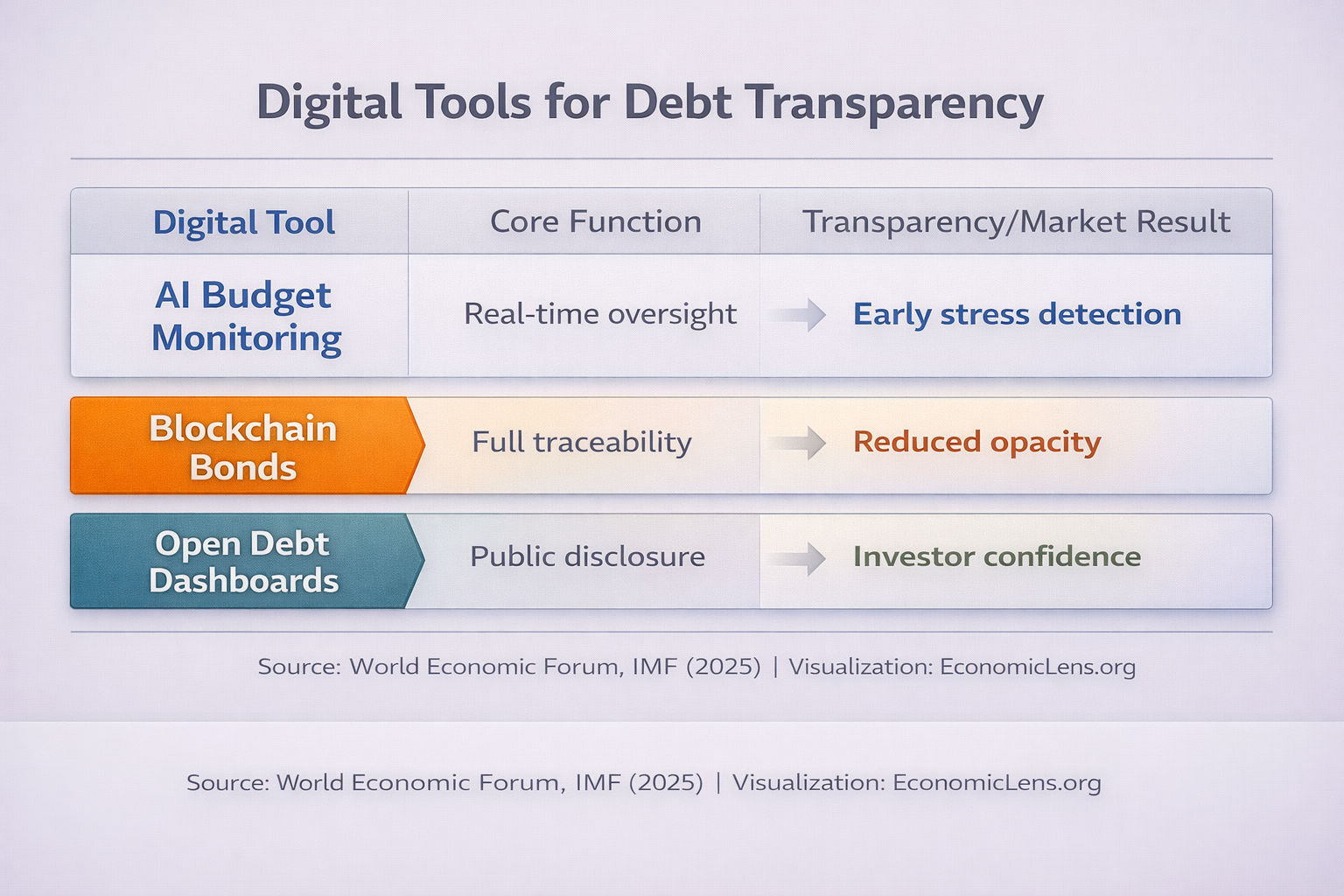
Despite the scale of the problem, the global debt crisis is not irreversible. Digital tools can restore fiscal trust. Artificial intelligence enables continuous budget monitoring. Blockchain-based bonds ensure traceability from issuance to repayment. Open debt dashboards improve public scrutiny.
Transparency increasingly functions as collateral. Markets reward credibility even under high leverage.
Links: https://www.weforum.org, https://www.imf.org
Technology shifts debt governance from secrecy to accountability. Fiscal transparency reduces risk premiums and improves crisis prevention.
Policy Pathways for Debt Governance Reform
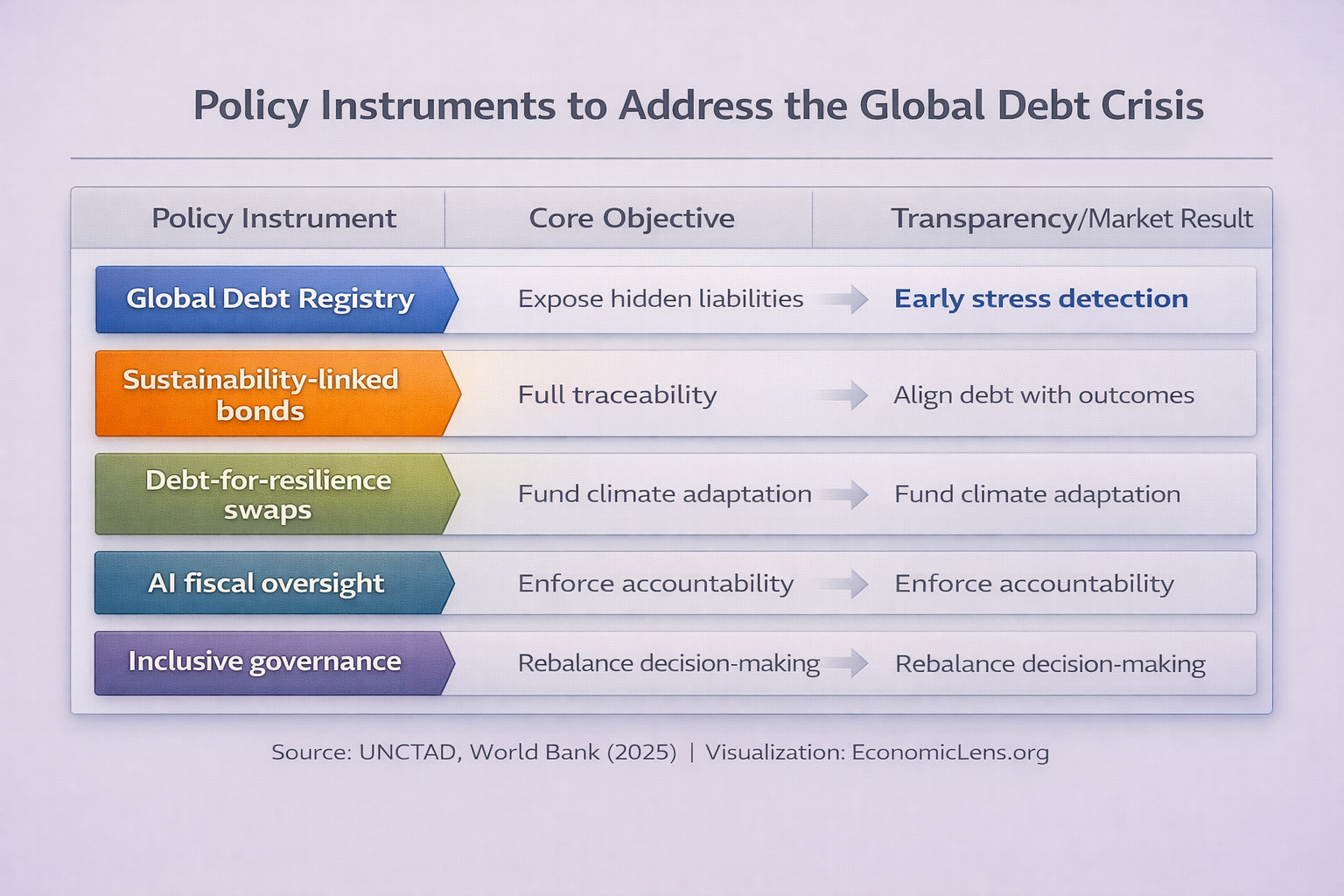
The objective is not to eliminate borrowing, but to discipline it. Sustainable debt must support productivity, resilience, and inclusion. This requires institutional reform rather than repeated refinancing.
Links: https://unctad.org, https://www.worldbank.org
These instruments reframe debt as a development tool rather than a political shortcut. Governance quality becomes the primary determinant of creditworthiness.
The Road Ahead
The global debt supercycle will not end abruptly. However, it can evolve. The 2026 IMF and World Bank Meetings offer an opportunity to replace austerity with accountability. Fiscal reform, transparency, and coordination must take precedence over short-term fixes.
Borrowing can still support growth. Yet it must reward efficiency, credibility, and purpose.
Final Word
The global debt crisis is not only a financial challenge. It is a test of institutional credibility and political responsibility. The 20th century expanded growth through credit. The 21st must secure stability through transparency.
The real question is no longer how much the world owes. It is how wisely it chooses to borrow.



2 thoughts on “Global Debt Crisis: Risks, Trust, and Fiscal Reform”
Appreciated
Great work