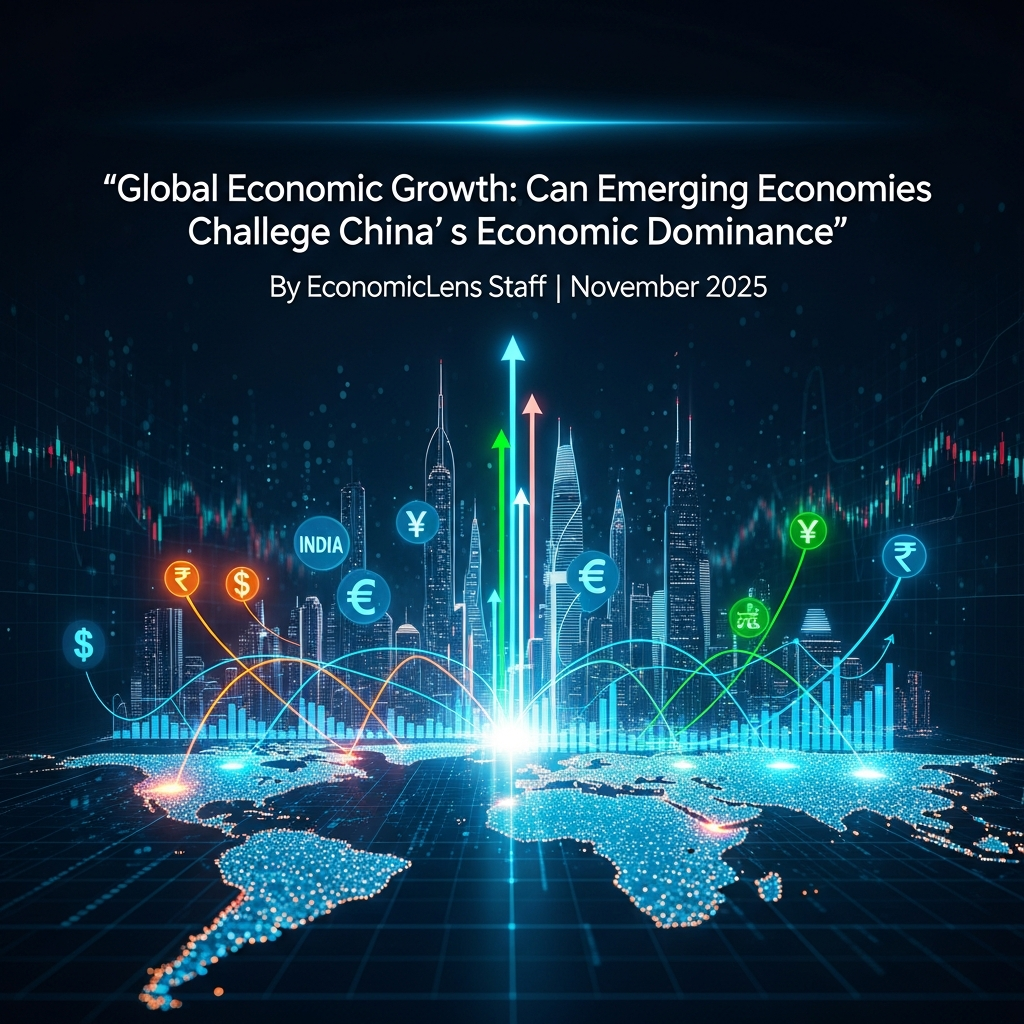
Explore the rise of emerging economies like India, Indonesia, and Nigeria and how they are challenging China’s economic dominance in global economic growth. Can they reshape the global economy?
Executive Summary
The global economic landscape is shifting, and emerging economies like India, Indonesia, and Nigeria are at the forefront of this transformation. In addition, with China’s economic dominance facing increasing challenges from internal factors such as an aging population, rising debt, and environmental concerns, new players are emerging as potential leaders in the global economy. This blog explores how India, Indonesia, and Nigeria are positioning themselves to challenge China’s economic leadership in key sectors, such as technology, manufacturing, renewable energy, and trade. Moreover, while these emerging economies face significant challenges—political instability, inadequate infrastructure, and educational gaps—they also hold unique opportunities that could propel them to the forefront of the global economy. Therefore, the role of BRICS and other international partnerships is crucial in this context, as they enable these nations to expand their influence and reduce their dependency on China. This blog highlights the potential, challenges, and strategic opportunities for these rising economies in reshaping global economic growth.
“The world’s economic landscape is shifting before our eyes. As China’s dominance faces significant hurdles, emerging giants like India, Indonesia, and Nigeria are making moves to challenge the old guard. Are these countries poised to redefine global economic power?”
1. Introduction
The global economic landscape is undergoing significant changes, with emerging economies like India, Indonesia, and Nigeria leading this transformation. As China’s economic dominance faces mounting challenges—driven by factors such as an aging population, increasing debt, and environmental concerns—new players are rising to take a more prominent role in the global economy.
This blog explores how these nations—India, with its rapidly expanding tech sector; Indonesia, focusing on sustainable energy and infrastructure; and Nigeria, with its growing tech and agricultural industries—are positioning themselves to challenge China’s supremacy. Despite the hurdles they face, these countries show promising growth trajectories. Will they be able to overcome their internal challenges and leverage their unique strengths to compete with China? This article will examine their strategies for growth and their potential to reshape the global economic order.
“China has long stood as the world’s economic powerhouse, driving global growth through its massive industrial base. But as the tides begin to turn, emerging economies are stepping into the spotlight. Is this the dawn of a new era in global economics, where countries like India, Indonesia, and Nigeria are set to disrupt China’s reign?”
2. China’s Economic Dominance vs Emerging Economies
For the past few decades, China has dominated the global economic landscape, driving global economic growth through its manufacturing powerhouse, technological advancements, and its position as the world’s largest exporter. Nevertheless, this landscape is rapidly changing. The rise of emerging economies like India, Indonesia, and Nigeria signals a dramatic shift in the global economic order, as these countries position themselves to play an increasingly significant role on the world stage.
From China’s Economic Dominance to a Multipolar Global Economy
China’s meteoric rise to global prominence was powered by its vast labor force, rapid industrialization, and export-driven economy. As a result, it has long been the world’s factory, supplying goods at unmatched scale. China’s Belt and Road Initiative furthermore extended its economic influence by investing in infrastructure projects across Asia, Africa, and Europe. However, despite its growth, China’s economic dominance is facing growing challenges. As the country’s economy matures, it is encountering significant obstacles
- Aging population: China’s population is rapidly aging, leading to a shrinking labor force and a rising dependency ratio.
- Rising debt levels: China is burdened by massive debt, particularly in local governments and state-owned enterprises, which poses long-term risks to economic stability.
- Environmental concerns: China’s rapid industrialization has come at a high environmental cost, and its air and water pollution are some of the worst globally. The country is now facing the urgent need for cleaner energy solutions and sustainable growth practices.
- Geopolitical tensions: Trade wars, particularly with the United States, and rising tensions in the South China Sea have affected China’s global standing and its economic relationships.
These challenges have led to a more cautious outlook for China, as the nation navigates the transition from an industrial-driven economy to one that needs to focus more on innovation, services, and sustainability.
The Rise of Emerging Economies: India, Indonesia, and Nigeria
While China faces these internal and external hurdles, countries like India, Indonesia, and Nigeria are stepping up to the plate. Consequently, these emerging economies have the potential to play pivotal roles in the world economic competition of the 21st century.
India’s tech sector has been a significant driver of growth in recent years. With major IT hubs like Bengaluru and Hyderabad, India is a leader in software development and technology services, creating a competitive edge in future economic growth sectors like tech and services. On the other hand, Indonesia, the largest economy in Southeast Asia, is experiencing rapid growth driven by its young workforce and growing middle class. With its focus on sustainable development and green energy, Indonesia is poised to play a leading role in global economic growth. In the same way, Nigeria, with its wealth of natural resources and burgeoning tech scene, is poised to lead Africa’s economic future. The country’s growing digital economy, particularly in fintech, positions it as an emerging competitor in global economic competition.
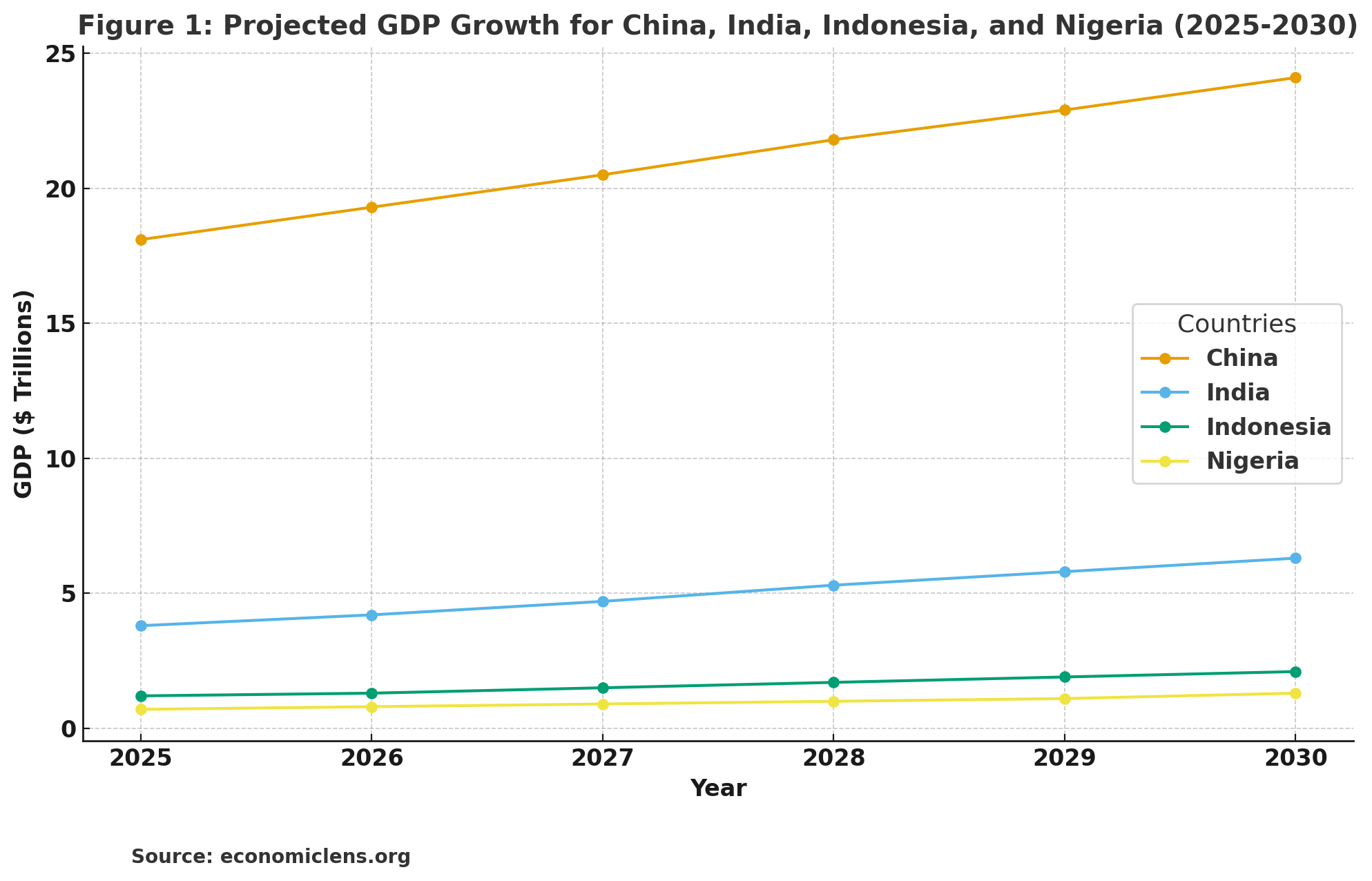
This figure highlights the projected GDP growth for China, India, Indonesia, and Nigeria. While China continues to lead, India, Indonesia, and Nigeria are expected to experience significant growth, narrowing the gap in the coming years.
3. India’s Economic Rise in Global Economic Growth
India’s economic rise is nothing short of remarkable. Infact, the country is on track to become one of the world’s largest economies by 2025, driven by its rapidly expanding tech sector, a growing services industry, and an emerging manufacturing hub.
Tech and Innovation Driving India’s Economic Growth
India’s tech industry, led by firms like Tata Consultancy Services and Infosys, is one of the fastest-growing sectors globally. The country’s focus on digital infrastructure, including initiatives like Digital India, is transforming it into a global leader in technology and innovation.
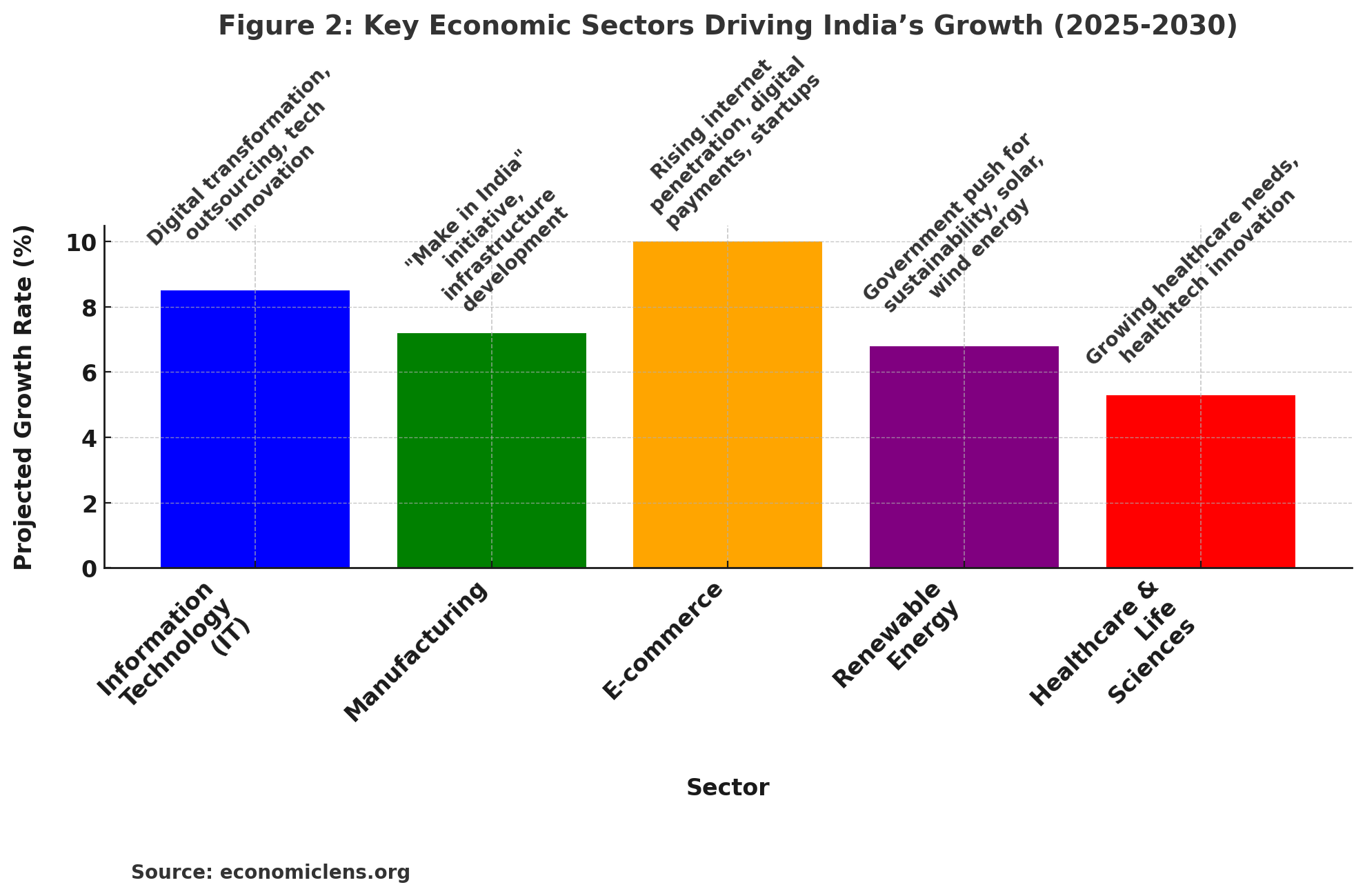
The figure illustrates key sectors contributing to India’s economic growth, demonstrating its diversification into technology, manufacturing, and sustainable energy.
India’s Strategic Global Alliances and Economic Influence
India’s increasing participation in global forums like the G20, BRICS, and its strengthening trade ties with Western countries and Asia further enhance its status as an emerging economic leader. India’s active role in global economic growth and its growing influence in global trade and politics make it a strong contender to challenge China’s position.
“India’s rapid growth in technology and strategic international partnerships make it a frontrunner in the global economic race—could it outpace China?”
4. Indonesia’s Economic Potential and Role in Global Economic Growth
Indonesia is positioned to be a key player in global economic growth. Moreover, with its growing population, young workforce, and focus on sustainable development, Indonesia is steadily becoming a force to be reckoned with.
Indonesia’s Green Energy Revolution
Indonesia is investing heavily in renewable energy to meet its growing energy needs and reduce its reliance on fossil fuels. The government’s commitment to sustainability and green energy has positioned Indonesia as a leader in Southeast Asia’s energy transition.
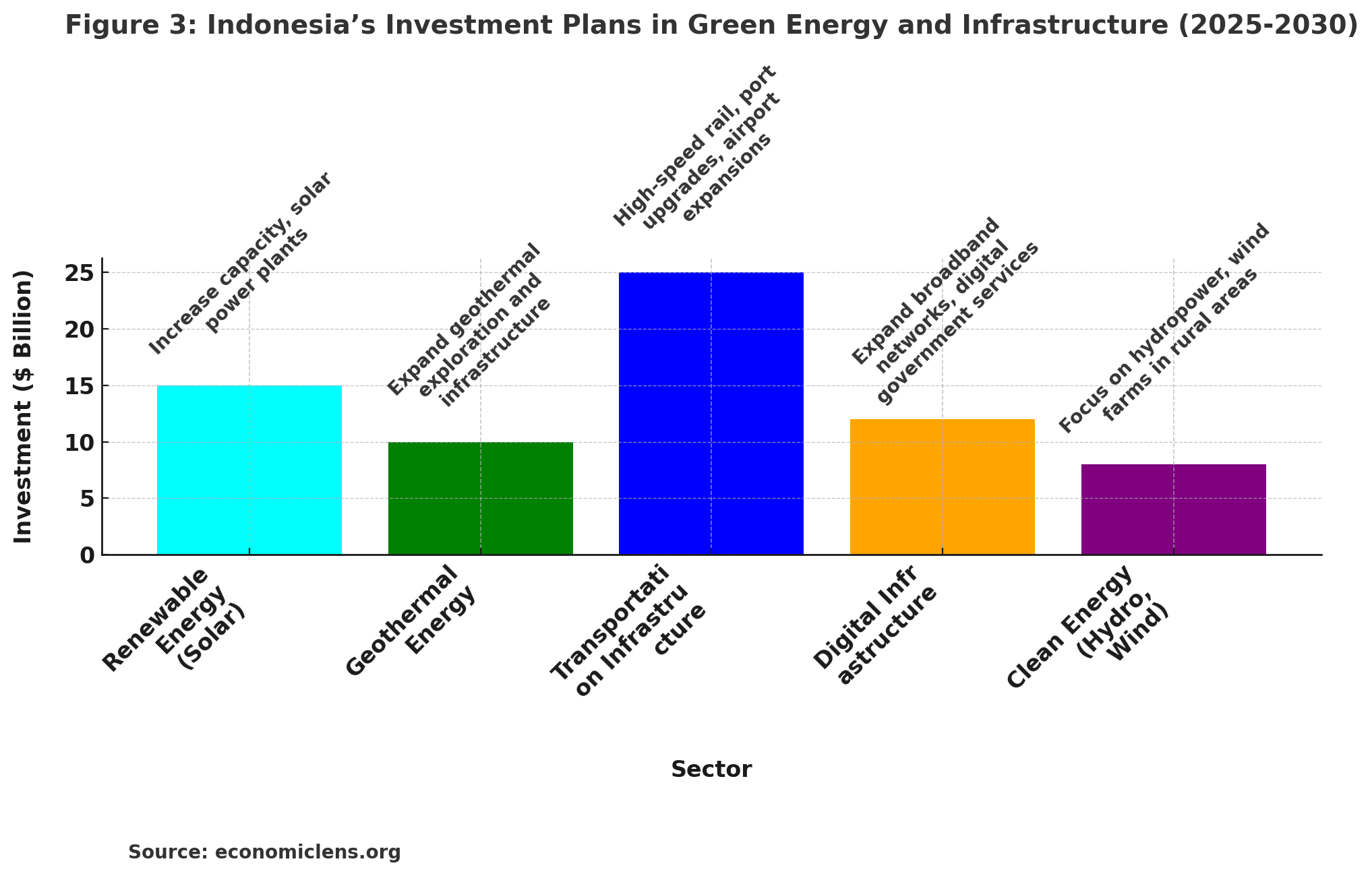
This figure highlights Indonesia’s focus on infrastructure and renewable energy as crucial drivers of economic growth.
“Indonesia’s commitment to green energy and infrastructure could make it a key player in the evolving global economic growth. But can it keep up with rising giants?”
5. Nigeria’s Economic Renaissance and Challenge to China’s Economic Dominance
Nigeria, Africa’s largest economy, has immense potential to compete globally, driven by its young population, expanding tech sector, and rich natural resources. In addition, Nigeria’s growing digital economy, particularly in fintech, positions it as an emerging competitor in global economic competition.
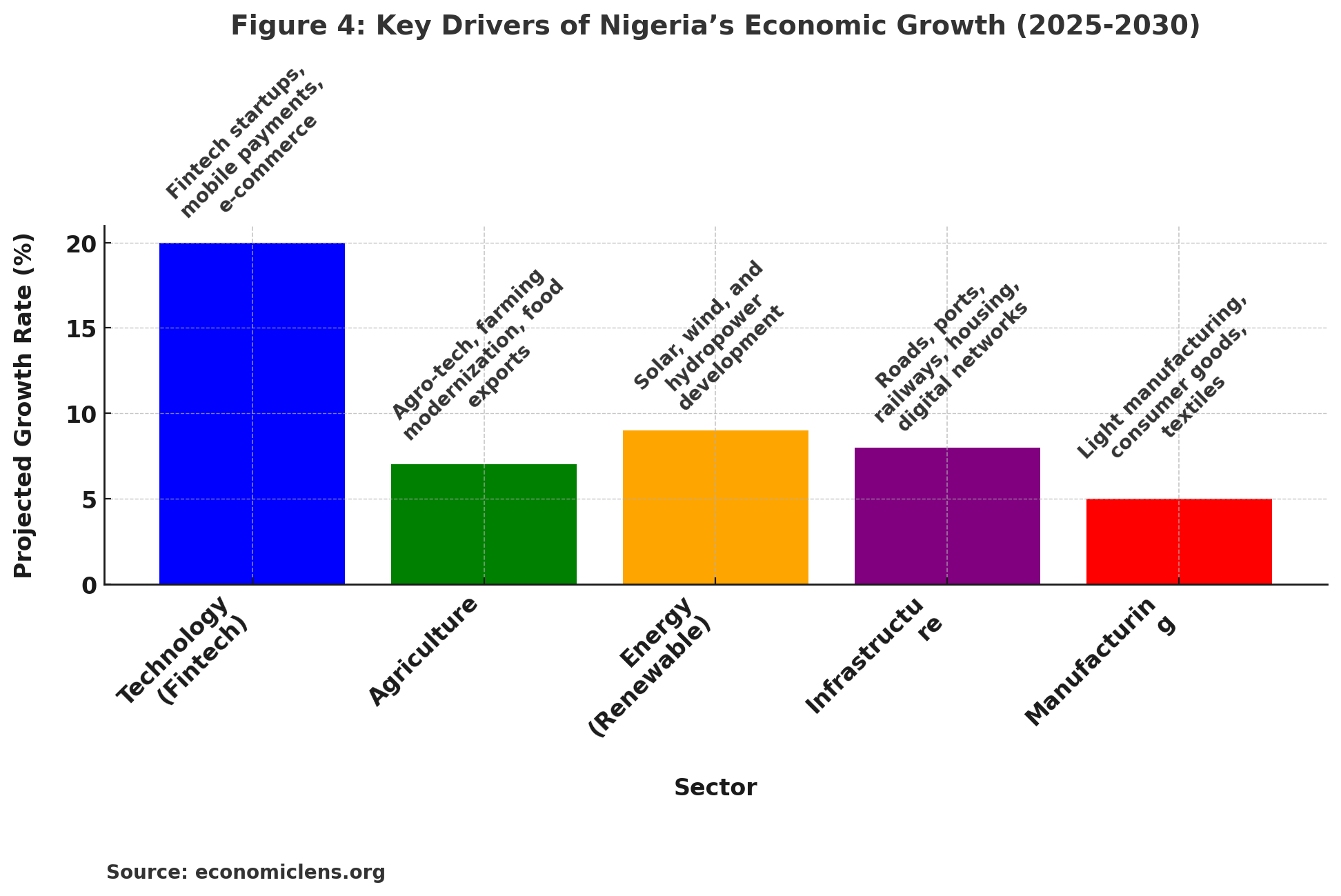
Figure 4 shows key sectors driving Nigeria’s economic growth, including technology, agriculture, and renewable energy.
“With its vast resources, young population, and emerging tech sector, Nigeria has the potential to challenge China’s economic dominance in Africa and beyond.”
6. Can Emerging Economies Overcome Challenges to Compete with China’s Economic Dominance?
India, Indonesia, and Nigeria face several challenges—political instability, inadequate infrastructure, and educational gaps—that must be addressed to fully compete with China’s economic dominance. Thus, overcoming these barriers will be essential for their success.
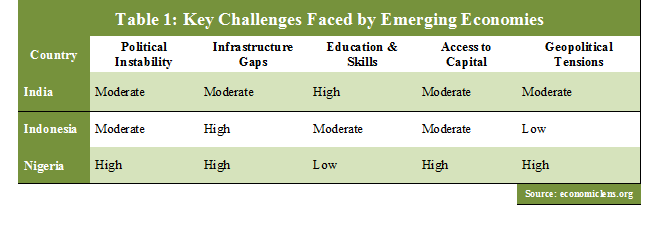
These statistics highlights the key challenges that India, Indonesia, and Nigeria face in overcoming obstacles to economic growth. These challenges need to be addressed if they are to successfully compete with China’s economic dominance.
“To challenge China’s economic dominance, emerging economies must innovate and enact sweeping reforms. Are they up for the challenge?”
7. The Role of BRICS Nations in Shaping Future Economic Dominance
BRICS nations are driving the future of global economic growth, with India, along with emerging economies like Indonesia and Nigeria, gaining influence. Together, they could reshape the global power balance and reduce China’s economic dominance in key sectors.
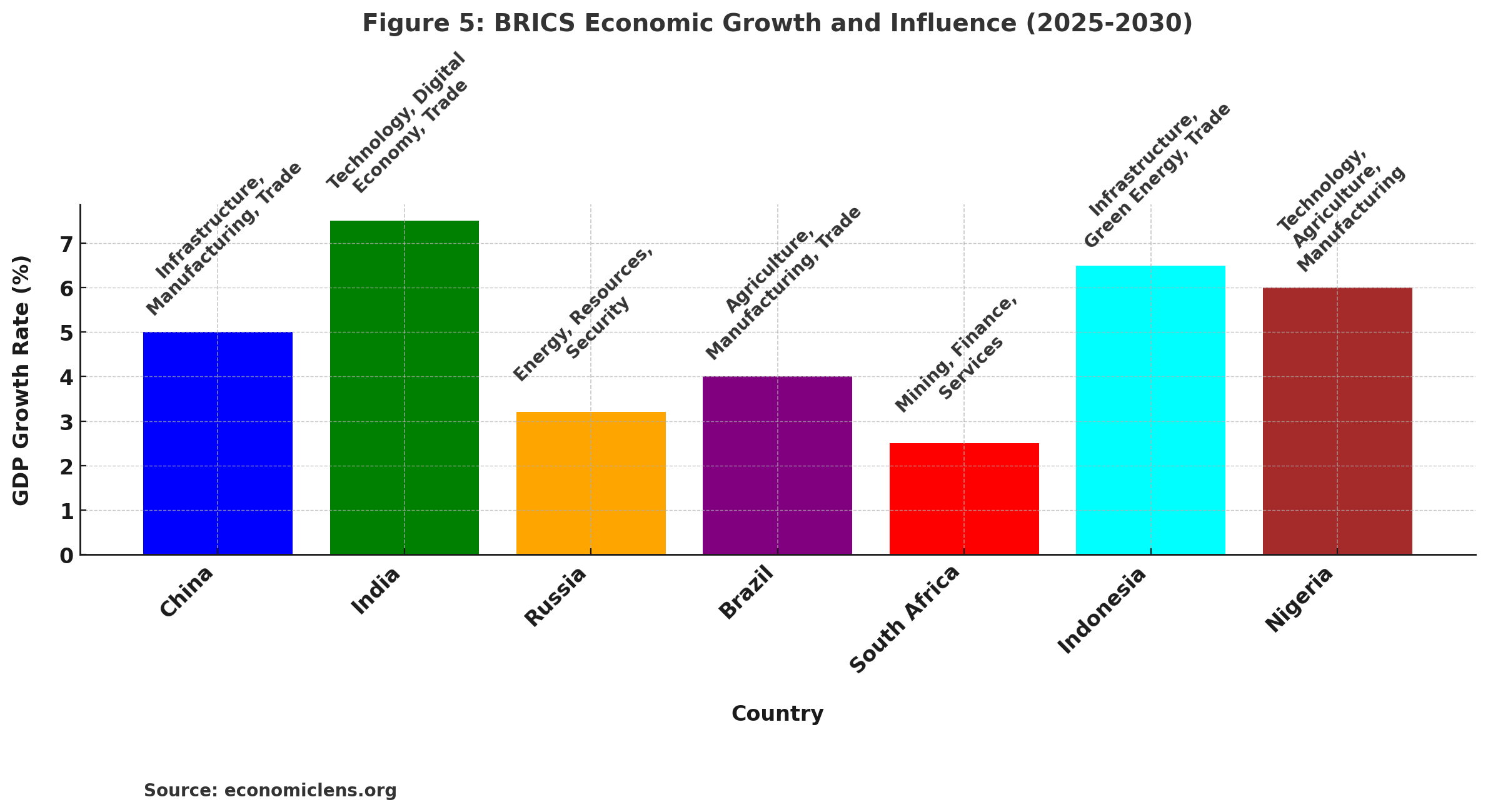
These statistics unfold the economic growth and influence areas of each BRICS member, with a focus on the strategies that emerging economies like India, Indonesia, and Nigeria are employing to contribute to global economic growth and economic competition.
“BRICS is evolving as a key player in global economics—could the alliance give India, Indonesia, and Nigeria the leverage they need to challenge China?”
8. The Future of Global Economic Growth and the Rise of Emerging Economies
As the world shifts toward global economic growth, China’s economic dominance is being increasingly challenged by emerging economies like India, Indonesia, and Nigeria. These nations, with growing populations, expanding middle classes, and advancing technological sectors, are becoming key players in the global economy.
While China remains influential, the rise of these economies signals a multipolar economic future. India, Indonesia, and Nigeria are not just responding to China’s dominance—they are actively driving global economic growth by focusing on innovation, sustainability, and regional influence.
The question remains: can these emerging economies overcome their challenges and compete with China’s economic dominance? As they continue to rise, the global economy could see a shift towards a more balanced, multipolar order.
“As India, Indonesia, and Nigeria rise, the future of global economic growth could be reshaped. Can they challenge China’s dominance and lead the way?”
9. Concluding Remarks
The global economic landscape is shifting, and India, Indonesia, and Nigeria are emerging as key players in global economic growth. While China’s economic dominance remains strong, these nations are positioning themselves to compete in key sectors like technology, manufacturing, and trade.
Despite challenges like political instability and infrastructure gaps, their potential to lead in innovation, sustainability, and diversification is clear. As these countries rise, the global economy could move towards a more multipolar economic future, with India, Indonesia, and Nigeria playing pivotal roles.
“As emerging economies like India, Indonesia, and Nigeria continue to grow, they could redefine global economic growth and challenge China’s economic dominance.”