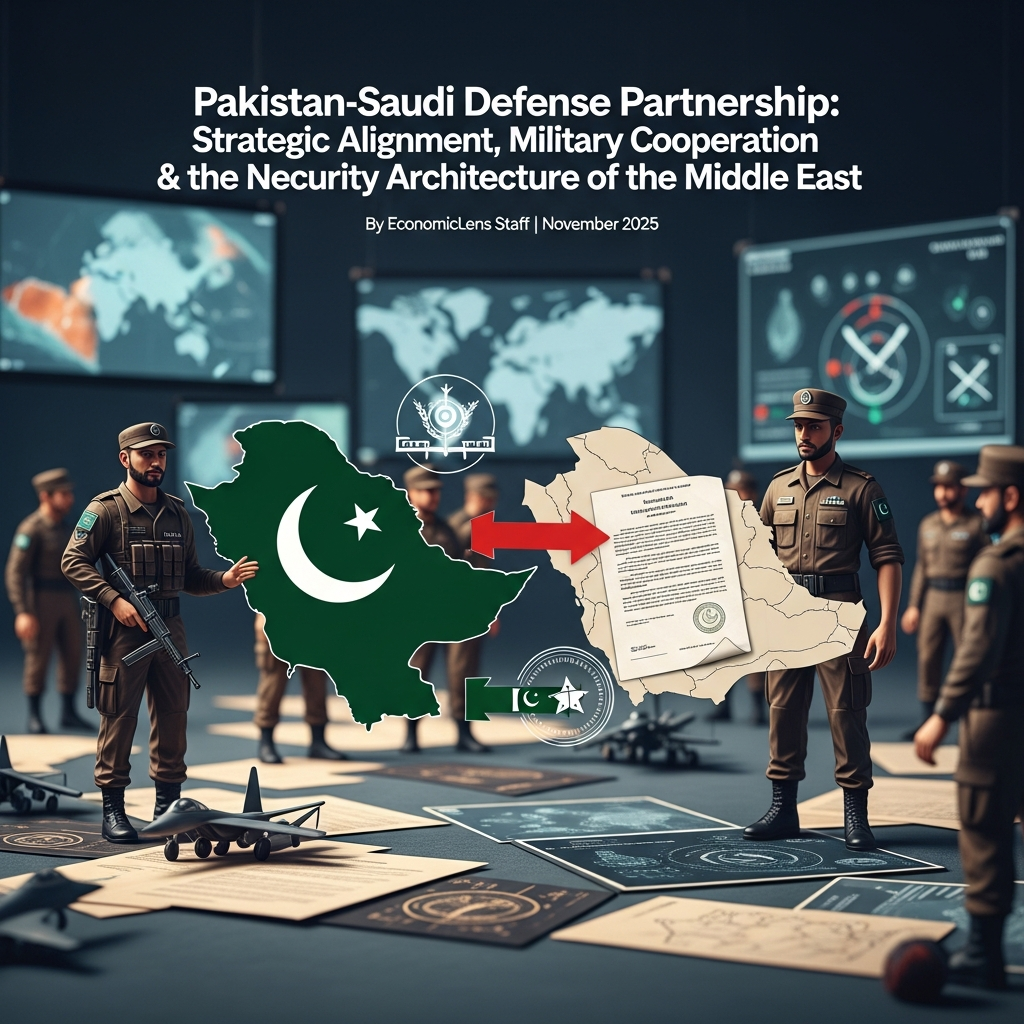
The Pakistan Saudi Defense Partnership is entering a new era of strategic alignment shaped by regional tensions, maritime risks, and modernization needs. This blog examines military cooperation, economic gains, joint exercises, and the evolving security architecture redefining Gulf–South Asia relations
Introduction: The Rising of Pakistan Saudi Defense Partnership
The Pakistan Saudi Defense partnership has entered a new and more strategic phase, shaped by shifting regional threats and rising geopolitical uncertainty. Historically rooted in military training, advisory missions, and shared political interests, the relationship has deepened significantly after the Israeli airstrike in Doha, which targeted Hamas officials during ongoing mediation efforts. The attack not only shook the diplomatic environment but also revealed how vulnerable Gulf states have become to cross-border escalation. Consequently, Saudi Arabia is now seeking reliable regional Defense partners, and Pakistan, with its battle-tested forces, intelligence experience, and long-standing bilateral trust, has emerged as the most natural and strategically aligned choice. The Pakistan Saudi Defense partnership is therefore evolving into a structured, institutional collaboration that blends military, economic, and geopolitical interests.
“When instability reaches a nation’s doorstep, trusted partnerships become the first shield. The Pakistan Saudi Defense partnership strengthened because both states recognized that only shared security can sustain regional stability in uncertain times.”
1. Historical Evolution of the Pakistan Saudi Defense Partnership
The Pakistan Saudi Defense partnership spans more than five decades and has evolved through shared strategic concerns, steady diplomatic engagement, and repeated moments of crisis. Initially limited to training and advisory missions, the partnership expanded throughout the 1980s and 1990s as Gulf tensions intensified. Over time, both states realized that structured military cooperation was essential for maintaining regional balance. As a result, today’s expanded Defense agreement is not a sudden shift but a logical continuation of a long historical arc shaped by trust and mutual interest.
Dr. Mustafa Alani from the Gulf Research Center notes that “Pakistan played an essential role in building early Saudi Defense structures, which created institutional trust that continues to shape today’s military cooperation.” A historical review by SIPRI found that Pakistani advisers in the 1970s and 1980s heavily contributed to forming Saudi Arabia’s first structured officer corps, helping Riyadh stabilize and professionalize its security institutions during an era of regional conflict.
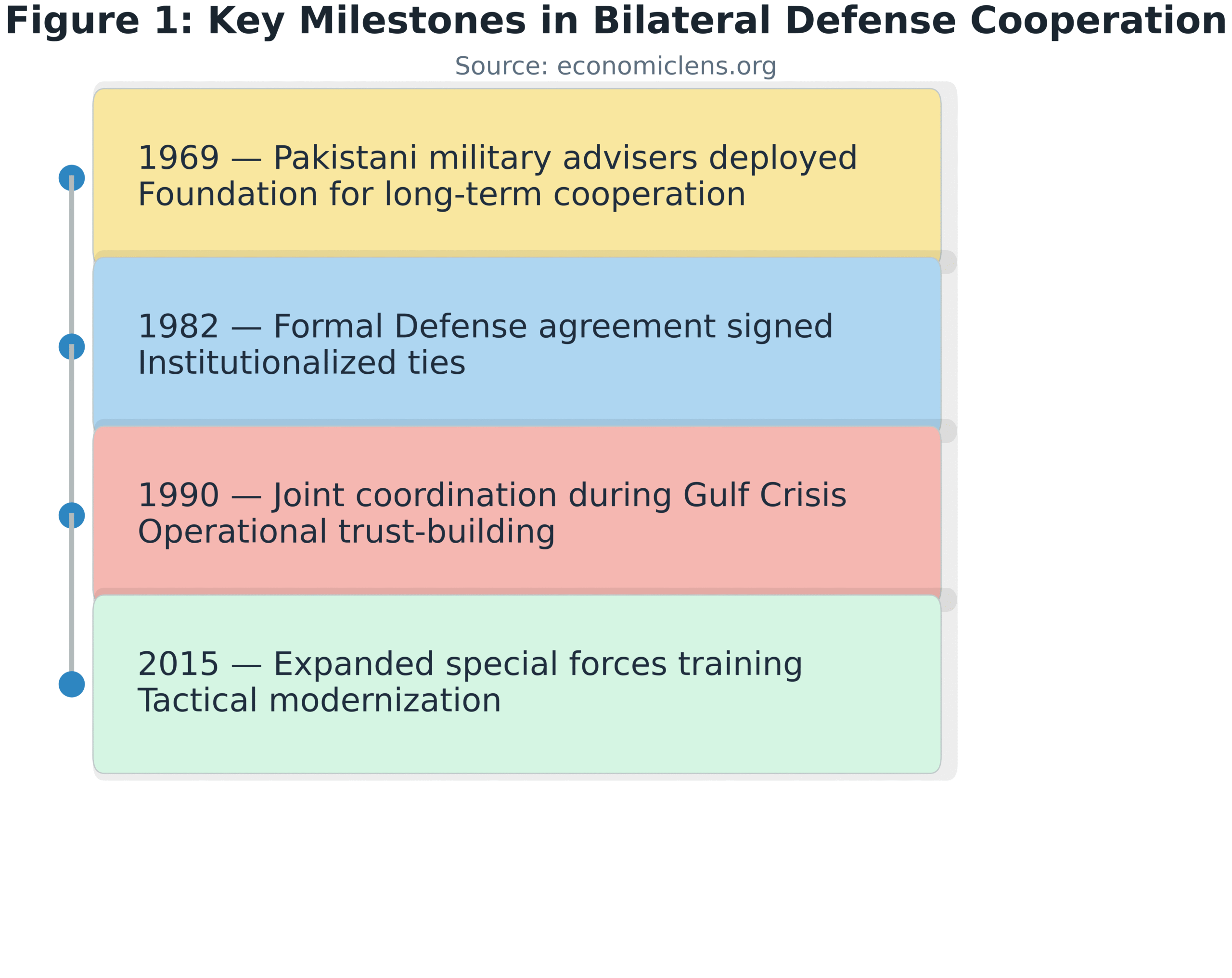
This table illustrates that the Pakistan Saudi Defense partnership has grown steadily alongside regional crises. Every milestone triggered deeper institutional alignment, proving that the partnership has matured through experience, necessity, and shared strategic objectives rather than symbolic diplomacy.
“Enduring partnerships are shaped by decades of shared experience, strengthened in crises, and sustained by trust that grows every time history tests it.”
2. Key Points of the Pakistan Saudi Defense Agreement
The most recent Pakistan Saudi Defense agreement reflects a shift from ad hoc cooperation to structured coordination. It introduces formal mechanisms for intelligence sharing, maritime security, crisis communication, cyber Defense, and joint production. Because the Doha airstrike exposed vulnerabilities in regional early-warning systems, both states recognized the need for predictable and unified Defense planning. Therefore, this agreement functions as the backbone of the newly strengthened Pakistan Saudi Defense partnership.
Brigadier (R) Waqar Malik explains that the new framework eliminates uncertainty by creating designated communication channels that activate instantly during emergencies, a point reinforced by a Middle East Institute policy brief (https://www.mei.edu/publications) which highlights that structured defense agreements reduce miscommunication risks and strengthen deterrence when multiple regional actors operate within contested security environments.
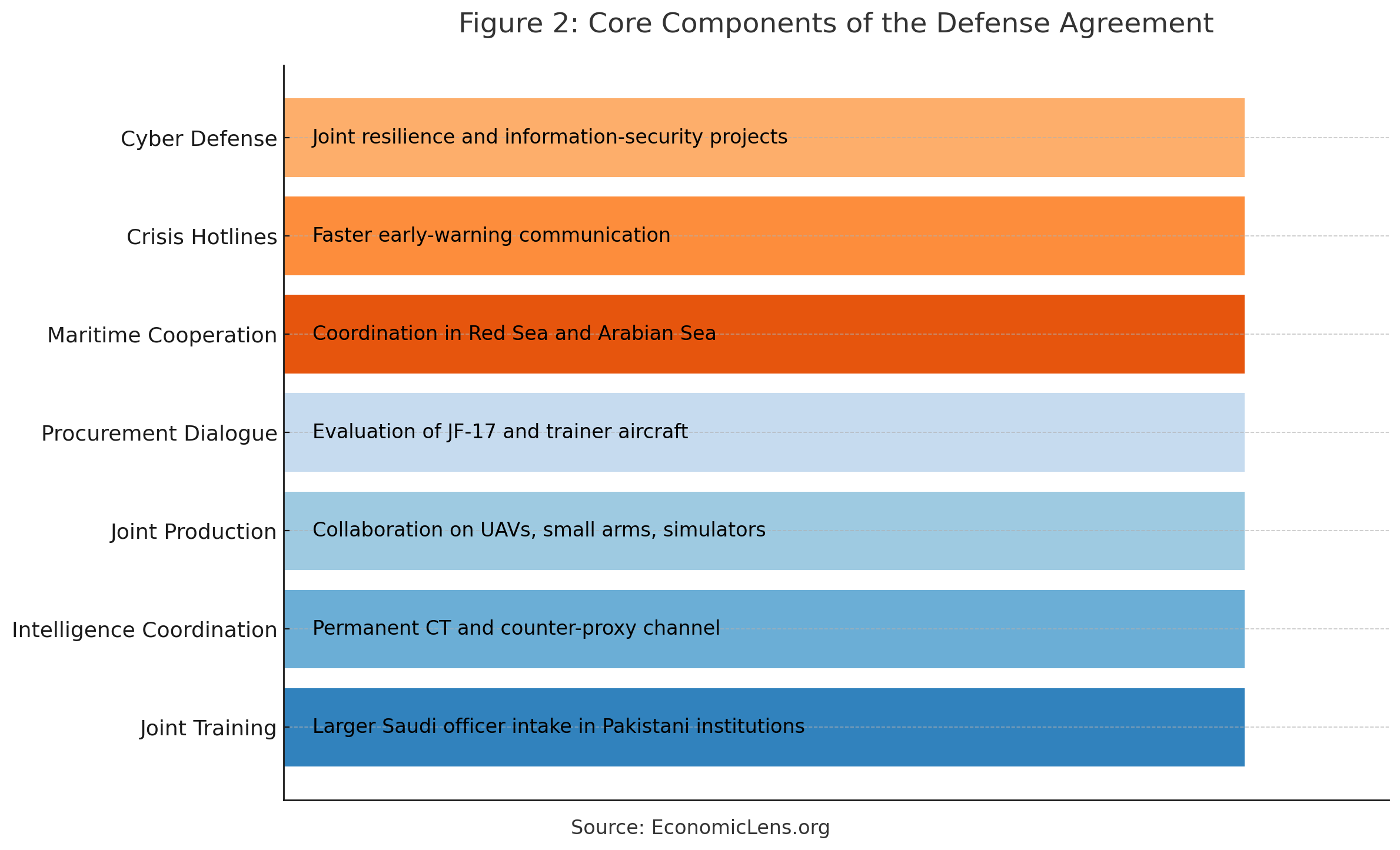
Each component addresses a critical vulnerability exposed by recent regional tensions. Joint training ensures skill development, Defense production promotes self-reliance, and crisis communication enhances response speed. Together, these measures strengthen the Pakistan Saudi Defense partnership and align it with emerging regional needs.
“When cooperation becomes structured and predictable, it evolves into a shield that enhances readiness and strengthens regional stability during turbulent times.”
3. Regional Impact of the Pakistan Saudi Defense Partnership
Beyond bilateral cooperation, the Pakistan Saudi security partnership has deep implications for Middle Eastern stability. Because conflicts in Gaza, Syria, Yemen, and the Red Sea continue to overlap, the Gulf region requires reliable alliances.
EconomicLens (https://economiclens.org/abraham-accords-post-gaza-risks-strategic-fault-lines-and-regional-power-shifts/) reported that post-Gaza strategic realignments in the Middle East have widened regional fault lines, reshaped alliance structures, and heightened security uncertainty across the region. These shifts have altered the strategic environment in which Gulf states operate, increasing the need for dependable defense partnerships and coordinated security frameworks.
The Doha strike, in particular, showed how spillover threats can destabilize even politically neutral states. Therefore, the enhanced partnership not only strengthens deterrence but also supports maritime security, crisis management, and strategic diversification away from exclusive Western reliance.
Brigadier (R) Waqar Malik explains that the new framework eliminates uncertainty by creating designated communication channels that activate instantly during emergencies, a point reinforced by a Middle East Institute policy brief (https://www.mei.edu/publications) which highlights that structured defense agreements reduce miscommunication risks and strengthen deterrence when multiple regional actors operate within contested security environments.
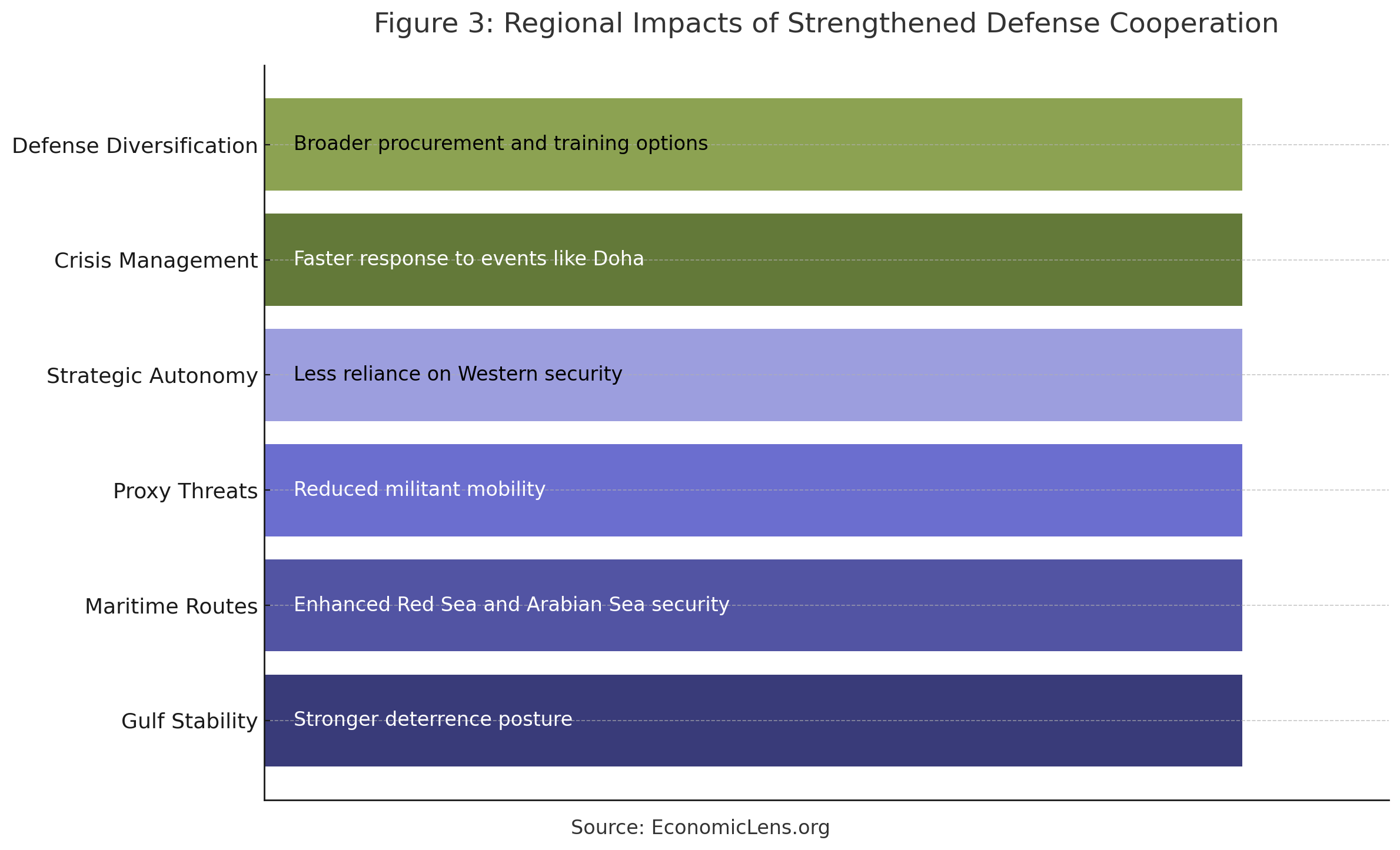
The table highlights how the Pakistan Saudi Defense partnership strengthens both operational and diplomatic stability across the region. More coordinated maritime patrols reduce shipping risks, while better crisis mechanisms minimize miscalculation during sudden escalations.
“True regional stability emerges when states combine deterrence with cooperation, turning shared vulnerabilities into shared strengths that protect the entire region.”
4. Joint Exercises and Maritime Interoperability
Joint exercises are the operational core of the Pakistan Saudi Defense partnership. They translate political declarations into real-world preparedness. Naval drills, live missile firing, anti-piracy operations, and intelligence-sharing exercises improve interoperability and readiness. Because maritime chokepoints are increasingly threatened, these exercises take on strategic importance.
Commodore (R) Tariq Majeed notes that joint naval drills prove the increasing trust and tactical compatibility between Pakistan and Saudi Arabia, a trend supported by analysis from Naval Technology Review (https://www.naval-technology.com) which reports that multinational exercises like AMAN strengthen communication, interoperability, and coordination across regional maritime forces.
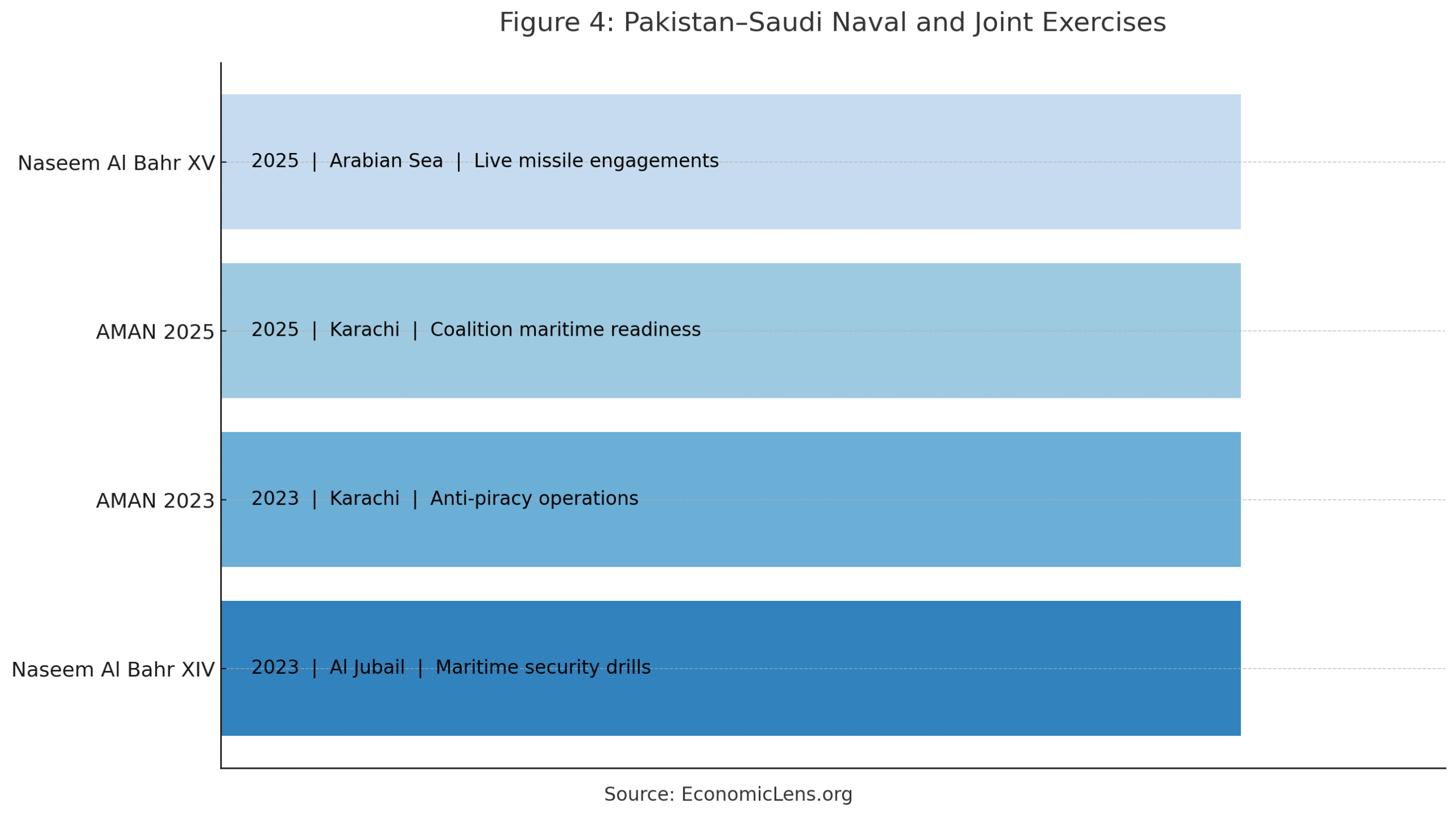
These exercises demonstrate growing complexity and stronger readiness. They improve communication, tactical understanding, and joint maritime Defense, making the Pakistan Saudi Defense partnership more operationally credible.
“Every coordinated maneuver, every drill, and every shared mission strengthens the silent bridge of trust that ultimately secures the Arabian Sea.”
5. Manpower and Complementary Strengths in the Defense Partnership
Pakistan and Saudi Arabia benefit from complementary strengths. Pakistan has a large, battle-hardened military, extensive counterterror experience, and deep training capacity. Saudi Arabia possesses advanced equipment, significant financial resources, and modernization aims. Together, they form a partnership that blends operational scale with strategic investment.
Dr. Ayesha Siddiqa notes that Pakistan’s reserve and paramilitary forces offer extraordinary deployment flexibility and operational resilience, an assessment supported by Global Firepower rankings (https://www.globalfirepower.com) which confirm Pakistan’s military size as one of the largest and most experienced in the region.
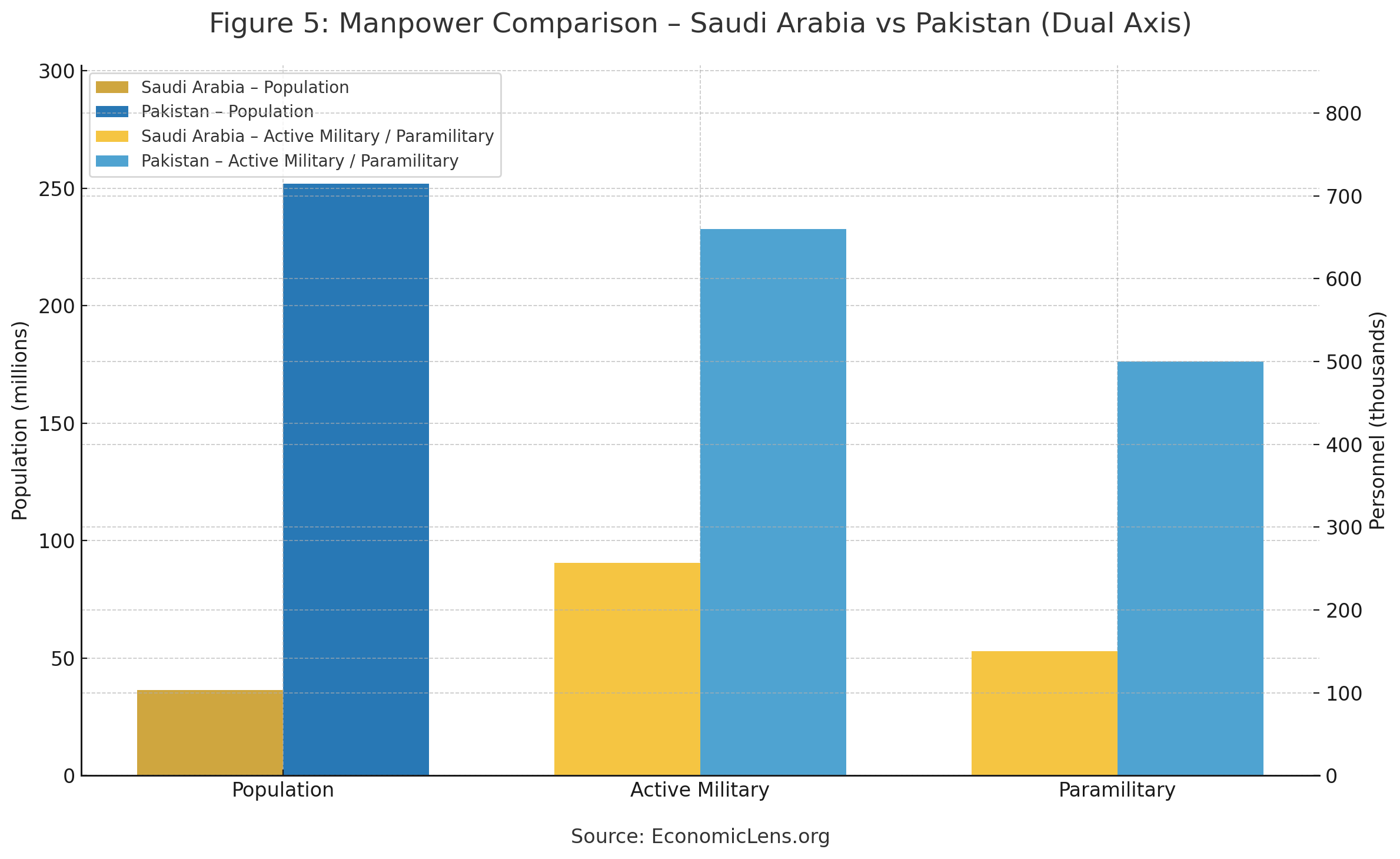
Pakistan’s manpower advantage fills skill gaps within Saudi Arabia’s Defense system, while Saudi investment supports Pakistan’s training and modernization needs. These complementary strengths solidify Pakistan Saudi defense cooperation.
“When operational experience combines with strategic investment, the result is a partnership that strengthens both sides far beyond what either could achieve alone.”
6. Technology, Procurement, and Defense Modernization
Saudi Arabia invests heavily in advanced Western systems, while Pakistan focuses on multi-role, cost-efficient platforms such as the JF-17. This creates opportunities for joint training, collaborative procurement, and burden sharing. Because both states face rising modernization pressures, cooperation reduces costs and expands strategic options.
Technology analyst Kamran Bokhari states that Pakistan’s cost-effective platforms offer Saudi Arabia diversification and flexibility, a trend supported by SIPRI research (https://www.sipri.org) which shows that countries are increasingly turning to affordable and adaptable defense systems instead of relying solely on expensive Western suppliers.
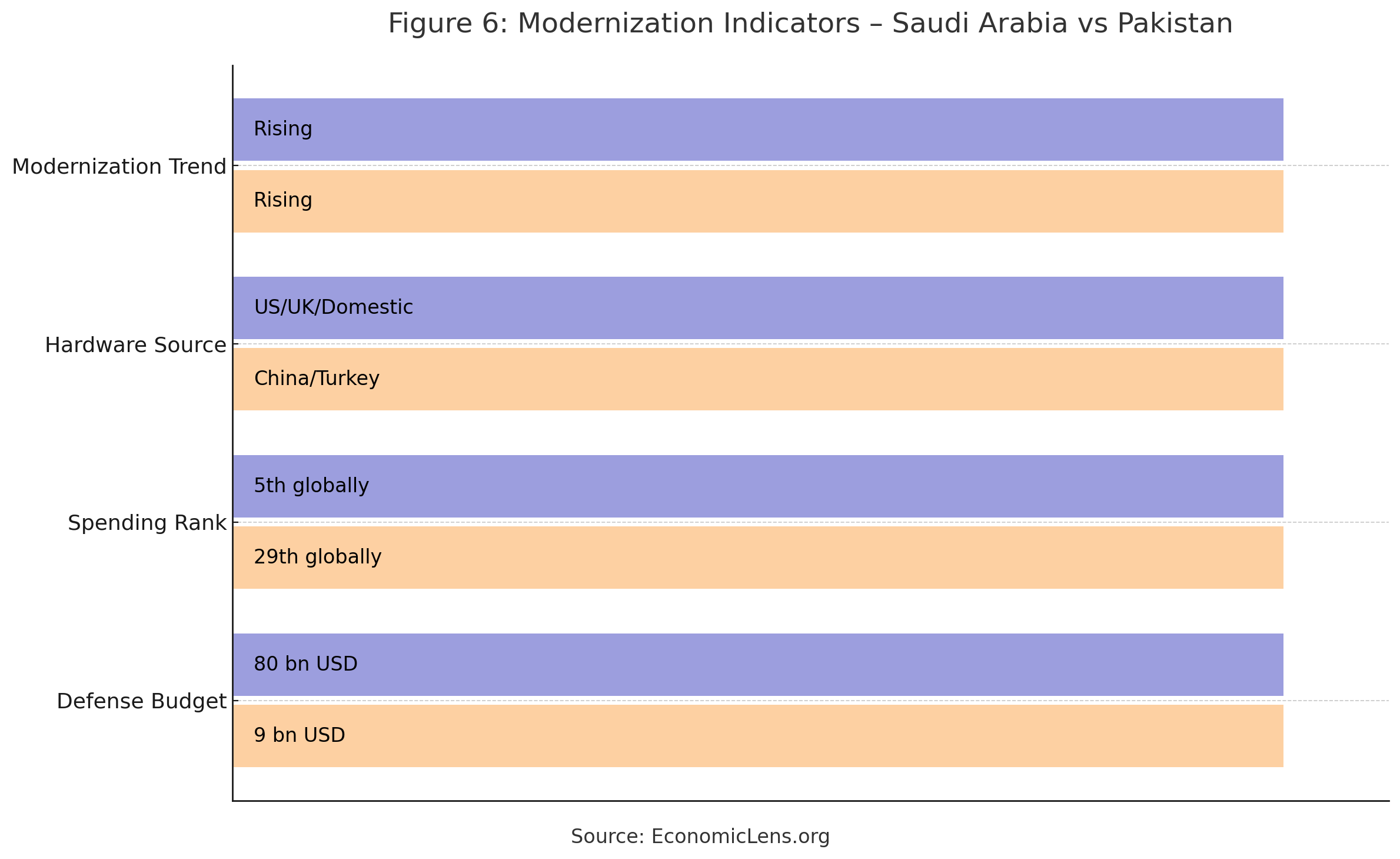
The data indicates that both countries are modernizing rapidly but through different pathways. Their cooperation allows greater interoperability and cost efficiency, deepening the Pakistan Saudi Defense partnership.
“Shared modernization is not just a military upgrade. It is a strategic investment that helps both nations stay prepared without overstretching their budgets.”
7. Economic and Strategic Benefits for Both Countries
A strengthened Pakistan Saudi Defense partnership delivers substantial economic gains. Pakistan benefits from Defense-linked employment, training revenue, remittances, and potential investment. Saudi Arabia benefits from cost-effective manpower, reduced reliance on expensive Western contractors, and access to scalable equipment and training ecosystems.
Dr. Hafiz Pasha emphasizes that defense-linked employment boosts Pakistan’s foreign reserves through high-value remittances, a finding aligned with World Bank studies (https://www.worldbank.org/en/topic/labormarkets) which show that specialized Gulf labor earns significantly higher wages, contributing to long-term economic stability in labor-sending countries.
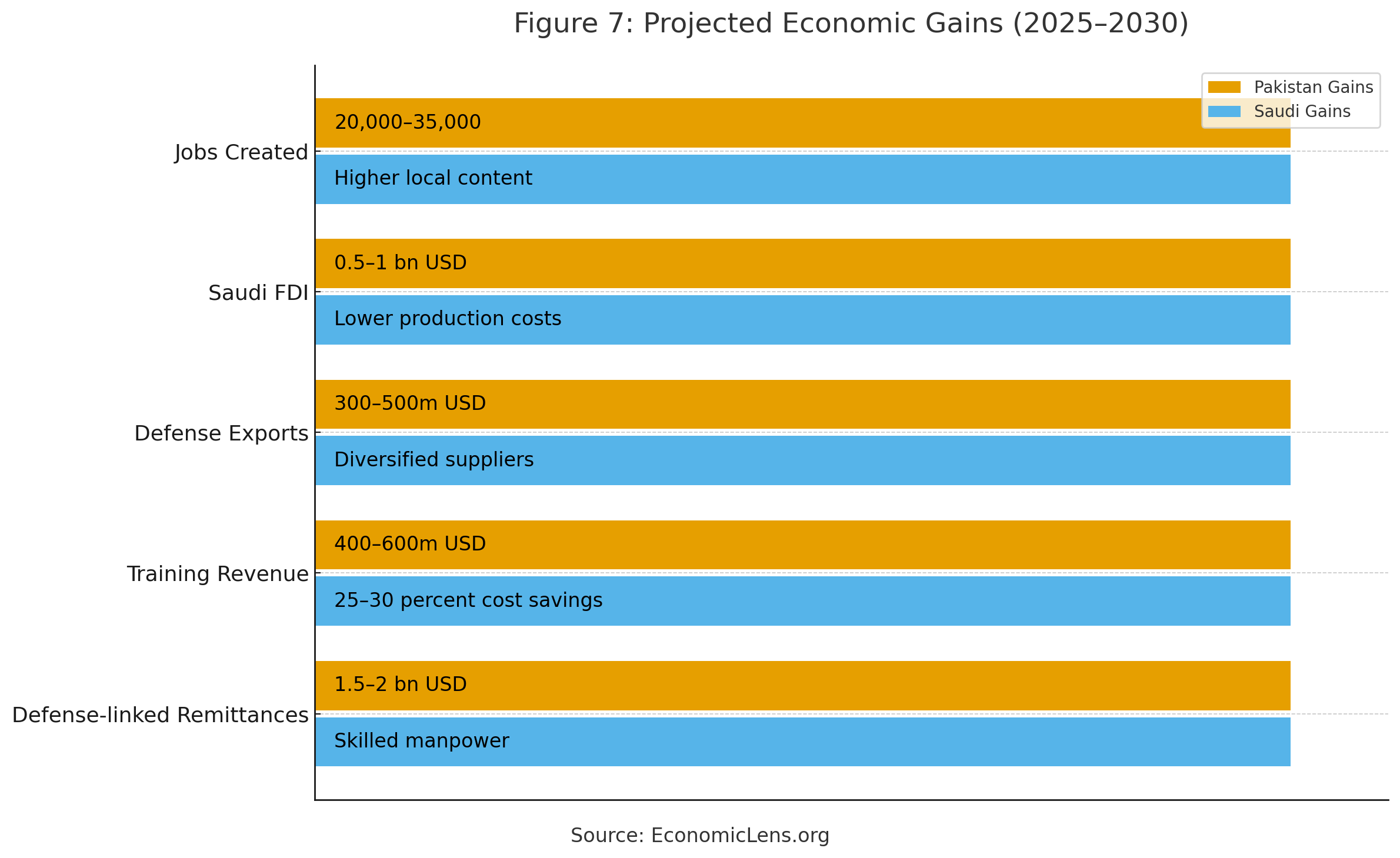
The data highlights that Defense cooperation also drives economic resilience. Pakistan gains revenue, jobs, and investment, while Saudi Arabia reduces dependency on high-cost partners and expands its Vision 2030 industrial objectives.
“When Defense cooperation translates into skills, jobs, investment, and revenue, it becomes more than security. It becomes a shared economic engine that strengthens both nations.”
8. Regional Security Roles and Domestic Implications
The Pakistan Saudi Defense partnership has broad domestic and regional implications. Pakistan gains diplomatic leverage and economic support, while Saudi Arabia strengthens its leadership role in the Muslim world. Because multiple regional conflicts overlap, both states benefit from coordinated planning and early-warning mechanisms.
Dr. Christian Koch notes that Pakistan offers Saudi Arabia operational experience and political acceptability during sensitive regional periods, a dynamic reinforced by a Reuters security report (https://www.reuters.com/world/middle-east/) which indicates that Gulf states increasingly depend on diversified alliances as regional threats become more unpredictable.
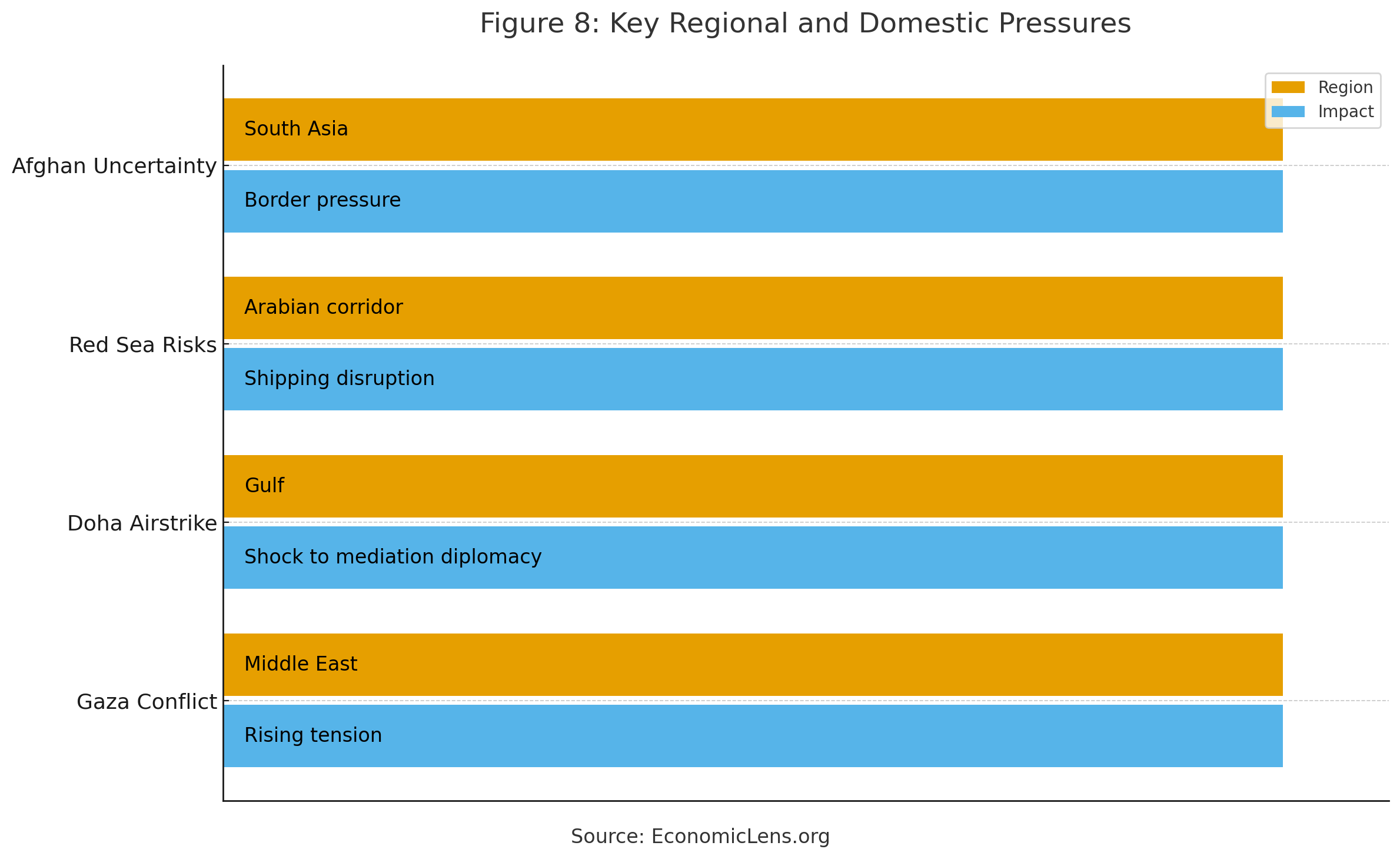
These pressures illustrate why both Pakistan and Saudi Arabia need coordinated Defense strategies. The Pakistan Saudi Defense partnership therefore supports domestic stability while strengthening regional deterrence.
“In a region where crises spill across borders, partnerships built on trust and strategy become the anchors that hold stability together.”
Policy Implications
The Pakistan Saudi Defense partnership requires structured policy action. Both states should develop permanent crisis-coordination units, integrated maritime surveillance systems, and joint training academies. They should also expand Defense co-production, focusing on UAVs, simulators, and small arms. Because economic dividends are significant, both countries should also integrate labour agreements, remittance channels, and investment frameworks into Defense planning.
“Strong policy design can turn cooperation into capability, stability, and shared resilience that strengthens both nations for the future.”
Conclusion
The Pakistan Saudi Defense partnership has transformed into a comprehensive security, economic, and strategic framework. Triggered by regional instability, especially after the Doha airstrike, the partnership now blends capability-building, maritime cooperation, Defense production, and economic opportunity. If sustained, it will become a cornerstone of regional stability and a major driver of Gulf–South Asia cooperation.
“When nations align their strengths and share their risks, they build partnerships that outlast crises and shape the security architecture of entire regions.”
Call to Action
Students, researchers, and policymakers should continue observing how both states expand joint exercises, develop crisis mechanisms, and strengthen Defense-industrial collaboration. These developments will shape the future of Middle Eastern security and Pakistan’s external economic strategy.
“To understand the evolving future of regional stability, follow how Pakistan and Saudi Arabia deepen this partnership because its influence will continue to reshape the Gulf and South Asia.”