
Space power competition is reshaping global geopolitics as nations expand military satellites, develop anti-satellite weapons, and fight for orbital dominance. With rising militarization, mega-constellations, and growing debris risks, the race for secure orbital control now defines strategic advantage, global communication, and defense stability. This analysis explores the forces driving the new era of space rivalry.
Introduction
Space power competition now shapes global strategy as nations expand military satellites, develop anti satellite systems and fight for orbital dominance. Because modern communication, navigation and surveillance depend on space infrastructure, the race to secure orbital control continues to intensify. As a result, countries treat orbit as a domain of strategic rivalry rather than a frontier of exploration. This trend strengthens the space power competition and deepens global security risks.
Militarization is increasing across major space powers. Countries invest in dual use satellites, rapid launch platforms and advanced tracking networks. Consequently, orbit is shifting toward a contested environment where control of orbital pathways influences defense planning, economic stability and global communication. For broader context on emerging technology rivalry, see our related analysis on AI controls and global power:
https://economiclens.org/the-new-tech-cold-war-how-ai-export-controls-are-redrawing-global-power/
“The state that shapes orbit strengthens its influence across every domain on Earth.”
1. Space Power Competition & Militarization: The New Strategic Battlefield
Space power competition now defines a major part of global security planning. Nations expand military satellites, strengthen tracking networks and test anti satellite systems. Because space based communication and surveillance support national defense, governments continue to increase spending on orbital capabilities. As militarization rises, strategic tensions grow and orbit becomes a contested zone rather than a neutral environment. Consequently, the space power competition intensifies and shapes long term geopolitical stability.
Expert Insight and Global Report Signals
The OECD Space Economy Report 2024 (https://www.oecd.org/space/space-forum/) notes that global satellite deployment expanded by more than 18 percent as countries accelerated investment in national space capabilities. The DOD Space Strategy 2024 (https://www.defense.gov/News/Press-Releases/) highlights rapid increases in anti satellite testing and orbital surveillance systems among major powers. These developments mirror a broader trend where space power competition heightens militarization and transforms critical orbital infrastructure.
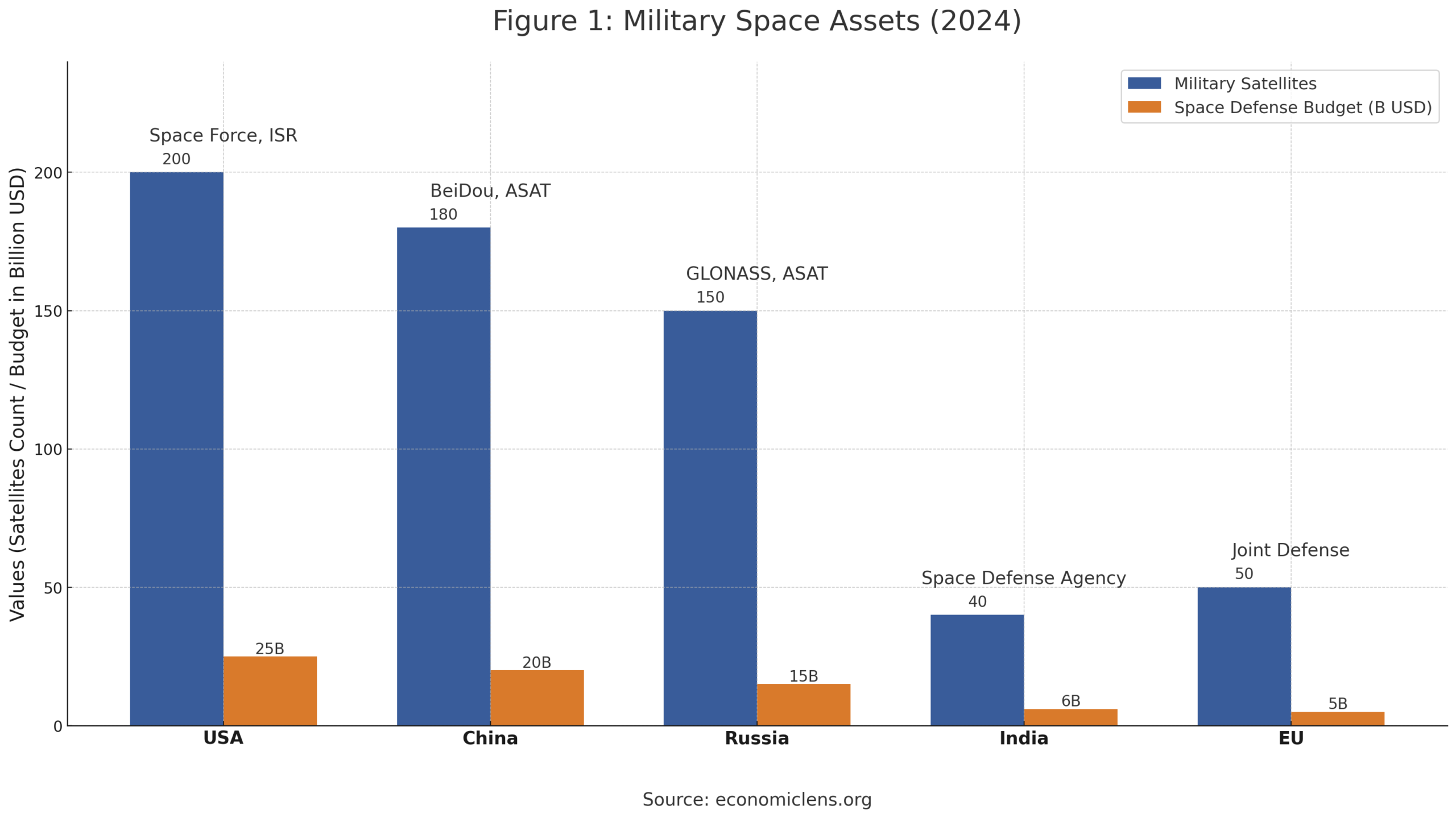
The table illustrates the expansion of militarized orbital programs. The United States, China and Russia dominate current capabilities, while India and the European Union scale their presence.
“Militarization has turned orbit into a decisive extension of national power.”
2. Space Power Competition and Satellite Rivalry: Securing Orbital Real Estate
Satellite rivalry has become a central feature of the space power competition. Nations race to secure valuable positions in low Earth orbit and geostationary orbit because these lanes support communication, navigation and defense. As mega constellations expand, competition intensifies and strategic congestion increases. Consequently, orbital dominance becomes a key objective for states seeking influence in global communication networks.
Growing demand for space based services also fuels rapid deployment. Commercial operators launch new platforms, while governments strengthen military and civilian systems. As a result, the strategic importance of orbital real estate continues to rise and defines the pace of the space power competition.
Expert Insight and Global Report Signals
The OECD Space Economy Report 2023 (https://www.oecd.org/space/space-forum/) notes that satellite markets could surpass one trillion dollars by 2040 as states and private firms expand orbital systems. The United Nations World Space Traffic Study 2024 (https://www.unoosa.org) highlights growing pressure on LEO due to rapid satellite deployment and limited coordination. These findings mirror a broader trend where satellite competition intensifies congestion and reshapes global orbital access.
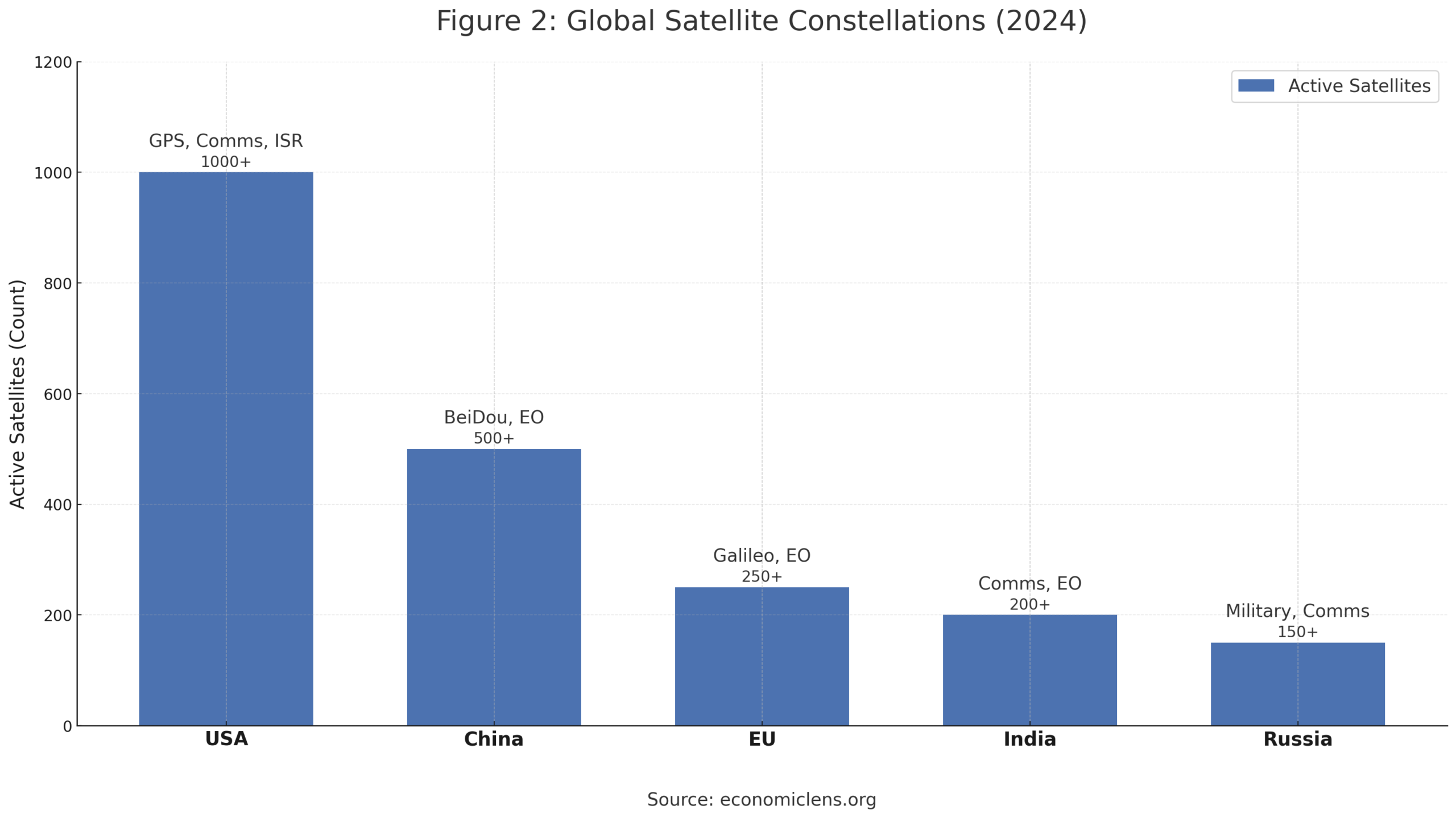
The United States leads in satellite numbers, while China’s rapid expansion signals rising ambition and tighter competition for orbital dominance.
“The nation that commands satellites today shapes the flow of global information tomorrow.”
3. Orbital Security Competition and Space Governance: Managing the High Frontier
Orbital security now stands at the center of the space power competition. As thousands of satellites enter orbit each year, risks increase due to congestion, interference and debris. Because communication and defense systems rely on stable orbital conditions, governments treat orbital security as a national priority. Consequently, pressure grows for stronger rules, clearer coordination and more responsible behavior in space.
Mega constellations add new challenges. They accelerate traffic in low Earth orbit and raise collision risks. In addition, hostile interference and cyber vulnerabilities create further concerns for satellite operators. Therefore, the demand for effective space governance continues to rise as nations seek safer and more predictable orbital environments.
Expert Insight and Global Report Signals
The UNOOSA Space Debris Report 2024 (https://www.unoosa.org/oosa/en/ourwork/topics/space-debris.html) notes that more than 27,000 tracked debris objects now threaten satellites across low Earth orbit and geostationary orbit. The Secure World Foundation Global Counterspace Assessment 2024 (https://swfound.org) highlights increasing threats from jamming, spoofing and co orbital interference. These findings mirror a broader trend where orbital security competition intensifies and exposes weaknesses in global space governance.
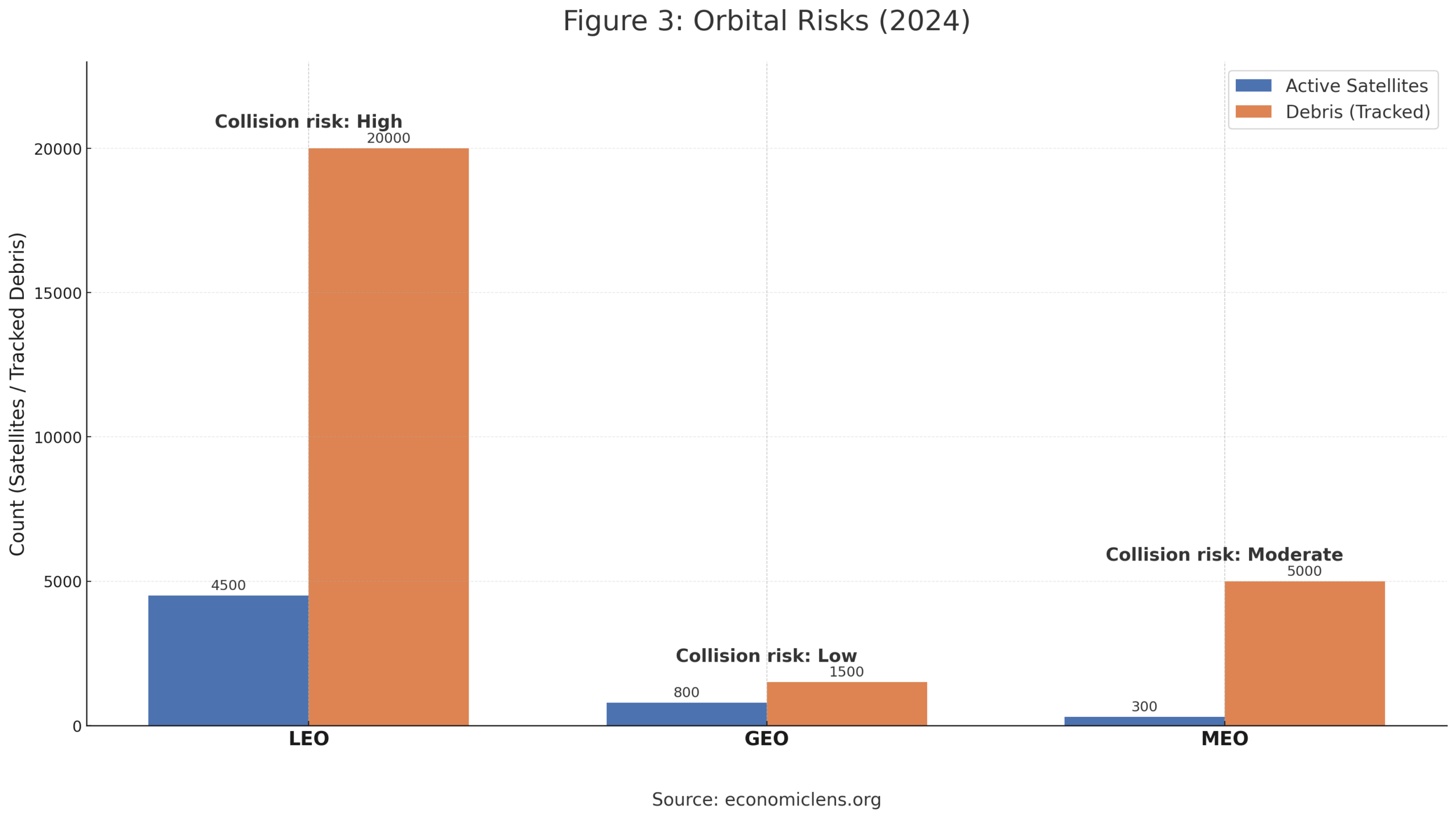
Low Earth orbit is approaching saturation, which increases collision risks and operational uncertainty. Geostationary orbit remains the most valuable corridor and requires strong protection.
“If we fail to govern orbit, the consequences will eventually govern us.”
4. Strategic Implications of the Space Power Competition
The space power competition now influences global security, technological ambition and long term economic planning. As countries expand launch capacity, strengthen surveillance networks and deploy military satellites, orbit becomes a central element of geopolitical strategy. Because space based systems support intelligence, communication and missile tracking, leaders increasingly view orbital dominance as a marker of national strength. Consequently, strategic rivalry intensifies and reshapes global power dynamics.
Growing investment also transforms the global space economy. Defense agencies, commercial operators and emerging space nations accelerate programs to secure a share of future orbital influence. As a result, the pace of innovation rises, but so do risks linked to congestion, militarization and fragmentation.
Expert Insight and Global Report Signals
The Global Space Strategy Report 2024 (https://www.spacestrategy2024.org) notes that the global space economy is on track to exceed one trillion dollars by 2040, driven by rapid military and commercial expansion. The Center for Strategic and International Studies Space Threat Assessment 2024 (https://www.csis.org) highlights increased counterspace activity that shapes military planning and strategic deterrence. These findings mirror a broader trend where strategic rivalry in orbit grows and alters global security calculations.
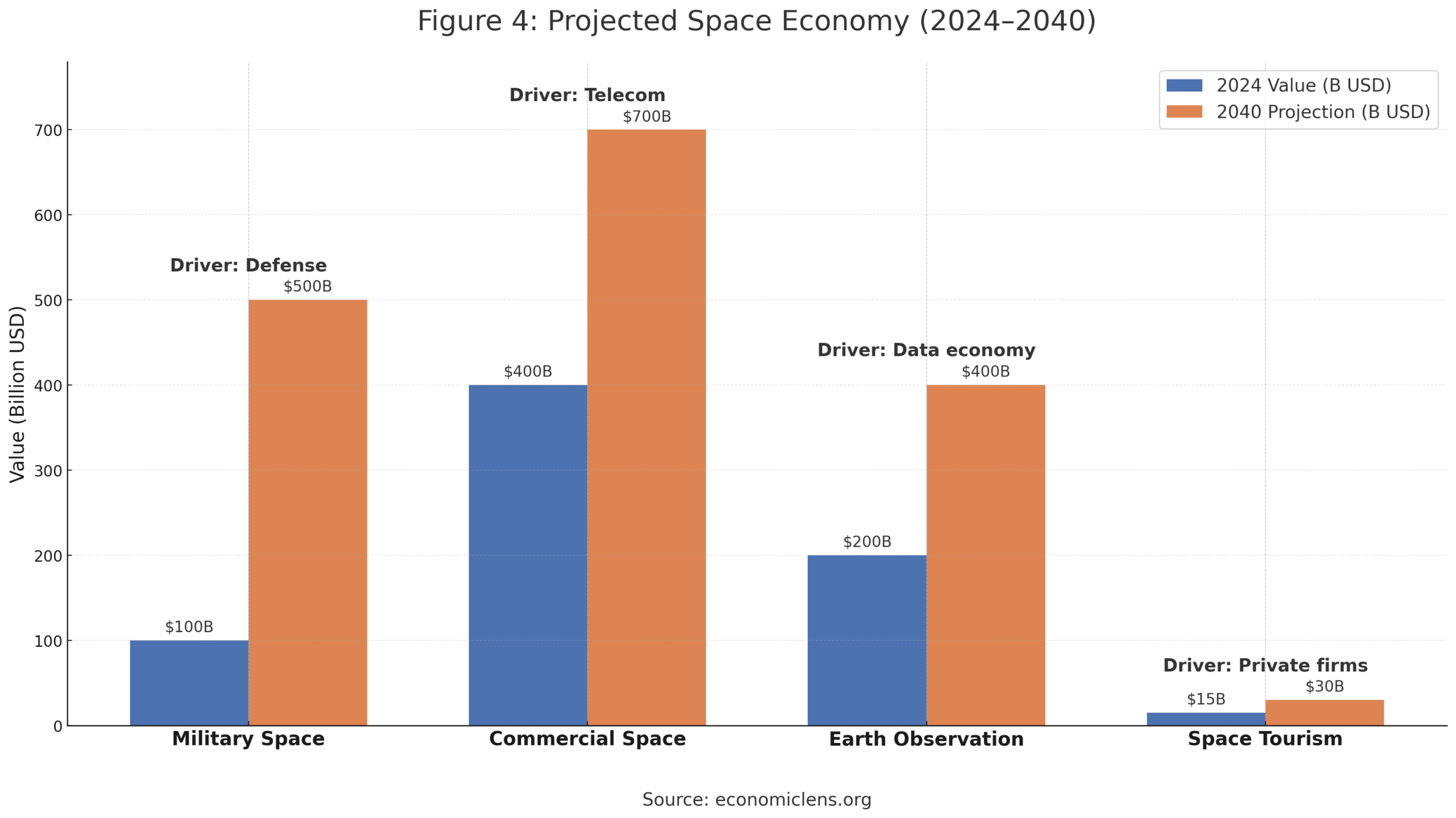
Military space programs expand rapidly, while commercial markets scale alongside them. This dual growth increases global reliance on orbital infrastructure.
“The nation that leads in space gains leverage that shapes decisions on Earth.”
5. Policy Implications: Governance, Security and Cooperative Stability in the Space Power Competition
Effective governance is essential as the space power competition accelerates. Nations require rules that manage satellite traffic, reduce debris and prevent uncontrolled militarization. Because orbital activity increases each year, the risks tied to congestion and interference become more difficult to manage. Consequently, the need for transparent policies and coordinated responses grows across all major space actors.
International cooperation also matters. Shared protocols for debris removal, traffic coordination and safe satellite operations can reduce the likelihood of miscalculation. In addition, inclusive governance frameworks help emerging space nations participate responsibly. As a result, the long term sustainability of orbit becomes more achievable.
Expert Insight and Global Report Signals
The OECD Reform Outlook 2025 (https://www.oecd.org/governance/) notes that stronger governance mechanisms are essential to manage rising orbital congestion and reduce the risk of conflict. The United Nations Committee on the Peaceful Uses of Outer Space 2024 Report (https://www.unoosa.org) highlights the urgent need for coordinated space traffic management to protect civilian and military satellites. These assessments mirror a broader trend where the space power competition pressures existing frameworks and demands new cooperative solutions.
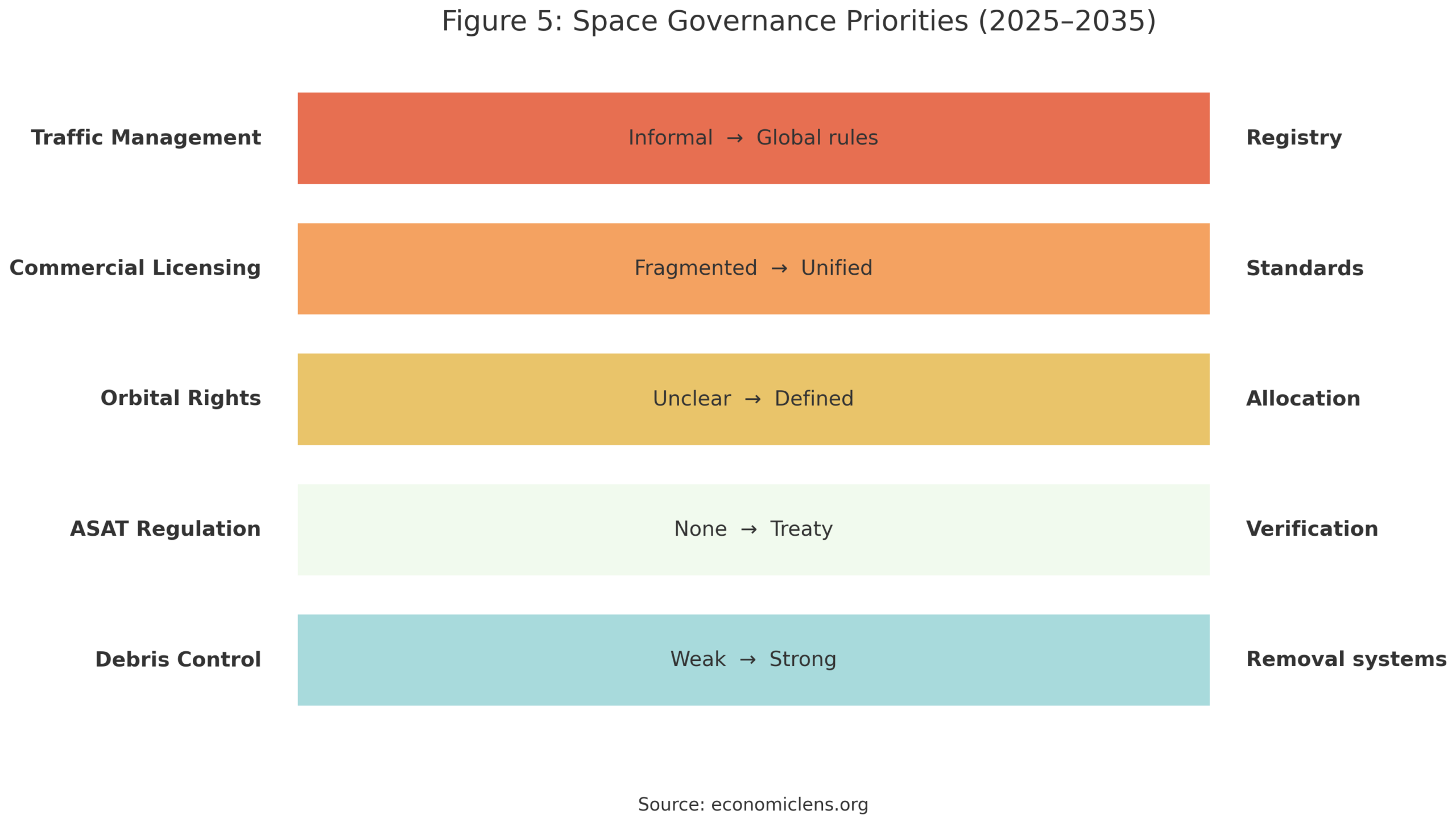
Clear governance reduces conflict risks, protects vital satellites and ensures sustainable access to orbit for future generations.
“Humanity’s future in orbit depends more on cooperation than competition.”
Conclusion
The accelerating space power competition shows how militarization, satellite expansion and orbital rivalry now shape global strategy. Space is no longer a passive frontier. It has become a contested arena that influences national security, communication and geopolitical stability. Although innovation in orbit grows rapidly, risks also rise due to debris, congestion and hostile interference.
Countries must balance strategic interests with long term sustainability. Without coordinated action, orbit may become unstable and hazardous, which threatens both civilian systems and military operations. Therefore, responsible governance must evolve alongside technological progress.
Call to Action
Nations must strengthen space governance, adopt transparent operating rules and invest in technologies that reduce debris and enhance safety. Cooperative frameworks are essential to prevent escalation and protect orbital environments. At the same time, governments and industry must work together to ensure that space remains accessible, stable and sustainable for future generations.
Clear policies, shared standards and responsible innovation can guide the world toward a safer orbital future. The choices made today will determine the stability of tomorrow’s space systems and the security of all nations that depend on them.