
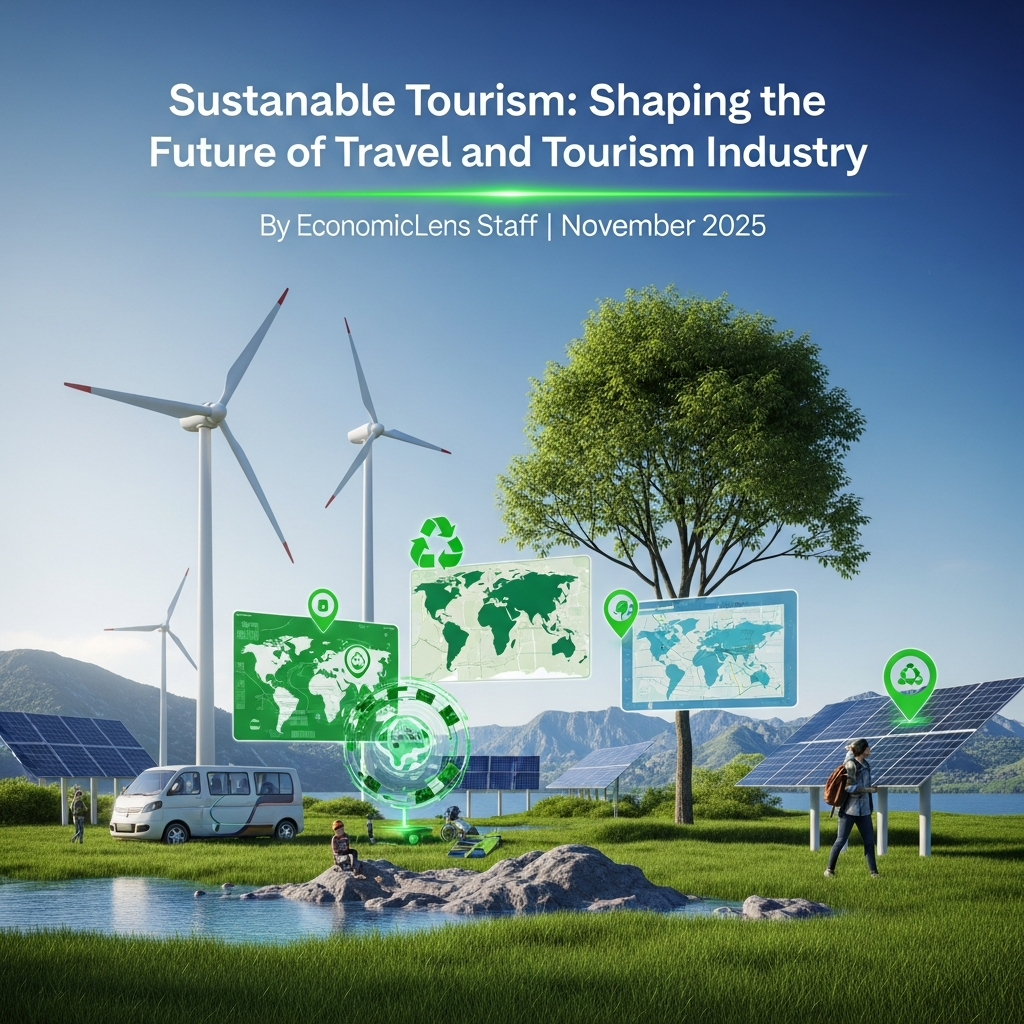
Explore how sustainable tourism is reshaping the tourism industry by promoting environmental responsibility and inclusivity for a better future.
Introduction: The Future of Sustainable Tourism
The future of the tourism industry depends heavily on the concept of sustainable tourism. As the world faces growing environmental concerns, the tourism industry must shift to practices that promote both eco-friendliness and inclusivity. Sustainable tourism is no longer a choice—it’s a necessity for ensuring a prosperous and balanced future for the tourism industry.
According to the World Economic Forum, the global travel and tourism sector is projected to grow at an annual rate of 7% between 2024 and 2034. This growth is expected to serve approximately 30 billion tourist visits, contributing around US$16 trillion to the global economy by 2034—accounting for 11% of the world’s GDP. Source: WEF Future of Travel and Tourism 2025
Sustainable tourism is essential to balancing this rapid growth with responsible management of our planet’s resources. This shift not only impacts the environment but also ensures inclusivity for communities and future generations to enjoy the benefits of travel. This blog explores how sustainable tourism will shape the future of the tourism industry and the steps required to make it a reality.
“The journey toward sustainable tourism begins today—join the movement and be part of a greener, brighter future!”
1. The Economic Drivers of Sustainable Tourism
The economic drivers of sustainable tourism play a vital role in shaping the future of the industry. From boosting GDP to creating jobs, tourism’s economic benefits are substantial. Sustainable tourism ensures these benefits are long-lasting and inclusive.
Table 1 unfolds the ey factors influencing the economic side of the tourism industry.
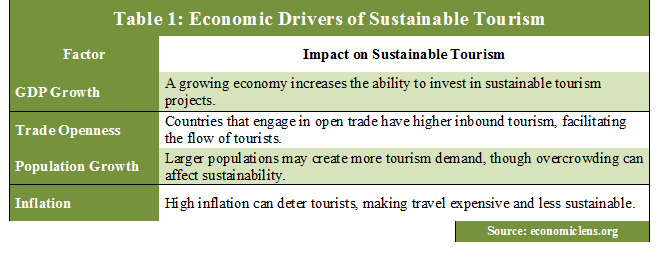
Countries with higher GDP growth, trade openness, and a stable population often see increased inbound tourism. Conversely, inflation can negatively impact tourism demand.
“Harness the power of economic growth to propel sustainable tourism forward, where prosperity and the planet go hand in hand!”
2. The Environmental Impact: Ensuring Green Tourism
The environmental impact of tourism is a significant concern for sustainable growth. Carbon emissions and non-renewable energy consumption are key factors that influence how tourism destinations are perceived by eco-conscious travelers. Countries with higher carbon emissions and reliance on non-renewable energy sources often see a decline in inbound tourism.
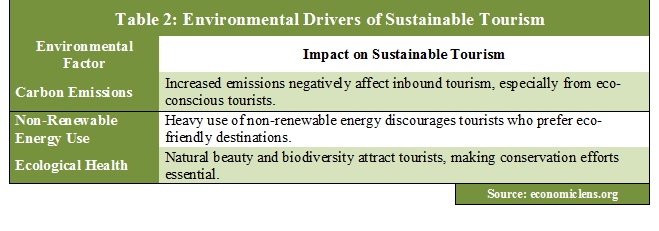
Sustainable tourism depends on reducing environmental footprints. Countries that invest in renewable energy and carbon offset programs will attract more eco-conscious tourists.
“Together, we can protect the planet while embracing travel that leaves only footprints of positivity!”
3. The Role of Institutional Quality in Attracting Tourists
Institutional quality is another crucial driver of sustainable tourism. The quality of governance, control over corruption, political stability, and the absence of violence or terrorism are critical factors that influence inbound tourism. Destinations with higher governance quality are more likely to attract tourists, as they provide a safer, more efficient, and trustworthy environment.
According to WEF, “destination readiness”—which involves strategic planning, infrastructure, policy adaptation, and proactive sustainability measures—is critical for tourism growth. Countries with strong governance and transparent systems attract more international visitors, as these factors ensure safety, security, and a higher quality experience. (Source: WEF, Destination Readiness)
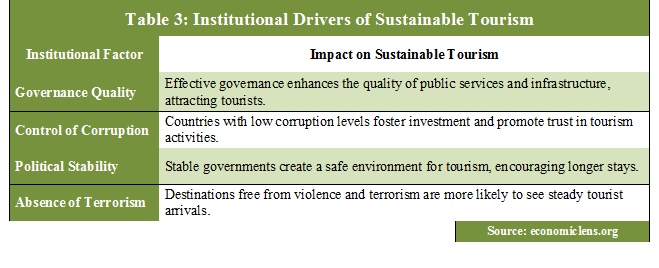
Strong institutional frameworks—good governance, low corruption, and political stability—are essential for promoting sustainable tourism.
“Let’s build a world where stability and trust drive a tourism industry that benefits all, today and tomorrow!”
4. The Role of AI in Shaping Sustainable Tourism
Artificial Intelligence (AI) is becoming a game-changer in the travel and tourism industry, especially when it comes to promoting sustainable tourism. AI can drive efficiencies, enhance the traveler experience, and help reduce the environmental impact of tourism. Here’s how AI contributes:
- Predictive Analytics for Sustainable Travel Patterns: AI-powered systems can analyze data to predict tourist flows and patterns. This helps in managing crowding, reducing over-tourism, and ensuring that resources are used efficiently, especially in high-demand areas.
- Personalized Eco-Friendly Travel Options: AI can help travel companies provide personalized itineraries that prioritize sustainability. By analyzing customer preferences, AI can recommend eco-friendly accommodations, transportation, and activities, encouraging travelers to choose greener options.
- Smart Cities and Tourism Infrastructure: AI is being integrated into smart city solutions, optimizing traffic flow, energy consumption, and waste management in tourist-heavy areas. This leads to a reduction in the environmental footprint of tourism while improving the quality of life for local residents.
- Carbon Footprint Tracking: AI can assist travelers and businesses in tracking and reducing their carbon footprint by providing real-time data on transportation emissions, energy usage, and waste management, enabling more sustainable decisions.
- AI in Conservation and Environmental Protection: AI technologies, such as machine learning and data analytics, can be used in conservation efforts to monitor biodiversity, track environmental changes, and enforce sustainable practices at tourism sites.
By integrating AI into sustainable tourism strategies, businesses and destinations can enhance operational efficiency, improve the tourist experience, and make more informed decisions that benefit the environment and local communities.
“AI isn’t just about convenience—it’s the key to building a future of travel where sustainability thrives!”
5. Emerging Opportunities in the Evolving Travel and Tourism Landscape
The travel and tourism industry is rapidly evolving, driven by technology, changing consumer preferences, and growing concerns for sustainability. This presents a wealth of emerging opportunities that can help the sector thrive while contributing positively to the environment and society.
5.1 Eco-Tourism and Nature-Based Experiences
With travelers increasingly opting for eco-friendly options, eco-tourism is experiencing significant growth. Tourists are seeking authentic, nature-based experiences that emphasize sustainability. Destinations that prioritize the protection of their natural resources, such as Costa Rica and New Zealand, are seeing rising interest in eco-tourism activities like wildlife safaris, conservation efforts, and community-based tourism.
5.2 Digital Transformation in Smart Tourism
As digital technologies continue to transform travel experiences, smart tourism is gaining traction. AI, Big Data, and IoT are enabling destinations to optimize resource management, personalize travel itineraries, and streamline operations. This trend not only improves efficiency but also supports sustainable practices, such as better crowd management and waste reduction.
5.3 Wellness and Health Tourism
Health and wellness tourism is on the rise as travelers look for rejuvenating and wellness-focused travel options. This includes spa retreats, fitness tourism, and mindfulness experiences. Countries offering wellness-focused, eco-friendly retreats are capitalizing on the intersection of sustainability and health-conscious travelers.
5.4 Inclusive and Accessible Tourism
As accessibility becomes more of a global priority, inclusive tourism is increasingly in demand. More travelers, including those with disabilities, are seeking accessible travel experiences. Governments and businesses that focus on accessibility—such as barrier-free transportation and accommodations—will gain a competitive edge in this growing market.
“Embrace the emerging opportunities in sustainable tourism and unlock a future where travel benefits people, planet, and communities!”
6. Top 10 Tourist Destinations by Tourist Arrivals, Revenue, and Key Indicators
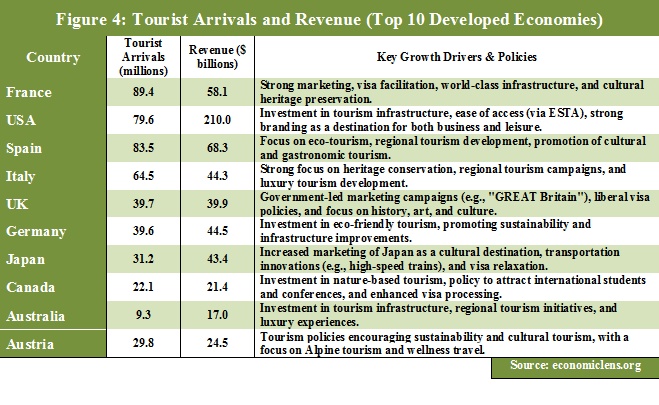
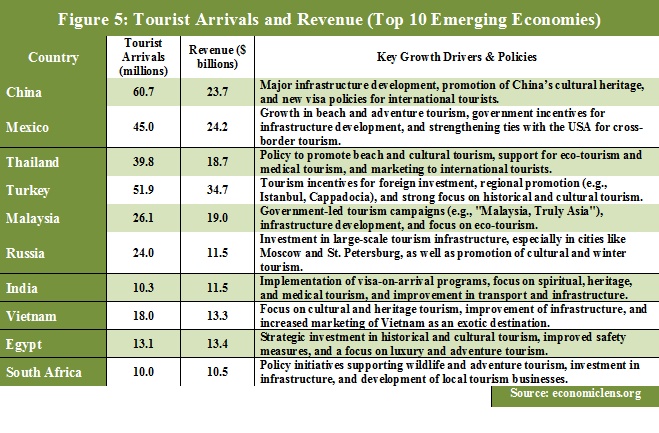
Tourist arrivals and revenue generation in the world’s top destinations are influenced by multiple factors. Here’s a look at the Top 10 destinations from both developed and emerging economies based on tourist arrivals and revenue generation, along with the key drivers and policies that have contributed to their growth.
7. Roadmap for Greener Future in Sustainable Tourism
To create a greener future for the tourism industry, stakeholders must follow a clear roadmap that integrates sustainability into all aspects of the travel ecosystem. Here’s a proposed roadmap to achieve this:
-
Adopt Eco-Friendly Practices
Governments and businesses should prioritize green certifications, promote renewable energy, and invest in sustainable infrastructure like eco-lodges and energy-efficient transportation.
-
Encourage Responsible Travel Behavior
Tourists should be educated on reducing their carbon footprint by making responsible choices such as opting for sustainable transport, supporting local eco-friendly businesses, and minimizing waste.
-
Strengthen Policy and Regulations
Governments should enact policies that regulate carbon emissions, promote eco-tourism, and incentivize businesses to adopt sustainable practices.
-
Promote Smart Tourism
Use AI and smart city technologies to optimize resource management and reduce environmental impact in tourist-heavy areas, such as through efficient waste management and traffic control.
-
Incentivize Sustainable Tourism Businesses
Offer tax breaks or other incentives for tourism businesses that adopt sustainable practices, ensuring long-term viability and growth of green initiatives.
- Foster Global Collaboration
Collaborative efforts between governments, non-profits, and private sector organizations will be essential in creating a unified global approach to sustainable tourism.
8. Conclusion: Shaping the Future of Travel and Tourism
The future of tourism industry relies on our ability to balance growth with sustainability. Sustainable tourism is not just an environmental concern—it’s an economic and social one as well. By focusing on reducing our environmental footprint, improving institutional frameworks, and ensuring equitable benefits for local communities, we can create a tourism industry that is both prosperous and responsible.
As the World Economic Forum states, the sector’s growth will only thrive if tourism becomes a global force for good. (Source: WEF, 2025)
As travelers, businesses, and governments, we must continue to work together to ensure that tourism can thrive without compromising the well-being of future generations.
Call to Action:
Join the movement toward sustainable tourism. Choose eco-friendly travel options, support sustainable businesses, and advocate for policies that promote a more responsible tourism industry.



2 thoughts on “Sustainable Tourism: Shaping the Future of Travel and Tourism Industry”
Great explanation of how tourism can grow while protecting the environment. The section on AI and inclusivity was excellent
Sustainable tourism is revolutionizing the tourism industry by prioritizing environmental responsibility and inclusivity. The global sustainable tourism market is expected to grow from $3,152.65 billion in 2024 to $12,534.17 billion by 2034, with a compound annual growth rate CAGR of 14.80%.