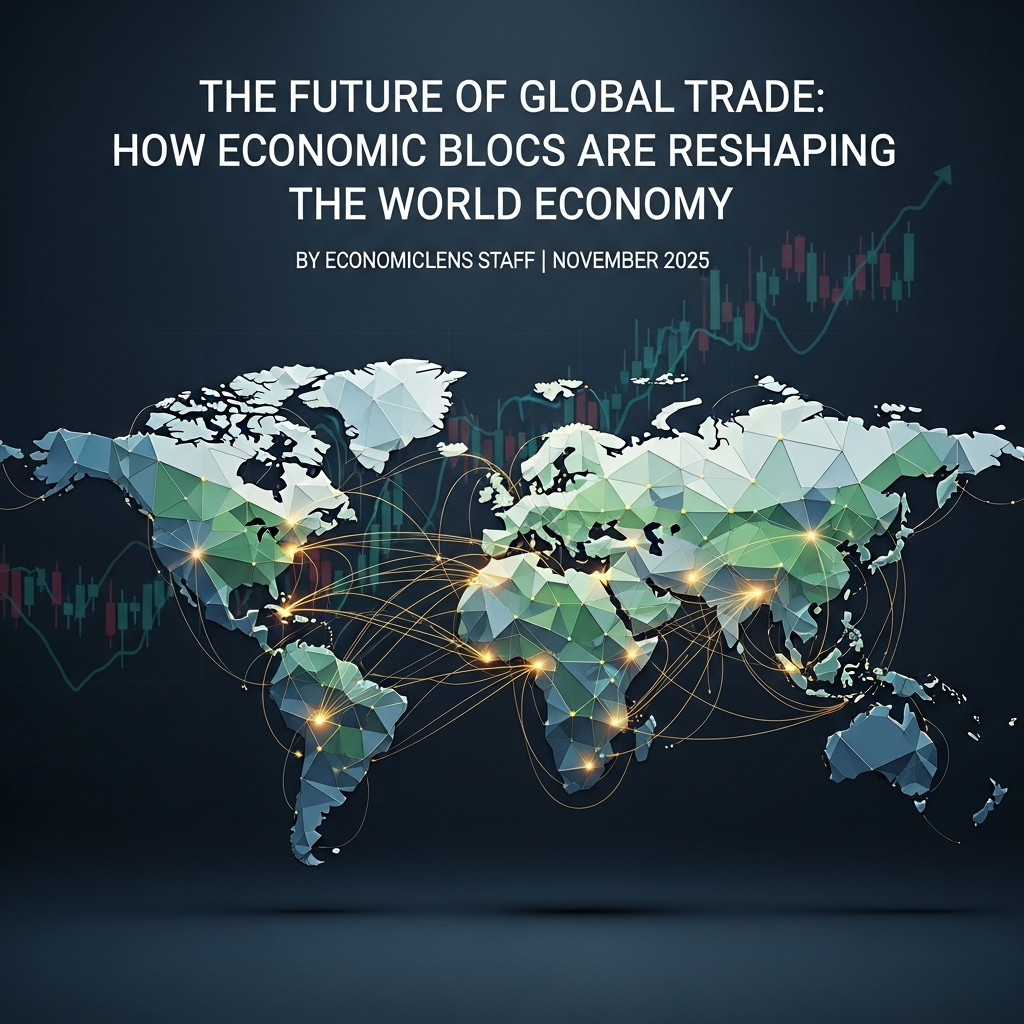
Explore how international trade is being reshaped by economic alliances like the EU, USMCA, and RCEP in 2025. These regional economic blocs are replacing globalization, offering enhanced market access but also creating challenges, such as increased trade barriers and economic isolation for non-member countries. This fragmentation of the global economy presents both opportunities and risks as nations adjust to the evolving economic landscape. The shift raises questions about the future of international cooperation, the balance between protectionism and open markets, and global economic equity. As global trade dynamics change, countries must navigate this new reality to stay competitive and ensure sustainable growth.
“The world is changing fast, and if we don’t pay attention, we risk being left behind.”
Executive Summary
In the rapidly changing world economy, globalization is being replaced by regional economic alliances, profoundly altering the dynamics of international trade. This blog analyses the rise of economic blocs, including the European Union (EU), United States-Mexico-Canada Agreement (USMCA), Regional Comprehensive Economic Partnership (RCEP), and the African Continental Free Trade Area (AfCFTA), their impact on global trade in 2025, and the tactics utilised by countries outside these blocs to maneuver through this changing economic environment. Analyze the emergence of regional alliances as a replacement for free trade, their benefits and challenges for global economic cooperation, and strategies for countries to sustain competitiveness in a fragmented international trade environment.
“We stand at a crossroads in global trade, where the future will be defined by how we respond to this monumental shift”
Introduction
Historically, globalization has linked global economies, reduced trade barriers, and promoted international cooperation. The formation of economic alliances—regional trade agreements such as the European Union (EU), USMCA, and RCEP—is eroding this reliance. Countries are increasingly prioritizing regional alliances above global integration due to rising geopolitical tensions, nationalism, and the need to protect native industries (Krugman, 2024). This blog will analyze how these regional economic blocs are transforming the world economy, emphasizing their influence on trade dynamics, economic growth, and international cooperation in 2025.
The shift towards economic blocs leads to a more fragmented world economy, marked by trade barriers and protectionist policies that are changing the dynamics of global trade among businesses and nations (Rodrik, 2024). This blog evaluates the benefits and challenges of economic fragmentation, explores how non-member countries are responding to these changes, and offers insights on prospective global economic strategies.
“Globalization is no longer the prevailing force, and we are entering an era where regional ties will define the economic success of nations”
How Economic Blocs Are Replacing Globalization
Economic blocs like the EU, USMCA, RCEP, and AfCFTA are establishing a new paradigm for global commerce. These regional agreements seek to augment economic cooperation among member nations and provide a more tailored approach to trade. The formation of these blocs indicates that those outside them may face increased trade barriers, higher tariffs, and economic isolation (Baldwin, 2025).
This blog analyzes the main economic trends of 2025, demonstrating how these economic hubs are improving market access for their members while limiting opportunities for non-member countries. Economic blocs are transforming international trade dynamics and may intensify global economic inequality, widening the gap between affluent and poor countries (Krugman, 2024).
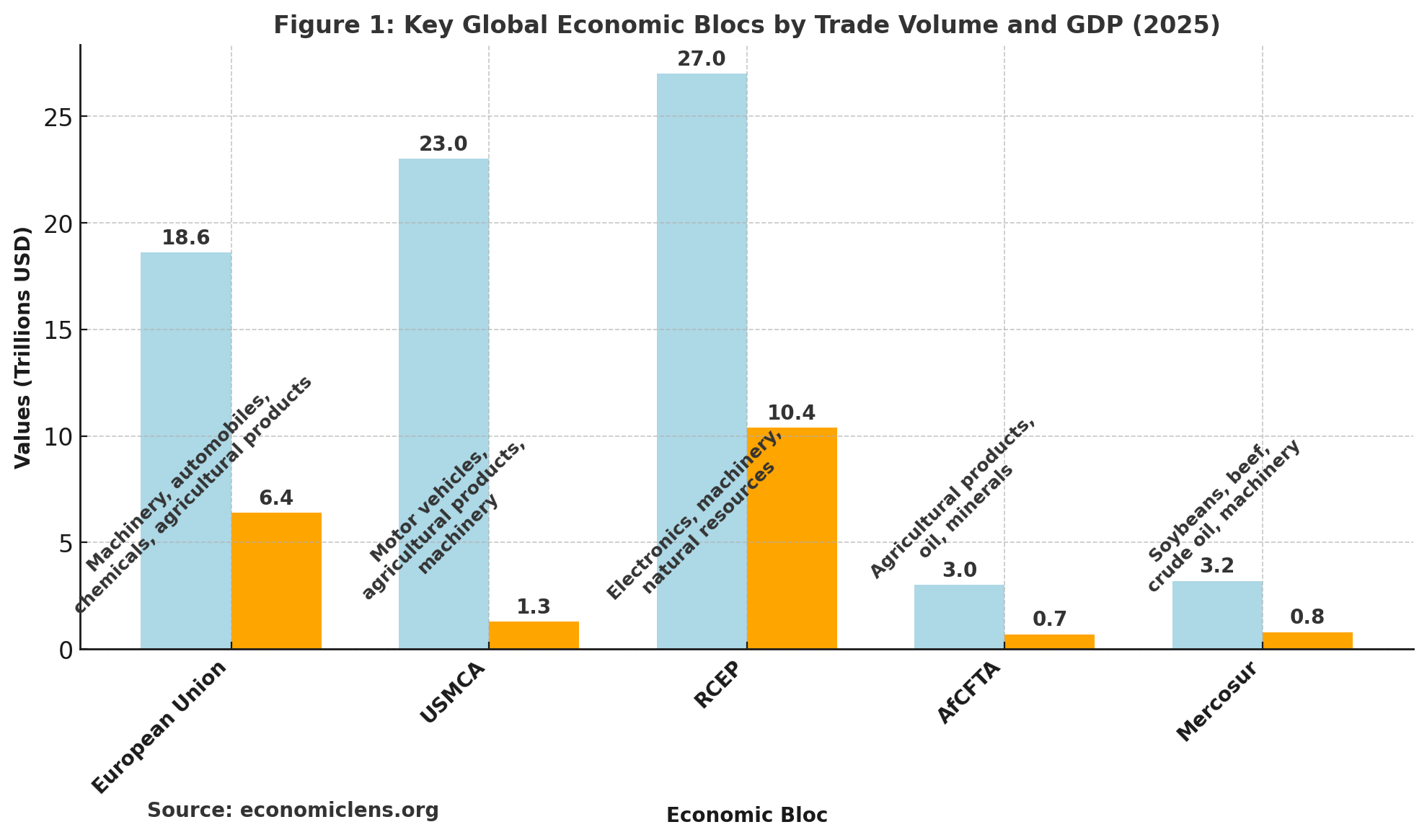
Economic blocs like the EU, USMCA, RCEP, and AfCFTA are establishing a new paradigm for global trade. These regional economic alliances seek to augment economic cooperation among member nations and provide a more tailored approach to trade. The formation of these blocs indicates that those outside them may face increased trade barriers, higher tariffs, and economic isolation (Baldwin, 2025).
This blog analyzes the main economic trends of 2025, demonstrating how these economic hubs are improving market access for their members while limiting opportunities for non-member countries. Economic blocs are transforming international trade dynamics and may intensify global economic inequality, widening the gap between affluent and poor countries (Krugman, 2024).
.
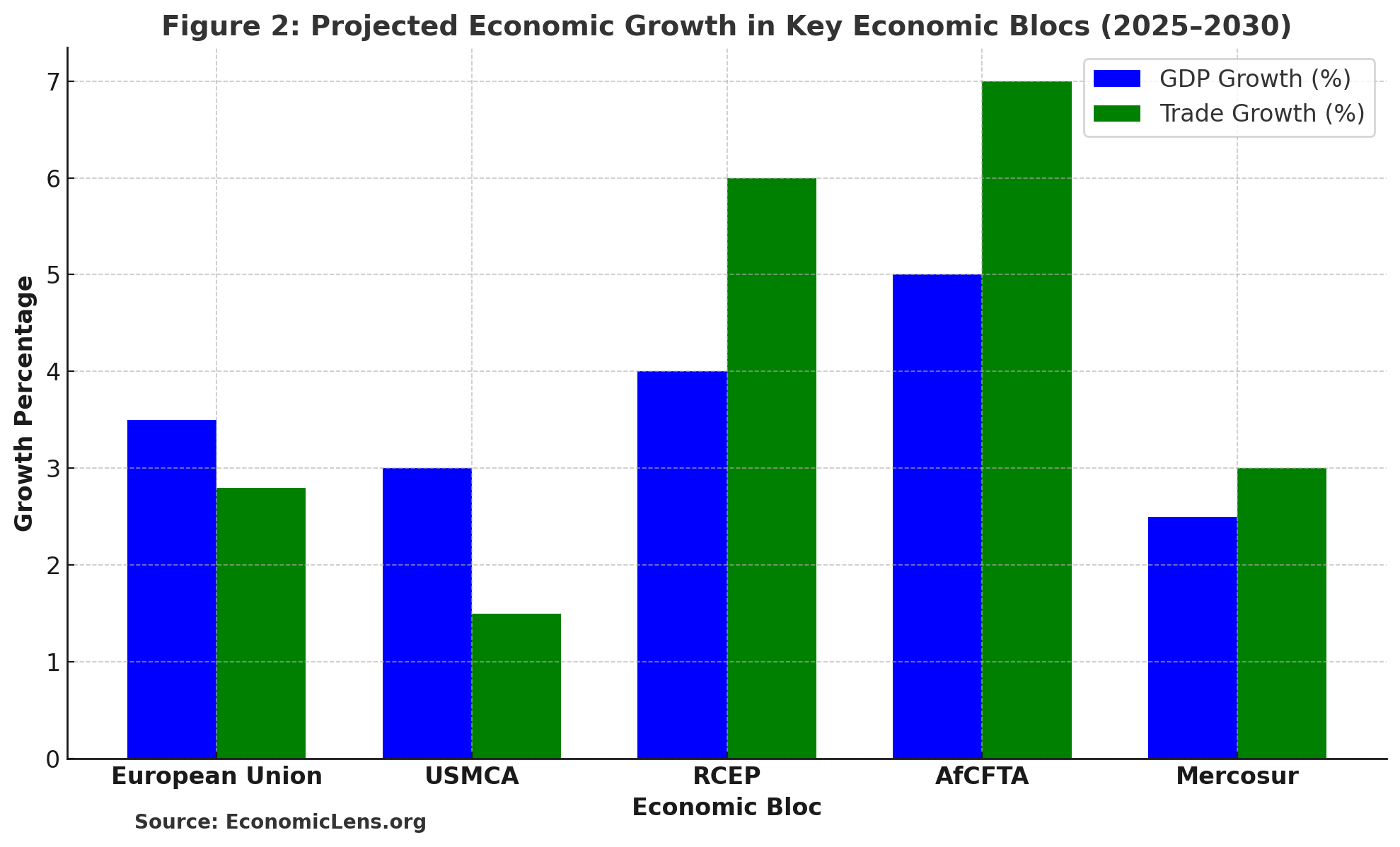
These estimates highlight a multi-speed global economy, in which emerging regions like RCEP and AfCFTA outpace traditional powerhouses in trade performance. The EU and USMCA emphasize sustainability and digital sovereignty, albeit they may be outpaced by advancements in Asia and Africa.
“The world is no longer a single interconnected system but a collection of regional forces shaping the future of trade and commerce”
The Cost of Fragmentation: Trade Barriers and Economic Inequality
As economic blocs gain significance, trade barriers inside these regions become more apparent. The creation of these regional economic zones often leads to the imposition of tariffs, quotas, and other protectionist policies that hinder global trade. These trade impediments stem directly from the increasing fragmentation of the global economy, as each bloc seeks to protect its own interests (Hufbauer & Schott, 2025).
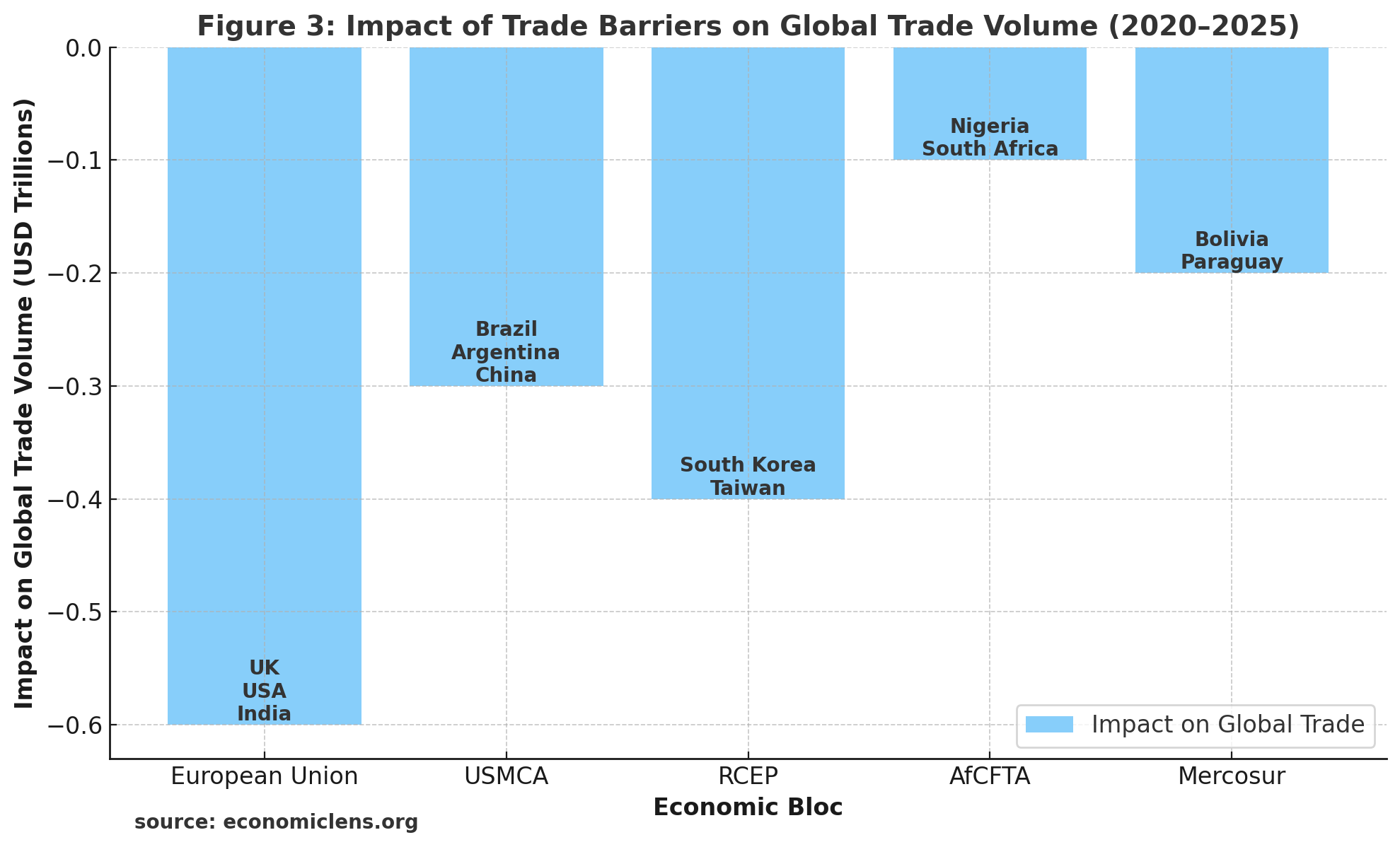
Figure 3 demonstrates that the escalation of trade barriers within economic blocs negatively impacts global trade volumes. The European Union’s increased tariffs on non-EU goods have significantly affected trade with major economies like the United Kingdom and the United States. Similarly, the export restrictions in RCEP’s technology sector have hindered trade in the swiftly growing digital and technical sectors. These impediments not only increase the price of goods but also intensify economic inequalities between member blocs and non-members, particularly for smaller nations reliant on global trade networks (Stiglitz, 2025).This growing fragmentation may intensify economic inequality. Countries excluded from these economic blocs may struggle to maintain their global market position, leading to an increasing divide between wealthy and destitute nations (Hufbauer & Schott, 2025).
“The future of global prosperity depends on whether we can bridge the growing divide between rich and poor nations”
Adapting to the New Economic Realities: The Challenges for Non-Member Countries
The rise of economic blocs is reshaping global trade, creating specific challenges for countries not included in these blocs. The increasing fragmentation of the global economy presents both risks and opportunities for these nations. Non-member states, without the benefits of affiliation with a larger economic bloc, often face isolation from essential global markets, meet heightened trade barriers, and struggle to get favorable trade agreements (Krugman, 2024).
“The challenge for non-member countries is clear: adapt to the new global order, or face economic marginalization”
Shifting Trade Alliances and Strategic Partnerships
To mitigate these issues, several non-member countries are actively seeking to diversify their economic alliances. These states want to maintain market access by forming bilateral agreements with major trade partners, such as the EU, China, and the US, in response to the rise of regional economic blocs. Moreover, some countries are exploring innovative regional alliances, especially in the Asia-Pacific region, to alleviate the isolation resulting from their exclusion from larger coalitions (Baldwin, 2025).
India, absent from RCEP, has systematically sought trade deals with regional countries such as Japan and Australia to secure access to the burgeoning Asia-Pacific markets. Brazil, neither a part of the USMCA or EU, is striving to strengthen its links with China and other emerging nations to alleviate the impact of regional trade barriers (Krugman, 2024).
“As the world becomes more fragmented, new alliances and partnerships will determine the future of global trade”
Economic Diversification and Digital Trade
Non-member states are pursuing economic diversification via the integration of digital commerce and technological innovation. As global trade becomes more concentrated inside these economic blocs, several governments are endeavoring to diversify their economies by investing in areas such as technology, services, and digital exports (Baldwin, 2025).
African governments are increasingly emphasizing technology-based solutions to integrate into the global economy. African countries want to bypass traditional trade barriers and connect with global markets by fostering technology startups and digital platforms, especially in e-commerce, fintech, and digital services (Friedman, 2025).
“Countries that fail to embrace digital trade risk being left behind, while those who innovate will shape the future of the global economy”
Geopolitical Implications: Regional Cooperation vs. Global Competition
Despite the challenges posed by fragmentation, economic blocs remain linked to global markets. A number are striving to harmonize regional integration with the need of sustaining global competitiveness. The European Union (EU) continues to negotiate free trade agreements with countries outside its borders, so ensuring global access to EU markets (Friedman, 2025). The African Continental Free Trade Area (AfCFTA) aims to reduce intra-regional trade barriers while maintaining connections to the global economy.
Nevertheless, these efforts need concessions. The balance between regional cooperation and global competition is complex, and as economic blocs increase their power, they risk exacerbating global conflicts. These divisions may threaten the principles of international cooperation and lead to a more fragmented global economy, where competition among blocs prevails over global unity (Rodrik, 2024).
“The growing competition between economic blocs will redefine global alliances, forcing nations to choose sides or risk being marginalized”
Research Insights: Bridging Regional and Global Economic Policies
As economic blocs gain significance, it is crucial to understand their lasting impacts on global trade, economic fairness, and sustainability. The following are crucial research findings that provide a thorough understanding of the changes and challenges in the global economy:
- The Shift to Regionalization and its Effect on Global Trade: Research suggests that as regional blocs like the EU, USMCA, and RCEP strengthen, global trade becomes more concentrated inside these regions. This transformation is yielding advantages for member states (e.g., enhanced access to regional markets) and drawbacks for non-member nations, who face heightened trade barriers. Understanding the shift of trade flows from a global context to regional hubs is crucial for policy development (Krugman, 2024).
- Impact on Developing Nations and Global Inequality: Research indicates that non-member countries, especially developing nations, face increased risks of economic marginalization and trade exclusion. The disintegration of global commerce may intensify economic disparity, particularly for smaller countries dependent on international trade for their economic viability (Rodrik, 2024). This highlights the need for more inclusive policies to address the widening disparities between rich and impoverished nations.
- Technology and Digital Transformation: A Paradigm Shift: The advent of digital commerce and technological developments is reshaping global economies. Emerging digital platforms and fintech innovations provide non-member countries unique avenues to bypass traditional trade barriers and engage in global business (Baldwin, 2025). Countries must emphasize technology-based trade to sustain competitiveness in an increasingly digital global economy.
- Environmental sustainability is increasingly becoming a primary issue for economic blocs. The EU is advocating for green technology; yet, this involves challenges related to the environmental consequences of resource extraction. As research on sustainable development within these blocs progresses, it is essential to harmonize economic growth with environmental conservation to avert the unsustainable exploitation of resources in regions like Africa and South America (Friedman, 2025).
- The Enduring Effects of Fragmentation on Global Cooperation: Research suggests that persistent fragmentation may negatively impact international cooperation. To mitigate the perils of isolation, it is essential for nations to continue engaging in multilateral agreements and to foster global governance frameworks that ensure cooperation across economic blocs. Collaboration is vital to avert regionalization from leading to a disjointed, competitive global economy (Rodrik, 2024).
“The path to a unified global economy lies in the ability to bridge the divide between regional interests and global cooperation”
Policy Recommendations: Managing the Shift toward Economic Blocs
To ensure a smooth and equitable transition from globalization to economic blocs, governments, international organizations, and corporations must adopt the following strategies:
- Enhance Multilateral Trade Agreements: Strengthen global trade treaties that link regional blocs and extend market access across regional boundaries (Krugman, 2024).
- Promote Fair Trade Practices: It is essential to develop policies within each bloc that prioritize economic redistribution. This would alleviate the intensification of economic inequalities inside the blocs and promote fair competition in the global market (Rodrik, 2024).
- Invest in Environmental Sustainability: Governments must enact legislation that promotes green technologies inside economic blocs, therefore mitigating the environmental costs linked to growth. It is essential to establish sustainable trade regulations to avert harmful practices that threaten global ecosystems (Friedman, 2025).
- Enhance International Collaboration: It is important to establish procedures that ensure cooperation among blocs. This includes the enhancement of international trade standards, the protection of human rights, and the advancement of digital inclusion to ensure that global prosperity is not undermined by local interests (Baldwin, 2025).
- Foster Technological Innovation and Digital Inclusion: Governments and corporations must cooperate to ensure that technological breakthroughs benefit all countries. Digital commerce and innovation must be used to promote economic growth, especially in developing countries (Krugman, 2024).
“The road to a prosperous future depends on how well we adapt to the changing tides of global trade, balancing regional strength with global collaboration”
Concluding Remarks: The Future of Economic Blocs and Global Trade
The transition from a worldwide economy to one defined by regional economic blocs is transforming global trade dynamics. While these blocs provide a tailored framework for trade and regional cooperation, they also present significant challenges, including trade barriers, economic seclusion, and increased inequality.
The data-driven visualizations and research results demonstrate that the formation of economic blocs enhances market access for members, while simultaneously increasing the risk of economic fragmentation. Countries outside these blocs, particularly rising nations, may face heightened obstacles and economic isolation, thereby exacerbating global inequalities.
The future of international trade will hinge on how countries balance regional integration with global cooperation. Multilateral trade agreements and technological innovation are crucial for avoiding economic blocs from becoming isolated and ensuring their continued contribution to global prosperity.
The principal responsibility of politicians, companies, and international organizations is to adeptly oversee this process, optimizing the benefits of regional cooperation while upholding the fundamental principles of global solidarity and economic equity. Coordinating among economic blocs, embracing technological breakthroughs, and fostering environmental sustainability are crucial for attaining a balanced and equitable global economy.
“The future of global trade lies in our ability to strike a balance between regional economic powers and global cooperation to foster a fair and prosperous world.”