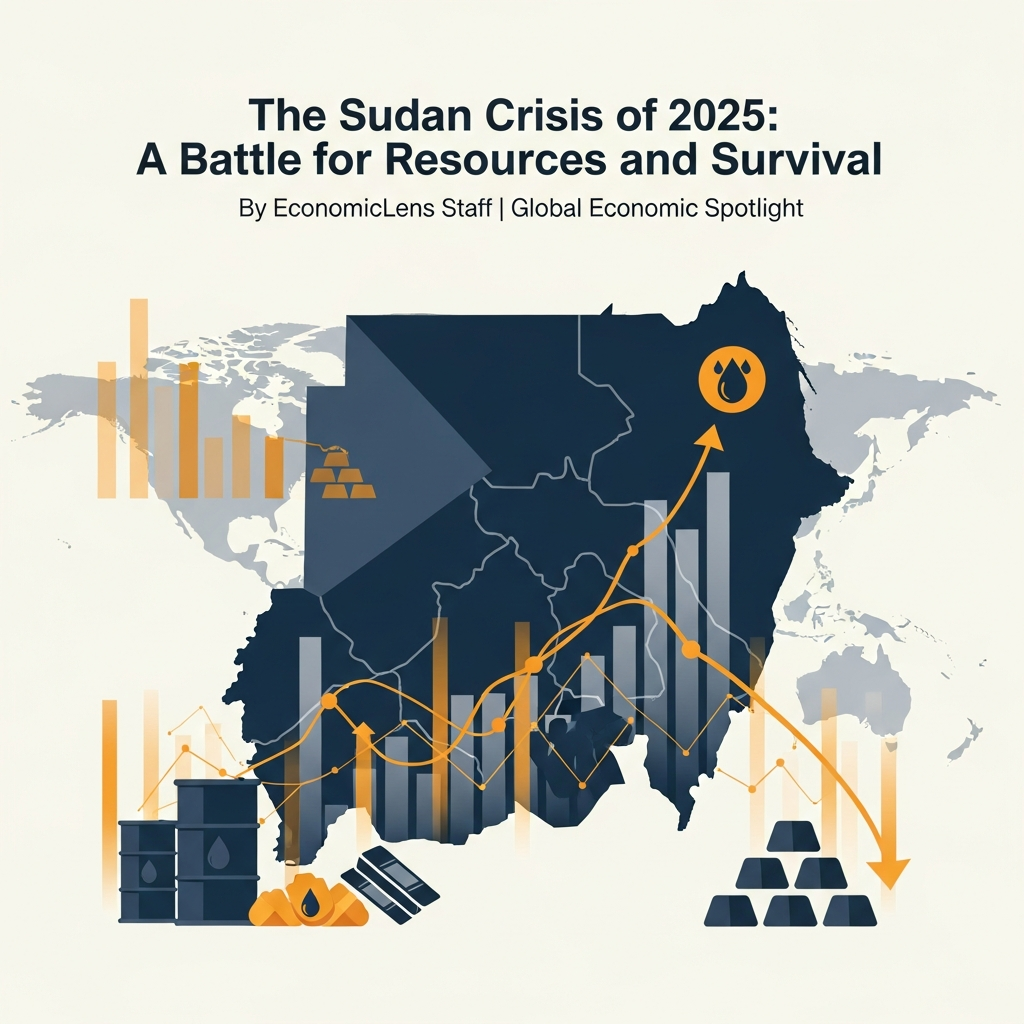
The Sudan crisis 2025 has evolved into a multidimensional humanitarian and geopolitical emergency. Millions have been displaced. Economic activity has collapsed. As a result, global markets face volatility through disrupted energy supplies, unstable gold exports, and worsening regional food insecurity. This Global Economic Spotlight examines the resource foundations of Sudan’s conflict, the role of foreign actors and militias, the socioeconomic devastation, and the policy pathways required for sustainable recovery.
1. Introduction: Understanding the Sudan Crisis 2025
The battle for Sudan’s resources is not only a struggle for territory. It is a struggle for survival.
Sudan’s oil reserves, gold deposits, and fertile agricultural land have placed the country at the center of regional power competition. However, weak governance and prolonged conflict have turned these assets into drivers of instability. Consequently, ordinary Sudanese citizens face displacement, hunger, and economic collapse.
Moreover, the Sudan crisis 2025 intersects with wider maritime and logistics disruptions. In particular, insecurity along Red Sea corridors has increased shipping delays and inflationary pressure. These trends reinforce dynamics already visible in the Red Sea shipping crisis and its global trade fallout https://economiclens.org/red-sea-shipping-crisis-global-trade-fallout-inflation-pressure-and-supply-chain-turmoil/
2. Overview of the Sudan Resource Conflict and Global Interests
Sudan’s crisis is fundamentally driven by competition over natural resources. Oil, gold, and fertile land offer economic potential. However, they also finance violence and attract foreign intervention.
To clarify this relationship, the following table outlines how Sudan’s key resources affect both domestic conflict and global markets.
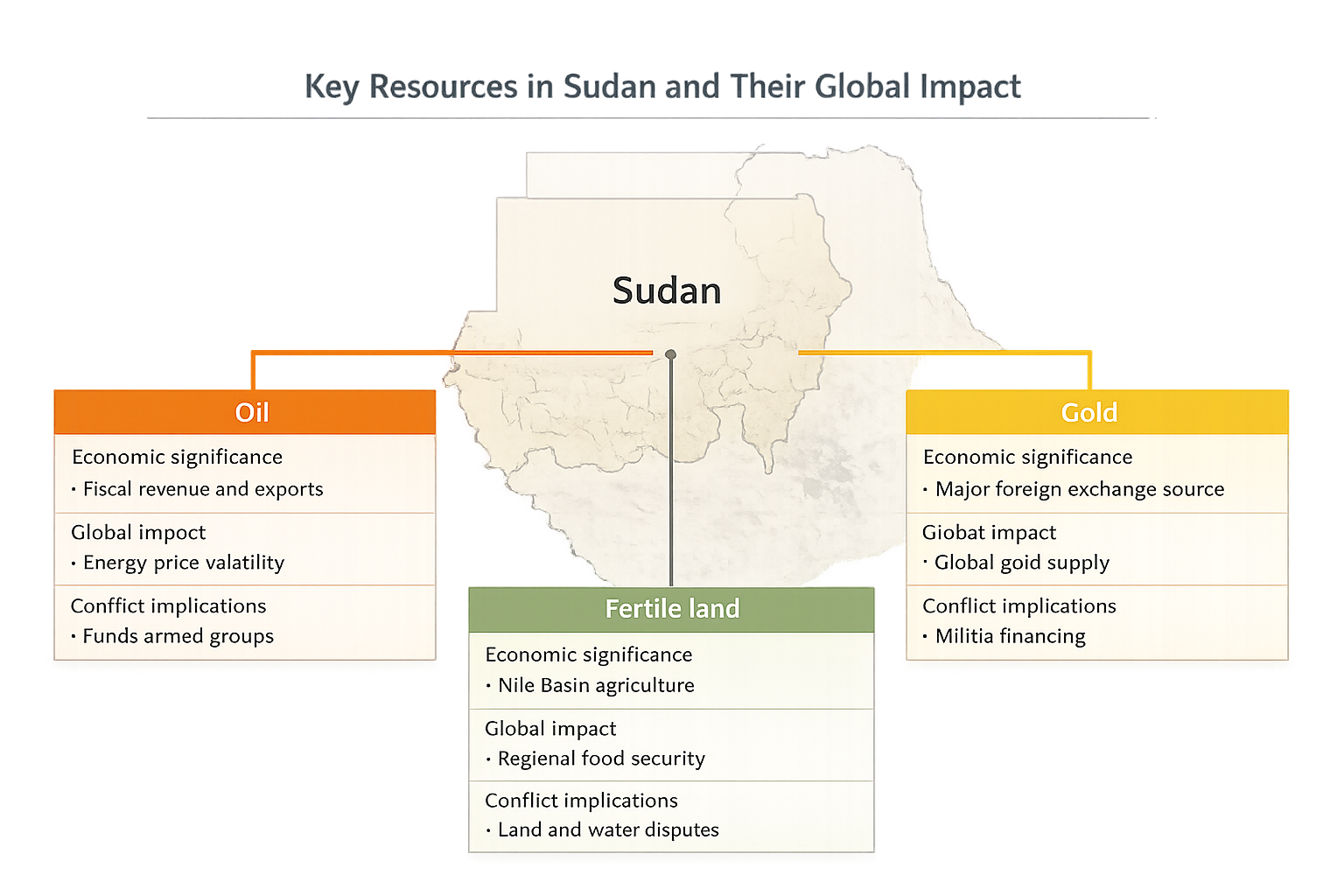
Unregulated extraction and weak institutions have intensified instability. According to the United Nations Environment Programme, resource governance failures worsen environmental damage and conflict risks https://www.unep.org
3. Why Sudan Matters: Strategic and Economic Importance
Sudan’s location and resource base make it geopolitically significant. Therefore, its internal instability produces regional and global spillovers.
3.1 Sudan’s Strategic Position in Africa
Sudan sits between North Africa and the Horn of Africa. It borders seven countries. As a result, conflict within Sudan directly affects trade, migration, and security across the region. These risks are regularly highlighted in African Union security briefings https://au.int
3.2 Sudan’s Role in Global Energy Markets
Although Sudan lost oil production after South Sudan’s independence, it retained control over pipelines and refineries. Consequently, regional energy flows remain dependent on Sudanese infrastructure.
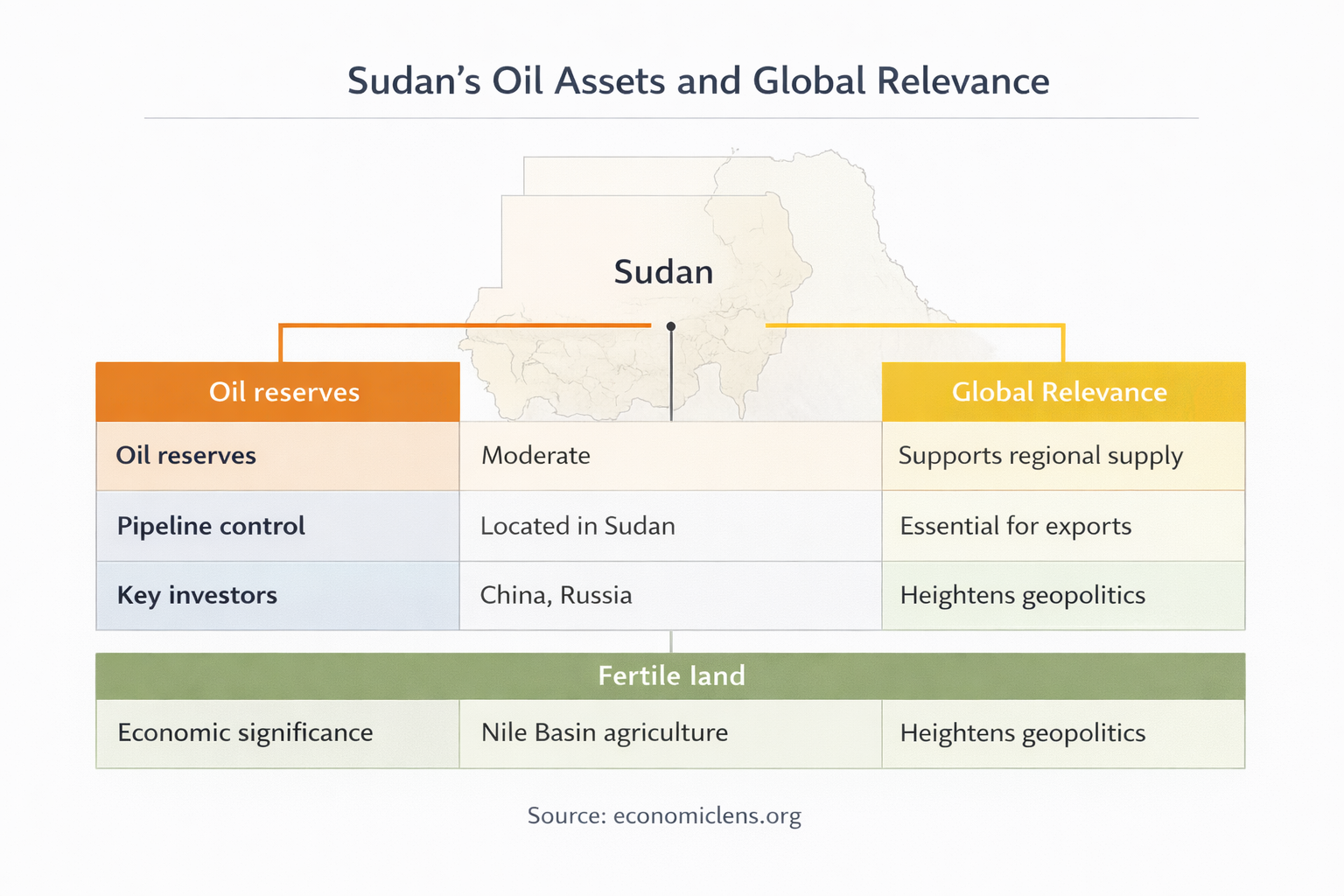
According to the International Energy Agency, infrastructure disruptions in fragile states increase market uncertainty https://www.iea.org
Moreover, Sudan’s energy tensions resemble disputes elsewhere. Comparable risks appear in the Eastern Mediterranean gas dispute and regional stability https://economiclens.org/eastern-mediterranean-gas-dispute-and-regional-stability/
4. Economic Resources at the Core of the Sudan Crisis 2025
Sudan’s natural wealth should support development. Instead, it has intensified violence and fragmentation.
4.1 Oil Conflict in Sudan
Oil remains a major source of revenue and conflict. Control over pipelines and revenues is contested. As a result, militias and foreign actors exert influence.
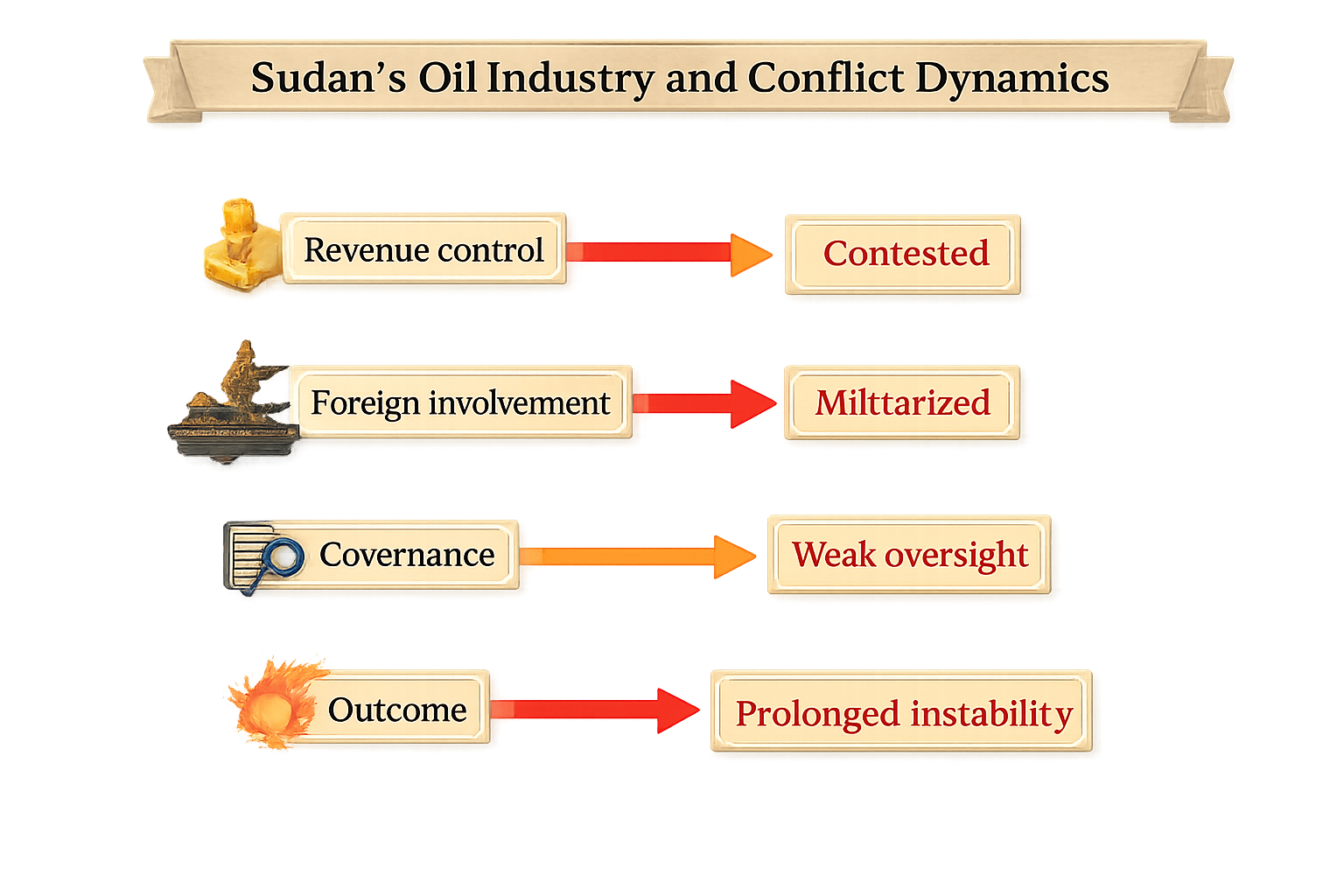
These patterns align with International Monetary Fund findings on fragile states https://www.imf.org
4.2 Gold and the Sudan Resource Conflict
As oil revenues declined, gold became central to Sudan’s conflict economy. Informal mining expanded rapidly. Consequently, armed groups captured extraction and trade networks.
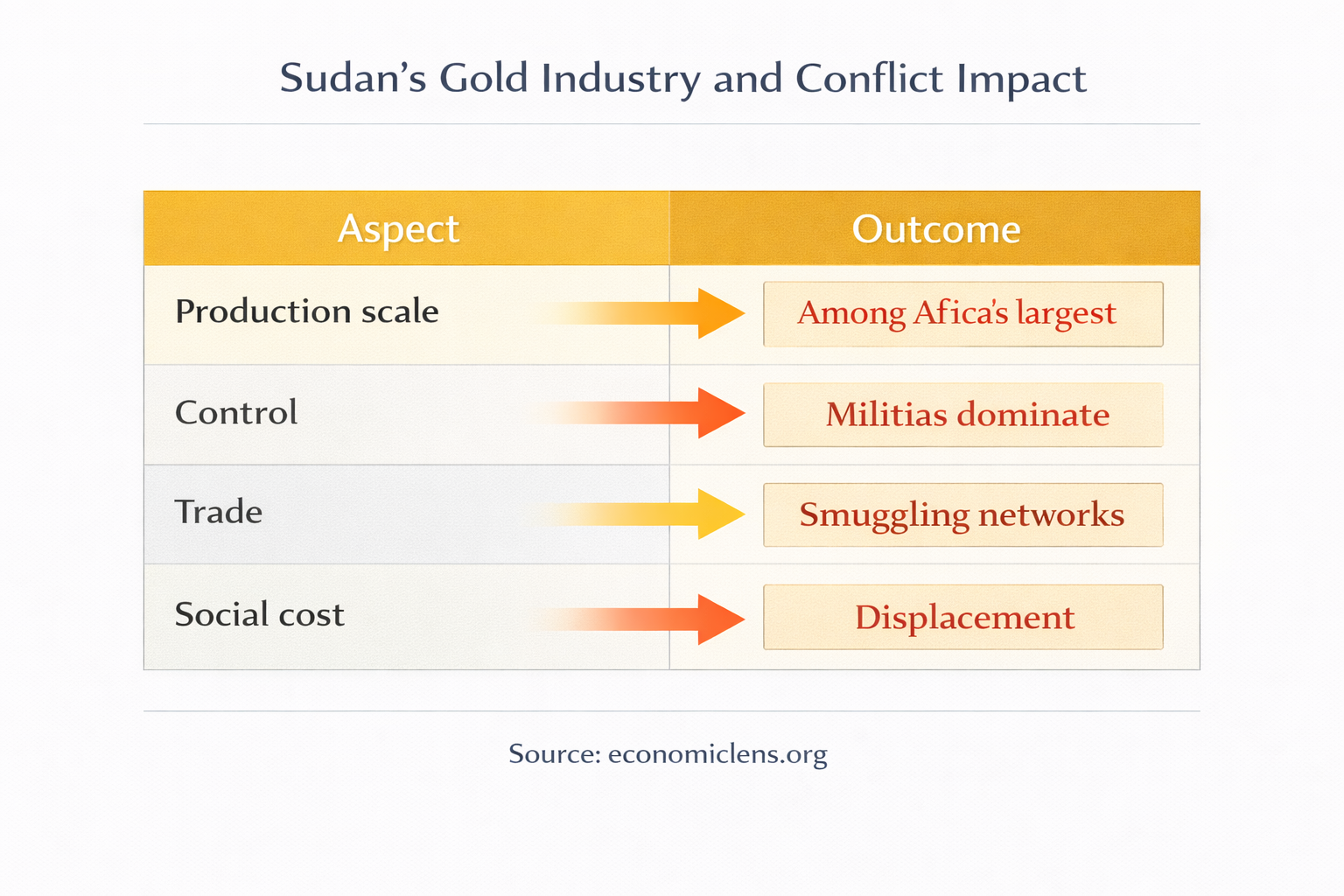
The World Bank warns that weak regulation in artisanal mining fuels violence https://www.worldbank.org
4.3 Agricultural Land and Water Stress
Sudan’s fertile land supports millions. However, land disputes and Nile water tensions have intensified conflict. Climate stress worsens these pressures, as noted by the Food and Agriculture Organization https://www.fao.org
5. Actors Facilitating the Sudan Crisis 2025
Conflict persists due to both domestic failures and foreign involvement.
5.1 Foreign Military and Political Support
External actors link military assistance to resource access. This approach complicates peace efforts.
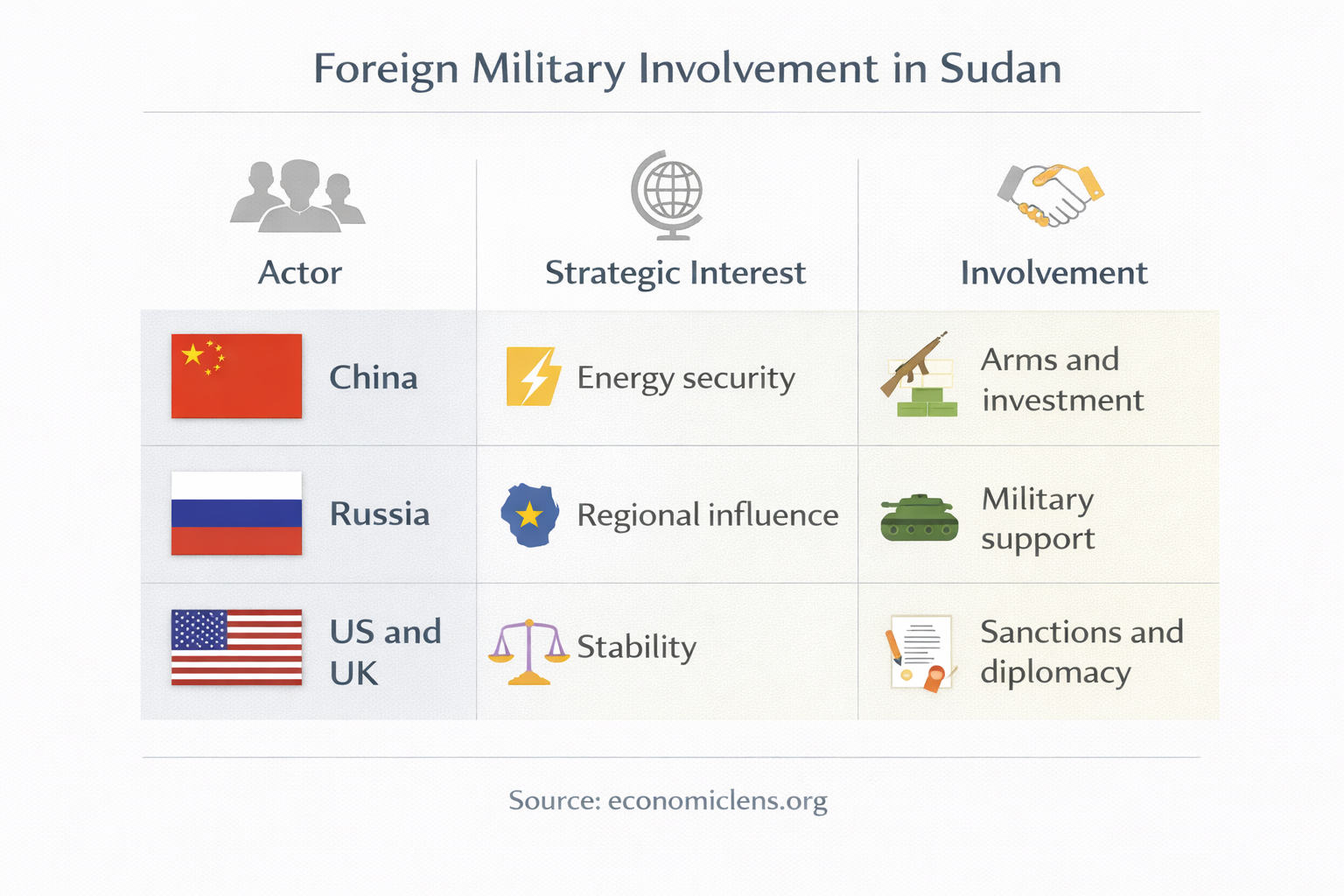
These dynamics are detailed in United Nations Security Council briefings https://www.un.org/securitycouncil
5.2 Militias and Armed Groups
Local militias control gold mines and land. They exploit ethnic divisions. Human Rights Watch documents widespread abuses https://www.hrw.org
6. Socioeconomic Impact of the Sudan Crisis 2025
Beyond geopolitics, the Sudan crisis 2025 represents a severe humanitarian emergency.
6.1 Displacement Crisis in Sudan 2025
Violence has forced millions to flee. The scale of displacement highlights the human cost of resource conflict.
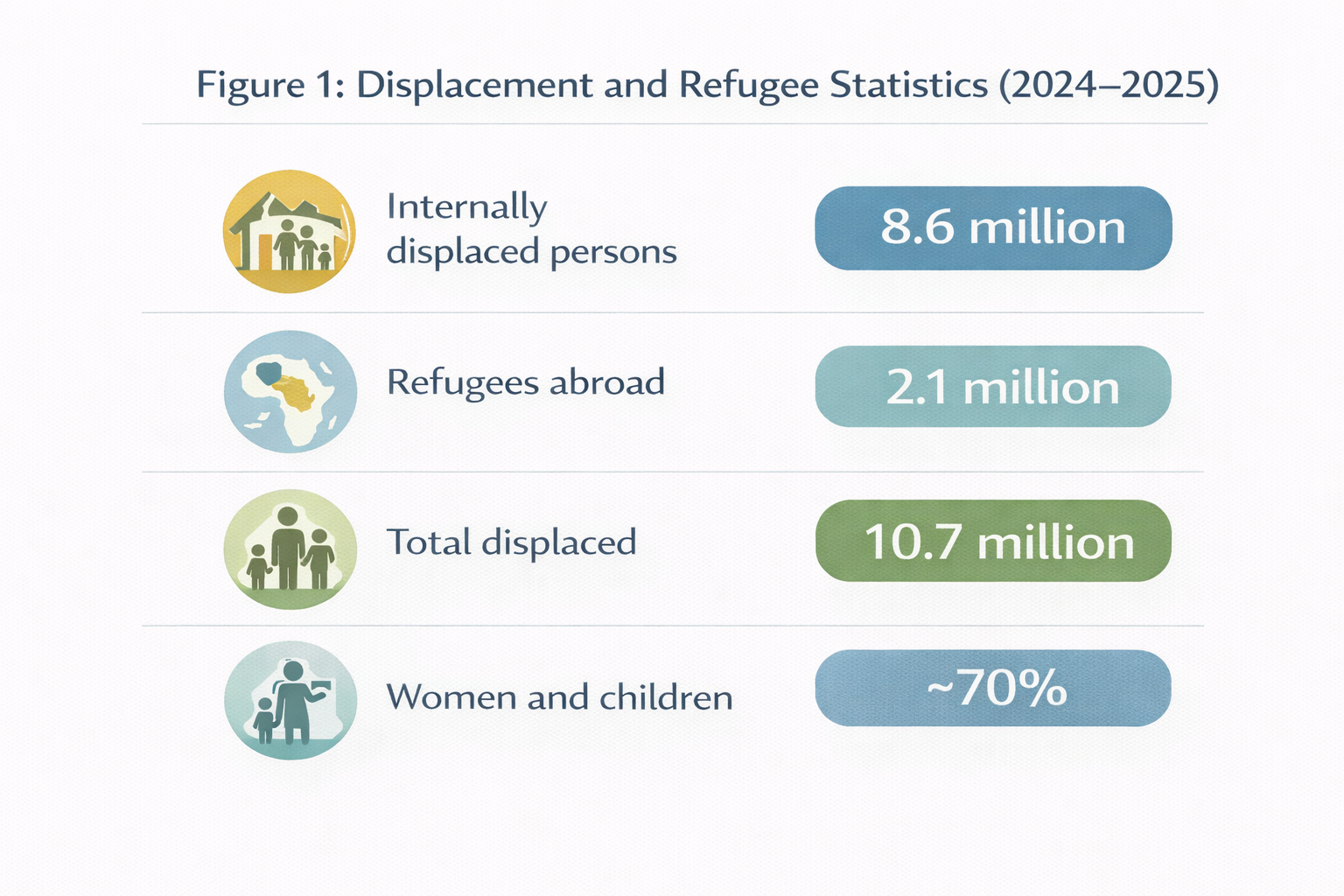
UNHCR identifies Sudan as one of the world’s largest displacement crises https://www.unhcr.org
Additional reporting comes from UN OCHA https://www.unocha.org
6.2 Food Insecurity and Economic Collapse in Sudan
Economic collapse has deepened hunger and poverty. Inflation and currency depreciation reduced purchasing power.
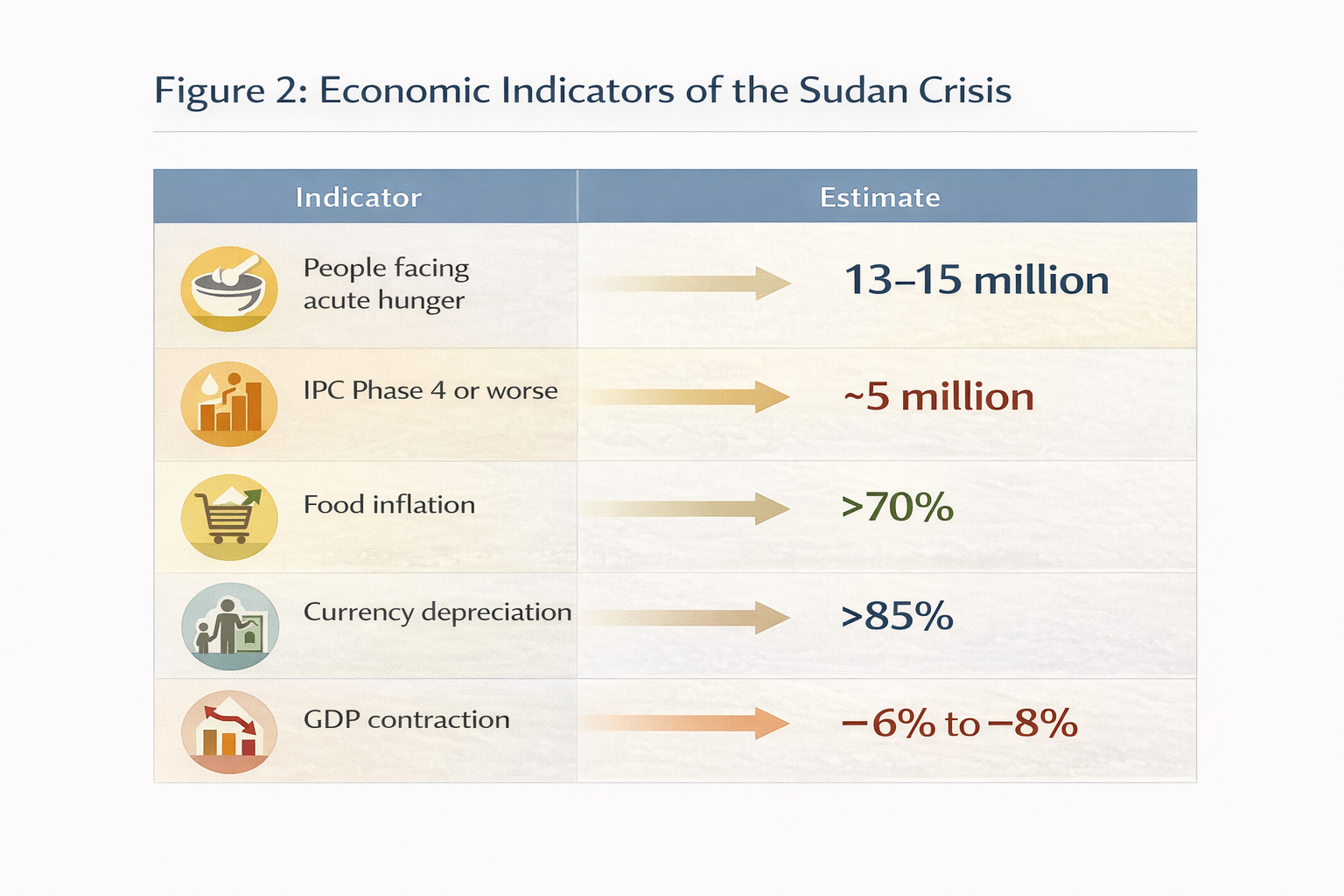
The World Food Programme classifies Sudan as a top hunger emergency https://www.wfp.org
Supporting data is provided by FAO and the World Bank https://www.fao.org, https://www.worldbank.org
7. Global Supply Chain Impact of the Sudan Crisis 2025
Sudan’s instability affects global markets. Oil and gold disruptions transmit shocks internationally.
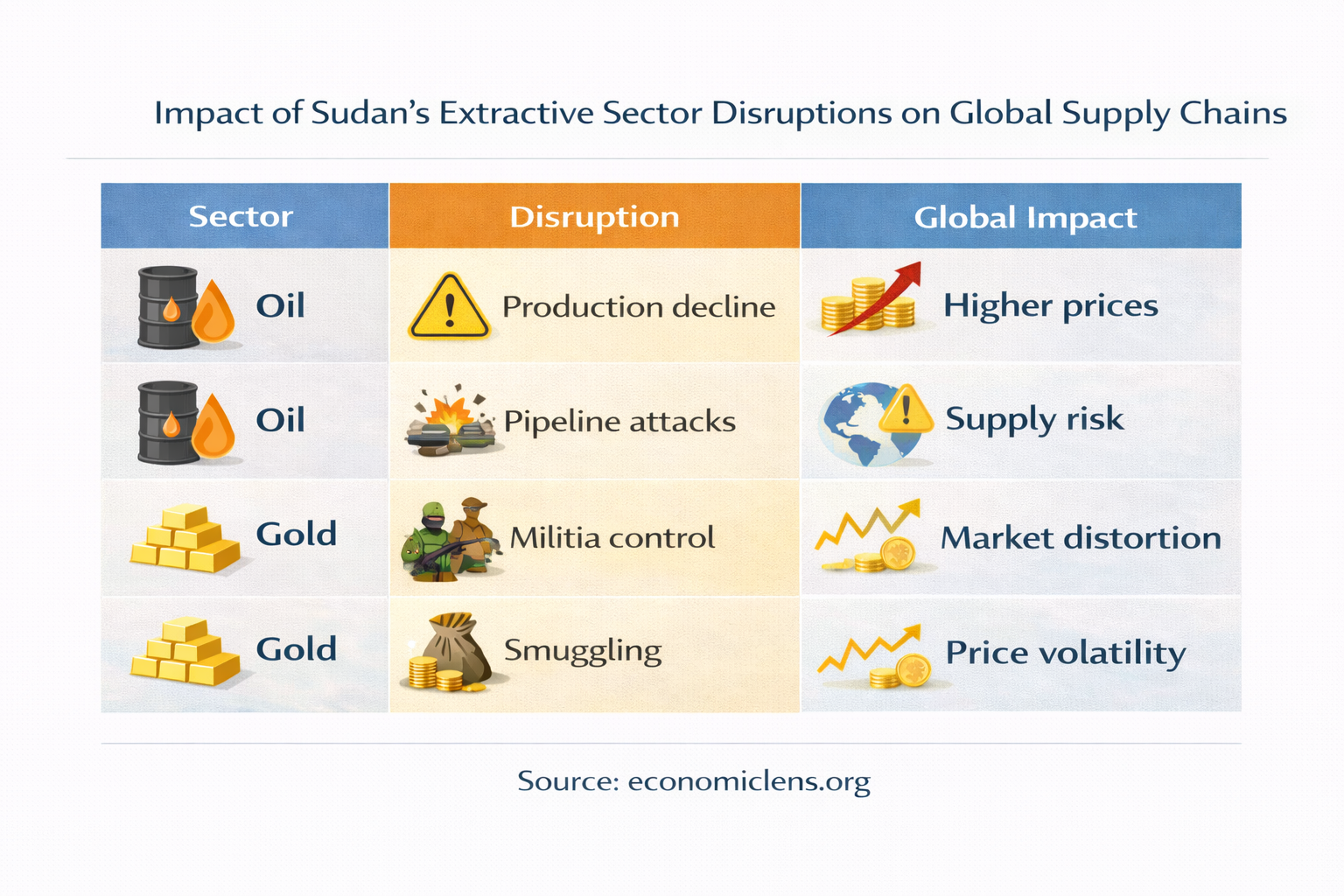
UNCTAD highlights how localized conflicts destabilize global commodity chains https://unctad.org
8. Path to Sustainable Recovery
Sudan’s recovery requires coordinated action. Inclusive peace talks are essential. Renewable energy and climate resilient agriculture can reduce conflict risks. Moreover, youth empowerment and governance reform are critical for long term stability.
Final Word: Call to Action
The Sudan crisis 2025 demands urgent global attention. Without coordinated action, it will continue to destabilize regional security and global markets. Transparent governance, ethical investment, and sustained international cooperation can transform Sudan’s resources into foundations for peace.