
The KP governance crisis has intensified as security instability rises, border disruptions increase and institutional systems weaken across the province. Shrinking administrative capacity, failing public services and growing instability have eroded public trust. This blog explains how security shocks, border volatility and weak governance structures are reshaping KP’s development trajectory.
INTRODUCTION
The KP governance crisis is intensifying as institutional capacity weakens, security volatility resurges and border instability chokes the province’s economic arteries. Terror incidents climbed to 245 in 2023. Fatalities reached 391 and injuries crossed 500. KP has become one of the most unstable regions in South Asia. Moreover, Administrative paralysis and weak enforcement have widened governance gaps across all districts.
Local institutions are unable to maintain service delivery, border regulation or public oversight. The collapse of local government financing has reduced municipal allocations from Rs 42 billion to Rs 17 billion, creating visible deterioration in water access, sanitation and street-level services. Meanwhile, Torkham and Chaman border closures totaled 58 and 73 shutdown days, triggering widespread market disruption.
Institutional decay is no longer a distant governance problem. It is an active crisis shaping daily life across KP. Weak policing, fragmented administration and a growing informal economy feed instability from below. Border volatility and security shocks add pressure from above. The KP governance crisis now stands at the center of the province’s widening economic and social emergency.
1: Security Turmoil and Rising Instability in the KP Governance Crisis
Security instability has surged dramatically as the KP governance crisis weakens policing, intelligence coordination and local administrative oversight. Terror incidents rose from 112 in 2021 to 245 in 2023, while fatalities increased by over 180 percent within three years. Districts such as Swat, Bajaur and Lakki Marwat now face some of the highest security stress scores in the region, with ratings ranging between 78 and 84 on a 100-point scale. This insecurity disrupts schools, trade routes, mobility and local investment.
Expert Insight & Global Report Signals
The Pakistan Institute for Peace Studies (PIPS) notes that declining provincial governance capacity directly increases terrorism risk and reduces public safety. Their security review (https://www.pakpips.com) confirms that weak coordination across police, CTD and district administration amplifies operational gaps.
The United Nations Office on Drugs and Crime (UNODC) highlights in its regional stability report (https://www.unodc.org) that fragile governance leads to increased militant activity in border-proximate areas. KP fits this pattern as weak enforcement capacity in merged districts allows non-state actors greater operational space.
Additionally, the World Bank’s Conflict and Fragility Assessment (https://www.worldbank.org/conflict) stresses that regions experiencing rapid security deterioration typically share traits found in KP: poor oversight, institutional fragmentation and low administrative resilience. These findings illustrate how the KP governance crisis fuels a cycle of rising insecurity and institutional weakening.


The surge in incidents shows a province losing institutional control. The rise in stress scores across southern and northern districts shows a widening vulnerability as local governance structures fail to contain militant movement. School closures, disrupted transportation networks and heightened fear among communities reflect how safety has deteriorated under the KP governance crisis.
Weak police capacity, limited resources and slow administrative responses further aggravate insecurity. Districts with fragile governance experience faster deterioration, confirming that the crisis is rooted in structural weaknesses rather than isolated security episodes.
Global Spotlight on Security Fragility and Governance Failure in KP: Lessons from Mali
Mali’s governance and security breakdown offers a clear global parallel. According to the United Nations, Mali’s insecurity surged when weak provincial administration allowed armed groups to expand territory. UNDP reports that more than 65 percent of Mali’s districts faced rising security incidents due to administrative fragmentation and inadequate policing. These dynamics resemble KP’s governance gaps, where insufficient enforcement capacity and fragmented coordination have intensified security volatility.
“If security instability continues rising, KP will face an entrenched conflict environment that weakens development, undermines governance and pushes the province into a sustained fragility trap.”
2: Border Disruptions, Smuggling Surge and Market Breakdown in the KP Governance Crisis
Border instability has become one of the most destructive accelerators of the KP governance crisis. Torkham and Chaman remained closed or partially disrupted for 131 total days in 2023–24. Daily truck flow collapsed from 2,500–2,800 to 1,200–1,400, representing a 48 percent decline in legal trade. As formal routes weakened, smuggling increased sharply, with estimates suggesting that 40 to 45 percent of total trade volume shifted into informal channels across KP and border-adjacent districts.
These disruptions destabilize markets, raise prices and create governance vacuums exploited by non-state actors.
Expert Insight & Global Report Signals
UNCTAD’s Border Governance and Informal Trade Review (https://unctad.org) highlights that weak border control and inconsistent customs enforcement accelerate smuggling and undercut state revenue. KP’s shift toward informal trade directly reflects this trend.
The World Bank’s Afghanistan Regional Trade Assessment (https://www.worldbank.org/trade) notes that border volatility increases corruption opportunities and weakens law enforcement, especially when formal trade collapses. KP’s smuggling surge aligns with these global findings.
The IMF’s Market Governance Toolkit (https://www.imf.org/en/Publications) warns that disruptions in border-regulated economies can reduce formal sector activity by 25 to 40 percent, destabilizing local markets and weakening institutional authority. Therefore, these insights illustrate how border instability strengthens the KP governance crisis, shifting control away from state systems and into informal networks.

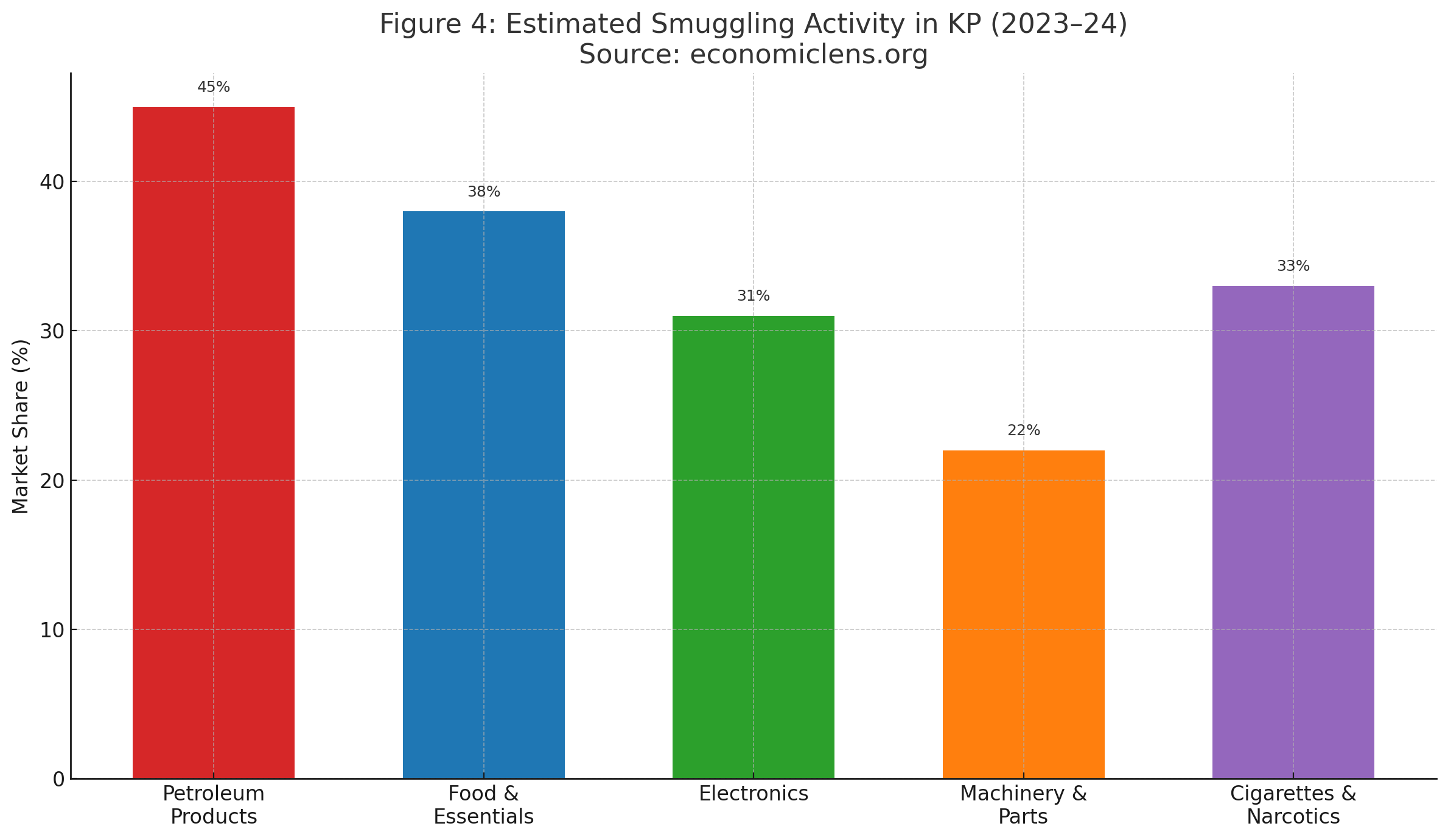
Falling formal border activity enables criminal networks, weakens business confidence and distorts markets. As smuggling expands, informal actors replace state authority, reshaping local economic flows and eroding public trust. Border volatility is not an isolated security issue; instead, it is a structural driver of the KP governance crisis, feeding corruption, weakening supply chains and undermining state legitimacy.
Districts such as Khyber, Bajaur and North Waziristan now depend heavily on smuggled goods, reducing the relevance of state regulations and increasing governance fragility. Without structural reform, border instability will continue eroding KP’s economic and administrative systems.
Global Spotlight on Border-Driven Institutional Crisis Mirroring the KP Governance Crisis: Nigeria’s Case
Nigeria’s border governance crisis mirrors KP’s vulnerabilities. According to UNCTAD, repeated Nigeria–Benin border closures redirected more than 52 percent of trade into smuggling channels. The World Bank reports that smuggling networks outgrew state structures, reducing tax collection, weakening police authority and heightening regional insecurity. The same pattern is emerging in KP, where informal markets expand as the state loses regulatory influence.
“If border disruptions and smuggling continue expanding, KP risks slipping into a parallel economic system where informal networks overpower formal governance, pushing the province deeper into institutional decay.”
3: Institutional Decay, Administrative Fragility and Service Collapse in the KP Governance Crisis
Institutional performance in KP has deteriorated at a pace that reflects the depth of the KP governance crisis. District administration scores fell from 59 in 2018 to 38 in 2024, indicating a severe decline in administrative capacity. Local government financing collapsed from Rs 42 billion to Rs 17 billion within four years, crippling municipal functions such as sanitation, street maintenance, water supply and waste management.
More than 54 percent of district-level development schemes remain incomplete. Citizen service satisfaction has fallen to 27 percent, one of the lowest recorded levels in KP’s governance history.
Expert Insight & Global Report Signals
The World Bank’s Service Delivery Governance Report (https://www.worldbank.org/service-delivery) warns that when local governments lose funding and autonomy, basic services deteriorate rapidly, especially in fragile regions.
UNDP’s Governance Effectiveness Index (https://www.undp.org) highlights that declining administrative capacity creates a chain reaction: weak oversight, poor implementation and rising corruption.
OECD’s Public Sector Capability Review (https://www.oecd.org/governance) emphasizes that fragile administrative systems collapse fastest when resource shortages combine with political instability. KP reflects this global pattern as municipal systems weaken under financial stress and rising security pressures.
Together, these findings confirm how institutional decay shapes the KP governance crisis, weakening state legitimacy and accelerating public service collapse.
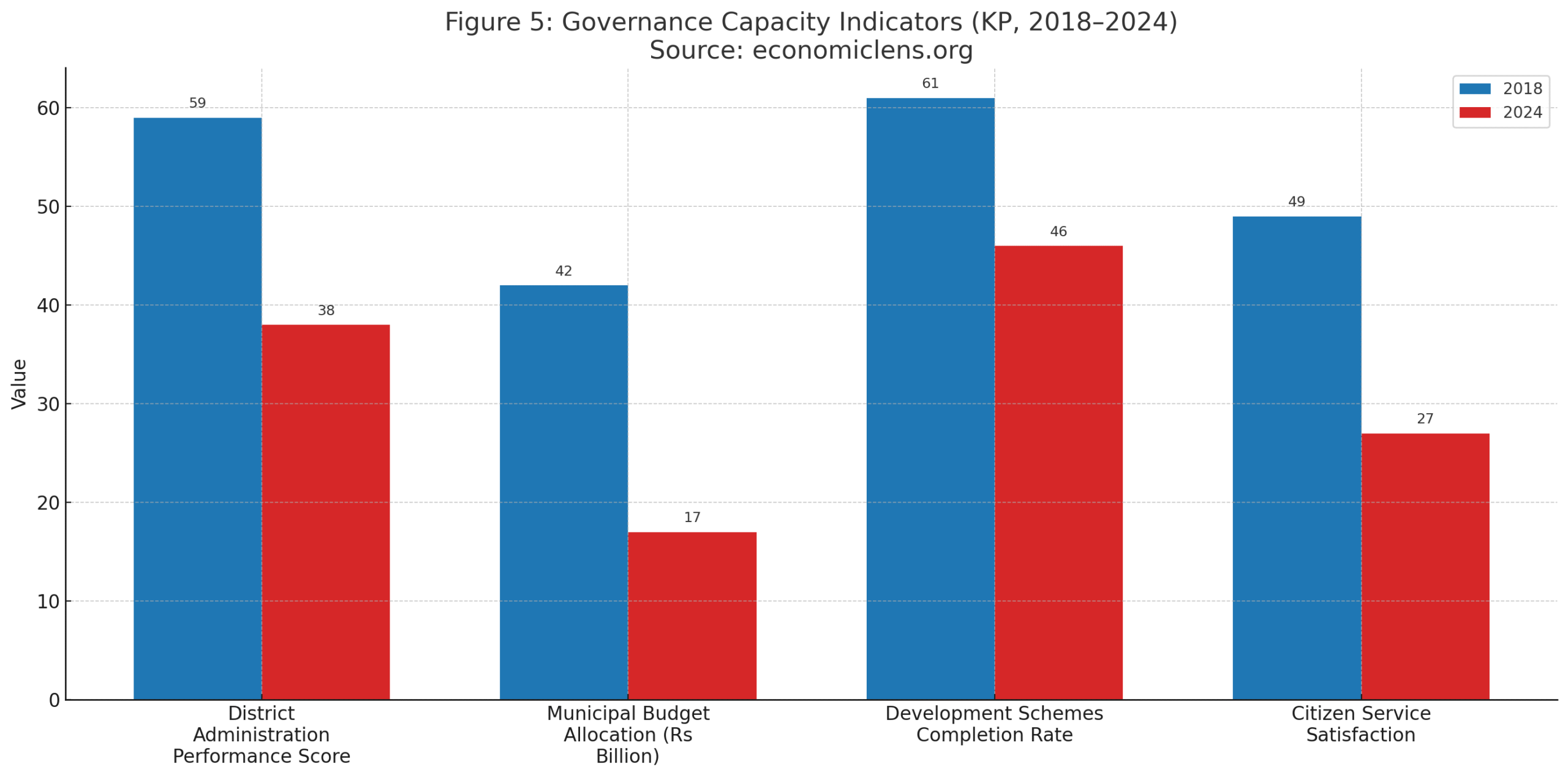
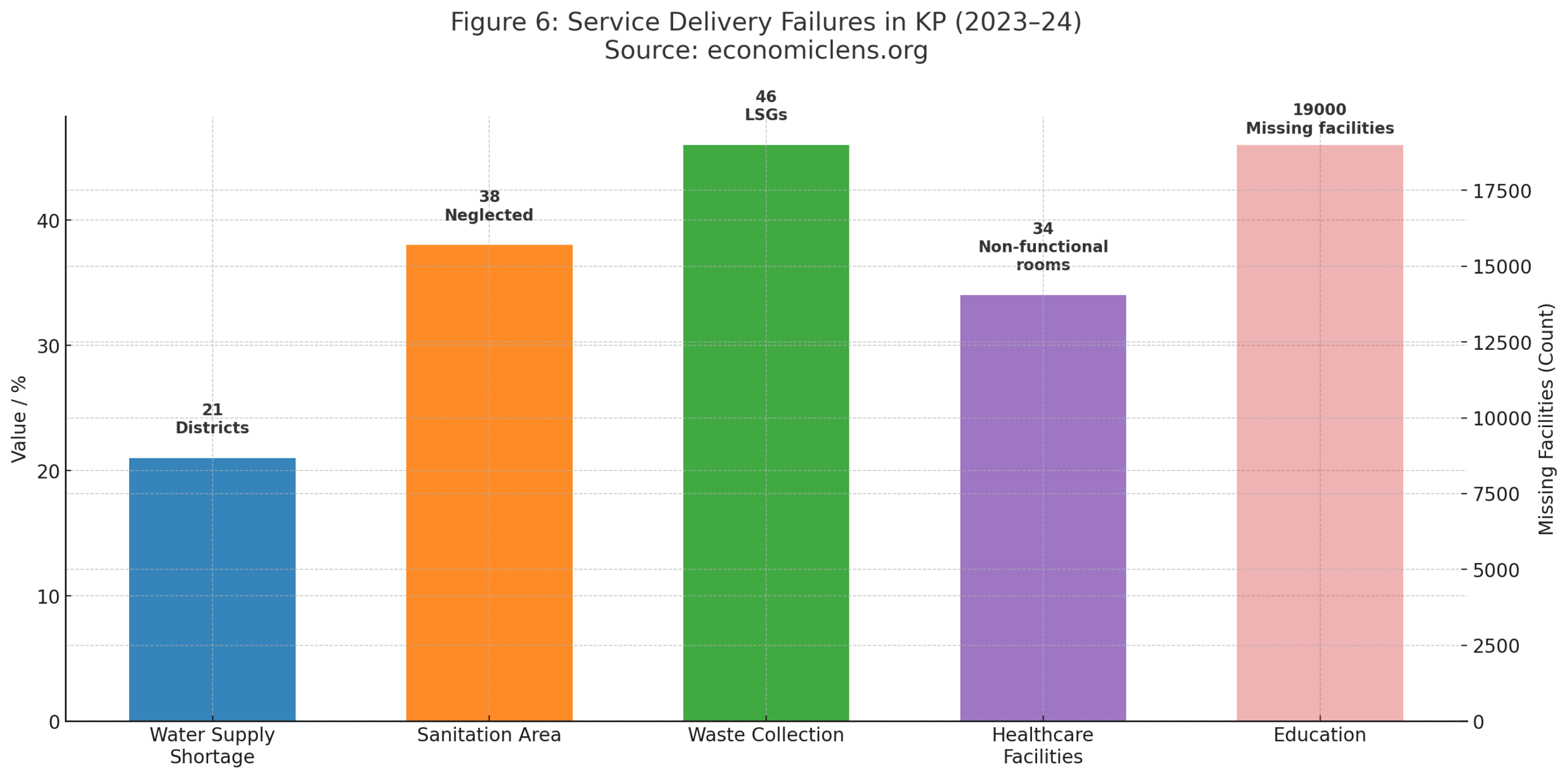
The rapid decay of institutional performance reveals a governance system under severe distress. Weak district administration, declining municipal budgets and incomplete public works erode community trust and deepen social vulnerability. Consequently, service delivery failures compound the KP governance crisis, particularly in areas where local government once acted as the first line of stability.
Administrative fragmentation causes delays, raises costs and widens implementation gaps. Weak institutional capacity reduces the province’s resilience to economic shocks, security threats and social pressures.
Global Spotlight on Institutional Collapse Reflecting the Institutional Crisis in KP: Haiti’s Breakdown
Haiti’s institutional breakdown offers a stark global comparison. According to UNDP, Haiti’s governance collapse began with shrinking municipal budgets, weakened administrative systems and declining service delivery. OECD reports that more than 60 percent of local institutions became non-functional, leading to rising insecurity and widespread public distrust. KP now mirrors several of these warning signs as institutional decay accelerates.
“If institutional decay continues, KP will enter a governance free-fall where administrative systems fail, service delivery collapses and citizens increasingly turn away from state structures for survival.”
4: Administrative Fragmentation, Police Weakness and Governance Paralysis in the KP Governance Crisis
Administrative fragmentation has become one of the most visible symptoms of the KP governance crisis. Police staffing shortages have reached 27 percent in critical districts, case processing times have tripled from 14 days to 41 days, and district oversight committees meet 58 percent less frequently than they did four years ago. Weak coordination between police, CTD and district administration has slowed response times in high-risk zones by 34–49 percent.
Judicial backlogs have reached 212,000 pending cases, weakening public trust and reducing institutional effectiveness across KP.
Expert Insight & Global Report Signals
The World Justice Project’s Rule of Law Index (https://worldjusticeproject.org) notes that weak policing frameworks, low staffing levels and delayed case processing create long-term governance instability. KP’s rising backlog and shrinking coordination capacity reflect this global risk profile.
UNODC’s Policing Capacity Review (https://www.unodc.org) highlights that when law enforcement is overstretched, militant activity and organized crime expand rapidly. This aligns directly with rising security stress scores in KP’s southern belt.
Internal Links: Governance Weakness and Security Exposure
Institutional fragility in KP mirrors broader national governance exposure highlighted in the EconomicLens analysis “27th Constitutional Amendment: Economic Shifts and Institutional Reforms Shaping the Future of Pakistan”
(https://economiclens.org/pakistans-27th-constitutional-amendment-power-centralization-judicial-overhaul-the-new-civil-military-order).
The EconomicLens macroeconomic outlook “Global Economic Outlook 2025-2026: Slow Growth, Sticky Inflation and Rising Debt”
(https://economiclens.org/global-economic-outlook-2025-2026-slow-growth-sticky-inflation-rising-debt).
Together, these insights confirm that the KP governance crisis is not only a provincial failure; it is shaped by national institutional fragility and global macroeconomic pressures.
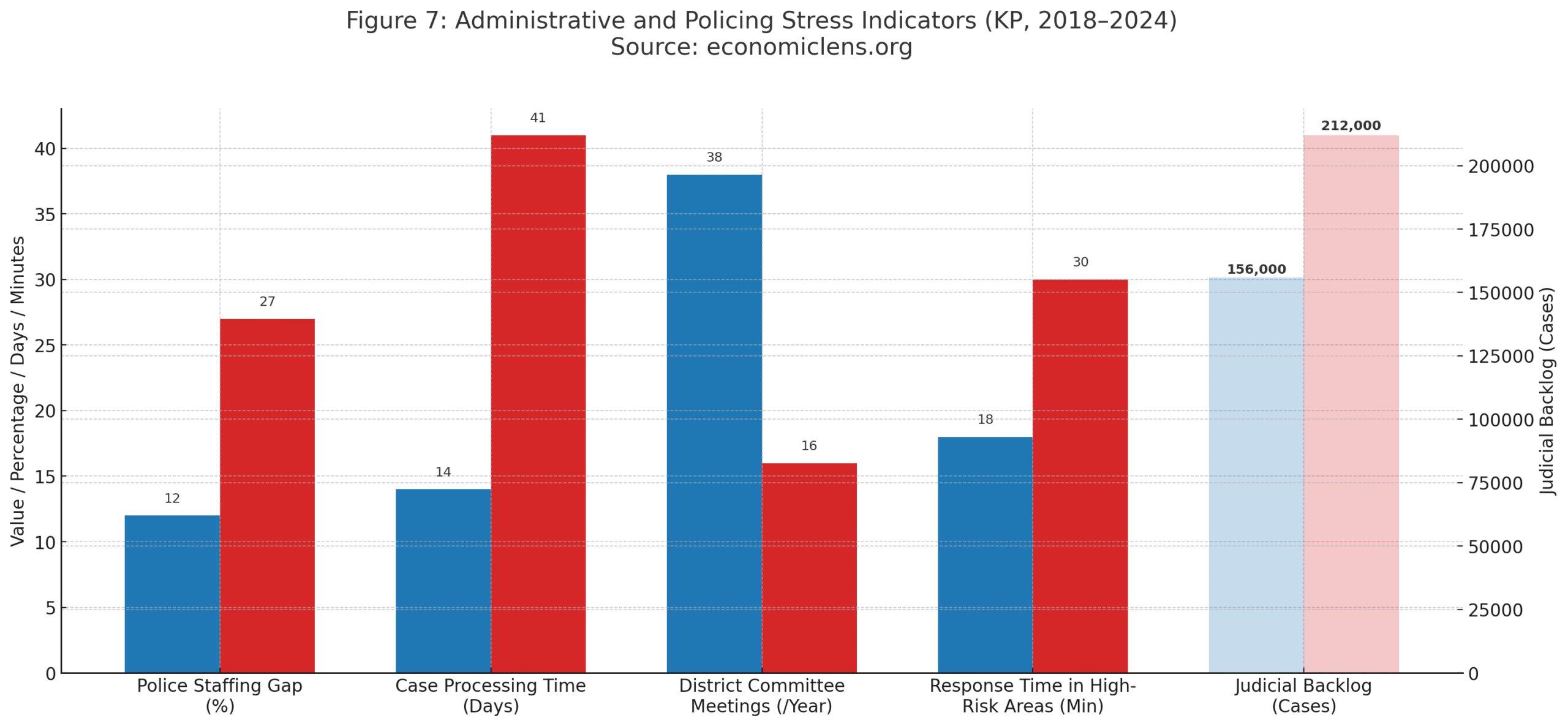
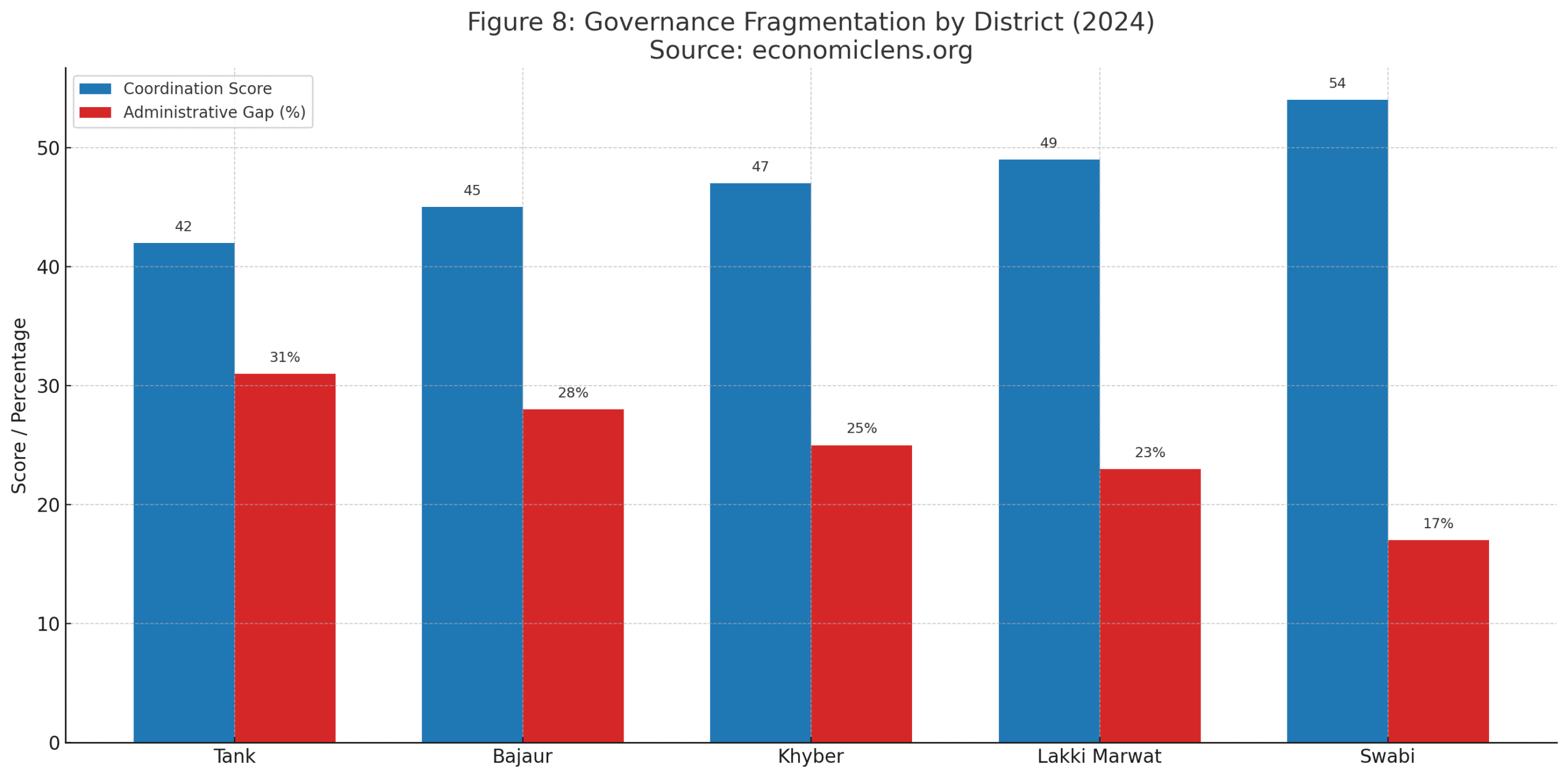
The widening administrative gaps confirm that KP is experiencing a structural breakdown in governance capacity. The combined decline in policing, district oversight and judicial functioning reflects institutional paralysis that directly fuels insecurity, corruption and public distrust. The erosion of committee oversight and administrative coordination shows that governance systems no longer operate with coherence or discipline.
As backlogs grow and response times worsen, state legitimacy declines and non-state actors exploit the gaps. The KP governance crisis therefore manifests not only in security volatility but also in the deterioration of routine administrative functions that are essential for everyday public order.
Global Spotlight on Administrative Collapse and KP Administrative Breakdown: South Sudan’s Warning
South Sudan’s administrative breakdown offers a clear global comparison. According to UNDP, administrative fragmentation, depleted police capacity and weak judicial systems led to rising insecurity and unchecked non-state actor influence. The World Bank notes that response times doubled and district-level governance weakened sharply as institutional fatigue set in. KP now mirrors similar warning signs, where overstretched institutions cannot manage rising instability.
“If administrative fragmentation and policing weakness continue to escalate, KP will enter a governance vacuum where state authority erodes, institutional control collapses and non-state actors fill the void.”
5: Social Unrest, Public Trust Erosion and Governance Legitimacy Loss in the KP Governance Crisis
Public trust in KP’s institutions has collapsed to its lowest recorded levels. Citizen satisfaction has fallen from 55 percent in 2018 to 23 percent in 2024, while trust in police effectiveness has dropped to 28 percent. Protests increased by 146 percent, administrative petitions surged by 184 percent, and more than 41 percent of citizens now rely on informal dispute resolution instead of state institutions. This breakdown of public confidence is a defining feature of the KP governance crisis, and closely aligns with the broader provincial decline discussed in the EconomicLens analysis on KP’s economic distress here:
https://economiclens.org/kp-economic-crisis-poverty-corruption-pressures-and-financial-strain/
This breakdown of public confidence is a defining feature of the KP governance crisis.
Expert Insight & Global Report Signals
The World Bank’s Governance and Accountability Framework (https://www.worldbank.org/governance) warns that trust collapse accelerates when institutions fail to deliver services and contain insecurity.
OECD’s Government at a Glance Review (https://www.oecd.org/governance) notes that when citizens turn to informal justice systems, state legitimacy diminishes and governance fragmentation deepens.
UNDP’s Social Cohesion Report (https://www.undp.org) highlights that prolonged trust erosion increases the probability of unrest, administrative rejection and political instability. KP already exhibits these patterns.
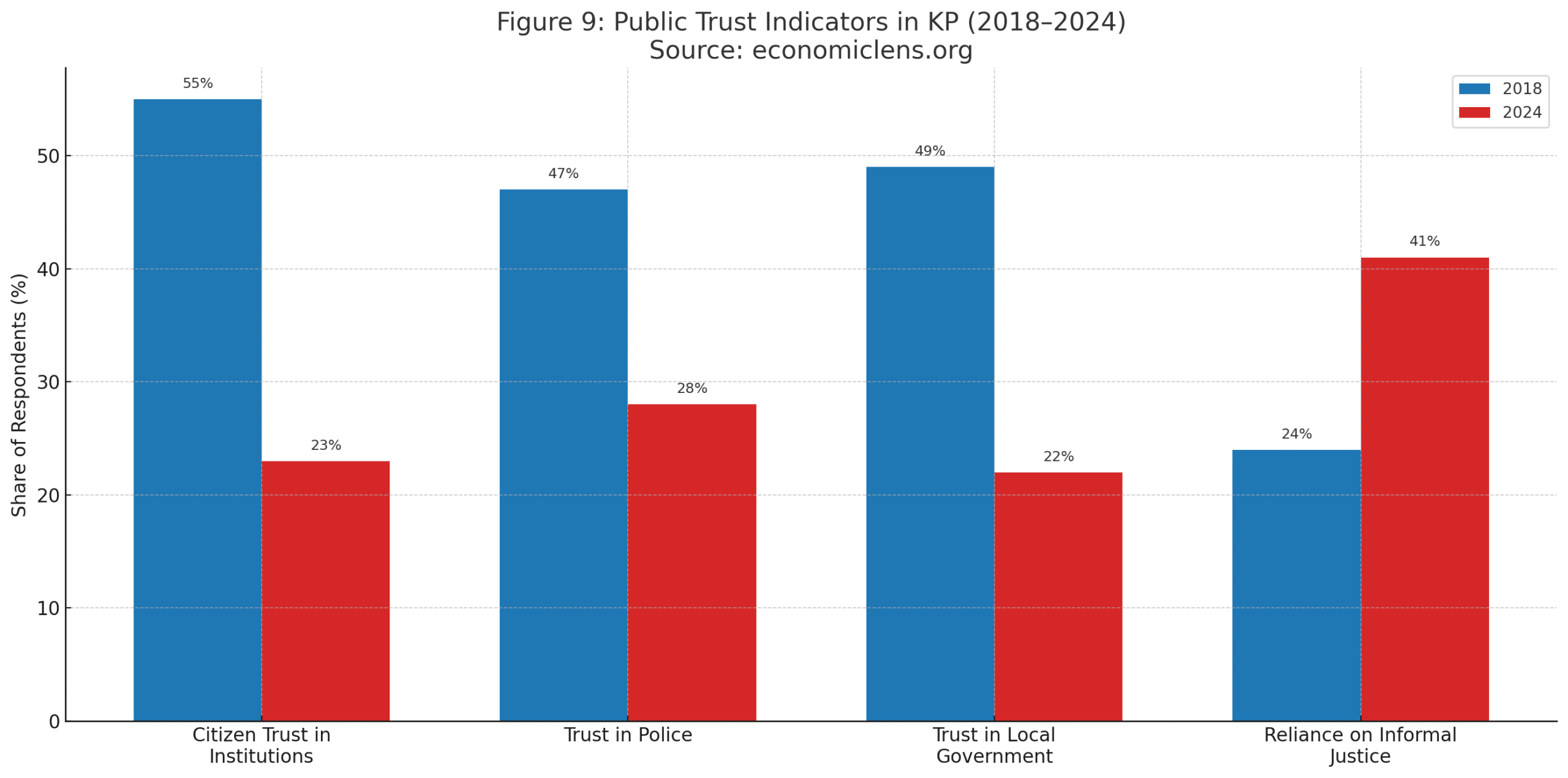
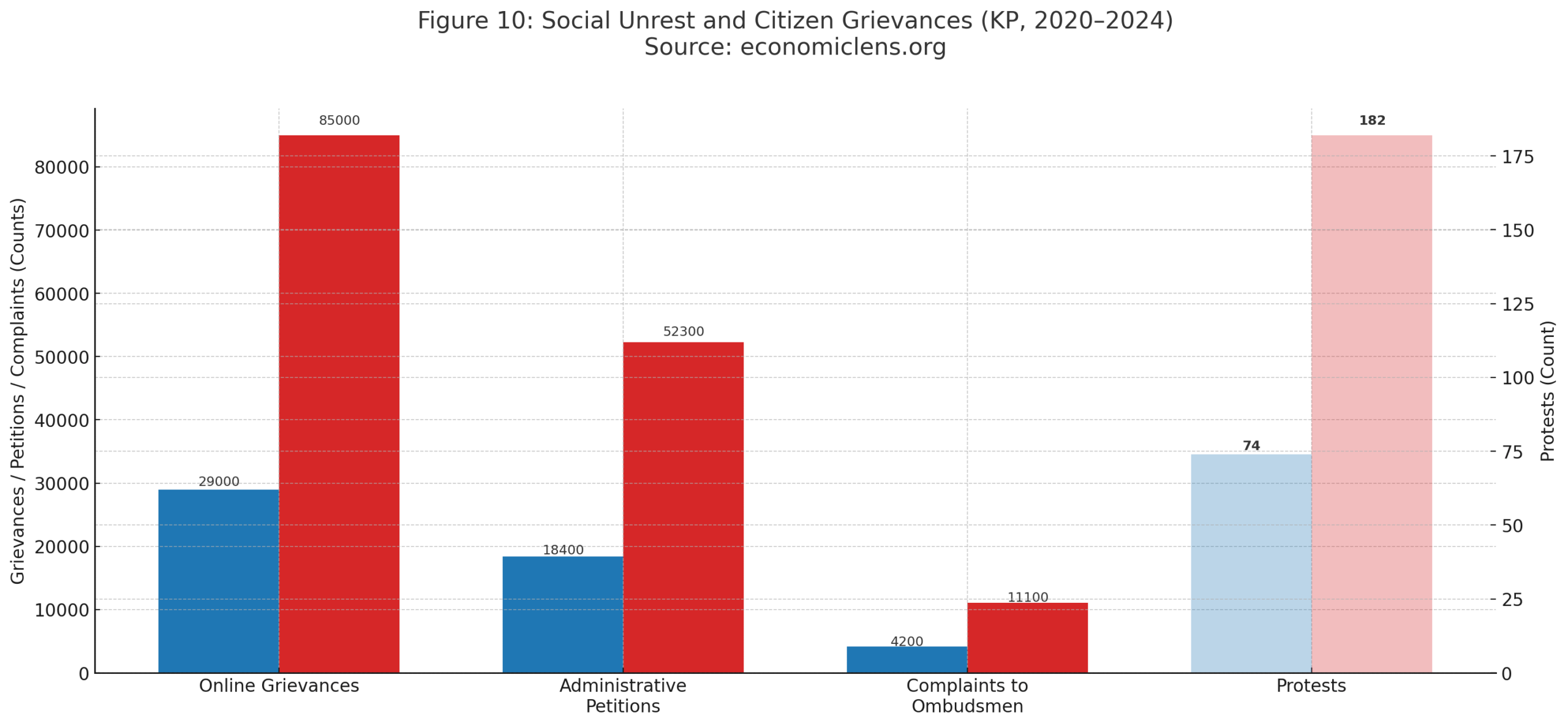
The collapse in public trust confirms that governance failure has become a lived reality across KP. Citizens increasingly bypass state institutions because they no longer believe those systems will protect or serve them. This distrust weakens the social contract, reduces compliance and accelerates institutional decay.
The rise in protests, petitions and reliance on informal justice systems shows that the governance crisis has seeped into daily life. This is no longer a political problem; instead, it is a societal rupture.
Global Spotlight on Trust Erosion and Governance Failure in KP: Chile’s Governance Crisis
Chile’s institutional crisis reveals how trust collapse can destabilize even moderately strong governance systems. According to OECD, Chilean trust declined to 21 percent, triggering major protests and forcing long-term constitutional reforms. UNDP notes that institutional breakdown accelerated when citizens began relying on informal networks and alternative justice mechanisms. KP is following a similar trajectory, with rising unrest tied directly to governance fatigue.
“If public trust continues collapsing, KP will face intensified unrest, deep institutional rejection and a governance legitimacy crisis that becomes increasingly irreversible.”
Policy Pathway in the KP Governance Crisis
The KP governance crisis requires a structured response that targets administrative, security and institutional weaknesses simultaneously. KP needs an empowered district governance model with independent oversight, transparent procurement and real-time monitoring dashboards for funding and project execution.
Police strengthening needs new hiring, modern equipment, better training and improved coordination. Judicial backlog reduction demands fast-track mechanisms and digital case management to restore institutional responsiveness.
Border regulation requires a joint command between customs, police and district administration to cut smuggling and stabilise trade.
Finally, restoring public trust requires service delivery guarantees, grievance redress reforms and empowering local government bodies with predictable financing.
“Without a structural governance reset, KP will remain trapped in a cycle of insecurity, administrative breakdown and public distrust that weakens its long-term stability.”
Conclusion
The KP governance crisis is no longer a future risk; it is an active breakdown reshaping daily life across the province. Security volatility, border instability, administrative fragmentation, institutional decay and public trust erosion have combined into a multidimensional crisis that weakens the province from every direction.
Global evidence shows that when security, administration and services collapse together, recovery becomes slow and fragile.
Only a decisive governance overhaul, backed by strong institutions and stable administration, can reverse the downward trajectory.
“If KP does not act now, the governance crisis will harden into a long-term structural collapse that future generations will inherit.”
Note: For further analysis, read the following article: KP Institutional Leakage: The Hidden Engine of Economic Crisis (https://economiclens.org/kp-institutional-leakage-the-hidden-engine-of-economic-crisis/)