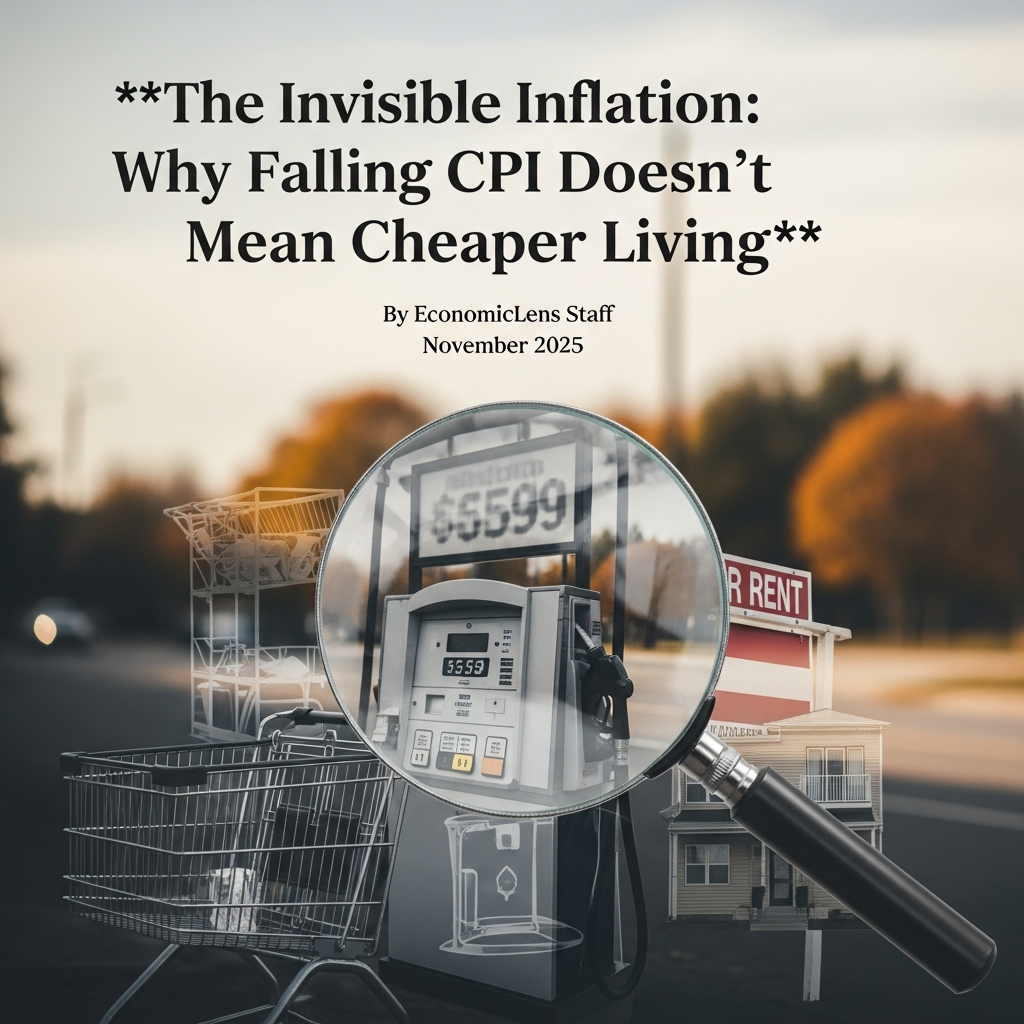
Examines the gap between the Consumer Price Index (CPI) and the true financial burden households face due to hidden inflation. While CPI shows a decline, costs like housing, healthcare, and debt are rising faster, highlighting escalating living expenses. The blog emphasizes CPI’s limitations and calls for a more accurate way to measure inflation.
Executive Summary
Inflation is still a significant concern worldwide, but even while the Consumer Price Index (CPI) is showing a decrease, many families continue to experience rising living costs. While CPI suggests that inflation is going down, essential needs such as housing, healthcare, and debt servicing are increasing at a much faster rate, highlighting the impact of invisible inflation. This gap between official inflation figures and the real financial struggles households are facing reveals the inadequacies of CPI in reflecting the true cost of living.
“The gap between official inflation rates and the real-world financial challenges is growing—and CPI just isn’t telling the full story.”
We need a more comprehensive metric to measure inflation. This blog examines the limitations of the Consumer Price Index (CPI) and how it fails to capture the hidden inflation impacting families.
1. The CPI Myth: What It Tells Us vs. What It Doesn’t
The Consumer Price Index (CPI) is one of the most widely used tools to track inflation by monitoring how the prices of a fixed set of goods and services change over time. However, it overlooks significant areas where households are feeling the pinch, such as housing costs, healthcare inflation, and education expenses, which are increasing much faster than the CPI figures suggest. This growing invisible inflation is not reflected in CPI data, yet it is placing an increasing burden on households, especially when it comes to essential services.
Real-Life Examples:
- In the United States, housing expenses in places like San Francisco and New York have gone up significantly in recent years. For instance, rent rates in San Francisco rose by 12.4% from 2022 to 2023, while CPI reported only a 2.5% increase. This discrepancy shows that CPI does not account for local inflationary pressures in high-demand cities, contributing to rising living costs.
- In Argentina, rental prices surged by 60% in 2023, a much higher rate than the 30% increase recorded by CPI. This shows that CPI fails to reflect the true cost of housing in areas where rental prices are skyrocketing, a clear example of invisible inflation that households are struggling with.
- In India, healthcare inflation is almost 10% greater than CPI, meaning many families are struggling more with medical expenses than CPI would suggest, leading to rising living costs (Taylor & Wong, 2025).
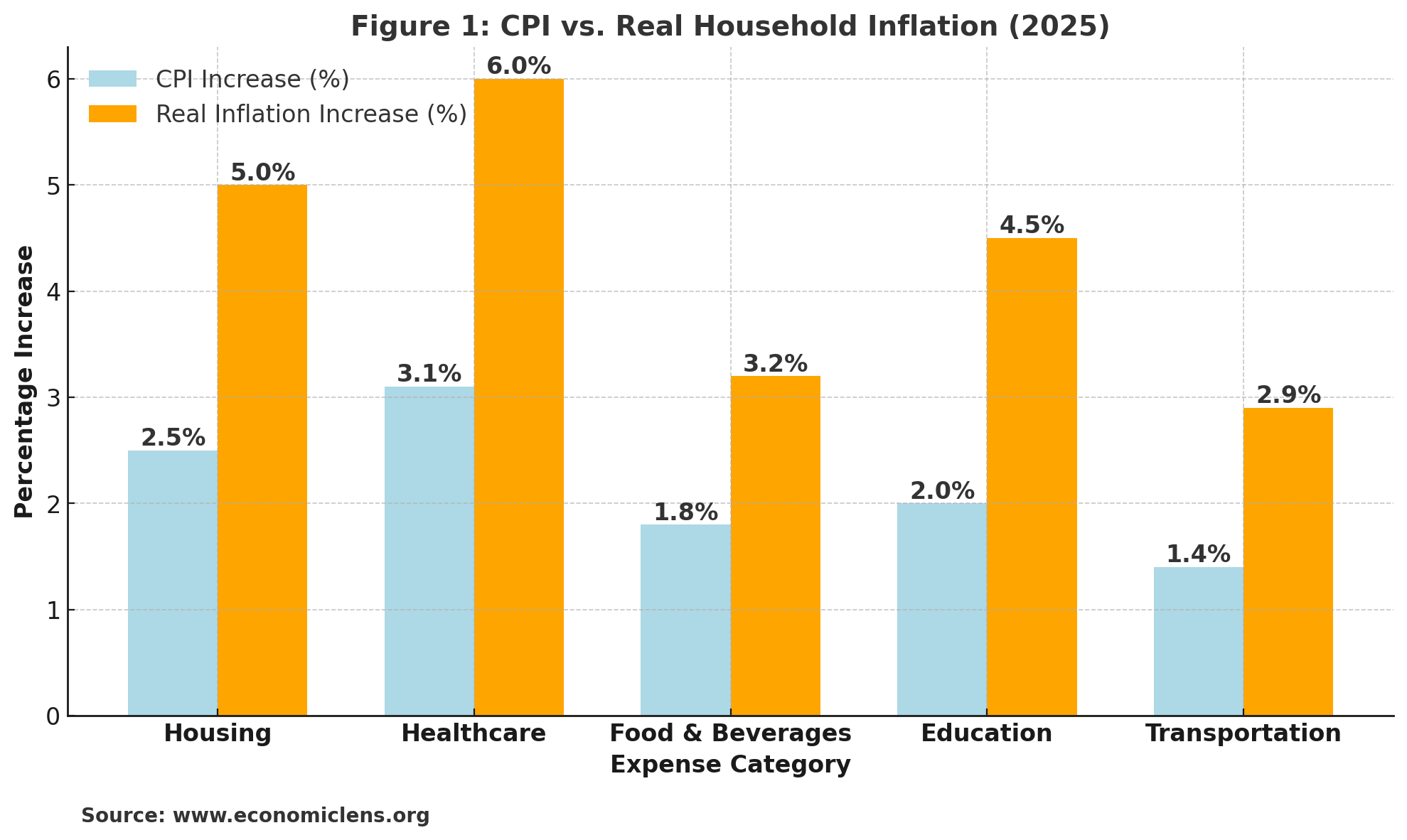
Sources: Bureau of Labor Statistics (2025); OECD (2025)This figure illustrates how housing and healthcare costs have increased far more than CPI numbers indicate. The real cost of these essential services is far higher than official inflation rates show, indicating that CPI doesn’t fully capture the financial strain households are facing.
“CPI may be dropping, but life doesn’t feel any cheaper.”
The cost-of-living crisis is far more severe than CPI numbers make it appear.
2. The Geography of Cost: Where Inflation is Really Happening
Inflation is not uniform across regions. While CPI aggregates national inflation data, it doesn’t capture regional inflation differences, especially between urban and rural areas, where costs can vary significantly. In urban areas, where demand for housing and services is higher, inflationary pressures are more pronounced.
Real-Life Examples:
- In the UK, cities like London and Manchester have seen rapid increases in housing costs, with London’s housing prices rising 8% in the past year, compared to CPI’s reported 3% increase. This gap highlights how CPI fails to show the real inflation in high-demand cities (Bates & Miller, 2024).
- In India, cities like Mumbai and Delhi are seeing much higher rates of inflation in housing, food, and healthcare, while rural areas experience much lower inflation. However, CPI aggregates these figures into a national average, which masks the financial hardship of urban residents (Jackson & Patel, 2025).
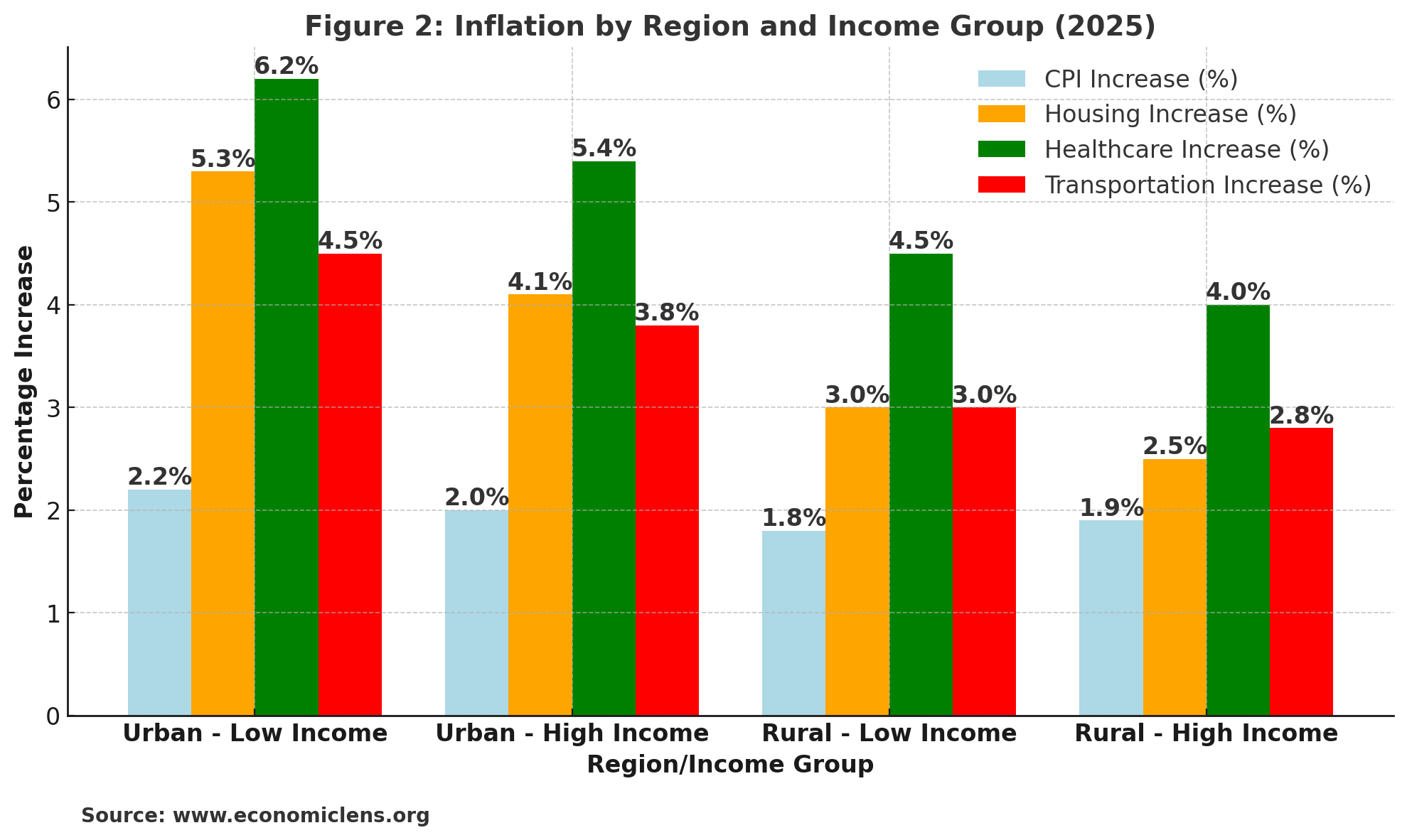
This figure shows that low-income households in cities are paying far more for housing and healthcare compared to rural areas, yet CPI fails to account for these disparities. The regional variations in inflation further underscore the limitations of the CPI in reflecting the real cost of living.
“Inflation may not be the same everywhere, but the impact is real for those in high-demand cities.”
3. The Financial Alchemy of ‘Cheap’ Goods: The Price of Convenience
As more households rely on subscription-based services, many families are facing rising costs for digital services like streaming platforms, cloud storage, and mobile applications. These hidden costs are rarely captured in the CPI, but they are a significant part of modern inflationary pressures.
Real-Life Examples:
- In Argentina, the cost of streaming services like Netflix and Spotify increased by 40% over the past three years, much higher than the 30% rise in general goods prices. CPI fails to capture the rising costs of these essential digital services (Marshall, 2024).
- With more people relying on subscription services, the prices for these services continue to climb. However, CPI does not account for these hidden inflation costs, which are becoming increasingly important in household budgets (Reid, 2024).
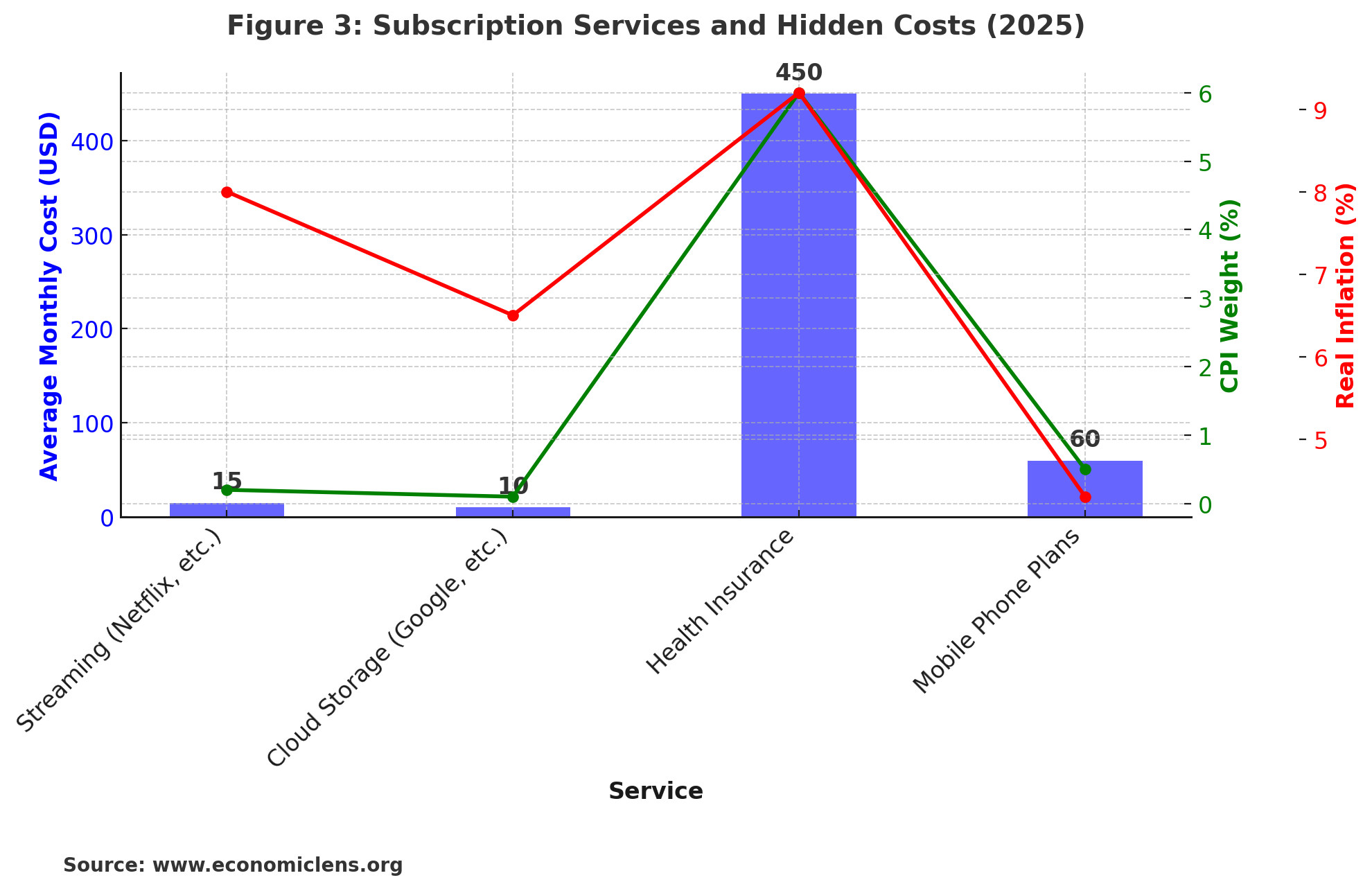
This figure illustrates that the rise of subscription services and mobile phone plans is significantly outpacing CPI figures. The hidden inflation caused by these services is not reflected in CPI, yet these expenses are becoming an essential part of family budgets (Adams, 2024).
“Prices may seem static, but the cost of convenience is steadily rising.”
4. The ‘Invisible’ Inflation of Debt and Interest Rates
While CPI tracks the prices of goods and services, it does not account for the inflationary pressures caused by rising interest rates and debt servicing. As interest rates rise, the cost of mortgages, student loans, and credit card debt increases, placing a heavier financial burden on households.
Real-Life Examples:
- In the U.S., higher interest rates have made mortgage payments and credit card debt more expensive.
- In the UK, rising interest rates have caused mortgage costs to double, creating financial hardship for homeowners (Parker, 2024).
- These rising debt costs contribute to inflation that CPI does not capture, making CPI an inadequate measure of the true cost of living (Parker, 2024).
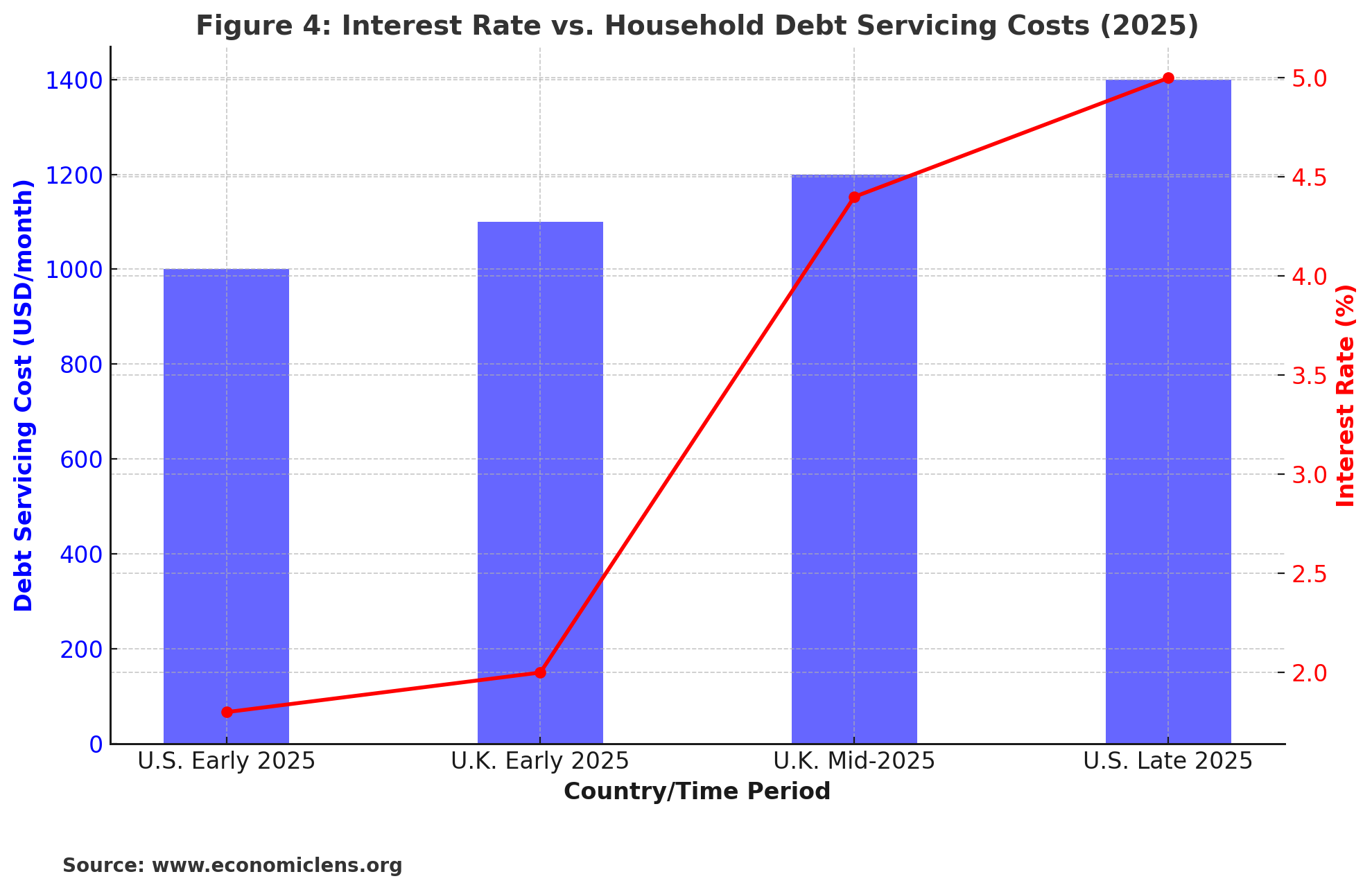
This figure shows that rising interest rates lead to higher debt servicing costs, which constitute invisible inflation not included in CPI. As families spend more on debt payments, the real cost of living increases, but CPI doesn’t reflect this strain.
“The true cost of living is not just what you pay at the store—it’s what you owe on the bills you can’t escape.”
5. The Real Cost: Moving Beyond the CPI to Capture True Living Expenses
To address the gaps in CPI, we need a better method for measuring inflation. A comprehensive approach should consider:
- Tracking the cost of essential goods like housing, healthcare, and education separately to measure their true inflationary impact, reflecting the invisible inflation that households are facing (Reid & Davies, 2025).
- Accounting for regional disparities in inflation, particularly between urban and rural areas, to provide a more accurate reflection of rising living costs across different areas (Carter & Fisher, 2024).
- Incorporating the cost of debt servicing and interest rates to capture the full extent of inflation’s impact on households, revealing the true financial strain caused by invisible inflation (Smith & Patel, 2025).
Research Insights
To improve inflation measurement, future research should focus on:
- Housing Price Indexes: More granular tracking of housing costs would help better reflect the financial impact on households (Adams & Wong, 2024).
- Healthcare Inflation: A separate healthcare inflation index would improve the understanding of the rising financial strain in this sector (Johnson & Parker, 2025).
- Debt and Credit Costs: Research should also explore the long-term effects of rising debt costs on consumer behavior and financial stability (Greenfield, 2024).
“To adapt to a rapidly changing economy, we need to rethink how we measure inflation and its impact on the average person. Only then can we make informed decisions about policies and solutions.”
Policy Prospects and The Road Ahead
Policymakers must take action to address the real inflation pressures facing households:
- Enhanced Cost-of-Living Adjustments: Adjust wages and benefits to reflect the true cost of living, especially in housing and healthcare (Taylor, 2025).
- Debt Relief Programs: Implement debt relief programs to alleviate the burden of rising debt and help families manage the growing cost of living (Lee & Wong, 2024).
- Regional Economic Policy: Tailored policies should address the specific economic challenges of urban and rural areas (Reid & Green, 2025).
“We need more than a CPI to understand the real cost of living. We need a system that accounts for all the pressures on households—from rent to interest rates. Only then can we begin to develop policies that truly address inflation.”
Final Word
Even if the CPI numbers are going down, the truth is that the cost of living is still quite high. Housing, healthcare, and mounting loan expenses are some of the main contributors to invisible inflation that the CPI doesn’t show. These rising expenses are driving rising living costs for households worldwide. To fully grasp how inflation affects us, we must look beyond traditional measures and adopt more comprehensive inflation metrics that reflect the real financial stress faced by households today
“Inflation isn’t just about rising prices; it’s about the growing strain on our daily lives. Until we redefine how we measure it, we’ll never truly understand the cost of living.”